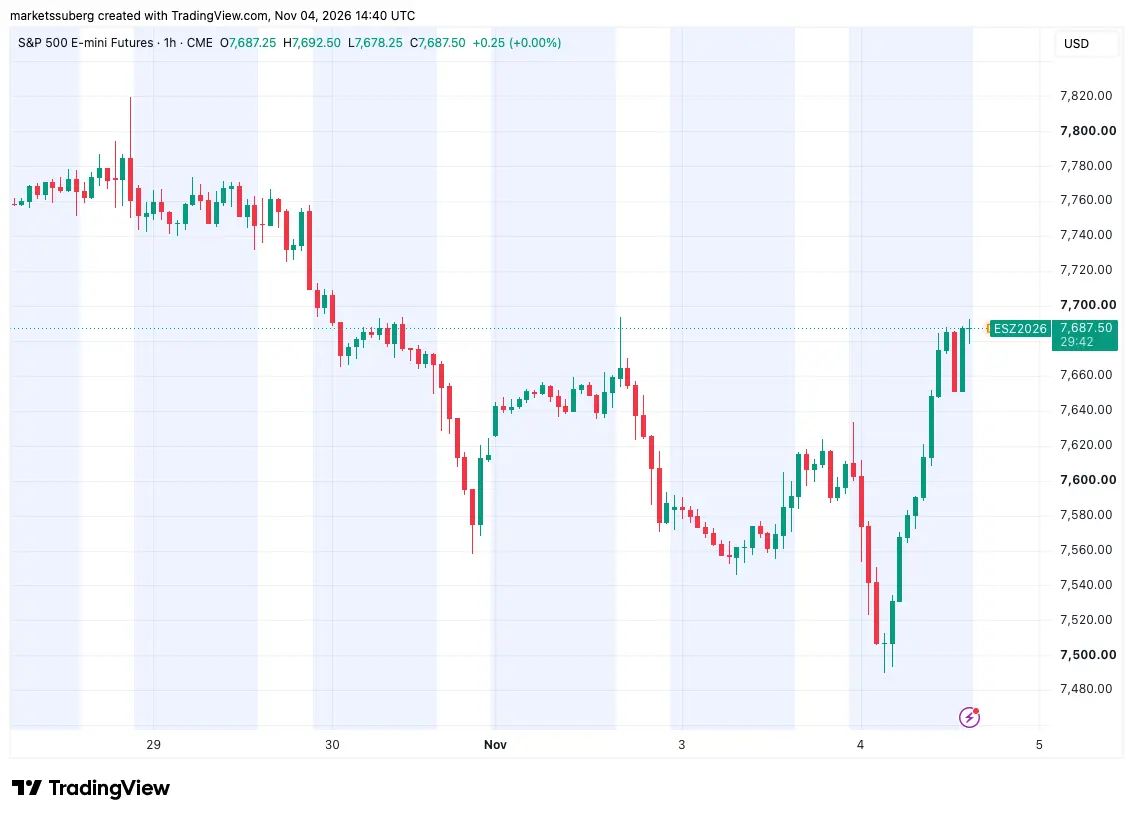
Bitcoin staged a sharp recovery to reclaim the $80,000 threshold at Wednesday’s Wall Street opening, buoyed by a sudden and dramatic surge in United States equities. The rebound followed a historic political shift in the US midterm elections, which saw a sweeping wave of victories for the Democratic Party.
Data provided by TradingView indicated that the BTC/USD trading pair climbed by over 4%, successfully pulling itself out of a steep slump that had recently pushed the asset down to its lowest price levels in seven weeks. The cryptocurrency had previously hovered below the $76,000 mark as markets processed pre-election anxieties and shifting macroeconomic headwinds. However, as the political landscape shifted during the vote count, broader financial markets underwent a violent reversal of fortune, pulling risk-on assets like Bitcoin back toward familiar psychological resistance levels.
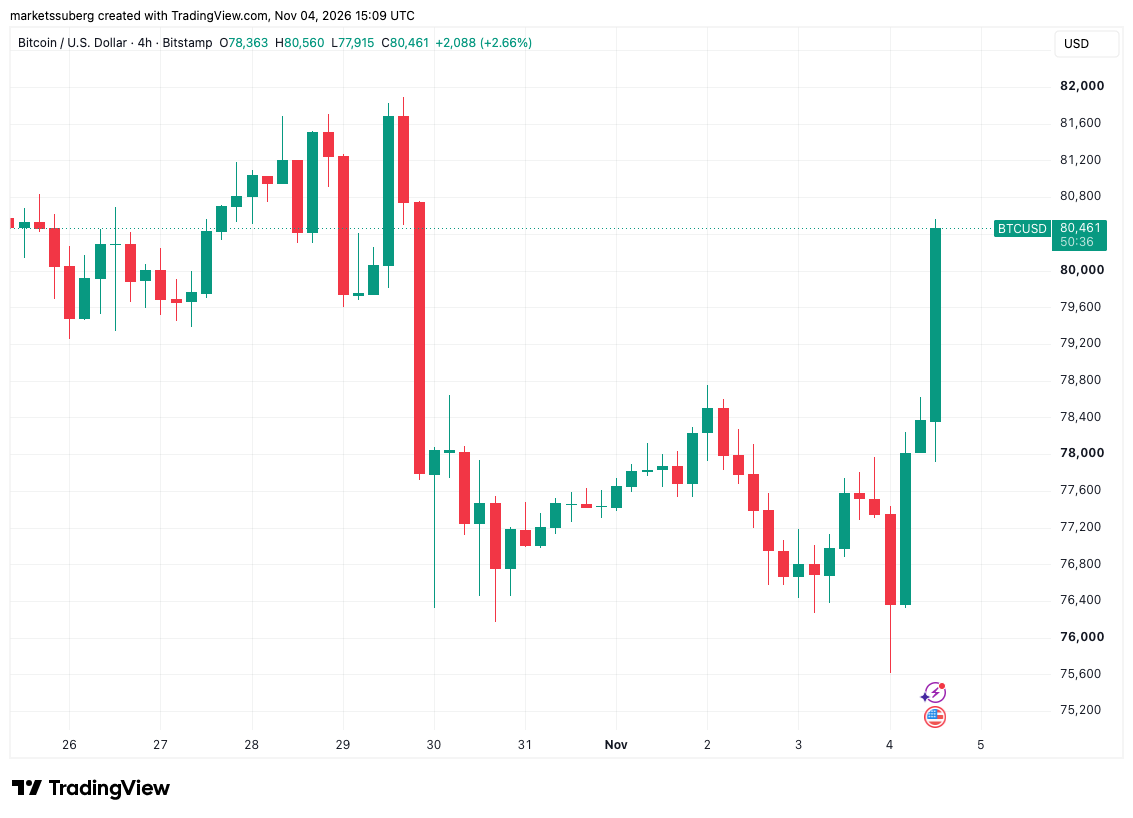
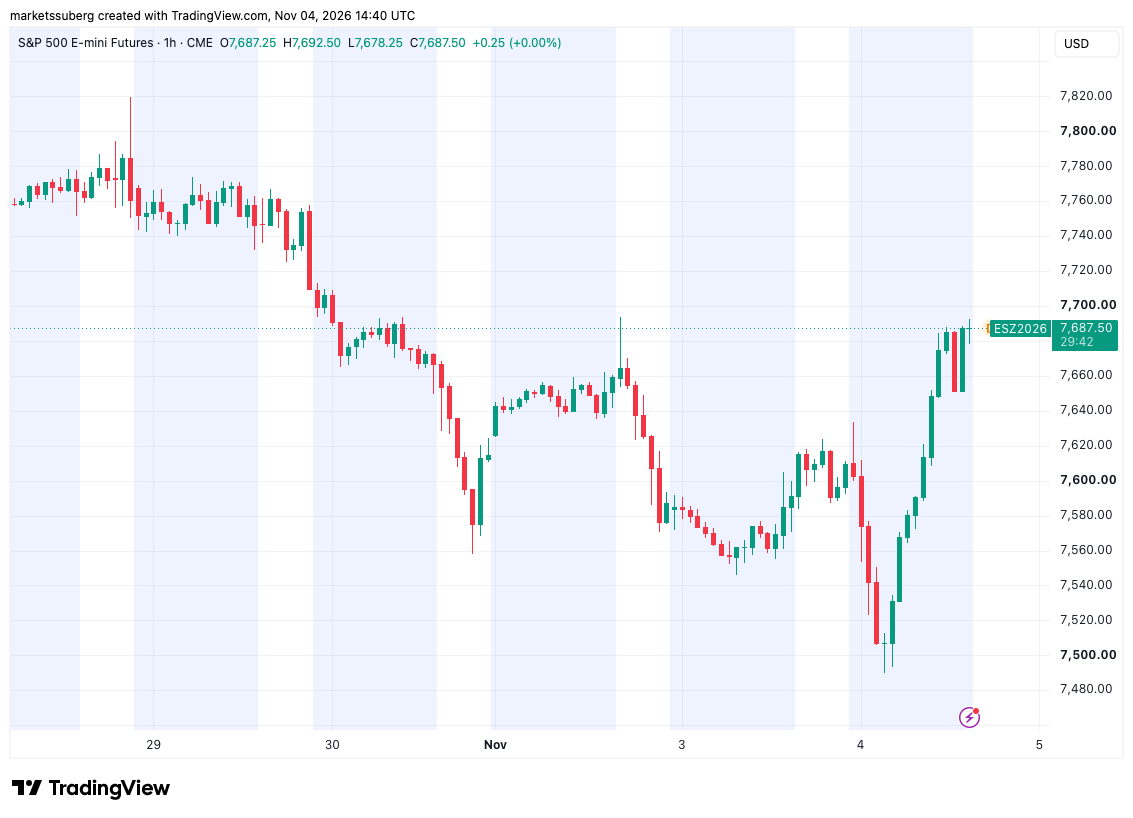
US stock futures experienced a volatile session, initially tumbling during overnight trading before staging a swift and aggressive recovery on Wednesday morning. S&P 500 futures had fallen as low as 7,490 points—marking their weakest performance since July 31—before mounting an impressive charge that drove the index up to 7,690 points, bringing it within striking distance of fresh month-to-date highs.
Market observers were quick to contextualize the initial downward spike in equities. In a series of analytical posts published on social media platform X, prominent trading resource The Kobeissner Letter characterized the early market weakness that coincided with news of the Democratic gains as a "textbook bear trap."

The commentary emphasized the magnitude of the electoral outcome, pointing out that the results represented one of the most substantial realignments of US political power in nearly two decades. According to the analysis, the Democratic Party managed to flip a total of seven seats in the Senate alongside an impressive 25 seats in the House of Representatives, reshaping the balance of power in Washington and instantly altering the legislative outlook for the remainder of the presidential term.
Analyst Eyes BTC Price "Relief Rally" After Midterms
While political developments dominated headlines, crypto-native analysts pointed to a broader matrix of macroeconomic catalysts driving the digital asset market. In exclusive commentary sent to Cointelegraph, James Butterfill, head of research at digital asset management firm CoinShares, suggested that the market was primed for a wider Bitcoin "relief rally" as the cloud of election uncertainty finally began to dissipate.
At the same time, Butterfill noted that fundamental economic drivers continue to command more authority over crypto valuations than domestic politics alone. "For Bitcoin, real yields, dollar liquidity and ETP flows still carry more weight than the elections," he wrote, referring specifically to the performance and inflows associated with Bitcoin exchange-traded products.
Furthermore, Butterfill highlighted a crucial shift in global commodity markets that could heavily influence monetary policy going forward. "We are seeing oil prices plummet, relieving some inflationary pressure and consequent rate hike expectations could moderate," he added, pointing to a rapidly changing macroeconomic backdrop.
Iran War Optimism Sends WTI Crude to Three-Week Low
The dramatic drop in crude oil prices played a central role in the broader financial market recovery, directly tied to political reactions stemming from the midterm outcome. The unexpected scale of the Democratic gains triggered swift geopolitical ripples, most notably concerning tensions in the Middle East.
Iran’s response to the US election results acted as a major catalyst for the commodity sell-off. In a widely circulated post on X, Mohammad Bagher Ghalibaf, the speaker of Iran’s parliament, publicly stated that American voters had "said NO TO WAR, and we endorse this message."
The diplomatic signal resonated quickly across global energy markets, driving US West Texas Intermediate (WTI) crude oil prices down to their lowest levels since mid-October. WTI tumbled below $93 per barrel, registering a steep decline of up to 11.9% for the week. Meanwhile, international benchmark Brent crude hovered dangerously close to breaking beneath the $100 threshold, a psychological level it had not breached since October 7.
The downward pressure on oil came on the heels of notable political admissions from the White House. Earlier on Wednesday, US President Donald Trump conceded in an interview with the Wall Street Journal that the ongoing conflict involving Iran was partially responsible for the Republican Party’s heavy electoral losses at the ballot box.
Economist Robin Brooks weighed in on the developments, suggesting that international energy markets had been carrying a geopolitical risk premium that was fundamentally "too high" prior to the midterm showdown.
"The key question now is whether this causes the President to dial back on war with Iran or whether he escalates," Brooks wrote in a detailed analysis published on his Substack blog, pointing to the delicate balancing act facing US foreign policy in the wake of the domestic political upheaval.