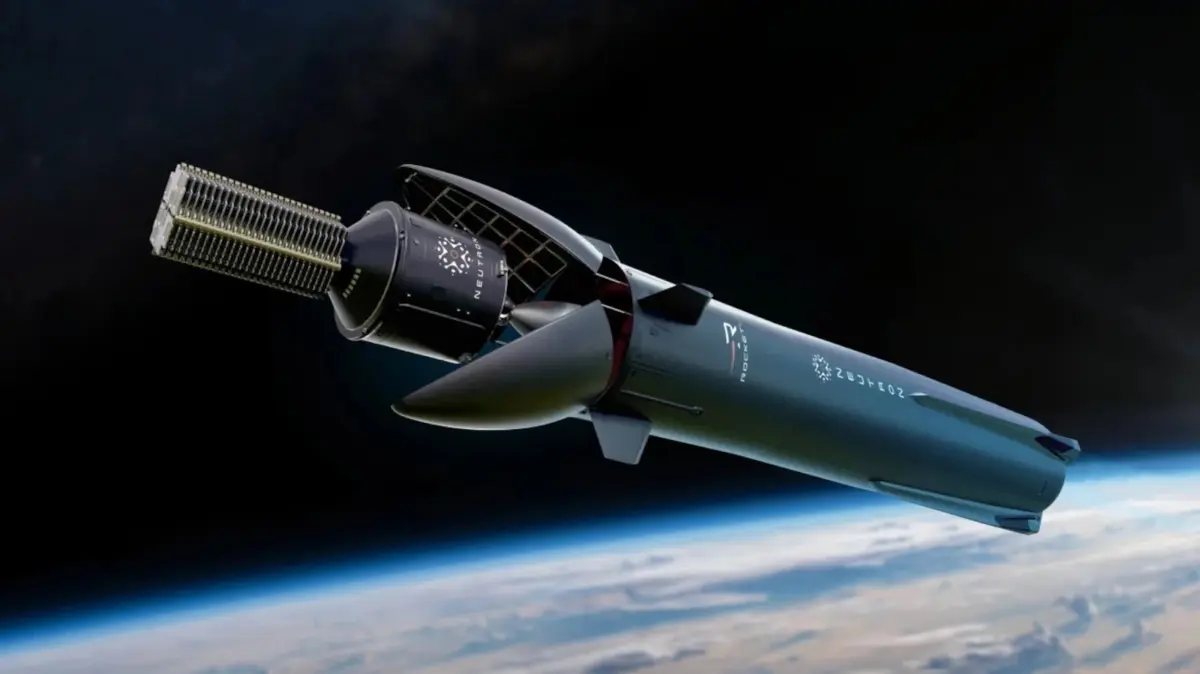
The future of American access to space is facing a period of uncertainty not seen in decades, as the foundational architecture of the nation’s launch capabilities undergoes a profound structural shift. That very uncertainty, however, is already translating into a major window of opportunity for emerging aerospace companies positioned to seize market share. In recent weeks, the Pentagon has intervened directly in the commercial space market, handing out two separate $150 million loans to competitive rocket developers Stoke Space and Rocket Lab.
These strategic investments are explicitly designed to build out critical launch infrastructure and accelerate manufacturing capabilities. While the capital is primarily intended to help these firms reach a point where they can reliably launch classified national security and military payloads into orbit, it also provides a vital commercial springboard. The funding helps them attract, service, and ultimately deliver on lucrative commercial contracts. Business is booming across the sector, and industry analysts expect a massive influx of payloads to head toward these two companies and their competitors over the next few years. The primary catalyst for this historic shift is straightforward: SpaceX, the dominant force in the entire global launch market, is intentionally stepping back from its current business model.
Elon Musk’s aerospace enterprise has expanded its corporate footprint significantly in recent years, branching into ventures ranging from artificial intelligence infrastructure to natural gas mining. Yet, the long-term future of the company remains tethered to the success of Starship, its heavy-lift vehicle currently in development. As the largest and most powerful rocket ever built, Starship is slated to carry NASA astronauts back to the Moon and serves as the sole launch vehicle capable of deploying SpaceX’s newest V3 Starlink satellites. SpaceX needs Starship to succeed, and the company is operating with the absolute conviction that it will.
That operational bet means SpaceX has already stopped taking commercial reservations for future flights on its trusted workhorse, the Falcon 9. While the United States military and NASA may secure a temporary grace period allowing them to utilize the Falcon 9 for a few additional years, Musk has made it explicitly clear that he intends to wind down the Falcon 9 program sooner rather than later.
This impending transition raises critical questions for the broader aerospace ecosystem. What happens if Starship is not ready within the projected timeframe? Even if development stays on schedule, industry observers wonder if Starship will be overwhelmingly occupied with launching internal Starlink payloads, leaving little capacity for external customers. Furthermore, as a massive heavy-lift vehicle, Starship will likely carry a significantly higher price tag per launch than medium-lift alternatives. Once the Falcon 9 is officially retired, where will the rest of the commercial market and the military turn for reliable orbital access?
Small companies, small rockets, big opportunity
The Pentagon is acutely aware of the looming launch capacity crunch and is moving aggressively to mitigate the fallout. Military leadership wants a greater number of competitive companies capable of delivering vital payloads to orbit, thereby reducing the nation’s strategic dependence on a single provider and a single corporate leader.
To achieve this diversification, the military’s Office of Strategic Capital—an investment arm established in 2022—is injecting substantial financial resources directly into SpaceX’s smaller rivals. For Stoke Space, the $150 million loan commitment is earmarked to help construct a brand-new launchpad at the Cape Canaveral Space Force Station in Florida, where its in-development Nova Block 2 rocket is scheduled to operate. For Rocket Lab, the capital injection will fund vital factory upgrades and the expansion of its drone boat fleet, which is utilized for recovering returning rocket boosters at sea.
It is no coincidence that Stoke’s Nova Block 2 and Rocket Lab’s in-development Neutron rocket are direct competitors to the departing Falcon 9 rather than the gargantuan Starship. Although they are slightly smaller vehicles—capable of delivering 15 and 13 metric-ton payloads to orbit, respectively, compared to the Falcon 9’s 23 metric-ton capacity—they occupy the sweet spot for medium-sized missions. For a vast array of commercial satellite operators and institutional customers, that payload class is entirely sufficient, making these medium-lift rockets a much more logical and cost-effective fit than a high-capacity Starship launch. This assumes, of course, that Starship would even accommodate outside reservations beyond its primary internal obligations to the Starlink constellation.
Still, the phrase "in-development" remains a persistent caveat and a source of industry anxiety. All of these new rockets must successfully demonstrate that they can launch and recover payloads reliably, or their business models will falter. Rocket Lab has already delayed the debut flight of its Neutron rocket to 2027, while the Nova Block 2 is not projected to begin flying until 2029.
These timelines cast into sharp relief how far ahead of its time the Falcon 9 truly was. Other aerospace competitors are also knocking at the industry’s door, most notably Jeff Bezos’ Blue Origin and its heavy-lift New Glenn rocket, which recently completed its first mission. Ultimately, the trajectory of the space industry over the coming decade will be determined by how many of these next-generation rockets come online, when they debut, and how reliably they perform.
Good for the military, good for business
As the ongoing conflict in Ukraine and other global flashpoints have conclusively demonstrated, space infrastructure is a critical component of modern military operations. In multiple instances throughout the conflict, Ukraine’s sudden disconnection from the Starlink network—reportedly occurring at Musk’s direct behest—directly impacted local commanders’ operational capabilities and strike coordination. These high-profile episodes exposed the inherent fragility of relying on a single corporate entity for essential wartime communications and data routing.
Consequently, the Pentagon’s current investments are explicitly designed to diversify the military’s corporate partners in the orbital domain, establishing multiple independent pathways to reach and utilize space. Achieving robust redundancy will be an absolute imperative for military space operations in the event of a conflict with a near-peer adversary.
At the same time, these targeted investments in launch infrastructure and advanced manufacturing position commercial rocket builders for long-term success in the private sector, lifting the entire aerospace industry in the process. As a vital strategic priority for the 21st century, the American government is essentially underwriting the growth of the broader space economy. The more active companies that populate the market, the greater the volume of technological innovation. These innovations ultimately serve as the dual engines of both national economic prosperity and military readiness. True to form within the military-industrial complex, the system is designed to feed upon its own momentum.
With the Falcon 9 gradually fading into history, market conditions are ripe for these emerging players. Rocket Lab’s Neutron rocket, despite not having flown a single mission yet, is already completely booked through the remainder of the decade. The company has also raised its projected launch fees from $55 million to $70 million, fully aware that the impending absence of the Falcon 9 grants it unprecedented pricing power.
For SpaceX competitors that have spent years operating under the immense shadow of the company’s dominant workhorse, a major market boom is underway. The central challenge moving forward, however, will be successfully scaling operations to meet this sudden wave of demand. Last year alone, the proven Falcon 9 completed an astonishing 165 orbital launches. By contrast, the heavily booked Neutron rocket is currently scheduled for a modest total of 16 launches over the next few years.