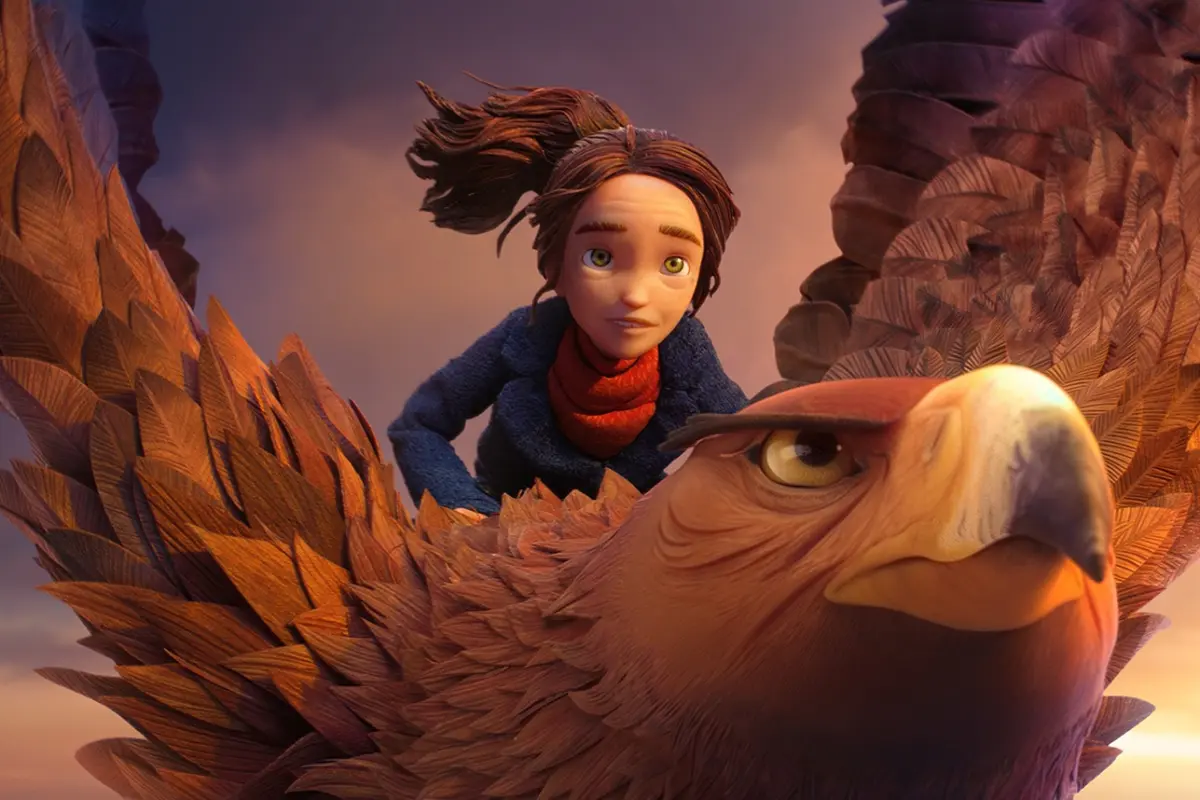
Stop-motion animation has long been defined by its paradoxical nature: it is a medium of extreme, almost architectural precision that aims to create the illusion of effortless fluidity. It is a notoriously time-consuming, labor-intensive method of filmmaking, where every frame is a battle against the entropy of physical objects. Most feature-length stop-motion films are considered Herculean tasks, often requiring several years of painstakingly detailed work by vast, specialized teams of artists, puppet makers, set builders, and animators. Yet, even by the demanding standards of this niche craft, the journey of Laika’s latest sweeping fantasy epic, Wildwood, stands as a singular achievement of endurance and ambition.
The film, which held its highly anticipated world premiere at the BFI London Film Festival this past Sunday, serves as the latest milestone for Laika, the Oregon-based studio that has consistently pushed the boundaries of what is possible with physical sets and puppets. The premiere at the Royal Festival Hall was a celebratory affair, attended by the film’s director, Travis Knight, alongside key voice cast members Carey Mulligan, Peyton Elizabeth Lee, and Jacob Tremblay. The atmosphere was one of profound accomplishment, marking the culmination of a production process that has spanned nearly two decades.
The Anatomy of an Obsession
During a post-screening discussion on stage at the Royal Festival Hall, Travis Knight offered the audience a window into the granular, often maddening reality of the stop-motion process. For those unfamiliar with the mechanics of the medium, Knight’s description painted a picture of a process that is less about traditional filmmaking and more akin to clockwork engineering.
"Basically, we build thousands and thousands of these tiny little objects, we put them in front of a camera, we set lights, and we take a picture," Knight explained to the audience. "We move them a microscopic distance, we take another picture, we move them another microscopic distance, we take another picture."
The rhythm of this work is relentless. For an animator, a productive day might yield only a few seconds of finished footage, and even then, those seconds are the result of hundreds of individual adjustments. Knight’s description of the creative cycle—"We repeat that process over and over until either the film emerges or society collapses"—drew laughter from the crowd, but it also underscored the heavy psychological and physical toll that such a project demands. It is a medium that requires the patience of a saint and the precision of a surgeon, sustained over years of focused effort.
A Decade-Long Journey to the Screen
Wildwood, which Knight has previously identified as the most ambitious project the studio has ever attempted, represents a significant evolution in Laika’s scope. While the official production phase began in 2021—coinciding with the complexities of the COVID-19 pandemic—the life of the film began long before the cameras started rolling. Development on the project dates back some 16 years, originating when the studio first optioned the beloved book by Colin Meloy and Carson Ellis.
To put that timeframe into perspective, the scale of the project is staggering. When the team first began the developmental work on Wildwood, Barack Obama was a fresh-faced president navigating his very first term in office. The world, the film industry, and the technology available to animators have shifted dramatically since those early days, yet the vision for Wildwood remained a constant anchor for the studio.
"This movie took us 16 years to make," Knight remarked during the panel, highlighting the sheer span of time the project consumed. "I could have become a medical doctor twice in the time it took us to make this movie. A child who was born when we started this could have driven me to the premiere."
This passage of time is not merely a logistical footnote; it is a testament to the studio’s commitment to the source material and the specific, tactile aesthetic that Laika has spent its history refining. In an era where digital animation and artificial intelligence are increasingly dominating the cinematic landscape, Wildwood stands as a deliberate, human-centric artifact. The project’s longevity highlights a commitment to a "slow cinema" philosophy, where the final product is expected to endure because the time invested in its creation is visible in every frame.
Setting a New Benchmark for Laika
For Laika, Wildwood is more than just another entry in its catalog of critically acclaimed films; it is a maturation of the studio’s storytelling ambitions. This is the first film in the studio’s history to receive a PG-13 rating, a shift that signals a desire to explore more complex, perhaps darker, and more emotionally resonant themes than those found in their previous works. The choice to push into this territory, combined with the immense technical scale of the film, suggests that Laika is positioning itself to bridge the gap between traditional family-friendly animation and sophisticated, mature narrative storytelling.
The challenges of producing such a film during the global instability of the early 2020s cannot be overstated. The COVID-19 pandemic forced the animation industry to adapt in real-time, with studios having to figure out how to maintain the collaborative, hands-on environment of a stop-motion stage while observing social distancing and health protocols. That Wildwood was completed under these circumstances is a testament to the resilience of the creative team. The film serves as a synthesis of everything the studio has learned since its inception, combining advanced rapid-prototyping, sophisticated lighting rigs, and intricate puppetry to create a world that feels both fantastical and tangibly real.
Looking Toward the Future
As the London Film Festival continues through October 17, the buzz surrounding Wildwood is expected to grow. For fans of the medium, the film represents the pinnacle of what is possible when modern technology meets the analog, tactile tradition of animation. The industry, too, is watching closely to see how audiences respond to this more mature iteration of the Laika style.
Following its festival run, the film is scheduled for a wider release. In the United States, Fathom Entertainment will handle the distribution, while Black Bear is set to bring the film to audiences in the U.K. on October 23. The release will be a landmark moment for the studio, not just for the box office performance, but for the conclusion of a 16-year creative odyssey.
For Travis Knight and his team, the premiere was not just a screening; it was a release of a project that has lived in their minds for the better part of two decades. As the lights dimmed at the Royal Festival Hall and the audience experienced the culmination of those microscopic movements and thousands of captured photographs, the sheer weight of the effort became clear. Wildwood is a reminder that in the world of stop-motion, the final image is only the smallest part of the story. The real story is in the years of labor, the thousands of tiny, deliberate decisions, and the unyielding persistence required to make a film that feels, in every frame, like a piece of living, breathing art.