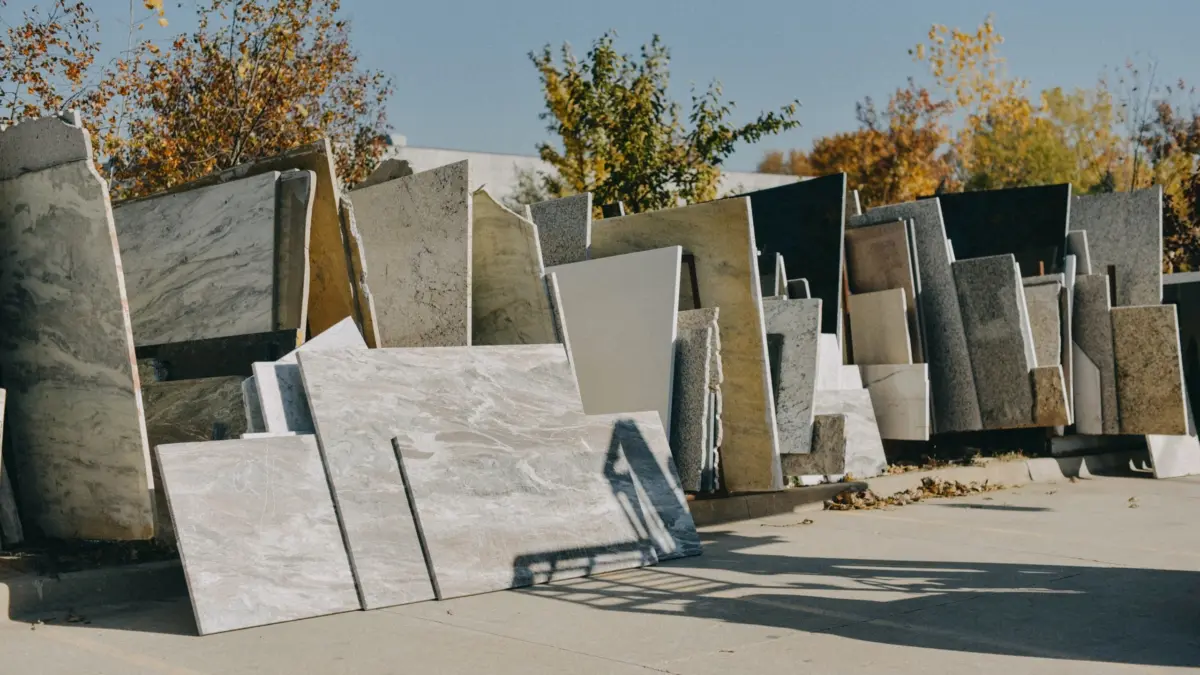
America’s most popular countertop material has been thrust into the center of a severe and rapidly accelerating occupational health crisis. Across the country, the artisans and stone-cutting professionals who craft, cut, and shape engineered quartz are developing debilitating and potentially fatal lung diseases at an alarming rate, forcing regulators, lawmakers, and the home improvement industry to reevaluate the future of the modern kitchen staple.
Despite the growing alarm surrounding its manufacturing and fabrication, homeowners who already have quartz countertops installed in their kitchens and bathrooms are not believed to face the same danger. According to workplace safety authorities, such as Safe Work Australia—which oversees policy in a nation that enacted a sweeping ban on many engineered-stone products in 2024—available evidence strongly suggests that engineered stone products do not pose a safety risk after installation, provided they are not actively cut, ground, polished, or otherwise processed in a way that generates respirable crystalline silica dust.
Instead, the mounting medical and regulatory evidence is directly threatening the viability and future availability of the material itself. While Australia has already prohibited the sale and use of many engineered-stone products, regulatory bodies in the United States are increasingly scrutinizing the industry. In California, officials are pursuing emergency rules that would strictly prohibit fabricating engineered stone containing more than 1% crystalline silica. What happens next in this unfolding public health and regulatory battle could completely upend a residential countertop market that has long been dominated by engineered quartz.
Why Quartz Became So Popular in the First Place
To fully understand the potential fallout and consider what materials might eventually take its place, it helps to examine what modern homeowners look for when choosing a kitchen or bathroom countertop.
Consumer surveys conducted by home remodeling platforms like Houzz consistently demonstrate that aesthetics drive the decision-making process above all else. In recent industry surveys, homeowners ranked the look and feel of a countertop first, its durability second, and its ease of cleaning third. Cost typically lands in fourth place among consumer priorities.
Engineered quartz surged to dominance because it managed to check every single one of those boxes. Over the course of multiple Houzz kitchen trends reports, engineered quartz was selected for an average of 38% of all kitchen renovations, capturing more than double the market share of traditional granite, which held an average of 18%.
Although its dominant market lead has narrowed somewhat in recent years—falling from 43% in 2024 down to 32% in 2026—no single alternative material has come close to displacing it from the top spot.
Crucially, choosing quartz did not demand heavy trade-offs regarding everyday performance. Consider scratch resistance: the Mohs Hardness Scale ranks minerals according to their resistance to scratching, scaling from 1 for very soft talc up to 10 for diamond. Engineered quartz typically scores around 7 on this scale, making it hard enough to easily resist scratches from the knives, cookware, and everyday objects it routinely encounters in a busy kitchen environment.
Of course, quartz is hardly alone when it comes to durability. Competing materials such as porcelain, natural quartzite, and many varieties of granite also land around a 7 on the Mohs scale. Even so, these equally sturdy natural alternatives often require significantly more maintenance from the homeowner.
Granite and natural quartzite typically demand periodic sealing to protect against stains and moisture penetration. Meanwhile, classic marble can be permanently damaged by common household acids—ranging from heavy-duty cleaning solutions down to mild kitchen ingredients like lemon juice or vinegar—which chemically react with its calcium carbonate composition and leave dull, etched spots across the polished surface.
Soapstone manages to avoid some of those specific vulnerabilities because it absorbs very little water and does not require routine sealing. However, at roughly 1.5 on the Mohs scale, soapstone is dramatically softer than quartz and scratches much more readily under everyday wear and tear.
Porcelain comes the closest to avoiding many of these functional compromises. It requires no routine sealing, scores around 7 on the Mohs hardness scale, and naturally resists household acids. Yet its primary hurdle remains aesthetics—specifically, capturing the intricate, deep patterns that homeowners value above durability, maintenance ease, and cost.
Price introduces another critical trade-off. With a midpoint of roughly $125 per square foot across published market ranges, engineered quartz has historically cost nearly twice as much as standard porcelain and granite options. Only premium natural stones like quartzite and luxury marble consistently command higher price points.
The true commercial advantage of quartz, therefore, was never simply about a single superior trait. Instead, it successfully bundled several distinct qualities that homeowners valued into one cohesive material, proving popular enough that millions of buyers were willing to pay a premium for it.
What Could Replace Quartz in the Market?
If traditional engineered quartz is phased out or heavily restricted across parts of the market, there may be no single, clear heir apparent to take its place.
International markets offer an early preview of this transition. Before Australia implemented its landmark ban on engineered stone in 2024, the material accounted for an estimated 55% of the local benchtop market. In the wake of the prohibition, both consumers and fabricators have naturally scattered across a wide range of diverse substitutes rather than consolidating around one dominant replacement material.
The U.S. market already features several established contenders well-positioned to absorb shifting consumer demand.
Porcelain presents the strongest functional case. Among the materials compared by industry analysts, porcelain comes the closest to preserving the unique combination of high durability and low maintenance that originally helped quartz win over homeowners. Its primary challenge lies in convincing buyers on the aesthetic front, which remains the number-one priority for home renovators.
Granite offers the most familiar alternative for consumers hesitant to embrace entirely new synthetic surfaces. It already commands the strongest foothold among quartz’s traditional competitors, providing homeowners with a well-known fallback option if engineered quartz becomes scarcer or more expensive to source.
At the same time, natural quartzite has experienced a significant surge in momentum among interior designers and architects. A clear majority—62%—of industry professionals identified natural quartzite as a popular and desirable countertop material, placing it just slightly behind engineered quartz, according to the National Kitchen & Bath Association’s annual trends survey.
Yet, quartzite’s higher price point and ongoing requirement for professional sealing weaken its standing as a seamless, direct replacement for quartz. Furthermore, its potentially high crystalline silica content exposes a much larger, more complex problem underlying the entire search for a safer industrial substitute.
Replacing Quartz Won’t Eliminate Worker Risk
The ongoing crisis raises a much thornier question for lawmakers, public health officials, and industry executives: Would replacing engineered quartz actually solve the underlying worker health problem?
That debate has already sparked intense legislative conflict. During a House Judiciary subcommittee hearing, Rebecca Shult, chief legal officer for major U.S. quartz manufacturer Cambria, argued before lawmakers that the engineered material itself is not the root cause of the crisis.
The problem is the fabrication process, not the finished product, Shult told lawmakers, directing blame toward fabrication shops that fail to adequately control workers’ daily exposure to hazardous silica dust through proper ventilation, wet-cutting techniques, and personal protective equipment.
Conversely, David Michaels, the epidemiologist who served as the head of the Occupational Safety and Health Administration (OSHA) from 2009 to 2017, strongly challenged the notion that mere compliance with existing workplace safety standards inherently makes engineered quartz safe to fabricate.
Existing OSHA standards do not represent safe exposure levels, Michaels testified before Congress, explaining that the agency is historically forced to consider what industries can economically and technologically achieve when setting regulatory exposure limits, rather than relying purely on medical safety thresholds.
This distinction highlights a crucial nuance, especially since silica content alone does not appear to fully explain the severity and rapid progression of the lung diseases documented among engineered-stone workers.
Some natural quartzites contain more than 90% crystalline silica—roughly matching the high silica concentration found in traditional engineered quartz—yet medical researchers have not documented the same alarming epidemic of rapidly progressing silicosis among the workers who cut and install natural quartzite.
According to findings published by Cal/OSHA, respirable crystalline silica exposure generated specifically from artificial stone is considered much more toxic and dangerous than exposure originating from natural stone or sintered materials. Researchers are actively investigating whether this stark difference stems from the sheer amount and microscopic size of the dust generated during high-speed fabrication, or from the complex mixture of resins, synthetic pigments, metals, and other chemical additives used to bind engineered stone together.
Ultimately, no existing alternative perfectly solves both sides of the modern kitchen equation: reducing severe occupational health risks while simultaneously preserving all the aesthetic and functional qualities that homeowners have come to expect.
Engineered quartz originally became America’s favorite countertop material by successfully minimizing the compromises homeowners had to make in their living spaces. If the mounting worker health crisis ultimately pushes the material out of significant portions of the market, consumers may once again be forced to decide which of those historical compromises they are willing to accept.