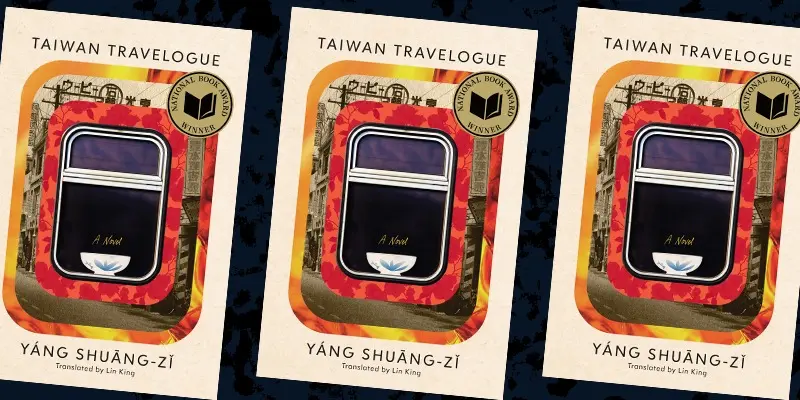
Translator and writer Lin King released a comprehensive statement on Instagram on Tuesday laying out her formal claim of copyright infringement. The legal dispute centers on her acclaimed English translation of Taiwan Travelogue, originally written in Mandarin by Yáng Shuāng-Zǐ under the title Táiwān Màn Yóu Lù (臺灣漫遊錄). King discovered that an unnamed European publisher was preparing to release a translation of the book derived directly from her English text rather than from the original Mandarin source. This practice, commonly known as a "relay translation" or indirect translation, involves translating a literary work into a third language by utilizing a pre-existing translation rather than commissioning a fresh translation from the source language.
Upon uncovering the plans, King issued repeated warnings to the European publisher, emphasizing that the prospective third-language edition lacked legal authorization. Because she holds the exclusive copyright to the English-language edition of Taiwan Travelogue, King maintains that any unauthorized third-language translation constitutes a direct violation of her intellectual property rights. Faced with the publisher’s progression despite her warnings, King has formally initiated legal proceedings against the unnamed European entity to protect her work and assert the legal boundaries of literary translation rights.
Beyond the immediate legal conflict, the most resonant and widely discussed portions of King’s public statement involve her passionate defense of translation as a distinct, highly creative art form. To articulate the complex nature of literary translation, King offered several vivid analogies that challenge the traditional, subordinate view of the translator’s labor.
"Translation is adaptation," King wrote in her statement. "It is not unlike a filmmaker reinterpreting a book for the screen, or Whitney Houston covering Dolly Parton’s ‘I Will Always Love You.’ Whether one is ‘better’ than the other is up for debate. That the two are different is indisputable."
King further compared translation to a performance art, noting that just as a scriptwriter needs an actor, a composer needs a musician, and a choreographer needs a dancer, a novelist ultimately relies on the translator to bring their text to life. Every artistic choice made by the translator during this process directly influences how the original work is delivered to and received by a new audience of readers.
Addressing a question she is frequently asked about whether she identifies more strongly as a writer or a translator, King dismissed the notion as a false binary. While acknowledging that not all writers are translators, she asserted firmly that all translators are writers. Describing her creative process, King explained that she hand-picked every single word in the English edition of Taiwan Travelogue from the vast, chaotic expanses of the English lexicon. Because of this creative ownership, the original author, Yáng Shuāng-Zǐ, cannot actually read the English text she produced, just as King herself will not be able to read most of the forthcoming translations of her own forthcoming novel when it is published. In those instances, she noted, the respective translators will be the ones actively writing those books, rather than the original authors.
This perspective on the intrinsic literary value of translation received strong backing from the publishing industry. Yuka Igarashi, executive editor at Graywolf Press, the publishing house responsible for releasing Taiwan Travelogue in the United States, voiced full support for King’s stance and legal actions. Igarashi noted that King’s inspired translation of Yáng’s brilliant novel perfectly demonstrates the core argument that translators are writers in their own right, and their copyrights must be rigorously respected. Highlighting translators as vital artists, cultural mediators, and advocates, Igarashi emphasized their indispensable role in the international dissemination of literature, while commending King’s efforts to shed light on work that remains frequently overlooked and unacknowledged.
King has similarly stressed that her primary motivation extends far beyond her individual grievance, aiming instead to challenge deeply entrenched, unfair business practices that have become widely accepted within the international publishing ecosystem. These permissive industry norms often facilitate copyright-violating, third-language translations without proper consultation or compensation for the original translator.
"This is not about the money," King wrote, a sentiment that will come as no surprise to anyone familiar with the modest financial realities of literary translation. Detailing her initial involvement with the project, King revealed that she had originally volunteered without compensation to translate Táiwān Màn Yóu Lù and actively pitch the book directly to United States publishers, driven purely by her belief in the literary merit of the work.
"Translation is a horrendous business plan," King reflected. "I do it because I believe in the books."
By pursuing legal action, King hopes to address the broader structural and business practices plaguing the translation community. She aims to establish a new legal precedent that might disrupt the complacent status quo allowing unauthorized relay translations to slip past legal and ethical boundaries. Questioning the industry’s reliance on historical inertia, she wrote, "Since when has ‘it’s always been done this way’ been a sufficient reason for continuing to infringe on people’s rights?"
King concluded her public statement with a direct and urgent appeal for systemic change within the global publishing community. She beseeched all publishers of translated fiction to prioritize seeking explicit permission rather than relying on retroactive apologies. Urging a culture of mutual respect, she reminded publishers that if they truly love the books they acquire, they must honor the rights of the translators who rewrite the stories, rendering them accessible across linguistic divides.
The full statement regarding the ongoing legal proceedings and her reflections on translation remains available on King’s official Instagram page.