You have been handed the chance of a lifetime. It is the opportunity to occupy a cockpit on the starting grid at the very pinnacle of global motorsport: Formula 1. For any driver who has spent their life clawing through the ranks of karting, Formula 4, and beyond, this is the destination. It is the culmination of every sacrifice, every bruised rib, and every sleepless night spent in a garage. But what happens when that dream lasts for only a few fleeting moments?
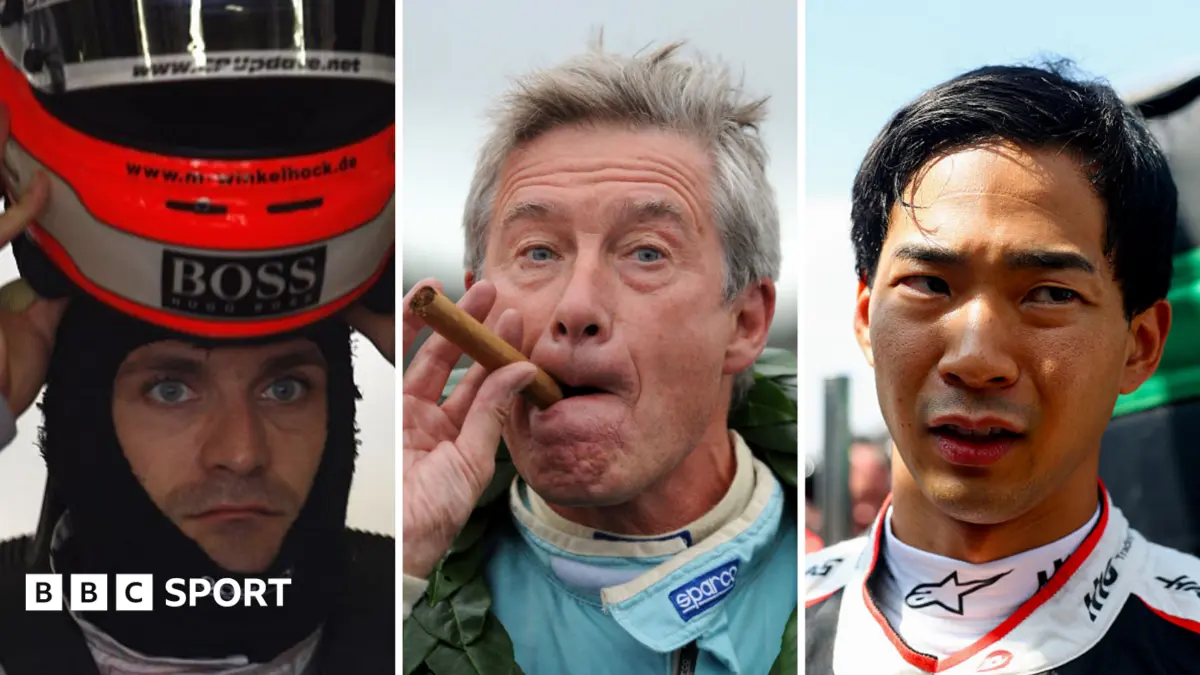
"I sang the Grand Prix theme tune while I was sat on the grid. I thought I was watching it on telly," admits Tiff Needell, one of the 166 drivers in the history of the sport who graced an F1 race exactly once. For some, it is a badge of honor; for others, it remains a bitter "what if" that haunts their professional legacy.
While the "super-sub" phenomenon was a common feature of the 1960s and 1970s, when the grid was a more fluid, dangerous, and chaotic place, the concept of the helmet-for-hire remains surprisingly alive in the ultra-professional, hyper-regulated world of modern Formula 1.
Consider the recent experience of Japan’s Ryo Hirakawa. Only last month, the Toyota factory driver achieved his long-held ambition when he was drafted into a Haas cockpit at the Mexican Grand Prix following the controversial departure of Esteban Ocon. "I just need to taste this moment. I’m really happy," Hirakawa remarked after the race, having managed to secure a points finish—a result bolstered by the post-race demotions of other competitors. "Just enjoy this moment and see what we can do."
However, the reality of modern F1 is as cold as it is fast. Within a week of his debut, the opportunity had evaporated. Haas moved to draft in their 2027 prospect, Rafael Camara, to take the seat for the remainder of the 2026 season. Hirakawa’s brief stint was a product of the team’s strategic association with Toyota—a classic case of being in the right place at the right time, yet ultimately being a placeholder in a long-term developmental game.
The percentage of F1 test and reserve drivers who ever truly secure a permanent seat on the grid is staggeringly low. Those who do find themselves under the spotlight for a single outing are often drafted in to fill a void left by disaster or misfortune. The days of the wealthy aristocrat simply paying to "pootle" around the track in a grand prix car are long gone. Today, years of intense preparation are required just to earn the right to stand in the pit garage, let alone take a seat. When a driver finally gets the call, it is rarely under ideal circumstances. Injuries, sudden sponsorship failures, or even incidents of outright cheating are the volatile catalysts that often open the door for a one-hit wonder.
Tiff Needell’s journey to the 1980 Belgian Grand Prix serves as a poignant reminder of how different the landscape was just a few decades ago. Needell, who would later find fame as a presenter on Top Gear and other automotive television programs, did not follow the standard academy path. "I won a car in a magazine competition," he recalls. "I was the kid on the terraces, on the fences—and made it on to the grid. We had no money at all in our family, so I was a working civil engineer five days a week and a mechanic in my garage five nights a week. At the weekend I was the van driver, the mechanic, and the racing driver."
Needell’s grit eventually earned him a professional drive in Formula 3, and after two years, he moved into the now-defunct British Formula 1 championship. His big break came in an era where the paddock was a place of frantic networking and last-minute desperation. "I was out at the Nurburgring trying to get an F1 drive when I got the call," he explains. "I was hanging around the paddock trying to chat up an F2 team, trying to say I had a sponsor, which of course I didn’t. Ensign called me and said: ‘This weekend would you like to drive?’ I rushed home from the Nurburgring in my orange Ford Capri, had half a day’s test at Donington and on to qualifying for the Belgian GP at Zolder."
Needell’s chance arose because Clay Regazzoni had suffered a severe back injury following a crash at Long Beach. In that era, such opportunities were often carved out of tragedy. "A lot of that in the olden days was due to injuries—chances would come up when someone had crashed and got injured. It was dangerous back then."
For Needell, the experience was a surreal collision of reality and fandom. "There was something like 30 drivers trying to pre-qualify, and somehow I made it to the back of the grid—23rd in the Ensign. It was so much cheaper then—aluminium chassis and a Cosworth DFV engine and away you go." Lining up on the back row, Needell found himself alongside a legend: double world champion Emerson Fittipaldi, who was enduring a difficult weekend in his Skol Fittipaldi machine. "I found myself on the back row of the grid, sitting by one of my big heroes. It was all a bit of a dream."
In sharp contrast to the high-tech, VIP-managed environments of modern F1, Needell’s support system was decidedly grassroots. His parents and his girlfriend—now his wife—had driven to Belgium in the family car to watch him from the crowd. "When the mechanics started the engine and left me sitting there—me and Emerson—I actually started humming the theme tune [to Fleetwood Mac’s The Chain]," Needell remembers. "For 12 laps I battled with Emerson for the honour of being last place at the 1980 Belgian Grand Prix. Then the engine broke." A subsequent failure to qualify at Monaco a week later effectively ended his F1 pursuit, leading him toward a successful career in Le Mans and television.
However, not all one-race careers ended due to mechanical failure or a lack of pace. Sometimes, the brevity of a career was a result of a driver’s own defiance. Consider the case of Hans Heyer at the 1977 German Grand Prix at Hockenheim. Heyer failed to qualify, yet he decided to contest the race regardless, sneaking out from the pit lane in an ATS car that was never authorized to be on the track. He got his moment, but it ended in ignominy: a disqualification after retiring with gearbox failure on lap nine.
Then there is the cautionary tale of Marco Apicella. The year 2026 marked a historic milestone for Italy, as Kimi Antonelli secured the world title, ending a 73-year drought dating back to Alberto Ascari’s final triumph. Apicella, by contrast, remains a symbol of the fragility of an F1 dream. Rushed into the seat at the 1993 Italian Grand Prix to replace the disgruntled Thierry Boutsen at Jordan, Apicella had only two hours of testing under his belt. His race lasted approximately 800 meters before he was caught in a multi-car collision on the first lap at Monza. That was the end of his F1 career, leading him to pursue a series of unsuccessful attempts at the Le Mans 24 Hours.
When looking for the greatest performance by a one-hit wonder, opinions vary. Dorino Serafini’s shared second-place finish with Ascari at the 1950 Italian Grand Prix—the final race of F1’s inaugural season—is perhaps the most statistically impressive. Yet, in the modern era, Germany’s Markus Winkelhock holds the crown of the ultimate "super-sub."
Standing in for the Spyker team at the 2007 European Grand Prix at the Nurburgring, Winkelhock took up the familiar position of a debutant: last place on the grid. Coming from a racing family—his father, Manfred, competed in 56 grands prix before his death in 1985—Markus was admittedly ill-prepared. "I had one day testing in Silverstone and one day in Paul Ricard," he told Motorsport magazine. "The first couple of laps it felt like a PlayStation—so unreal, everything was so fast."
When rain hit the Eifel mountains, the Spyker team made an inspired tactical gamble. While the front-runners struggled on dry tires, Winkelhock’s car danced through the rivers forming on the track. He suddenly found himself 33 seconds ahead of the field. "I didn’t know it was for the lead. I was just driving. At the point they told me, ‘You’re P1’. I really didn’t understand anything that was going on because this race was really crazy." He led for six laps before a drying track and a hydraulic failure brought his dream to a halt.
For these drivers, the end of an F1 career is often the beginning of something else—a glittering life in sportscars or the high-speed ovals of IndyCar. But the pull of the Grand Prix car remains singular. As Tiff Needell concludes, "Being a grand prix driver was where you wanted to go. Single-seaters are the best cars to drive and they are made and designed to race. And the ultimate is the grand prix car. Everything else is second best." Reflecting on his own brief moment under the lights, he remains pragmatic: "I was so proud I got there on no sponsorship and no money. I suppose I was a bit annoyed I couldn’t stay for longer. But as I always say, ‘unluckier than a few, but luckier than millions’."