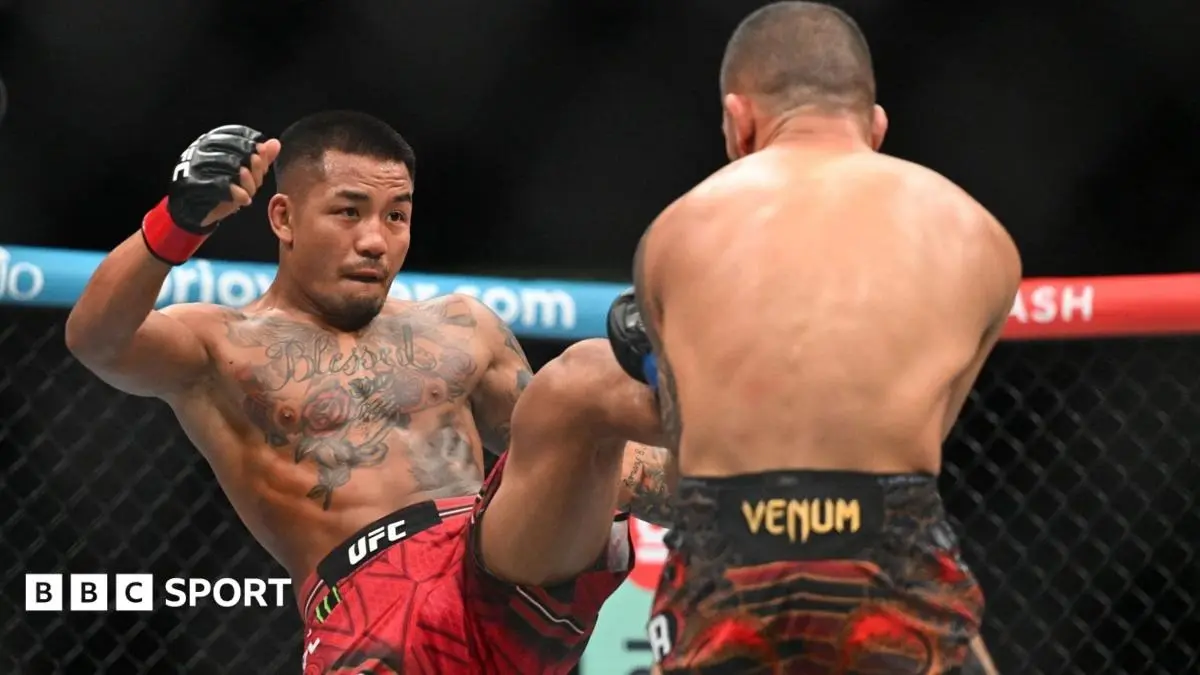
In a performance that silenced lingering doubts and cemented his status as the premier force in the flyweight division, Joshua Van successfully retained his championship title against Alexandre Pantoja at UFC 331 in Los Angeles. The victory, secured on the judges’ scorecards after a grueling five-round battle, served as a definitive exclamation point on a rivalry that had been marred by controversy and questions since their first meeting.
For the 24-year-old Van, a fighter who represents the new generation of combat sports as the first UFC champion born in the 2000s, this win was far more than a simple title defense. It was a statement of legitimacy. The narrative surrounding their previous encounter in December 2025 had been defined by an unfortunate injury, as Pantoja suffered an accidental elbow dislocation just 26 seconds into the opening frame. While the record books reflected a win for Van, the brevity of the contest left fans and critics alike wondering how a full-length fight between the two would play out. On the grand stage of Los Angeles, Van ensured there would be no ambiguity left to debate.
"A lot of people said that was an accidental win, well, doubt me now," Van remarked in the aftermath of his victory. The triumph extends his professional mixed martial arts record to an impressive 18 wins and two losses, confirming that his rise to the top of the 125-pound weight class is built on skill, resilience, and tactical adaptability rather than mere fortune.
The atmosphere inside the arena was electric, reflecting the high stakes of the main event. Pantoja, a veteran at 36 years old, entered the cage with the experience and desperate hunger of a former champion seeking redemption. From the opening bell, the contrast in styles was immediately apparent. Pantoja, known for his relentless pressure and grappling pedigree, sought to impose his will early. He successfully took Van down in the first round, signaling his intent to turn the fight into a grinding affair.
As the opening round progressed into a fiery exchange, the crowd witnessed the technical evolution of both men. Pantoja landed heavy punches and knees, testing Van’s composure under fire. However, the champion remained unflappable, retaliating with a slicing elbow that reminded those in attendance of the power he possesses in tight quarters. This exchange set the tone for the remainder of the contest: a high-stakes chess match played at a violent pace.
Van, who moved to the United States from Myanmar at the age of 12, has often been lauded for his technical discipline, and that trait was on full display in the second round. He began to dictate the range, peppering the veteran Pantoja with crisp, left-handed jabs. By keeping the Brazilian at the end of his reach, Van neutralized much of the threat posed by Pantoja’s inside game. By the third round, the champion’s rhythm had reached a crescendo. Van showcased his striking fluidity, rocking Pantoja with a precision-based combination of punches that forced the challenger to retreat and reset. It was a moment of clear dominance that seemed to shift the momentum of the fight firmly into the champion’s corner.
However, Pantoja’s resilience proved why he remains one of the division’s most dangerous competitors. Refusing to be counted out, the Brazilian surged back in the fourth round. Utilizing his wrestling background, Pantoja effectively closed the distance and secured a takedown, controlling the majority of the frame on the mat. Despite the pressure, Van showcased high-level defensive grappling, remaining active enough to prevent Pantoja from locking in a submission and eventually working his way back to his feet before the buzzer.
Heading into the fifth and final round, the fight sat on a knife’s edge. Both fighters appeared drained, yet the tactical discipline displayed by Van remained intact. He stalked Pantoja with methodical intent, carefully managing his energy while looking for a clean opening. The decisive moment finally arrived when Van caught the challenger with a thunderous overhand right. The blow connected cleanly, sending Pantoja to the canvas and serving as the definitive punctuation mark on the fight. While Pantoja managed to survive the final seconds, the knockdown left little doubt in the minds of the judges. When the final scorecards were read, Van was declared the winner, leaving the arena as the undisputed champion.
This victory is particularly significant given Van’s trajectory over the past year. Since capturing the title, he has faced significant pressure, including a successful defense against the rising contender Tatsuro Taira back in May. By defeating Pantoja, a man with significant experience and a pedigree for championship-level competition, Van has effectively cleared the path forward in the flyweight division. He has moved beyond the "prospect" label, establishing himself as a mature, championship-caliber athlete who can weather adversity and execute a game plan against seasoned veterans.
The night of action in Los Angeles was not limited to the main event, as other fighters also made their mark on the card. Among the highlights was the performance of Scottish fighter Casey O’Neill, who continued her impressive climb in the rankings. O’Neill secured a dominant victory over Eduarda Moura, demonstrating her superior ground game by forcing a tap-out via armbar submission. Her performance added to a night of high-level competition that reminded spectators why the lower weight classes often produce some of the most technical and fast-paced action in the sport.
For the UFC, the success of Van serves as a testament to the international reach of the organization. As a fighter who transitioned from a young immigrant in the United States to a world-class martial artist, Van’s story resonates with a growing global audience. His ability to handle the scrutiny following the December 2025 controversy, and his subsequent refusal to let that narrative define his career, speaks to the mental fortitude required to hold a championship belt in such a competitive weight class.
As the dust settles in Los Angeles, the flyweight division finds itself in a state of clarity that has been absent for some time. With a champion who has now proven his mettle against both emerging contenders and established veterans, the focus now shifts to who will be the next to challenge for the crown. For Joshua Van, however, the immediate future is one of deserved recognition. He has answered the critics, solidified his throne, and proven that the future of the flyweight division is firmly in his hands. The question of whether his first title win was a fluke has been answered with a resounding performance that suggests his reign is only just beginning.