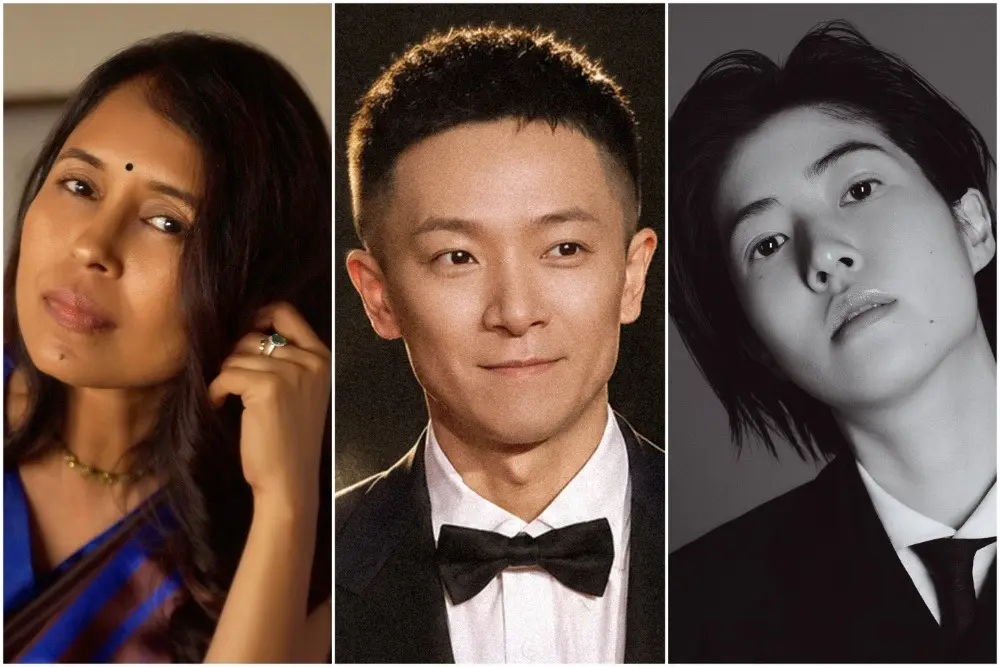
The Busan International Film Festival (BIFF), widely recognized as the premier cinematic gateway for emerging talent across Asia, has officially announced the distinguished panel of jurors for its highly anticipated 31st edition. Tasked with the responsibility of selecting the next generation of visionary filmmakers, the festival has appointed Indian director Rima Das, celebrated Chinese producer Shan Zuolong, and acclaimed South Korean actor Shim Eun-kyung to preside over the New Currents Award. This prestigious honor serves as a definitive launchpad for first-time directors, highlighting the festival’s enduring commitment to fostering fresh voices in the global independent film landscape.
The New Currents Award is not merely a mark of prestige; it carries significant weight in the industry, offering a KRW 20 million ($14,400) cash prize to the winning debut feature. Eligibility is strictly limited to first-time directors whose films are featured in either the festival’s competitive New Currents section or the Vision section. By focusing on these specific categories, BIFF ensures that the spotlight remains firmly on directors navigating the challenging transition from independent production to international recognition, a process that is as much about artistic discovery as it is about navigating the complexities of the global film market.
A Jury Defined by Global Artistic Excellence
The selection of this year’s jury reflects the festival’s desire for a diverse and seasoned perspective. Each juror brings a unique pedigree of success, having personally navigated the rigorous circuits of international festivals, including Berlin, Cannes, Locarno, and Venice. By assembling such a high-caliber trio, the Busan International Film Festival reinforces its reputation as a cornerstone of the Asian film industry, capable of drawing global talent to evaluate the next wave of auteurs.
Rima Das, a filmmaker whose work has become synonymous with intimate, soul-stirring storytelling, brings a profound understanding of the independent spirit to the jury. Based in Assam, India, Das has cultivated a distinct visual language that explores themes of human resilience and the delicate, often complicated bond between humanity and the natural world. Her trajectory as a filmmaker is nothing short of extraordinary; her works have been screened at over 150 festivals, amassing more than 75 international accolades.
Das’s filmography is a testament to the power of persistence and authenticity. She first captured global attention with "Village Rockstars" (2017), a film that resonated deeply with audiences and critics alike. It was honored with the prestigious Best Feature Film award at India’s National Film Awards and served as the nation’s official submission to the Academy Awards in 2018. She continued to refine her craft with "Bulbul Can Sing" (2018), "Tora’s Husband" (2022), and "Village Rockstars 2" (2024). Her most recent project, "Not a Hero" (2026), has already garnered significant attention, receiving a special mention for the Crystal Bear at the Berlin International Film Festival’s Generation KPlus section. Notably, her relationship with Busan remains strong, as "Village Rockstars 2" was awarded the Kim Jiseok Award at the 2024 edition of the festival. As a member of the Academy of Motion Picture Arts and Sciences, Das brings not only her artistic sensibilities but also a high level of professional rigor to the jury process.
Joining Das is Shan Zuolong, a producer whose career has been defined by a keen eye for groundbreaking, often experimental, cinematic narratives. Shan’s production credits include some of the most influential Chinese films of the last decade, starting with Bi Gan’s "Kaili Blues" (2015), which earned the best emerging director prize at the Locarno Film Festival. His collaboration with Bi Gan continued to reach new heights with "Long Day’s Journey Into Night" (2018), a visually stunning work that secured an Un Certain Regard selection at the Cannes Film Festival.
Shan’s influence has only grown in recent years, as he has consistently championed works that push the boundaries of conventional storytelling. His recent slate of films reflects a global reach, including "Love Is a Gun" (2023), directed by Lee Hong-chi, which claimed the prestigious Lion of the Future award for best debut feature at the Venice Film Festival. He also produced Jing Yi’s "The Botanist" (2025), a winner of the Grand Prix in Berlin’s Generation section, and Bi Gan’s "Resurrection" (2025), which earned the Special Prize at Cannes. The latter also secured the Busan Award for Artistic Contribution during the festival’s inaugural competition section last year. In 2026, Shan’s contributions to the industry were further recognized when he joined the Producers Branch of the Academy of Motion Picture Arts and Sciences. His deep involvement in the international festival circuit makes him uniquely qualified to evaluate the artistic merit and potential market impact of the New Currents entries.
Rounding out the panel is the powerhouse South Korean actor Shim Eun-kyung, whose career has bridged the gap between commercial success and critical acclaim. Shim first rose to prominence with her breakout performances in the hit films "Sunny" (2011) and "Miss Granny" (2014). The latter, in particular, solidified her status as a leading talent in Korean cinema, earning her top acting honors at the Baeksang Arts Awards, the Chunsa International Film Festival, and the Buil Film Awards.
Shim’s career trajectory is notable for its international scope, as she successfully transitioned into the Japanese film market, becoming the first Korean actor to win the Best Actress award at the Japan Academy Film Prize for her compelling performance in "The Journalist" (2019). Her versatility continues to evolve, with her latest project, "Two Seasons, Two Strangers" (2025), earning the Golden Leopard at the Locarno Film Festival and garnering her the Kinema Junpo Best Actress Award. As a performer who has consistently challenged herself across different languages and cultural contexts, Shim brings an empathetic and critical perspective to the jury, essential for assessing the nuanced performances often found in debut features.
Celebrating the Future of Asian Cinema
The appointment of this jury marks the beginning of the lead-up to the 31st edition of the Busan International Film Festival. As the industry looks forward to the event, the focus remains on the mission that has defined BIFF for over three decades: to provide a platform where Asian cinema can be celebrated, nurtured, and exported to the rest of the world. By selecting jurors who are themselves masters of their respective crafts, BIFF ensures that the New Currents Award continues to be a standard-bearer for quality and innovation.
The 31st edition of the festival is scheduled to take place from October 6 to October 15, centered at the iconic Busan Cinema Center, with various screenings and events occurring throughout the city. The festival’s broader programming, which will be complemented by the 21st edition of the Asian Contents & Film Market, remains a vital hub for industry professionals, buyers, and sellers. Running from October 10 to October 13, the market will provide the necessary infrastructure to facilitate the deals and partnerships that help propel new filmmakers onto the global stage.
As the festival approaches, the film community’s attention will undoubtedly turn to the selection of the Competition and Vision sections. With Rima Das, Shan Zuolong, and Shim Eun-kyung at the helm of the jury, the process of selecting the winners of the New Currents Award promises to be a thoughtful and thorough examination of the best that contemporary Asian cinema has to offer. For the emerging directors participating in this year’s festival, the presence of such esteemed jurors provides a significant opportunity for professional engagement and recognition, setting the stage for what promises to be a landmark year for the Busan International Film Festival.