The Bayeux Tapestry has officially arrived at England’s British Museum, instantly becoming one of the most sought-after tickets in London and drawing massive crowds eager to catch a glimpse of the nearly century-old embroidered masterpiece. For history enthusiasts fortunate enough to view the monument in person—or those simply wishing they could make a sudden journey to the United Kingdom—the exhibition has ignited a cultural phenomenon affectionately dubbed "Bayeux Fever" by British medical professionals and commentators alike.

Before diving into the cultural craze, a proper historical primer is in order. The Bayeux Tapestry is an immense work of art, measuring nearly two feet wide and stretching to a length comparable to a Boeing 747 aircraft. Despite its common moniker, purists are quick to point out that it is not technically a tapestry at all; it is not woven on a loom, but rather meticulously embroidered onto cloth. The monumental artwork chronicles the dramatic events surrounding the 1066 Norman Conquest of England by William the Conqueror. This includes the pivotal Battle of Hastings, where William faced Harold II, the final Anglo-Saxon King of England. Commissioned by William’s half-brother to commemorate the conquest, historians believe the piece was likely stitched by English nuns on the losing side of the conflict.
While the history documented within the tapestry holds profound significance for the English national identity, the physical artifact has long been housed in a small museum in Bayeux, France. Now, following years of delicate diplomacy, the tapestry has finally landed in London. Its arrival has generated such immense public interest and extraordinary attendance numbers that the museum has been forced to fundamentally alter how it manages the exceptionally long lines wrapping around the venue.
As visitors and armchair historians alike wait for their turn to experience the historic artifact, the cultural moment offers a prime opportunity to turn to the printed page for a deeper exploration of the era. The sudden surge of interest in medieval history has naturally turned attention toward a diverse collection of books that capture the complexities, conflicts, and human experiences of the pre-modern world.
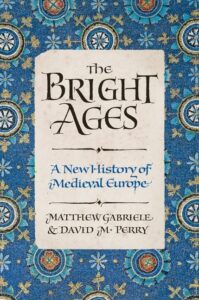
Among the standout recommendations for understanding the era is The Bright Ages by Matthew Gabriele and David M. Perry. This immensely readable history stands as a model of curious, engaged scholarship that works to dismantle the heavy preconceptions often unfairly freighted onto the Middle Ages. Gabriele and Perry offer a wide-ranging exploration, taking up a series of key topics, figures, and historical moments for much-needed reevaluation, including the Vikings, the Black Death, and the reign of Charlemagne.
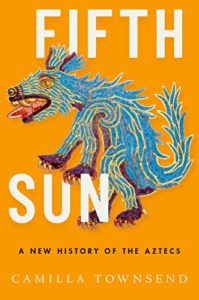
Expanding the geographical lens beyond Europe, Camilla Townsend’s 2021 history Fifth Sun reminds readers that the pre-modern, pre-nation-state world was vast and multifaceted. While many students in the West grow up memorizing the date 1066 to mark the Norman Invasion depicted in Bayeux, far fewer learn the significance of 1325, the year Tenochtitlan was founded. Townsend draws on cutting-edge scholarship and a wide breadth of primary sources to present an updated, expansive telling of Aztec history, complemented by engaging writing that occasionally employs narrative flourishes to bring the past to life.
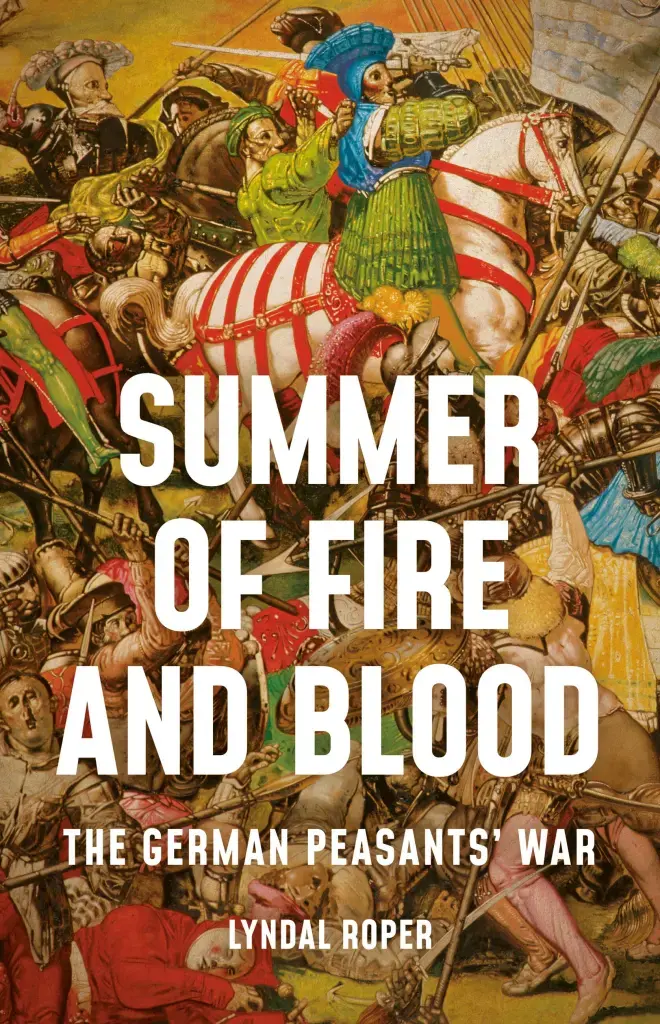
For those looking beyond the traditional perspectives of kings, conquerors, and nobility, Lyndal Roper’s history of the German Peasants’ War, Summer of Fire and Blood, offers a ground-up look at a turbulent era. While the Bayeux Tapestry features glimpses of daily life in its margins, it remains a firmly established piece of authority-commissioned art rather than a revolutionary account. Roper’s book explores the short-lived, doomed rebellion of lower-class individuals who took up arms against the church and the aristocracy between 1524 and 1525. The revolt was met with brutal retaliation, resulting in the deaths of an estimated quarter of a million peasants and farmers. Of particular historical importance is the emergence of proto-socialism among the rebels, who were inspired by radical strains of the Protestant Reformation to fight for early concepts of justice, communal decision-making, and resistance to arbitrary power.
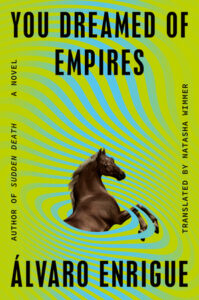
Continuing the exploration of Aztec history and the profound shocks of imperial expansion, Álvaro Enrigue’s historical novel You Dreamed of Empires offers a surreal and gripping fictional account. Enrigue explores the disorientation and violence of conquest, examining the intense cultural exchange that occurs at the edge of a sword—a theme that remains urgently relevant in an era where issues of cross-border sovereignty, cultural memory, and justice are constantly debated.
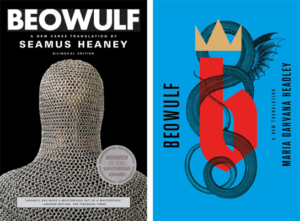
Primary sources from the ancient past also invite renewed attention, notably through different translations of Beowulf. Readers exploring foundational texts can look to two very different approaches. Maria Dahvana Headley’s translation generated significant buzz and debate for its radically contemporary, colloquial approach, most notably when she rendered the poem’s opening Old English word, "Hwæt," as "Bro!" While some critics dismissed the choice as gimmicky, Headley taps into the ancient roots of the poem as a piece of thrilling monster and superhero storytelling meant for a broad audience, successfully translating the cultural context alongside the literal vocabulary. In contrast, Seamus Heaney’s celebrated translation offers a masterclass in lyricism, bringing his legendary poetic ear and attention to the frictional details of everyday life to the Old English text, translating that same opening word simply as "So."
Further examining the complex human dynamics of the Spanish conquest of the Aztec Empire, Veronica Chapa’s novel Malinalli provides an intimate fictional portrait of the controversial woman who served as the translator for Spanish conquistador Hernán Cortés. Though the narrative may not entirely salvage Malinalli’s complicated historical reputation—reflecting the modern Mexican term "malinchista," used pejoratively to describe someone who favors foreign cultures over their own—the book presents a deeply sympathetic exploration of an individual forced to navigate a harrowing existence suspended between two colliding worlds.
For readers seeking classic explorations of memory and resilience in post-Arthurian England, Kazuo Ishiguro’s The Buried Giant offers a deeply moving portrait that echoes some of the thematic weight found in the Bayeux Tapestry. Similarly, Christopher Buehlman’s Between Two Fires leans into the visceral violence and dark atmosphere of the medieval period, delivering a gripping historical monster story where a disgraced bandit-knight and a visionary young girl must navigate plague and inhuman horrors amidst the ruins of war.
Finally, Lauren Groff’s historical novel Matrix paints a vivid, transcendent picture of a 12th-century community of nuns carving out a breakaway utopia. Through prose rich with passages exploring holy visions, bodily existence, and political power, Groff champions the agency and ambition of her protagonist, Abbess Marie de France, capturing the fierce determination of women forging their own destinies in a rigid medieval world.