October has arrived, bringing with it a crisp clarity to the night sky that serves as a seasonal invitation for amateur astronomers and casual stargazers alike. As the nights grow longer and the atmosphere often steadies, the celestial calendar presents a particularly robust lineup of events this month. From the pinnacle of planetary visibility to the return of debris from one of history’s most famous comets, the next few weeks offer a rare convergence of phenomena that highlight the dynamic nature of our solar system and the deep-space treasures beyond it.
Saturn Reaches Opposition
The centerpiece of this month’s celestial stage is Saturn. On October 4th, the ringed planet reaches "opposition," a significant orbital alignment that marks the best time of the year for observation. Opposition occurs when Earth, in its faster interior orbit, catches up to and passes between the Sun and Saturn. In this geometric configuration, the Sun, Earth, and Saturn form a nearly straight line in space.
For observers on the ground, this alignment means that Saturn appears on the exact opposite side of the sky from the Sun. As the Sun dips below the western horizon, Saturn rises in the east, remaining visible throughout the entire night. Because the planet is positioned closer to Earth than at any other point in its orbit during this time, it appears at its brightest and largest in the night sky. For those with even modest telescopes, the opposition provides a window of unparalleled clarity, allowing for the potential resolution of the planet’s iconic ring system and perhaps even the subtle banding of its cloud tops.
While Saturn has been a subject of human fascination for millennia, it remains a frontier for modern planetary science. Astronomers are currently focusing on the planet’s complex atmospheric behavior. For years, researchers have been captivated by the mysterious "hexagon," a massive, persistent jet stream that encircles the planet’s north pole. Spanning nearly 20,000 miles across, this geometric marvel has challenged our understanding of fluid dynamics on gas giants.
However, the intrigue does not end at the northern pole. Recent observations conducted by NASA’s Hubble Space Telescope have uncovered a new, equally puzzling feature at the planet’s southern pole: a ten-sided atmospheric wave. This structure appears to be gaining strength, providing researchers with a unique, real-time look at how massive, stable atmospheric patterns form and evolve on a world dominated by gas and gravity. By studying these waves during the optimal viewing window of opposition, scientists hope to piece together the mechanisms that drive such bizarre, long-lived weather patterns on a planet that possesses no solid surface to anchor its storms.
The Orionid Meteor Shower
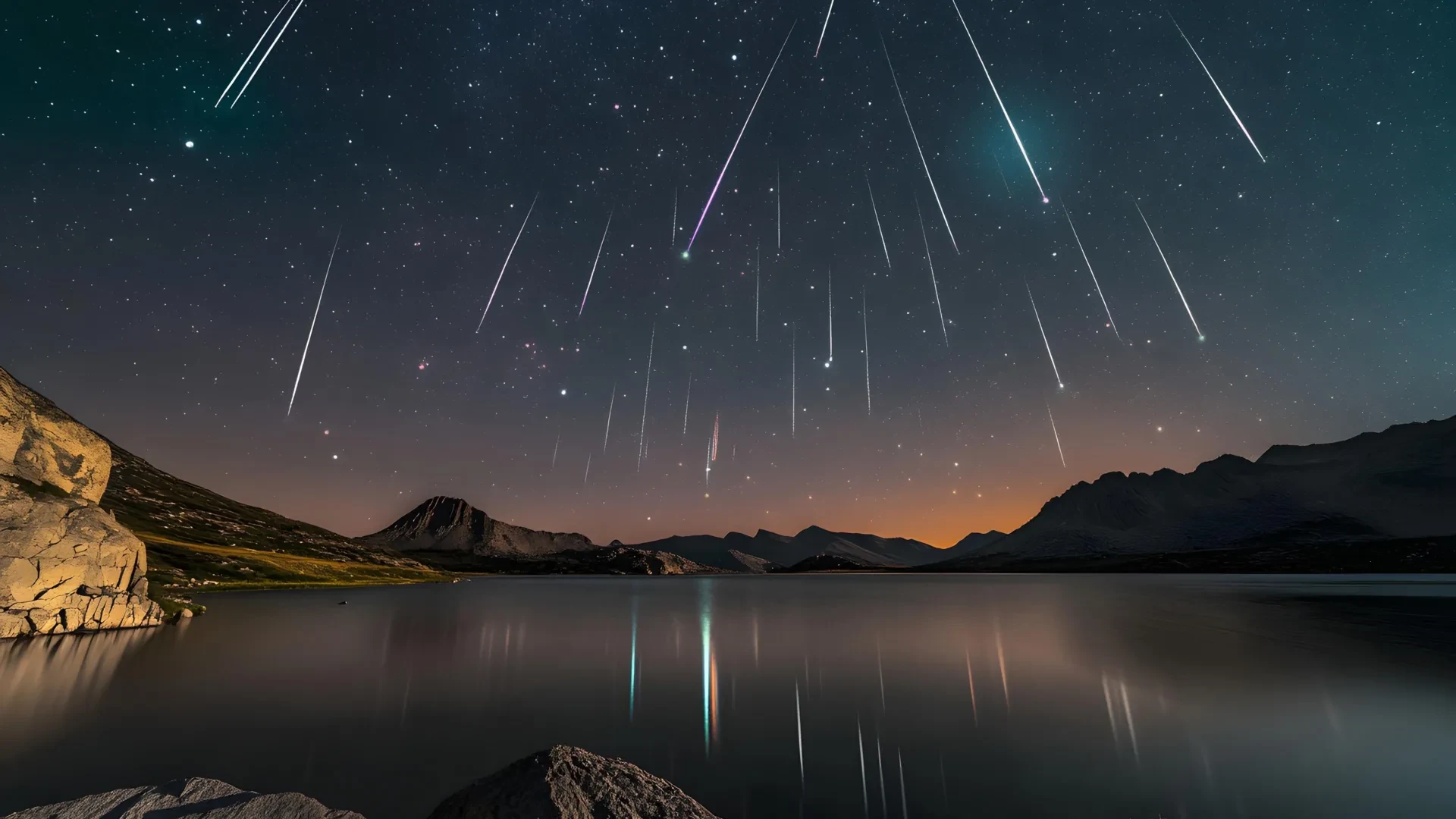
As the month progresses, the focus of the night sky shifts from the steady, planetary glow of Saturn to the swift, fleeting streaks of the Orionid meteor shower. Reaching its peak activity during the night of October 21st and into the early morning hours of October 22nd, this annual event is a byproduct of one of the most famous objects in the history of astronomy: Halley’s Comet.
As Halley’s Comet makes its long, elliptical journey through the inner solar system, it sheds a trail of dust and ice along its orbital path. Every October, Earth passes through this stream of debris. As these small, sand-sized particles collide with our atmosphere at high velocities, they incinerate, creating the characteristic flashes of light we recognize as meteors. While the shower is named the "Orionids" because the meteors appear to originate from the direction of the constellation Orion, these streaks of light can appear anywhere in the sky, often appearing as sudden, brilliant dashes across the darkness.
This year, however, stargazers face a challenge: the Moon. The lunar cycle is currently in a waxing gibbous phase, meaning a significant portion of the Moon’s disk will be illuminated during the peak of the shower. The brilliance of the moonlight acts as a form of light pollution, washing out the fainter, more subtle meteors and limiting the number of sightings for casual observers.
To mitigate this, experienced skywatchers suggest focusing their efforts during the few hours immediately preceding dawn. By this time, the Moon will have set or dropped low enough toward the horizon to reduce its interference, leaving the sky significantly darker. Finding a viewing location well away from the artificial glare of city lights is essential. Once at a dark site, observers are encouraged to allow their eyes approximately 20 to 30 minutes to fully adapt to the darkness. Because the meteors can appear anywhere, the best strategy is to lie back and scan as wide a swath of the sky as possible, rather than staring at a single point. Patience remains the most important tool for any meteor watcher; even with the lunar interference, the Orionids are known for their speed and occasional fireballs, making them a worthy late-night pursuit.
The Moon Meets the Seven Sisters
Rounding out the month is a striking, visually evocative pairing on the night of October 27th into the 28th. During this time, the Moon will pass in close proximity to the Pleiades, an open star cluster also famously known as the "Seven Sisters."
The Pleiades have occupied a central place in the human imagination for thousands of years. They have been featured in the oral traditions, mythology, and navigational lore of countless ancient cultures across the globe. This widespread cultural significance is likely due to the cluster’s accessibility; the Pleiades are one of the few deep-sky objects that can be easily identified from nearly every inhabited location on Earth, regardless of the observer’s latitude.
To witness this celestial encounter, observers should look toward the eastern horizon during the evening hours. As the night progresses, the Moon and the cluster will rise higher into the sky, creating a dramatic visual contrast. To the unaided eye, the Pleiades appear as a small, hazy patch of light, often resembling a tiny dipper or a glowing cloud. While it is famously called the "Seven Sisters," most people under typical viewing conditions will count between six and seven stars without optical aid.
While the cluster is beautiful to the naked eye, it is a rewarding target for those with equipment. Binoculars will reveal that the "haze" is actually a dense gathering of hot, blue-white stars—young suns born from the same cloud of gas and dust only about 100 million years ago. A telescope offers an even more immersive view, potentially revealing dozens of stars within the cluster and the subtle, wispy remnants of the nebulosity that once birthed them. Whether viewed through high-powered optics or simply by standing under a clear night sky, the pairing of our nearest natural satellite with one of the most iconic star clusters in the galaxy serves as a fitting finale to an active and engaging month of astronomical events.