On the Saturday morning of Labor Day weekend, literary scholar and writer Emily Van Duyne received a message from her best friend that stopped her frantic back-to-school preparations in their tracks. Robin Morgan—the landmark American feminist activist, organizer, poet, and writer whose monumental contributions spanned decades—had passed away at the age of 85. Amidst the rush of finishing course syllabi, opening week assignments, and her husband herding their children into the car for one last end-of-summer outing, everything suddenly halted. Standing at the kitchen sink and watching the morning light filter through the holly bushes outside the window, Van Duyne wept.
The outpouring of obituaries in major newspapers both in the United States and abroad quickly cataloged an extraordinary life. Born on January 29, 1941, Morgan’s vast list of lifetime achievements included publishing 23 books, organizing the famed 1969 Miss America Pageant protest—where feminists famously crowned and sashed a live sheep on the Atlantic City Boardwalk—and founding the National Network of Rape Crisis Centers. Yet, while global tributes rightly honored these foundational milestones, only a handful touched upon Morgan’s profound, complicated influence on the legacy of Sylvia Plath, a connection that dramatically shaped Morgan’s own life, artistic trajectory, and career. When those tributes did mention the relationship, they typically reduced it to a brief reference to Morgan’s controversial 1972 poem “Arraignment,” which originally opened with the striking lines: “I accuse / Ted Hughes / of… the murder of Sylvia Plath.”
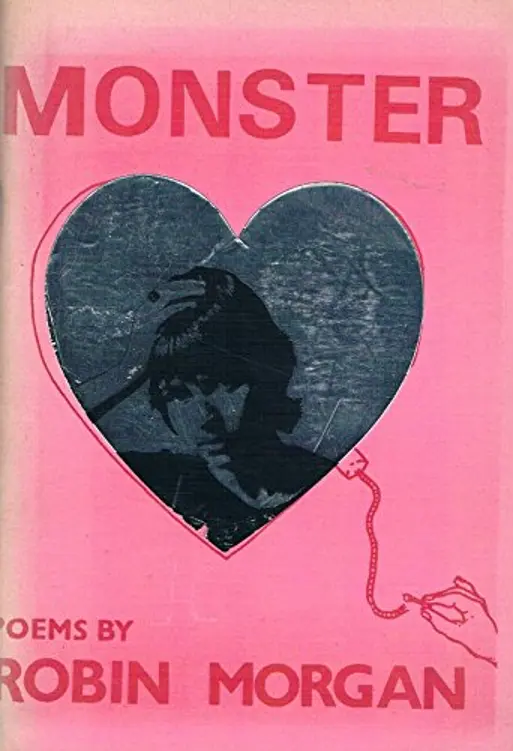
Even attempting to quote the opening lines of “Arraignment” highlights how thoroughly Morgan’s engagement with Plath’s life and work resists oversimplification. Morgan included the poem in her 1972 poetry collection Monster, but the version that made it to print was not the one she originally intended. As she detailed in a 1973 essay for the Feminist Art Journal—written prior to Monster’s publication but after the book’s galleys had already been printed—Morgan was summoned to a high-stakes meeting with Random House lawyers. They informed her that “Arraignment” had to be completely pulled or rewritten because, as it stood, the poem accused Ted Hughes of raping and murdering his first wife, creating clear and immediate grounds for a devastating libel lawsuit.
Morgan’s response to the legal team was characteristically two-pronged. First, she clarified that she was not accusing Hughes of the literal, physical murder of Plath, who she fully acknowledged had died by suicide on February 11, 1963. Instead, Morgan was arguing a more radical, metaphorical thesis: that through his extreme and well-documented censorship of Plath’s literary estate after her death, Hughes had effectively murdered Plath’s artistic corpus and her radical politics. Furthermore, she noted that the word “murder” was used in the poem satirically, drawing on a long, respected artistic tradition seen in the works of Andrew Marvel, Jonathan Swift, and John Donne.
Second, Morgan revealed that during her extensive research into Plath’s life, she had viewed a series of approximately twenty letters written by Plath that explicitly described physical and sexual abuse by Hughes. In her Feminist Art Journal essay, Morgan even quoted a haunting line from one of those recovered letters: “Why must the killing of me be so elaborate?” She described it as “a purely Plathian line.”
Despite Morgan’s concise, insightful defense, her arguments meant nothing to the Random House attorneys. Like many literary legal teams of that era, they were acutely aware of Ted Hughes’s well-known propensity for utilizing aggressive legal tactics, often referred to as lawfare, to aggressively shut down anyone attempting to challenge his tightly controlled narrative of Plath’s life and work. Consequently, Morgan was forced to rewrite “Arraignment.” She changed the direct, incriminatory opening lines from “I accuse / Ted Hughes” to “How can I / accuse / Ted Hughes,” executing a brilliant rhetorical workaround that managed to contain her fierce indignation entirely within clever line breaks and punctuation. On the page, she effectively asked herself how she could do this and still get away with it—and indeed, she did get away with it, as the revised poem successfully went to print.
It was vintage Robin Morgan: uncompromising, fierce, and utterly unwilling to back down, much like the woman who once famously derided women’s attempts to organize alongside leftist men as operating under “the dream that being in the leadership collective will get you anything but gonorrhea.” Even so, the compromise devastated her. She felt that Monster had been fundamentally ruined, and that her creative and political ethics—which for her were always inextricably linked—had been painfully compromised. The stress literally made her physically ill; she later wrote in the Feminist Art Journal that she had to resort to swallowing Dramamine before her harrowing meetings with the Random House lawyers.
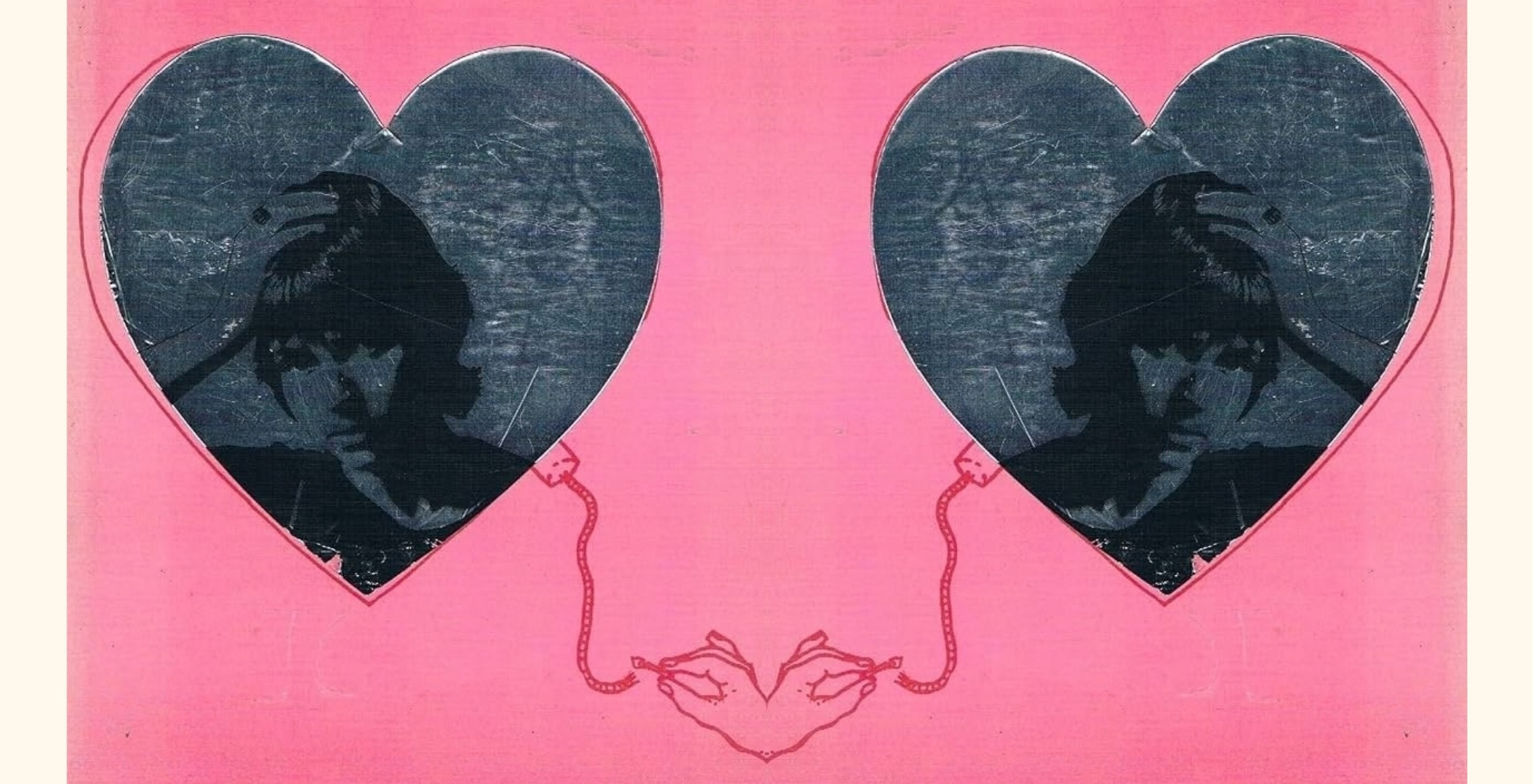
A profound reprieve, however, was already taking shape. When the original, unedited version of “Arraignment” was finally printed in the Feminist Art Journal, women around the world took matters into their own hands, clandestinely printing and distributing pirated copies of Monster that completely restored the original text. These unauthorized editions were printed in a striking hot pink, finished with a silver sticker emblazoned with Morgan’s face. Decades later, with her voice breaking over the phone during conversations with Van Duyne, Morgan remembered them with deep emotion: “Those women… all those wonderful women,” she said, marveling at how fiercely they rallied around her.
The controversy surrounding “Arraignment” helped cement one of the most persistent and potent mythologies in Plath scholarship: the widespread story that Ted Hughes eventually stopped giving public poetry readings in the United States because feminist audiences would protest his appearances by shouting “Arraignment” at the top of their lungs. This dramatic narrative persisted for decades, even though prominent Plath scholar Janet Badia definitively proved in her foundational book Sylvia Plath and the Mythology of Women Readers that these specific protests never actually took place.
What actually happened was that the literary establishment launched a concerted campaign to marginalize and silence Morgan. Morgan recounted to Van Duyne that legendary author Doris Lessing once called her at home to tell her to “knock it off” in no uncertain terms. This hostility was further borne out by Van Duyne’s own archival research, which uncovered a letter from Ted Hughes’s sister, Olwyn Hughes—housed at Emory University—describing her direct efforts to enlist Lessing in the campaign to quiet Morgan. Hearing this confirmation directly from Morgan’s own voice over a telephone receiver felt to Van Duyne like receiving a dispatch straight from the long-dead past.
Morgan’s powerful voice echoed throughout that archival history as Van Duyne delved into research for her own book, Loving Sylvia Plath: A Reclamation. Van Duyne’s work was written largely in response to a collection of “new” letters by Sylvia Plath that emerged into the public eye in 2017. These documents were not actually new, of course, but merely long hidden from view. There were fourteen letters in total, all written between 1960 and 1963 to Plath’s psychiatrist-turned-confidante, Dr. Ruth Barnhouse Beuscher, with the final letter dispatched within a single week of Plath’s 1963 suicide.
The documents contained firsthand, harrowing accounts of Ted Hughes’s domestic violence, including a detailed description of a severe beating that Plath believed directly induced her February 1961 miscarriage. These letters had originally been stolen from Dr. Beuscher sometime in the late 1960s or early 1970s by a young researcher named Harriet Rosenstein, who had been commissioned by Knopf to write a critical biography of Plath that ultimately never made it to print. When Rosenstein attempted to sell the letters in 2017, their appearance at the New York Antiquarian Book Fair made international headlines, with media outlets expressing widespread shock over Plath’s direct allegations of abuse.
As a longtime researcher of Plath’s life and work, Van Duyne knew the revelations were not actually shocking, but when she attempted to trace the true origins of her own understanding, her thoughts kept returning to Robin Morgan’s “Arraignment”—a poem she had been instructed during her youth as a literature and creative writing student to read and quickly dismiss. When Van Duyne revisited the poem while preparing Loving Sylvia Plath, she was astonished to discover that Morgan had laid out large components of her own supposedly “radical” arguments regarding Hughes’s violence and his tight control over Plath’s life and legacy as early as 1972.
Upon writing to Morgan to request an interview, Morgan politely declined through her assistant but generously forwarded two vital archival documents: an article she had written in response to the emergence of Plath’s letters to Beuscher—which the Times Literary Supplement had scheduled to run before pulling it at the absolute last minute—and her original 1973 essay from the long-out-of-print Feminist Art Journal. Reading those pages made the hairs on the back of Van Duyne’s neck stand up. The haunting, “purely Plathian line,” Why must the killing of me be so elaborate?, appeared verbatim from one of Plath’s letters to Dr. Beuscher, a phrase that appeared nowhere else in Plath’s published or public writings.
This revelation proved that Morgan had read those confidential letters before they were stolen—a fact Morgan later confirmed to Van Duyne, though she declined to elaborate on the exact circumstances of how she accessed them. When Morgan formulated her arguments against Hughes in “Arraignment,” her approach was simultaneously rhetorical and textual. The disappearance of those crucial letters for half a century conveniently aided the literary establishment’s ongoing efforts to paint Morgan as an unhinged, irrational figure operating on the fringes of Plath scholarship. Morgan later confided to Van Duyne that what hurt her the most was not just the persistent smear campaign framing her poetry as baseless, inflammatory libel, but the fact that she had actually conducted meticulous, groundbreaking research to back up every word. “Arraignment” not only documented Hughes’s violence against Plath, but also exposed a broader pattern of abuse against women by explicitly naming Assia Gutmann Wevill, Hughes’s romantic partner from 1961 until 1969—the very year that Wevill tragically took her own life and the life of Shura, her young child with Hughes. Although Plath scholar Judith Kroll took credit in her 1976 book Chapters In A Mythology for being the first person to publicly name Wevill, the historical record shows that distinction actually belonged to Morgan in 1972.
In 2009, author Honor Moore accurately described Plath’s monumental role in second-wave feminism by calling her “an avatar” for everything women were thinking, feeling, speaking, and writing during that era. Yet that status did not happen by accident. Morgan actively propelled Plath’s work to the absolute forefront of the feminist movement. She achieved this by publishing poems like “The Jailer”—which Hughes had aggressively excised from Plath’s landmark collection Ariel—in RAT, a radical feminist newspaper Morgan helped edit in the late 1960s. She also featured Plath prominently in her groundbreaking, paradigm-shifting anthology Sisterhood Is Powerful, published so early in the formal study of Plath that its biographical notes at the back slightly misdated Plath’s age at the time of her death.
That brief biographical sketch famously concluded with the line, “There was no women’s movement then,” a sentiment Van Duyne considers the earliest print manifestation of Morgan’s steadfast belief that marital violence directly contributes to the deaths of women, whether they are ultimately murdered by their abusers or driven to suicide. It is precisely the same empirical argument Van Duyne advanced decades later in Loving Sylvia Plath, a thesis she was finally able to support with rigorous empirical research built upon the foundational groundwork Morgan laid half a century prior.
When Van Duyne published Loving Sylvia Plath in July 2024, she mailed a copy to Morgan. About a month later, she checked her voicemail and heard Morgan’s unforgettable voice deliver a characteristic message: “I am just calling to talk to you about your wonderful book, my dear. Call me back!” After frantically calling her best friend Dani just to muster the necessary courage, Van Duyne dialed Morgan’s Manhattan number. When Morgan picked up, her very first words were typical of her sharp, engaged intellect: “Hold on, dear, I’m listening to these criminals at the Republican National Convention, I have to turn them down.”
That exchange initiated a steady stream of phone calls and emails that continued right up until the spring before Morgan’s passing. The two women had planned to meet in person twice—with Morgan warmly extending an invitation: “You’ll have to come and have tea in my garden”—but ill health prevented the meetings from taking place on both occasions. Whenever Van Duyne mentioned new writing projects, such as an upcoming initiative focused on campus sexual violence, Morgan immediately connected her with various grassroots organizations performing groundbreaking work on that grimly persistent subject. She remained the literal embodiment of generosity and fierce love, never allowing those profound human emotions to become detached from a justifiable, righteous rage at the state of the world.
Learning of Morgan’s death plunged Van Duyne back into the relentless hustle of late summer—juggling the frantic preparation of university classes, the demands of full-time motherhood, and the elusive pursuit of rest. For weeks, she walked around on the verge of tears, trying to inhabit multiple lives simultaneously while feeling her sense of self splintering apart. Each day felt disembodied, with hands in one location, a head in another, and a heart in a third, all while the wider cultural landscape continued its heavy hum of global crises.
No one understood the weight of these intersecting realities better than Robin Morgan, who dedicated her entire life to honoring her profound love for her son by fighting tirelessly to make the world a safer, more equitable place for mothers everywhere. That lifelong mission was informed in no small part by her deep, meticulous reading of Sylvia Plath’s final, extraordinary poetry concerning art, motherhood, marriage, and systemic violence. Morgan understood more clearly than almost anyone else that the personal is political—having helped coin the very slogan itself—and that artistic creation remains the most vital expression of that reality. Anyone who attempts to tell you otherwise, Morgan’s life and work remind us, is simply trying to sell you something, shut you up, or both.