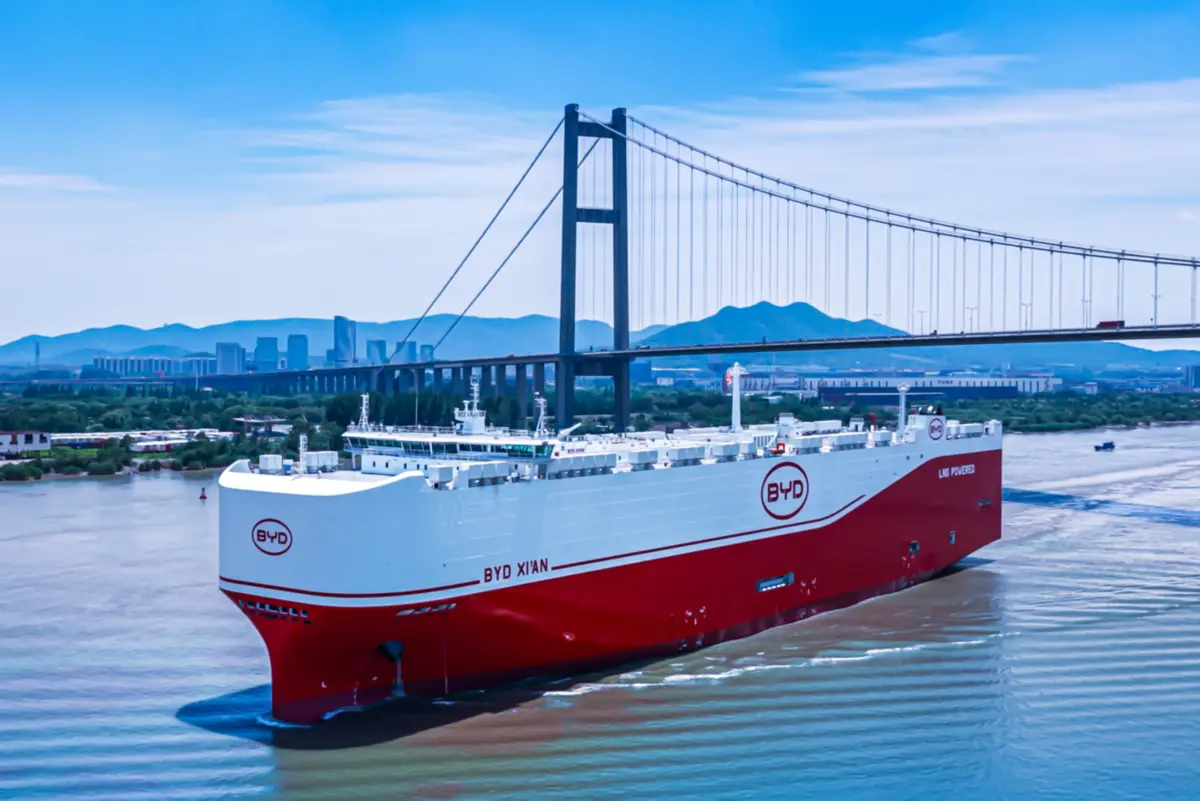
When the European Union implemented protective tariffs on battery-electric vehicles manufactured in China two years ago, industry analysts were quick to scrutinize the policy’s potential loopholes. Among them was CleanTechnica contributor José Pontes, who pointed out that the targeted trade barriers applied exclusively to pure battery-electric cars rather than electrified powertrains as a whole. Pontes accurately predicted that the measure would inadvertently serve as a catalyst, steering Chinese automakers to prioritize plug-in hybrid electric vehicles to bypass the steep import duties.
That prediction has now materialized in the marketplace with striking precision. According to fresh market data from German automotive research firm Dataforce, cited by Bloomberg, Chinese automotive brands captured a record-breaking share of the European car market last month, largely fueled by a surge in demand for plug-in hybrid models that manage to evade the heavy punitive tariffs levied on their pure electric counterparts. Overall, Chinese automotive brands accounted for 12 percent of all new passenger car registrations across Europe in August.
This milestone represents a significant competitive shift on the continent, but a closer examination of the broader macroeconomic and industry data reveals an even more precarious situation for domestic European manufacturers. As traditional fossil fuel costs remain volatile and prices for gasoline and diesel continue their upward spiral across Europe, consumers shopping for new vehicles are increasingly eager to slash their day-to-day transportation expenses. Consequently, combined consumer demand for battery-electric and hybrid vehicles jumped by 27 percent in August compared to the same period a year prior, providing a vital cushion that drove an overall 4.6 percent increase in total new car sales for the month.
Market analysts point out a stark reality: without the surging volume of new plug-in hybrids and battery-electric vehicles coming onto the market, the broader European new car market would have suffered a notable decline in total sales volume during August, underscoring how deeply reliant the industry has become on electrified powertrains to sustain consumer interest.
The unintended loophole exploited by overseas manufacturers has raised uncomfortable questions within policy circles. If independent analysts like José Pontes anticipated this market adjustment years in advance, critics are asking why the European Commission failed to foresee the obvious trade diversion. While there are no simple explanations for the policy blind spot, recent developments indicate that Brussels is moving to close the gap. According to reports from the German business daily Handelsblatt, the European Commission is currently formulating a comprehensive package of economic security measures. This upcoming regulatory framework may introduce expanded import tariffs that explicitly target hybrids and plug-in hybrids later this year.

The impact of these shifting dynamics varies significantly across national borders within the European Union. In Germany, which remains the single largest new car market on the continent, Chinese brands currently account for approximately 6.4 percent of new vehicle registrations. While that percentage appears relatively modest when compared to smaller or more vulnerable European markets, the sheer volume of vehicles absorbed by Germany makes it an exceptionally lucrative target for aggressive international expansion. Dataforce analyst Julian Litzinger notes that even though their market share is comparatively low relative to other regions, the sheer size of the German market makes such strategic commercial moves highly attractive for foreign manufacturers seeking scale in Europe.
Demand For EVs Surprises Volkswagen
The rapid evolution of consumer preferences is also sending shockwaves through legacy European automakers, most notably the Volkswagen Group. Throughout the year, Volkswagen’s supervisory board has been forced to grapple with severe structural overcapacity, wrestling with the financial reality that the industrial giant is producing roughly 100,000 more vehicles annually than its current projected consumer market can sustainably absorb.
According to reports from the automotive trade publication Automobilwoche, Volkswagen initially crafted plans to dial back production volumes at its primary manufacturing complex in Wolfsburg, a facility dedicated entirely to building vehicles powered by internal combustion engines. At the same time, the company contemplated scaling up assembly operations for battery-electric vehicles at its specialized facilities in Emden and Zwickau.
Only recently, Volkswagen leadership openly discussed the possibility that the Zwickau factory might be redundant, fueling speculation that the plant could face closure or a radical repurposing to manufacture alternative industrial goods. However, a sudden and unexpected acceleration in consumer demand for Volkswagen’s electric vehicle lineup over the past month has forced executive leadership to rapidly reconsider and recalibrate those long-range strategic plans.
While industry observers caution against altering multi-year production strategies based purely on short-term sales fluctuations, corporate leadership insists the market shift is structural. Martin Sander, Volkswagen’s board member responsible for global sales, told Automobilwoche that demand for battery-electric vehicles is noticeably increasing across Germany and several other key European markets. Sander described the current climate as an important turning point in the ongoing transformation of the automotive sector, driven primarily by persistent high prices at the pump for gasoline and diesel, which in turn are accelerating the structural decline in consumer demand for conventional internal combustion engine vehicles.

Volkswagen’s renewed optimism is buoyed by stronger-than-anticipated order books for several recently refreshed and newly introduced models. These include updated variants of the ID.3 Neo and the ID. Tiguan, alongside the highly anticipated Urban Electric Car Family. The latter group comprises vehicles built on the MEB+ platform, including the ID. Polo, the Cupra Raval, the Škoda Epiq, and the ID. Cross, all of which are slated for production at Volkswagen Group facilities in Spain. According to Automobilwoche, customer pre-orders for these four compact urban electric models have already surpassed the 100,000 threshold, with the ID. Polo alone attracting more than 40,000 advance reservations from eager buyers.
These robust pre-order figures suggest that Volkswagen may soon find itself selling more pure electric vehicles than conventional internal combustion engine cars within its domestic German market. While higher sales volumes are a welcome development for factory utilization and brand momentum, they introduce a distinct financial hurdle. Battery-powered electric vehicles currently carry lower gross profit margins than traditional fossil-fuel cars. As a result, many legacy manufacturers continue to operate under severe financial pressure, finding that the net profit generated per electric vehicle remains significantly lower than that of a comparable internal combustion model, even as consumer adoption curves trend upward.
The financial strain of managing this costly technological transition is not unique to Volkswagen. Competitor Stellantis announced that it will temporarily suspend manufacturing operations for the electric and hybrid variants of the iconic Fiat 500 at its historic Mirafiori plant in Turin, Italy, halting production for the final two weeks of October. According to reports published by the Italian newspaper Corriere della Sera, annual production for the Fiat 500 model is now projected to stall at approximately 60,000 units this year, falling drastically short of the company’s original internal target of 100,000 vehicles.
Balancing the competing financial interests of legacy automakers, the job security of millions of industrial factory workers, and the purchasing realities of everyday consumers remains an extraordinarily complex challenge for European policymakers. Yet, as import data continues to climb, it is increasingly clear that the European Union faces mounting pressure to address the unhindered influx of foreign plug-in hybrids. Market watchers expect regulatory interventions to address the competitive imbalance to arrive in the near future.