While the market for electric commercial vehicles in Europe has seen a notable decline in costs, the United States is facing a contrasting reality. Recent data from the International Council on Clean Transportation reveals that electric truck prices in Europe have dropped by 27 percent in recent years. In stark contrast, pricing in the United States has climbed by 32 percent.
Industry analysts point out that domestic truck manufacturers and traditional fleet operators have frequently utilized available market levers to moderate the commercial momentum of zero-emission trucks, allowing legacy manufacturers to continue prioritizing the production of high-margin Class 8 diesel-powered vehicles. This dynamic has left the heavy-duty sector lagging in its transition toward sustainable transportation, despite the clear long-term operational advantages of electric fleets.
To counter these systemic market pressures and accelerate the widespread deployment of heavy-duty electric trucks, a newly formed coalition has emerged. Known as the Zero-Emission Truck Shipper-Carrier Alliance Leading Electrification, or ZET SCALE, the organization is spearheading a concerted effort to introduce 10,000 heavy-duty electric trucks to North American highways as rapidly as possible.
The initiative bridges a critical gap in the commercial vehicle ecosystem by bringing together major shippers, carriers, truck manufacturers, charging infrastructure providers, and financial institutions into unified, bulk purchasing agreements. For many fleet operators, transitioning to heavy-duty electric transport has historically been viewed as a high-risk, capital-intensive undertaking. ZET SCALE aims to dismantle this barrier by aligning the entire value chain, unlocking competitive vehicle pricing, innovative financing models, coordinated charging infrastructure, and guaranteed freight demand.
Commitment For 2,500 Electric Trucks
ZET SCALE operates as an offshoot of Catalyst Mobility, formerly known as CALSTART. The organization was developed in partnership with the Smart Freight Center, alongside corporate heavyweights Microsoft and PepsiCo. By aggregating fleet demand into coordinated bulk procurement rounds, the alliance intends to secure more favorable pricing structures directly from original equipment manufacturers.
This week, the organization announced a major milestone: its members have officially committed to purchasing 2,500 battery-electric Class 8 trucks. This single commitment roughly equals the total number of heavy-duty electric trucks currently operating on roads across the United States today.
The majority of these initial 2,500 vehicles will be supplied by Tesla, with additional allocations fulfilled by Kenworth, Volvo, and RIDE. According to representatives for the alliance, the primary manufacturer was selected after a rigorous evaluation of pricing, driving range, charging capabilities, and active production capacities.
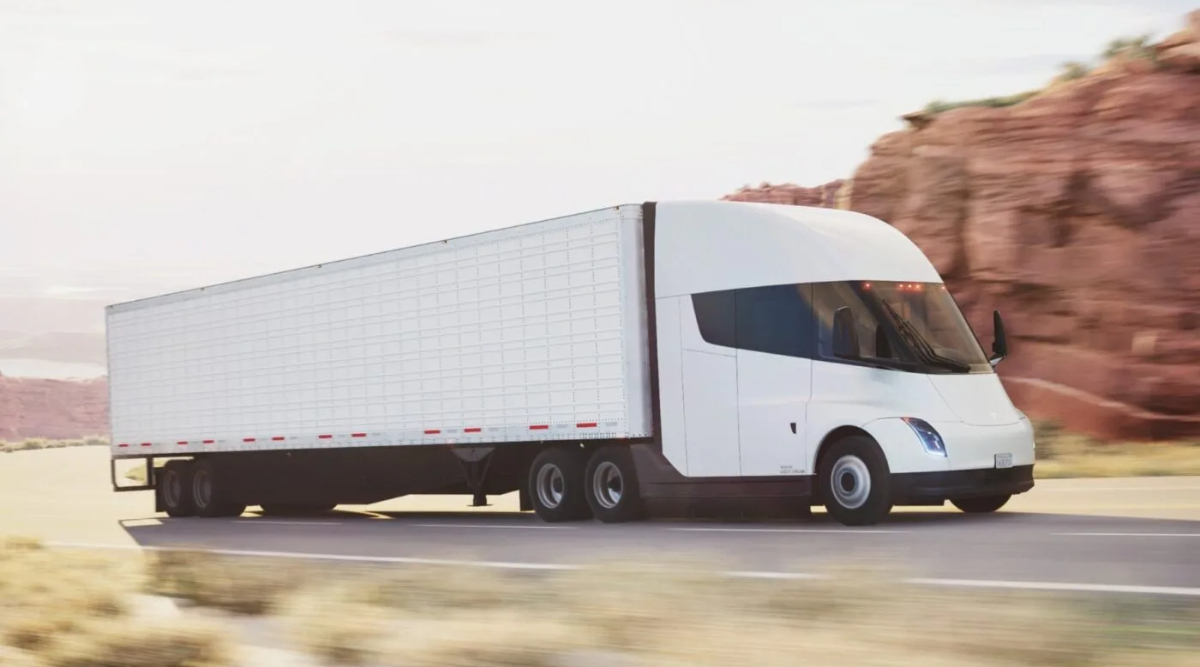
Every major Class 8 truck manufacturer in North America was invited to participate in the competitive request for proposals. The forthcoming fleet of 2,500 zero-emission trucks will be strategically deployed across ten major freight hubs throughout the United States. The designated logistics corridors and urban centers include Los Angeles, Stockton, Bakersfield, Seattle-Tacoma, Houston, Dallas, San Antonio, Chicago, Atlanta, and the greater Newark-New York metropolitan area. A definitive timeline for the delivery of these vehicles has not yet been publicly disclosed.
To mitigate the financial risks traditionally borne by individual buyers, the initiative is supported by a dedicated financing affiliate known as ZET Financial. This entity manages vehicle orders and administers the ZET Lease program, which is specifically engineered to remove residual value risk from corporate balance sheets.
Michael Berube, CEO of Catalyst Mobility, emphasized that residual value uncertainty has historically represented one of the most stubborn hurdles for prospective buyers. Pointing to the complex interplay between technology readiness and market adoption, Berube noted that possessing advanced technology does not automatically guarantee a functioning commercial market. He explained that ZET SCALE’s structured demand allows manufacturers to price vehicles at scale, effectively driving down costs and moving clean trucks out of the prolonged pilot phase.
Christoph Wolff, CEO of the Smart Freight Center, echoed these sentiments regarding the collaborative nature of the initiative. He observed that while virtually every segment of the freight sector desires cleaner operations, individual companies have long been forced to navigate the transition and its associated financial exposure entirely on their own. By uniting shippers, carriers, manufacturers, and financiers around a concrete demand signal, the industry can finally achieve scale by sharing the risk across the entire supply chain.
California SB 1213 Enacted
The announcement from ZET SCALE coincided with significant legislative developments at the state level. In California, state officials approved new legislation designed to introduce greater price transparency and accountability into the state’s burgeoning zero-emission medium- and heavy-duty truck markets.
Authored to address public investment efficiency, Senate Bill 1213—sponsored by State Senator Eloise Gómez Reyes—aims to provide state regulators with detailed data regarding actual vehicle acquisition costs. Proponents argue that the legislation will ensure public funds are effectively reducing financial barriers and accelerating the commercial adoption of green fleets.
Senator Reyes noted that California’s substantial investments in clean transportation demand proper oversight to guarantee tangible value for taxpayers and fleet operators alike. By requiring clearer tracking of what clean commercial vehicles actually cost to acquire, the state hopes to apply downward pressure on prices over time. Furthermore, advocates emphasize the local environmental benefits, particularly for logistics-heavy regions like the Inland Empire, where communities have historically absorbed the concentrated public health impacts of heavy diesel goods movement.
To bolster long-term market stability, SB 1213 directs state agencies to investigate alternative financial structures, including low-cost loans and state-backed residual value guarantees. These mechanisms are intended to speed up market maturation, encourage new manufacturing entrants, and instill the financial confidence fleet managers need to commit to a zero-emission future. The legislation also provides a policy template that other states can replicate to ensure their respective incentive programs actively make affordable commercial vehicles accessible to operators. Currently, seven states, including California, have established guidelines requiring electric truck price data reporting to optimize state-level funding initiatives.

Dan Priestley, who leads the Tesla Semi program, welcomed the alliance’s announcement, noting that ZET SCALE’s objectives align with the inherent operational cost advantages and predictability offered by electric mobility. While Priestley expressed pride in Tesla’s selection as the primary recipient of the initial procurement round, specific financial details regarding whether the alliance successfully negotiated discounted purchase prices for the Tesla Semis were not disclosed.
The latest agreement builds on recent commercial momentum for Tesla’s heavy-duty program, which recently secured an order for 500 Semi trucks from logistics firm Einride, alongside an additional order of 50 vehicles from IMC Logistics. The Einride acquisition encompasses both standard-range configurations designed for regional port drayage operations and long-range variants engineered for routes connecting Southern California ports with inland distribution centers. Tesla also maintained a prominent commercial presence at the recent IAA Transportation show in Hannover, Germany, where electric commercial vehicles of various configurations commanded significant industry attention.
Fear Of Competition
While North American markets navigate the transition through domestic coalitions and state policies, pricing trends overseas suggest that broader international market forces are at play. The recent price declines observed in Europe may be partially attributed to the market entry of electric commercial models from Chinese manufacturers, such as Sany, which are often marketed at lower price points than domestically produced equivalents. Industry trade shows have highlighted the expanding global footprint of manufacturers like BYD, which already produces electric transit buses within California and commands a massive global share of zero-emission commercial vehicles.
However, the North American market remains insulated from these international competitors due to existing trade policies and tariffs. Critics of current industrial policy argue that the domestic sector’s resistance to foreign competition may inadvertently slow the pace of the green transition. They suggest that while government policy initiatives and collaborative purchasing alliances are welcome developments, introducing open international competition could stimulate faster innovation, drive down vehicle acquisition costs, and accelerate the electrification of heavy-duty freight within the United States.
At present, the total cost of ownership equation continues to favor electric commercial vehicles over the long term, largely driven by the volatile and elevated cost of diesel fuel. Yet, commercial fleet operators traditionally plan investments across multi-year operational horizons rather than short-term fuel spikes. If fleet managers anticipate that diesel pricing instabilities will remain manageable, their near-term incentive to transition diminishes, particularly given the stark initial capital expenditure gap. Standard diesel-powered Class 8 trucks typically require an upfront investment of approximately $180,000, whereas new electric alternatives can command upwards of $400,000.
Despite these capital barriers, international precedents offer encouragement for advocates of electrification. In China, electric truck adoption has surged dramatically over the past year, fundamentally shifting new truck registrations toward zero-emission models and transforming the domestic commercial landscape. Organizations like ZET SCALE hope to replicate this rapid market transformation across North America, aiming to transition heavy-duty trucking from a niche sector into the dominant standard for freight transport.