For anyone familiar with the culinary landscape of Boston, the city’s identity is inextricably linked to the bounty of the Atlantic. From the historic fishing wharves to the local clam shacks that dot the coastline, Boston has long staked its reputation on its seafood heritage. Lobster rolls, oysters, and fried clams remain the bedrock of the city’s dining culture, drawing visitors from around the globe who come seeking an authentic taste of the New England coast. However, beneath this traditional surface, a significant transformation has taken place over the past decade. Boston’s sushi scene has emerged as a serious, sophisticated pillar of the city’s upscale dining environment, proving that the city is just as adept at refined Japanese techniques as it is at deep-frying clams.
The rise of high-end sushi in Boston is driven by a unique confluence of factors. The city benefits from its proximity to abundant local fisheries, which provide a steady supply of high-quality ingredients. Simultaneously, the increasing international demand for premium seafood has allowed local restaurateurs to source rare, specialized components, including fish flown in daily from Japan. This intersection of local accessibility and global sourcing has cultivated a dining culture that appeals to both seasoned locals and discerning international travelers.

A deeper look at the evolution of Boston’s sushi restaurants reveals a dynamic ecosystem. The landscape is no longer limited to a handful of high-end spots; it has expanded to include destination, chef-driven establishments designed for special occasions, as well as quiet, neighborhood-integrated gems that locals rely on for their weekly routines. Unlike the rigid, canonical preparation of a classic lobster roll, sushi in Boston displays a remarkable spectrum of styles, ranging from strictly traditional Edomae-style techniques to the wildly inventive, boundary-pushing creations that define modern gastronomy. For those planning a visit to Boston, the culinary itinerary should now prioritize a seat at an omakase counter just as much as a stop at a waterfront seafood shack.
At the pinnacle of this movement is O Ya, a restaurant that serves as a cornerstone for Boston’s serious sushi aspirations. Situated in the historic Leather District within a building that once served as a firehouse, O Ya has maintained its status as one of the city’s most prestigious dining reservations since its inception in 2007. Founded by James Beard Award-winning chef Tim Cushman and his wife, Nancy Cushman, the restaurant offers a 20-course omakase experience that eschews conventional definitions of traditional sushi. Tim Cushman, whose professional background includes time as a musician, approaches the menu with a focus on rhythm and crescendo. Each piece of nigiri or sashimi is meticulously composed, creating a meal that feels deeply considered, artistic, and occasionally playful. The restaurant also boasts one of the most robust sake programs in the United States, further cementing its role as the standard-bearer against which newer arrivals are measured as it approaches its 20th anniversary in 2027.

While O Ya represents the height of luxury, the city’s sushi scene also thrives on accessibility. Cafe Sushi Shoten in Cambridge has become a beloved fixture by proving that great sushi need not be precious or inaccessible. Having shifted toward a takeout-focused model during the pandemic, the restaurant has transformed what might have been a limitation into a defining strength. The quality remains meticulous and reliable, allowing locals and students to enjoy beautifully prepared bento boxes and signature rolls without the time commitment or price tag of a traditional multi-hour omakase experience.
Innovation remains a central theme for many of the city’s newer chefs, such as Gary Lei at Umami Omakase in Cambridge. After refining his craft at the well-known Sushi Den in Denver and spending five years at Boston’s renowned Uni, Chef Lei launched his own operation in 2019. His approach is rooted in technical tradition but characterized by theatrical flair. An Umami dinner often features elaborate garnishes, such as caviar-topped nigiri, or the dramatic presentation of duck breast under a cloche. The precision behind these 18-course meals is exacting, and the experience is complemented by a flexible sake pairing program, catering to those who appreciate both technical mastery and creative storytelling.

For diners seeking an atmosphere that mirrors the high-energy, social buzz of a metropolitan hotspot, Zuma Boston offers a distinct experience. Located within the Four Seasons Hotel One Dalton Street, it is one of only six locations in the United States. The restaurant emphasizes the "total package," pairing contemporary, high-quality sushi with an izakaya-inspired menu in a sleek, polished environment. It is a destination where the social experience—lingering over cocktails and sharing plates—is just as important as the food itself, making it a preferred choice for a night out in the city.
The diversity of the scene is further highlighted by niche, chef-driven spots like Momi Nonmi. Opened in 2017 in Inman Square by Chris Chung, a veteran of the kitchen at Uni, this 25-seat restaurant maintains the atmosphere of a hidden secret. The menu is notable for its unique fusion, blending traditional Japanese sushi with the flavors of Chef Chung’s native Hawaii. The result is an inventive, singular menu where a course of expertly sliced sashimi might be followed by Spam musubi or glazed duck drumettes. Its late-night service on weekends makes it a rarity in the Boston area, providing a high-quality, late-night dining option.

The neighborhood of Bay Village, often overlooked by visitors, has also seen a revitalization of its culinary status thanks to Wa Shin. Under the guidance of Chef Sky Zheng, who trained under Master Chef Daisuke Nakazawa—a protégé of the legendary Jiro Ono—the restaurant offers a vision of sushi that is both refined and localized. The omakase counter, built from fine hinoki wood, serves as a stage for an experience that draws heavily on seasonal New England ingredients, demonstrating that world-class, precise sushi can thrive in the most unassuming residential pockets of the city.
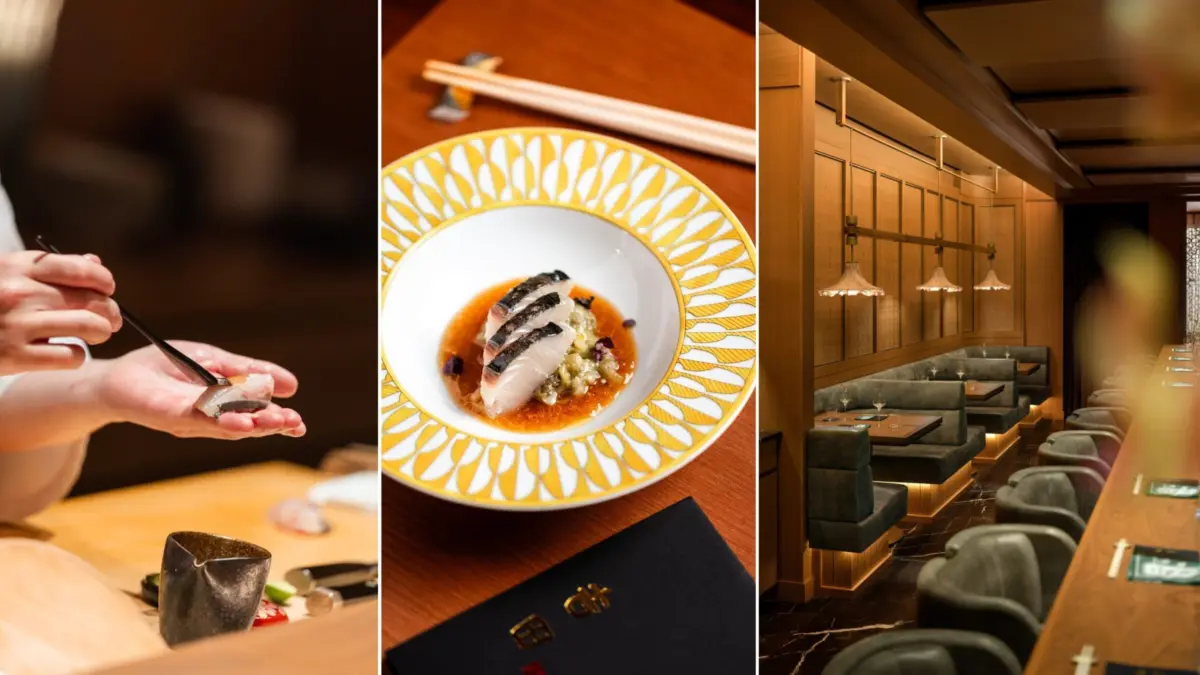
In contrast to the intimate counters, Yoshida Omakase offers a sense of "quiet luxury." Designed by David Rockwell, the dining room is an aesthetic jewel box featuring woven wood paneling, ribbed glass, and Hermès plates. Chef Tony Cao focuses on the Edomae-style, employing techniques such as dry-aging to elevate the natural flavors of the fish. It is a space where the design is as carefully curated as the menu, offering a serene, highly polished environment for traditionalists.

The city’s only Michelin-starred sushi restaurant, Three 1 One, represents the current zenith of Boston’s omakase scene. Tucked away behind an unassuming entrance in the South End, the ten-seat counter is led by chef-proprietor Wei Fa Chen, who trained under Masa Takayama at the famed Masa in New York City. The 18-course journey is highly sought after, beginning with creative appetizers like tilefish with crispy fried scales before transitioning into a rigorous, traditional progression of rare and special fish cuts.
Long-standing institutions like Uni in the Back Bay continue to hold their own, maintaining the boundary-pushing ethos that helped define Boston’s sushi evolution before the current omakase boom. Known for the "Uni spoon"—a decadent combination of sea urchin and caviar—the restaurant remains a hub for talent, with many of the city’s top sushi chefs having cut their teeth in its kitchen.

The breadth of the city’s offerings extends to the more approachable and budget-conscious as well. Somenya, with locations in Chinatown and Quincy, provides a menu that balances sushi with izakaya staples like soba, udon, and karaage chicken. Similarly, Fuji at High Street Place brings high-quality, inventive sushi into a food hall setting, offering items like the High Street Roll alongside a selection of Japanese whisky and sake. These establishments prove that excellent sushi is not solely the domain of the most expensive counters.
Even in areas with high turnover, such as Kenmore Square, the durability of concepts like Blue Ribbon Sushi—which emphasizes scratch-made miso and hand-grated wasabi—speaks to the local demand for detail and quality. Meanwhile, spots like Tora in Chinatown and the unpretentious Akami Omakase in Brookline demonstrate that whether a diner is looking for a casual rice bowl or a structured 16-course progression, the Boston sushi scene has matured into a comprehensive landscape that offers something for every palate. From the hidden counters of Charlestown’s Washoku Renaissance to the globally-inspired plates of Lola 42, the city’s sushi scene has firmly established itself as a vibrant, essential part of the modern Boston experience.