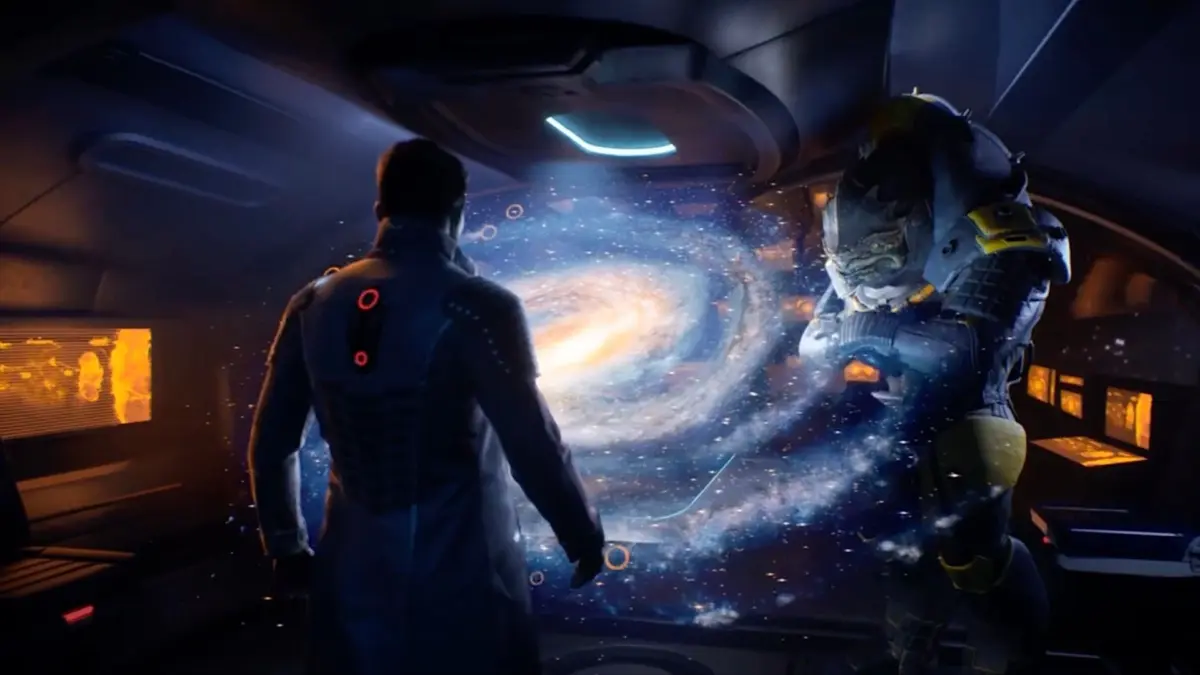
BioWare’s recently canceled Mass Effect project was slated to be far more expansive than fans initially realized, built around an ambitious multi-universe concept where every player choice generated an entirely separate timeline.
During a recent live stream on Twitch, Romain Toutain, who has served as a Mass Effect technical director at BioWare since 2022, offered a fascinating and bittersweet look behind the scenes of the scrapped sequel. Watching the leaked trailer for the game—temporarily titled Mass Effect Universe—Toutain broke down various lore elements, gameplay systems, and technical architectures that were under development before the project was ultimately shuttered. His insights painted a picture of a title that aimed to push the boundaries of narrative choice-driven role-playing games, leaving many fans mourning a concept that sounded remarkably innovative.
The Twitch broadcast offered a rare, unfiltered perspective from a core developer on a project that has otherwise been shrouded in mystery and corporate silence. Toutain analyzed the visual and narrative components of the leaked footage, touching upon newly introduced alien species and character interactions. He confirmed that the bartender featured prominently in the trailer belongs to an entirely new, organic alien race, describing the entity as Reaper-like, hairy, and potentially capable of growing additional tentacles.
As the trailer progressed, viewers could spot a new Quarian companion displaying the N7 protagonist’s bioscanner data page. However, much like the writers who previously worked on the project, Toutain noted that he was bound by confidentiality agreements, meaning deeper narrative revelations about these characters and their motivations will likely remain locked away in internal design documents.
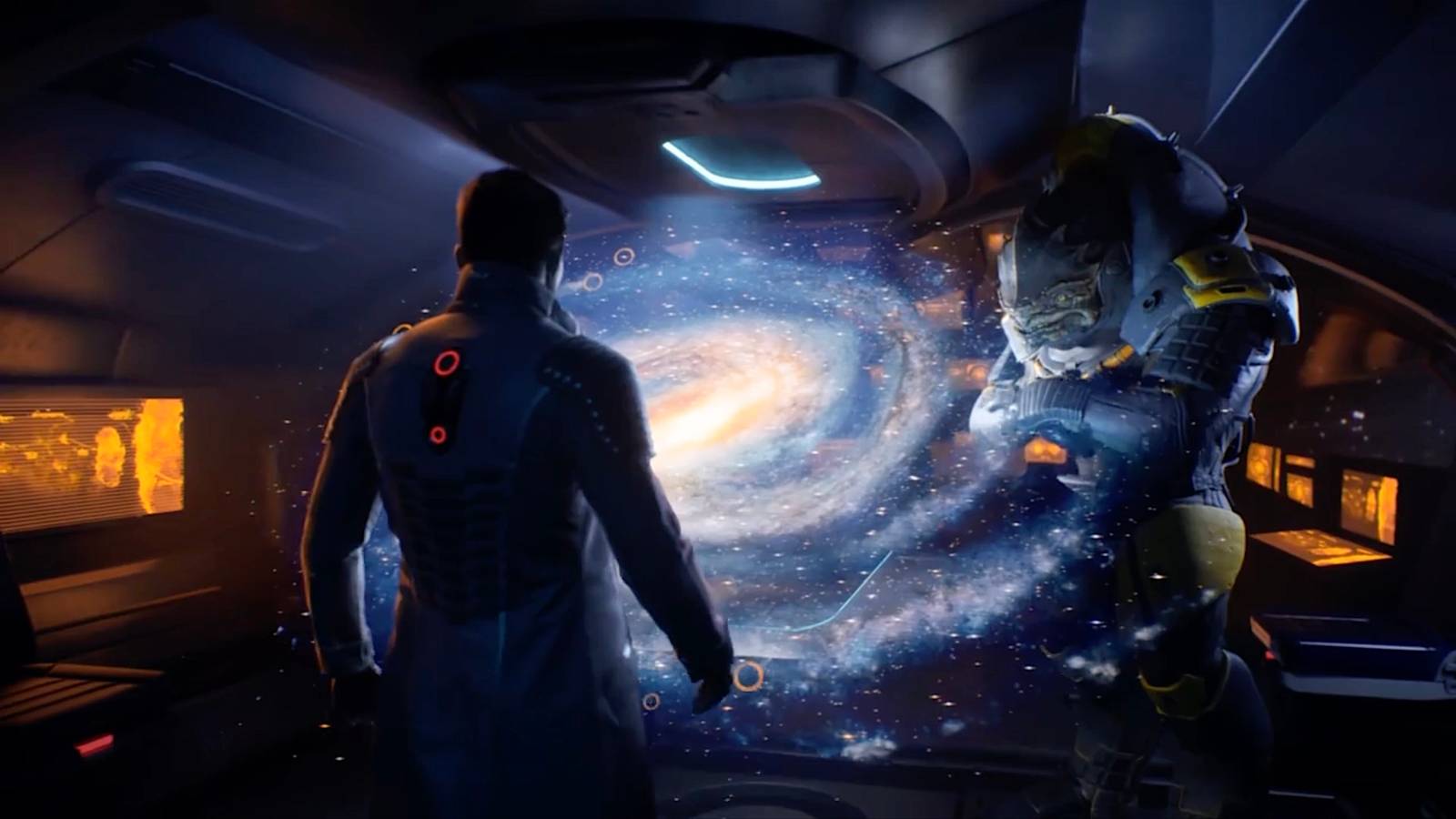
Mass Effect Universe Save Files Would Create an Array of Parallel Universes
Beyond the surface-level lore and visual design, Toutain dove deeply into the technical scaffolding and conceptual philosophy driving Mass Effect Universe. According to the technical director, the developers sought to honor the historical weight of the franchise by ensuring that all previous choices made throughout the original Mass Effect trilogy—and presumably Andromeda—would remain relevant within the new game.
The title Mass Effect Universe was not chosen lightly. Toutain explained that the game’s core framework was designed so that every individual save file functioned as its own distinct universe, directly influenced by the cumulative choices of the player. With each major decision, the game would branch out, generating a separate timeline and producing a vast array of parallel universes.
Toutain compared this ambitious narrative architecture to Zero Time Dilemma, a game renowned for its intricate branching plotlines where every alternate decision creates a new reality. Under this system, players would theoretically have the freedom to make choices that directly contradicted decisions they had made in past playthroughs, as the game’s infrastructure was built to accommodate and validate those divergences.
To make this massive undertaking work, BioWare’s engineering and writing teams created sophisticated proprietary technology designed to trace how decisions across the timeline connected to pivotal plot points. If a player’s unique combination of choices lacked a direct narrative bridge, the system and its writers were tasked with building one. This ensured that regardless of how radically different a player’s path was, they would still experience a cohesive story tailored specifically to their accumulated choices.

Furthermore, the developers intended to introduce a sharing mechanic, allowing players to exchange save files if they felt their specific sequence of decisions had unlocked a particularly compelling or unique narrative path. This structural autonomy was the central pillar of the development process, and the entire game was being architected from the ground up to support this web of branching consequences.
Despite the immense ambition and creative energy poured into Mass Effect Universe, the future of the beloved science-fiction franchise remains bleak. The project’s cancellation has sparked widespread disappointment among fans, industry employees, and veteran voice actors alike, many of whom have rallied behind petitions and advocacy campaigns to rescue the IP from permanent abandonment.
When discussing the corporate realities of the industry and the likelihood of the franchise being salvaged or sold, Toutain expressed little optimism. Reflecting on Electronic Arts’ historical handling of intellectual properties, Toutain bluntly remarked during the broadcast before the clip abruptly cut off that the publisher rarely sells off its assets, instead choosing to shelve projects and sit indefinitely on dormant licenses.