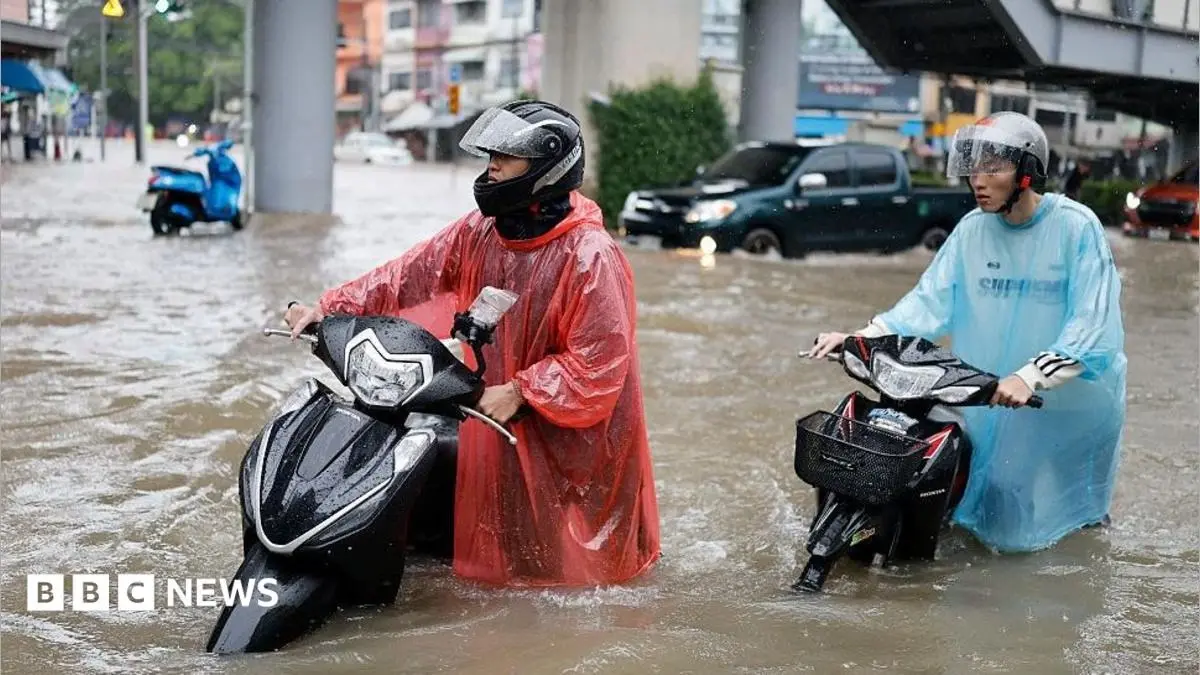
A state of flood emergency has been declared across all 50 districts of Bangkok as the Thai capital grapples with the aftermath of historic rainfall. Since Thursday, the city has been battered by more than 300mm (12 inches) of precipitation, an extreme weather event that has overwhelmed the city’s drainage infrastructure and brought daily life to a standstill. As the deluge leaves major thoroughfares submerged and canal systems at a breaking point, city authorities have issued urgent warnings, signaling that the threat to the metropolitan area is far from over.
A City Under Siege by Water
While the intense thunderstorms that characterize this time of year are a seasonal expectation for residents of Thailand, the sheer volume of water experienced in recent days has been unprecedented. The downpour has turned Bangkok’s famously congested roads into water-filled channels, trapping vehicles and forcing residents to navigate submerged streets on foot or by makeshift water transport.
On Sunday, officials from the Bangkok Metropolitan Authority confirmed that while the most intense periods of rainfall have temporarily subsided, the situation remains critical. The primary concern has shifted from the falling rain to the rising levels of the city’s complex network of canals, or khlongs, which serve as the primary arterial drainage system for the capital. Because these canals are currently at or near their maximum capacity, there is little to no room for additional water to be pumped out of flooded neighborhoods, leaving low-lying areas particularly vulnerable.
The governor of Bangkok, Chadchart Sittipunt, has been at the forefront of the response, working to coordinate emergency relief efforts and manage the city’s drainage systems. Speaking to the media on Saturday, Governor Chadchart highlighted the severity of the situation, particularly in the eastern districts, which have borne the brunt of the deluge.
"The rain keeps falling and we are doing our best," the governor stated. "We are trying to pump the water out, but the water in the canals is full. The risk areas are those who live near canals. Every canal is now filled." His assessment underscores the precarious nature of the city’s geography, where the proximity to these watercourses—once vital for trade and transport—now presents a significant hazard during extreme weather events.

Residents Caught in the Deluge
For many, the reality of the crisis is immediate and deeply disruptive. Residents living in the vicinity of the capital’s canal network have been strongly advised to take proactive measures, including moving their personal belongings and electrical appliances to upper floors to mitigate potential damage.
The human impact is palpable, with many locals finding themselves effectively trapped in their own homes. Somkid Pheuk-ngam, a 67-year-old resident living near a canal north of the city center, described the overwhelming nature of the rising water. "The water keeps coming in," she told the AFP news agency. "It’s hard to go out now. It’s like at my waist level now. I cannot go anywhere. I have been closing my shop for two days now."
Her testimony reflects the broader anxiety felt by those living in older, lower-lying neighborhoods where infrastructure is less resilient to such high water levels. Comparing the current situation to the devastating nationwide flooding of 2011—a three-month-long crisis that saw hundreds of casualties and significant economic damage across the country—residents are watching the water levels with growing trepidation. While, fortunately, no casualties have been reported in Bangkok during this recent event, the psychological toll on those who remember the 2011 catastrophe remains significant.
Infrastructure and Urban Challenges
Bangkok’s vulnerability to flooding is a long-standing issue, rooted in its low-lying terrain and rapid urban development. The city, which is built on what was once a vast wetland, has seen its natural drainage paths replaced by concrete, asphalt, and high-rise developments. This urban sprawl, combined with a drainage system that struggles to cope with the sheer volume of water during the monsoon season, creates a scenario where even moderate, sustained rainfall can lead to significant flooding.
The current situation is exacerbated by the fact that the entire city has been declared an emergency zone. This designation allows for the mobilization of additional resources and personnel to assist in flood mitigation, debris removal, and the provision of emergency aid to those cut off from basic services. City workers are working around the clock to clear clogged drainage grates and operate massive water pumps, but the lack of capacity in the canals remains the primary bottleneck.

Traffic, already notorious for being among the worst in the world, has become chaotic as major roads become impassable. Commuters have been urged to stay at home wherever possible, both to keep the roads clear for emergency vehicles and to ensure personal safety, as floodwaters can hide deep potholes, manhole covers, and other hazards.
Looking Ahead: The Meteorological Outlook
The Thai Meteorological Service has provided little relief in its latest forecasts, predicting that heavy rain is likely to continue throughout the coming week. Although the specific area of low pressure that fueled the initial surge of rain is expected to shift toward central Thailand, the saturated ground and the already overflowing water systems mean that even moderate rainfall could lead to further flooding.
The declaration of a state of emergency across all 50 districts serves as a stark reminder of the scale of the challenge facing the municipal government. As the city waits for the water to recede, the focus remains on monitoring the structural integrity of embankments and ensuring that those in the most vulnerable areas receive the necessary support.
For now, the capital remains in a state of high alert. The combination of saturated soil, filled canals, and the lingering threat of further thunderstorms creates a volatile environment. As residents like Somkid Pheuk-ngam continue to keep their doors shut and their shops closed, the city is braced for what may be a long and difficult week ahead. The resilience of Bangkok’s citizens is once again being tested by the power of the monsoon, and the recovery process—whenever the waters finally do recede—promises to be a significant undertaking for the city’s administration and its inhabitants alike.
Authorities continue to urge the public to monitor local news channels and official government updates closely. In a city as densely populated and interconnected as Bangkok, the ability to disseminate information quickly will be crucial as the situation evolves. With all eyes on the sky and the water levels in the canals, the capital remains, quite literally, in the middle of a major climatic test.