By Sean Seddon and Thuthuka Zondi, Johannesburg
South Africa is grappling with a fresh wave of grief and insecurity after two brutal mass shootings occurred just hours apart, claiming the lives of 27 people. The attacks, which took place in different provinces, have underscored the persistent and increasingly volatile nature of gun violence in the country, a nation already struggling with one of the highest murder rates in the world.
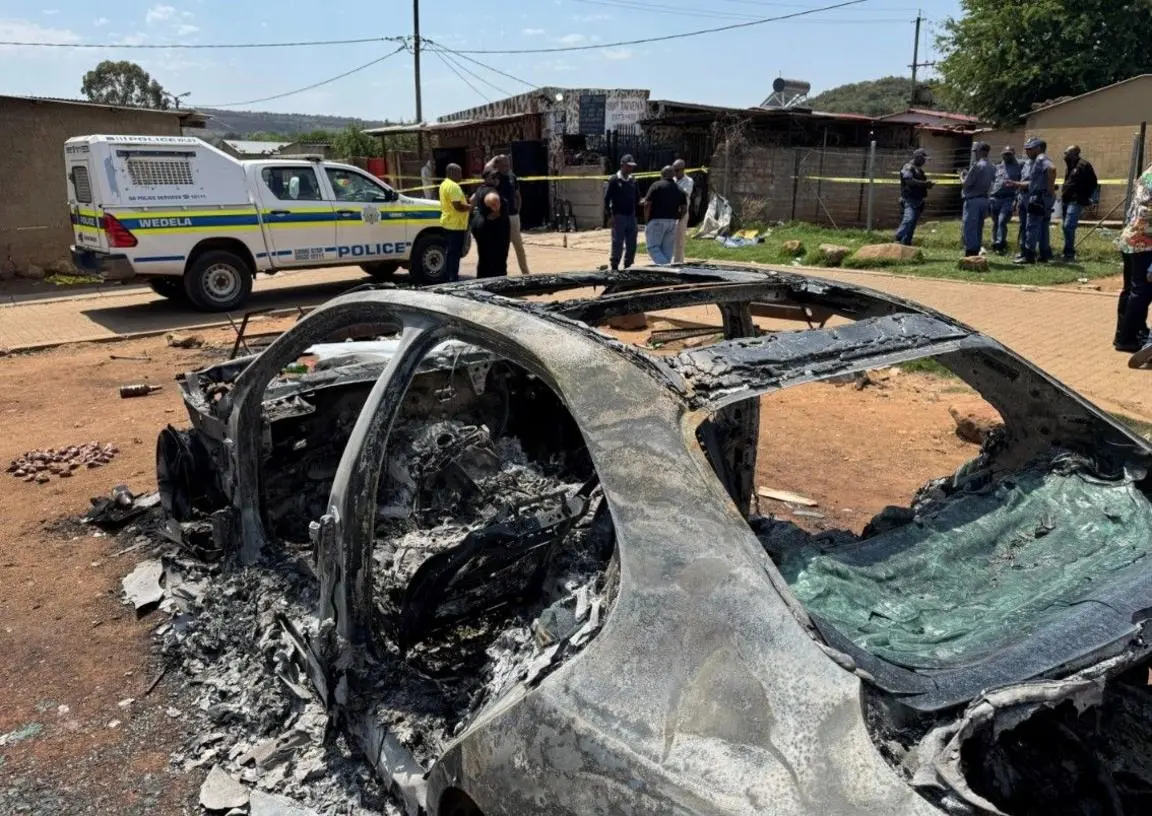
The first of the two incidents occurred on Saturday evening, when a group of eight gunmen stormed a bar in a township near Johannesburg. The assault was as swift as it was lethal. According to eyewitness accounts and police reports, the attackers opened fire on patrons outside the establishment before moving inside to continue the carnage. In a final act of intimidation, the gunmen torched two vehicles parked outside the venue before fleeing the scene, leaving a trail of devastation in their wake.
By the time the violence concluded, 17 people had been confirmed dead, while another 15 individuals were left injured, many suffering from gunshot wounds. Gauteng Police Commissioner, Lieutenant General Tommy Mthombeni, confirmed the identities of the deceased, noting that while the vast majority were South African citizens, the victims included individuals from Ethiopia and Lesotho, reflecting the diverse community that frequented the local establishment.

Authorities are still working to establish a definitive motive for the Johannesburg massacre. Commissioner Mthombeni suggested that robbery could be a primary driver, as the perpetrators had looted the personal belongings of the victims. However, investigators are keeping an open mind, with law enforcement officials acknowledging that they cannot rule out links to turf wars between rival factions involved in illegal mining—a rampant and dangerous industry that operates in the shadows of abandoned mining shafts and dump sites across the Gauteng province.
The issue of illegal mining is a significant and growing problem for South African authorities. The informal, unregulated sector is often fueled by undocumented migrants who are recruited by organized crime syndicates to work in hazardous, abandoned underground tunnels. These operations are frequently associated with violence, as criminal gangs fight for control over lucrative, albeit illegal, extraction sites.
Deputy Provincial Police Commissioner Major General Fred Kekana, who arrived at the scene to oversee the initial investigation, provided a chilling perspective on the potential background of the attack. He indicated that the shooting might have been an act of retaliation for an incident that occurred only last month, in which one person was killed and another wounded. While no arrests had been made by Sunday morning, the police have reported that they have secured clear photographic evidence and, in several instances, have identified specific suspects, providing a glimmer of hope for a breakthrough in the investigation.
The horror of the weekend was compounded only hours later in the early hours of Sunday morning. In a separate, yet similarly harrowing incident, 10 people were killed and another 11 injured outside an entertainment venue in a township near Cape Town. Emergency services were alerted to the scene, where five victims were pronounced dead upon arrival, while five others succumbed to their injuries after being rushed to nearby hospitals.

The Cape Town attack, much like the Johannesburg incident, saw the rapid deployment of armed security forces and police units to the area. The scene was cordoned off as forensics teams gathered evidence, but by Sunday morning, no arrests had been reported in relation to the Cape Town shooting, further fueling public anxiety regarding the state of law and order in the country.
These back-to-back tragedies come just days after another significant incident in the city of Durban, where 11 people were killed when gunmen stormed a house in the KwaMakhutha township. The rapid succession of these mass shootings has intensified the national discourse on public safety and the prevalence of illicit firearms.
For decades, South Africa has struggled to contain gun violence. In a country of approximately 62 million people, statistics indicate that about 60 murders are recorded every day. However, the recent frequency of mass shootings has led to a growing fear that the nature of the violence is evolving, becoming more brazen and frequent. These incidents are increasingly being linked to entrenched turf wars between gangs engaged in the drug trade and illegal mining, suggesting that criminal organizations are becoming more willing to use mass violence to assert dominance.
The government has acknowledged the severity of the threat. In February, President Cyril Ramaphosa explicitly characterized organized crime as "the most immediate threat to our democracy, our society and our economic development." The rhetoric from the presidency reflects a growing realization that current strategies may be insufficient to curb the tide of violence. Earlier this year, in a bid to reclaim control over the most dangerous areas, the government authorized the deployment of the military to work alongside police forces in regions identified as high-risk for armed violence.

The sense of unease in the country is further exacerbated by other violent trends. On Saturday, in a separate development in the Ekurhuleni area, east of Johannesburg, the body of a tenth woman was discovered. Local police have stated that they are unable to rule out the possibility of a serial killer operating in the area, noting the similarities in the circumstances surrounding these deaths.
As the investigations into the Johannesburg and Cape Town massacres continue, the families of the victims are left to navigate the aftermath of a weekend that has left the nation in shock. For the authorities, the challenge remains immense: they must not only bring the perpetrators of these specific crimes to justice but also address the systemic issues of illegal weapons, organized crime, and economic instability that continue to provide the fuel for such recurring violence.
For now, the streets remain tense, and the government faces mounting pressure to demonstrate that it can regain control of areas where the rule of law has been severely challenged. The investigations into these 27 deaths are currently the highest priority for the police, who are under immense scrutiny to deliver results in a country that is desperate for a reprieve from the persistent shadow of gun violence.