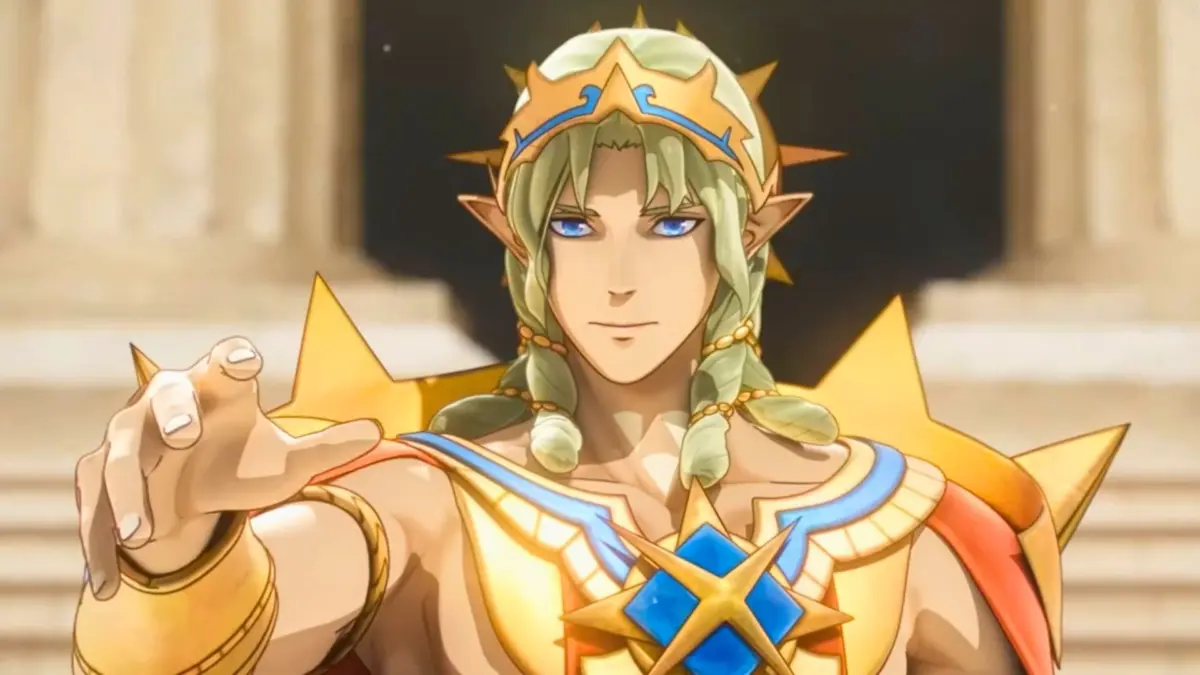
Role-playing games have long relied on a specific kind of narrative whiplash: the sudden introduction of an off-stage villain who has been secretly pulling the strings from the shadows all along. Traditionally, this archetype takes the form of a malevolent supernatural entity harboring a deep disdain for humanity. After hours of philosophical bloviating regarding the nature of free will, predetermination, and cosmic order, players and their loyal companions are expected to rise up and defeat the antagonist using little more than the power of friendship, legendary cool swords, and impractical armor designs.
Nintendo’s latest tactical role-playing release, Fire Emblem: Fortune’s Weave, eagerly embraces this time-tested trope, yet its abruptly introduced baddie is so outrageously, unreservedly horrible that the narrative gamble works remarkably well. Following the leisurely pacing of Act 1—which focuses heavily on gift-giving, social bonding, and friend maintenance—Act 2 of Fortune’s Weave grabs the player by the collar and tosses them straight out of an airplane. It serves as a compelling reminder that traditional storytelling tropes exist for a reason, and when they are executed with absolute conviction, they can still deliver an intensely satisfying gaming experience.
To step into Act 2 of Fortune’s Weave, officially subtitled the War Arc, players must interact with the ominous Strife Obelisk. While the vast majority of players will encounter this pivotal moment naturally after completing at least one of the four distinct narrative routes available in Act 1, the game technically permits players to trigger the transition directly after finishing the prologue. From that exact juncture, the overarching story jumps forward several months, leaving behind the pomp, circumstance, and athletic prestige of the Heroic Games.
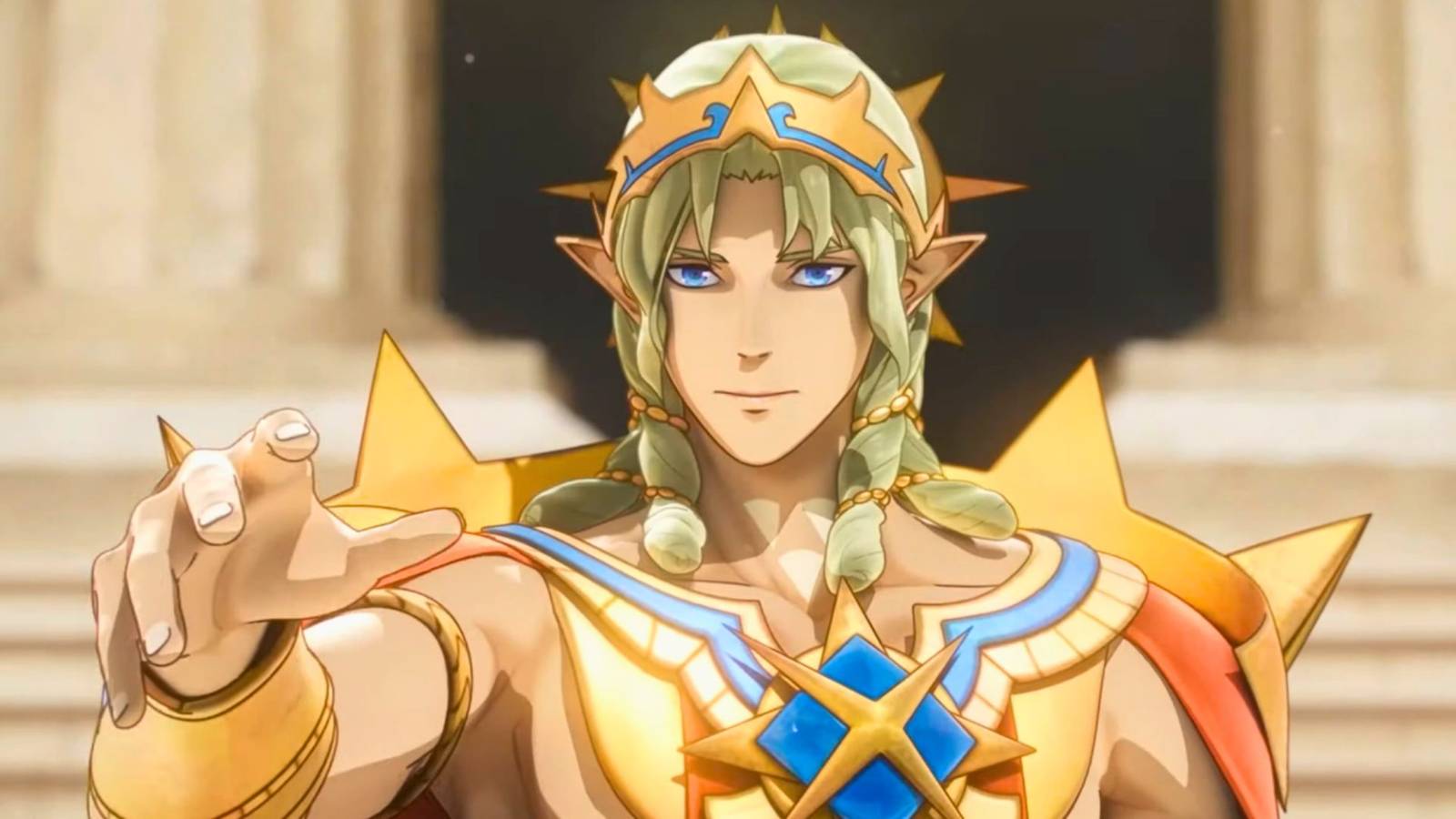
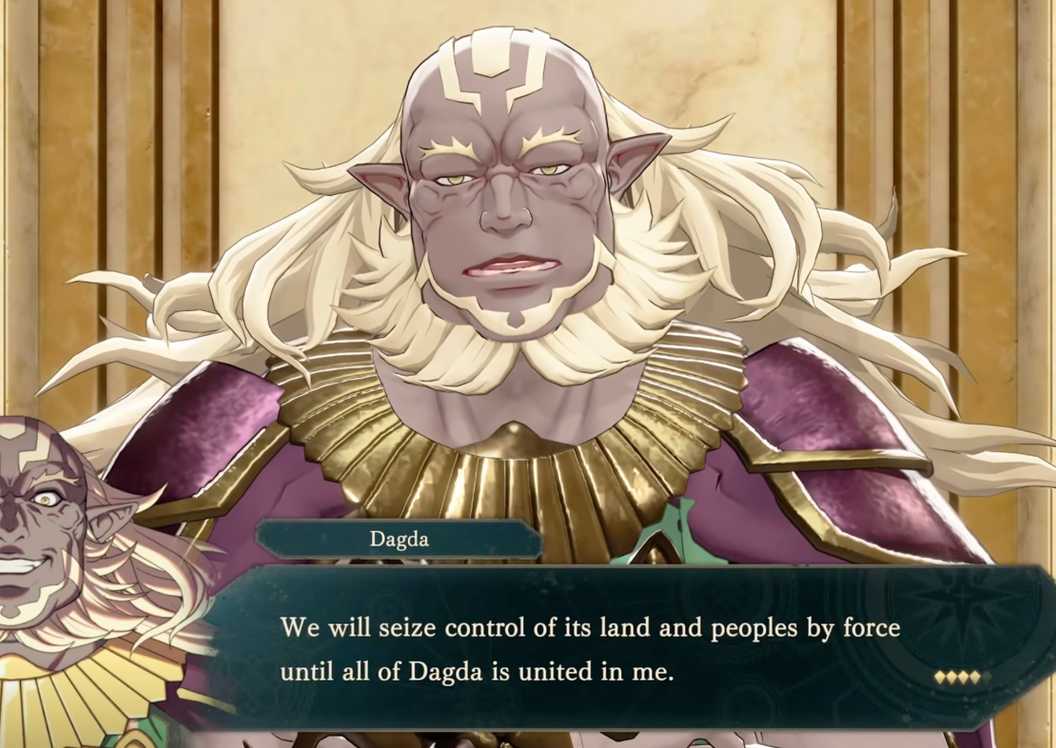
It is during this narrative leap that the plot reveals Raksha—the enigmatic, green-haired schemer previously concealed behind a distinctive wooden mask—has successfully resurrected her father, Emperor Dagda, following a dormant slumber that lasted half a millennium. And as players quickly discover, this newly awakened monarch is an absolute tyrant of the highest order.
Dagda makes no pretense whatsoever of attempting to govern as a fair and just leader. By comparison, his aggressive political maneuvers make figures like Edelgard from Fire Emblem: Three Houses look practically saintly. Upon seizing control of the apparatus of state, Dagda immediately executes his own son, Solel, setting a violently uncompromising tone for his reign.
Almost simultaneously, he formally declares a ruthless "war of annihilation" targeting Saramis, the culturally rich southern region of the continent that serves as home to many of the diverse characters featured throughout Fortune’s Weave. In a move designed to stamp out local culture and consolidate absolute authority, Dagda commands that Dagsion’s beloved arena be completely torn down, slated to be replaced by a terrifying industrial apparatus he refers to simply as his "cauldron." The era of bread and circuses is summarily canceled for the common populace.
Before long, the once-vibrant capital city where players spent countless hours interacting with NPCs and managing resources transforms into a hellish police state. Imperial troops routinely patrol the streets, subjecting ordinary citizens to arbitrary beatings while confiscating their food and financial reserves to line the pockets of the newly restored imperial regime and serve the whims of their cruel emperor.

Unsurprisingly, Dagda’s unchecked extremism and sadistic cruelty quickly rub many of the Empire’s historical allies the wrong way. Disgusted by the escalating atrocities, several key factions defect, choosing instead to cross enemy lines and join Theodora’s resistance forces on the Saramis front.
Faced with unexpected military resistance and a series of humiliating defeats at the hands of the freedom fighters, Dagda adopts a catastrophic final solution. He orders that every single civilian residing in Dagsion—numbering approximately one million souls—be rounded up and forcefully cast into his newly constructed cauldron. While the harrowing process itself mercifully occurs off-screen, the mechanical outcome is absolute: the bodies and souls of the entire civilian population are boiled down into a dark, magical slurry known as flamma. Dagda proceeds to consume these soul slurpees by the bowlful, using the horrific concoction to artificially restore his personal strength or simply whenever he experiences a mood swing, which happens to be almost constantly.
Even a casual observer cannot help but notice the striking parallels between Dagda’s fictional dictatorship and various contemporary political figures. His overt bigotry, his casual willingness to declare military conflict on a whim, his all-encompassing greed, his profound self-interest, his entourage of scheming yet utterly inept offspring, his bottomless capacity for institutional cruelty, and his remarkably punchable facial animations combine to create a portrait that feels uncomfortably familiar.
Fortunately for players who find the stark realism of these political themes hitting a bit too close to home, Dagda’s precipitous fall from power arrives just as abruptly as his tyrannical rise. Intoxicated by the collective essence of a million murdered subjects, the emperor ultimately transforms into a gigantic, formidable dragon, taking his final stand atop the highest peak in Dagsion. In this monstrous form, he initially proves entirely impervious to standard attacks.
The turning point arrives when Eshmel descends like a sudden bolt from the blue, delivering a devastating, precisely targeted physical blow that shatters Dagda’s defensive barrier. With the boss finally vulnerable, the player’s party is given free rein to unleash their full arsenal until the tyrant is permanently defeated. Achieving that victory delivers an immense sense of catharsis, even if the narrative immediately introduces a fresh looming threat to take his place.
Within the broader scope of Fortune’s Weave, particularly for those who experience multiple paths through Act 1, Emperor Dagda is not actually present on the stage for a particularly long duration. Yet his stark, unreserved villainy, combined with the noticeably elevated difficulty and scale of the battles tied to his campaign, ensures that every single tactical victory feels deeply earned. Even if he ultimately serves as a stepping stone rather than the game’s final antagonist, this soul-guzzling tyrant leaves an indelible impression on the overarching narrative of the continent.