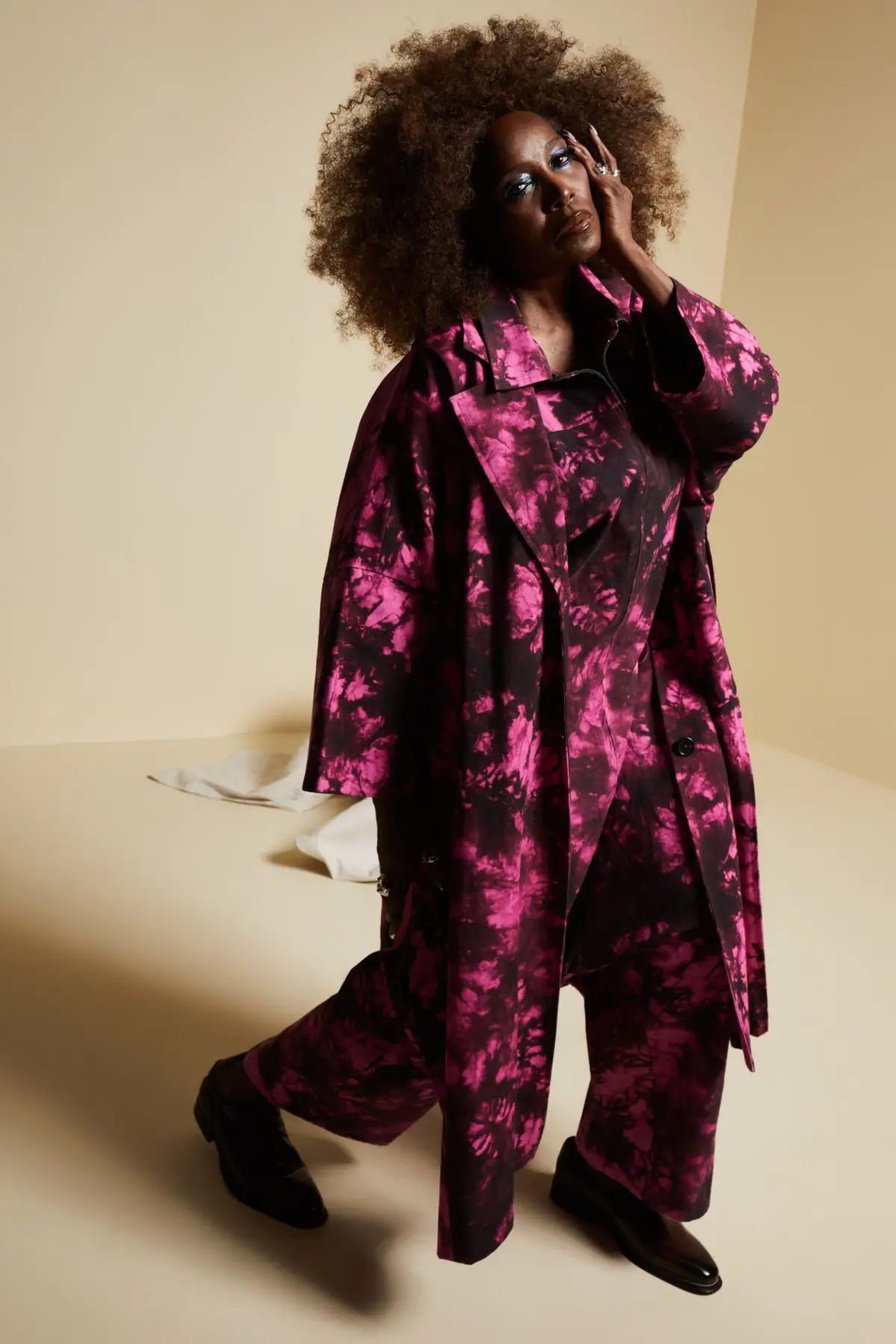
In an era dominated by sprawling runway presentations, endless product drops, and the relentless pressure to produce volume, designer Aaron Potts took a radically minimalist approach for his Spring 2027 collection. Presenting just a dress, a jumpsuit, and a coat, Potts managed to prove that extreme constraint can unlock an expansive, jubilant proposition filled with a surprising amount of spirit and versatility. Rather than overwhelming the senses with a vast array of transitional pieces, eveningwear, and accessories, Potts honed in on the core of his brand identity, delivering a cohesive case for how a mere trio of garments can constitute a full, dynamic wardrobe.
Speaking from his studio at Berkeley College, where he serves as a resident artist, Potts reflected on the genesis of this remarkably restrained collection. The designer explained that he has spent a considerable amount of time recently thinking deeply about how creative people live, move, and work. That introspection led him to analyze the core demographic that supports his label, A. Potts.
"I’ve been thinking a lot about how creative people live and work," Potts said from his studio workspace. "And one of the things that has kept coming up for me is that most of the people who buy A. Potts are some sort of artist—they’re designers, they’re models, they’re DJs, writers, painters—and the jumpsuit has been the standout item that everyone wants or has. So we were like, ‘You know what? Let’s focus on that.’"
That laser-focused dedication to the jumpsuit yielded a garment that served as the anchor of the entire Spring 2027 offering. Designed with a relaxed, dropped crotch, a functional zippered front placket, and a defining tie-waist, the jumpsuit arrived on the fashion landscape in a variety of striking, expressive patterns. Among them was a mesmerizing pink-to-black splattered ombré, a graphic black-and-white scribbled sketch motif, and a densely woven, blown-up pattern rendered in a vibrant slime green.
Accompanying the standout jumpsuit was a coordinating coat, engineered with dropped three-quarter length sleeves and practical zippered side vents, mirroring the motifs of the central piece. Rounding out the trio was a dress that possessed a subtle historical bent, defined by a slim bodice juxtaposed against a fuller peasant-style skirt, complete with detachable bell sleeves. By distilling his vision down to just a trio of garments, Potts appeared to take inspiration from Donna Karan’s legendary concept of "five easy pieces," choosing to whittle the modern wardrobe down even further to its absolute essentials.
Despite the bombastic nature of the prints, which provided plenty of space for the garments to make a bold statement, the loose shapes promised uncompromised comfort. Their apparent simplicity, however, belied a deep level of functional ingenuity. Those signature jumpsuits could be cinched at the waist with a quick flick of a side bungee, instantly altering the silhouette. Similarly, the coat could transition seamlessly from a long, lean line to an open, dynamic drape simply by unzipping the side vents. Potts further demonstrated the styling versatility of the collection by suggesting additions such as a sash at the waist, or even wearing the jumpsuit completely open over a bandeau or bralette for a more daring, evening-appropriate look.
Accessibility and inclusivity remained central to the designer’s philosophy. "I believe in clothes that work for all bodies," Potts noted, emphasizing that the jumpsuits are manufactured in an expansive size range extending from extra-small to XXL. Furthermore, the garments are crafted from a durable washed cotton, ensuring they can be worn comfortably year-round and laundered with absolute ease, aligning perfectly with the practical demands of an active creative lifestyle.
In a delightful subversion of expectations, Potts elevated the humble cotton jumpsuit into the realm of eveningwear by introducing versions featuring smooshed organza ruffles running in striking strips down the front and sleeves. Paired with a black coat cut from the same dependable cotton, the ensemble felt remarkably fresh, offering a formal option that retained a tossed-off ease and a distinct touch of humor. The dress was also reimagined in full organza, and while it appeared in a glowing neon chartreuse, it maintained that same spirit of the unexpected that defined the entire showing.
It is remarkably easy to picture precisely where an artist would wear these pieces—spending the daylight hours working in a studio, running essential errands across the city in the afternoon, and transitioning seamlessly to a gallery opening or social event at night. This multifaceted utility underscores the instant appeal of the collection. In an industry constantly chasing the next micro-trend, Potts has provided a compelling reminder that a lot of designers should challenge themselves to think smaller and more deliberately.
The collection also sparked a timely conversation about the evolving definition of luxury in contemporary fashion. While traditional luxury is frequently measured by rare animal fibers and exorbitant price tags, Potts approached his Spring 2027 line from an entirely different perspective, crafting a collection where roughly 90 percent of the garments are constructed from cotton.
"It’s funny because we always have these conversations about luxury, and I did a collection that’s probably 90% cotton," Potts observed. "I’ve been talking a lot about us needing these new definitions, so our version of luxury is about beautiful prints. It’s very thoughtful embroideries. A lot of work goes into these and that’s a form of luxury that’s not just about the fiber. Everything luxury doesn’t have to be cashmere. Sometimes luxury is the thought process."