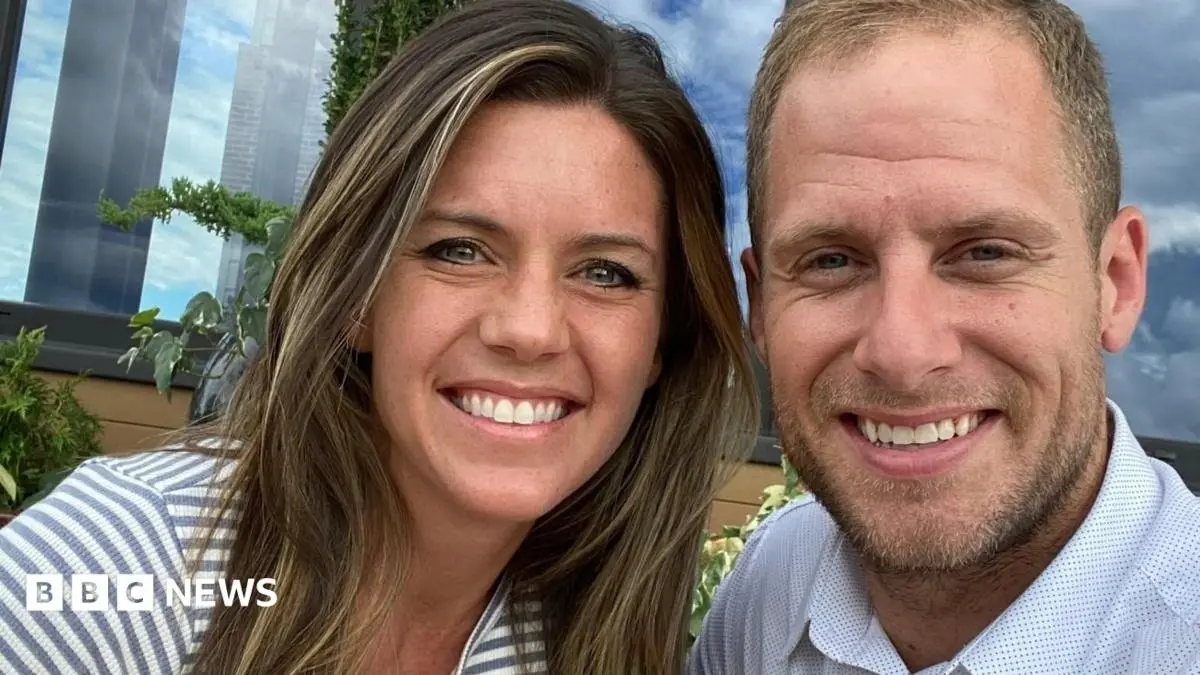
A former Ohio music pastor who once stepped into the national spotlight as a contestant on the television talent competition American Idol has been found guilty of the brutal murder of his wife, ending a harrowing trial that exposed a dark web of infidelity, digital manipulation, and cold-blooded premeditation.
Caleb Flynn, 40, was convicted by an Ohio jury on all charges brought against him, including aggravated murder and tampering with evidence. The verdict, delivered after less than three hours of deliberation, brings a definitive end to a case that shocked the quiet community of Tipp City, a suburb of Dayton. Flynn now faces a mandatory sentence of life in prison without the possibility of parole.
The conviction follows an intense eight-day trial that painted a picture of a man leading a double life. Prosecutors successfully argued that Flynn, who served as a music pastor, executed a calculated plan to eliminate his wife, 37-year-old Ashley Flynn, while she slept in their home on February 16 of this year. According to the state, Flynn shot his wife twice in the back of the head, subsequently attempting to stage the scene as a home invasion by claiming he heard gunfire while in his daughters’ bedroom and discovered the garage side door left ajar.
Throughout the proceedings, Flynn displayed an erratic emotional demeanor. As the jury read the guilty verdict, he wept openly in the courtroom, at times sniffling and wiping tears from his eyes—a stark contrast to the cold, calculated messages he had sent his mistress in the months leading up to the crime.
A Web of Deceit and Digital Evidence
The prosecution’s case rested heavily on a mountain of digital evidence, including activity logs from Flynn’s iPhone and Apple Watch, as well as an exhaustive archive of text messages between the defendant and his mistress, 24-year-old Alleigha Botner. The two had met while Botner was serving as an intern at the church where Flynn was employed. Over the course of their 18-month affair, the pair exchanged an estimated 100,000 text messages, many of which were read aloud in open court to the horror of those in attendance.
The messages revealed a deepening obsession and a clear intent to commit murder. In a chilling exchange from August 2025, Flynn messaged Botner: "I was up until 4am last night crying, literally thinking of ways to kill her and not go to jail." In another, he explicitly stated, "I just want her dead and gone."
The trial also featured testimony from Joseph Wilhelm, a special agent from the Ohio Bureau of Criminal Investigations. Wilhelm provided forensic evidence showing that Flynn had systematically uninstalled several applications from his phone shortly before the murder. Among the deleted apps was an AI-music generator that Wilhelm testified was used to create songs dedicated to his relationship with Botner.
One such AI-generated song, which the prosecution argued was written for his mistress, was played for the jury. The lyrics were analyzed line by line by Botner herself during her two-day testimony. The moment in court became something of a spectacle, with viral video footage showing jurors reacting to the song with visible disbelief and even laughter, highlighting the surreal and macabre nature of the evidence.
The Prosecution’s Theory of Motive
During closing arguments, prosecuting attorney Paul Watkins dismantled the defense’s narrative, focusing on the pressures Flynn felt were closing in on him. Watkins argued that Flynn was terrified of losing his status, his income, and his children. According to the prosecution, the defendant feared that a divorce would lead to a loss of custody of his daughters, the termination of his position at the church, and the severance of his ties to his wife’s family business.
"He was afraid," Watkins told the jury, suggesting that the hatred Flynn expressed in his texts toward his wife was fueled by a desperate desire to maintain his lifestyle at any cost. Watkins also pointed to the inconsistencies in Flynn’s initial statements to police. While Flynn initially claimed he had found his wife after hearing gunfire, he later told investigators he had not been in the garage, despite having mentioned the open garage door as a potential point of entry for an intruder. This contradiction, according to the state, was a failed attempt to create a credible alibi.
The Defense’s Argument
The defense, led by attorney Patrick Mulligan, faced a difficult task given the volume of incriminating digital correspondence. Mulligan urged the jury to remain focused on the lack of direct physical evidence connecting Flynn to the murder weapon. "Connecting a couple of meaningless dots doesn’t solve the case," Mulligan argued, emphasizing that the prosecution lacked a murder weapon and that the evidence was largely circumstantial.
Mulligan maintained that the case against Flynn was built on character assassination rather than proof of guilt. "They can’t find the gun, therefore they blame it on him?" he questioned, referring to the tampering charge. He insisted that the jury should not conflate Flynn’s moral failings as a husband—specifically his infidelity—with the crime of murder. He reminded the court that Ashley Flynn was a beloved schoolteacher and volleyball coach, but argued that the focus should remain strictly on the forensic requirements of the law. Ultimately, the defense called no witnesses to the stand, resting their case after the prosecution concluded its presentation.
A Fall from Grace
For many in the community, the trial served as a grim postscript to a story that began with promise. In 2013, a younger Caleb Flynn had appeared on the 12th series of American Idol. His audition saw him performing before a high-profile panel of judges, including Mariah Carey, Nicki Minaj, and Randy Jackson.
During his time on the show, Flynn spoke fondly of his passion for music, telling producers, "Music is all I know, it’s what I live to do and I love to sing, so that’s why I auditioned." In segments filmed for the program, he even credited his wife for encouraging his pursuit of the spotlight, noting, "Maybe my wife kinda nudged me a little, too."
He was awarded a "golden ticket" to Hollywood during the audition phase, though he ultimately failed to progress to the main competition. In the years that followed, he transitioned into ministry, serving as a music pastor in Ohio—a role that made his subsequent fall from grace even more shocking to those who knew him.
Justice Served
Alleigha Botner, who once shared an intimate relationship with the defendant, offered a definitive statement on the witness stand regarding her former lover. When asked about her feelings toward Flynn, she stated clearly that she now hates him, adding, "because I believe that he murdered his wife."
The missing firearm, which prosecutors believe was kept in the center console of Flynn’s truck, remains a focal point of the investigation into the tampering charges. When police arrived at the home on the night of the shooting, the console was found open and empty, a detail the prosecution successfully used to reinforce their claim that Flynn had disposed of the weapon.
As the trial concluded, the reality of the verdict set in. The jury’s swift decision underscored the weight of the digital paper trail that Flynn left behind—a trail that ultimately led to his downfall. With the guilt phase complete, the community is left to process the tragic end of a life taken too soon. Caleb Flynn is scheduled to be formally sentenced on October 5, where he will face the final legal consequences for the actions that shattered his family and ended the life of his wife.