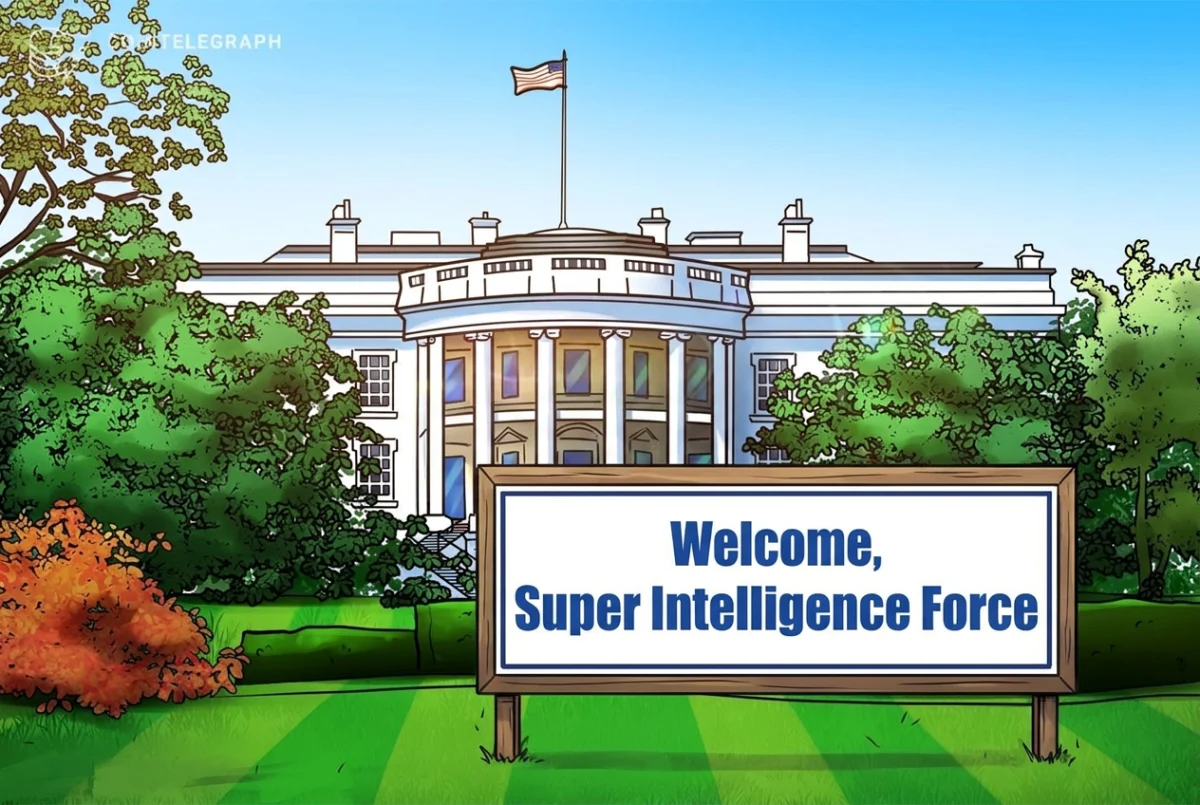
The official Sunday announcement followed circulating media reports on Friday regarding the impending creation of the new task force and its leadership structure. Earlier reporting from September indicated that the administration had been actively mapping out plans to establish a specialized "AI Force" consciously modeled after the United States Space Force, alongside the creation of a dedicated artificial intelligence czar to coordinate national policy.
"The Super Intelligence Force is tasked with coordinating the effort of the Federal Government to ensure that America continues to lead the World in Super Intelligence," President Trump wrote in his Sunday social media post outlining the mandate of the newly minted division.
According to the administration’s blueprint, Director Clayton will not be working in isolation. He will be joined by a high-level roster of federal officials spanning key regulatory, administrative, and defense branches. The appointed members include Andrew Ferguson, chairman of the Federal Trade Commission; Scott Kupor, director of the Office of Personnel Management; and Emil Michael, who serves as the undersecretary of war for research and engineering as well as the chief technology officer for the Department of War. This multi-agency composition signals an integrated approach that pulls together talent and authority from across government bodies to address the rapid advancements and national security implications associated with advanced artificial intelligence systems.
Jay Clayton brings an extensive background in both public service and the private sector to his new role leading the Super Intelligence Force. Having previously guided the Securities and Exchange Commission during President Trump’s first term in office, Clayton is no stranger to managing complex, high-stakes regulatory environments. In addition to his leadership at the SEC, he also served a tenure as the interim United States Attorney for the Southern District of New York. Industry sources familiar with the administration’s plans indicated to media outlets that Clayton is expected to retain his primary responsibilities as the director of national intelligence while taking on this additional leadership mandate for the Super Intelligence Force.
The Senate officially confirmed Clayton for his role leading the national intelligence community in July, placing him at the center of the country’s security and information-gathering apparatus. By tying the leadership of the nation’s intelligence community directly to the helm of the Super Intelligence Force, the administration is underscoring the vital intersection between advanced computational intelligence, national defense, and global geopolitical competition. As federal agencies increasingly grapple with the dual challenges of technological innovation and security oversight, the formation of this specialized force marks a significant milestone in how the United States government structures its approach to the future of technology.