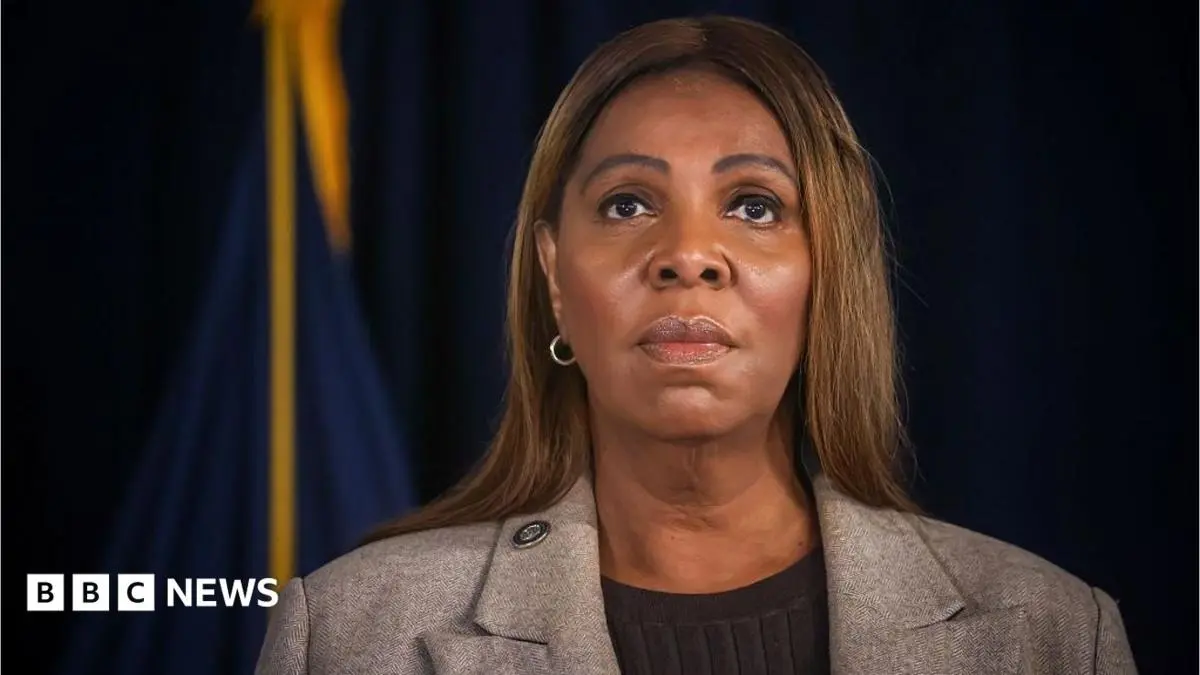
A legal challenge has emerged in the high-stakes investigation surrounding an alleged gang rape at Cornell University, as defense attorneys for one of the seven accused men have formally called for New York Attorney General Letitia James to recuse herself from the case. The request for recusal, which centers on concerns regarding the appearance of impartiality, adds a new layer of legal complexity to a scandal that has already destabilized the Ivy League institution’s administration and ignited a firestorm of public outrage across the United States.
The push for James’s removal from the special prosecutor role stems from a social media post published on September 28. In that statement, posted to the platform X, James addressed the allegations involving a woman identified in legal filings as "Jane Doe," writing, "What this young woman has been forced to endure is horrific and unacceptable." The Attorney General further added, "I’m holding her in my heart and in my prayers. To her, and to all survivors: you’re not alone. We stand with you."
Attorneys representing one of the seven men accused in the case argue that these public remarks compromise the "integrity and independence" of the investigation. The central argument presented by the defense is that by expressing personal support and declaring the victim’s experience "horrific" before the investigation has concluded, the Attorney General has created an environment where the impartiality of the prosecutorial process can be reasonably questioned.
In a statement provided to CBS News, the lawyer for the accused individual clarified that the request is not necessarily an allegation of bad faith or corruption on the part of the Attorney General. Instead, the legal team contends that the remarks create an "avoidable question" regarding the office’s ability to independently evaluate the evidence. "This is not an accusation that Attorney General James is corrupt, acting in bad faith or incapable of performing her duties professionally," the statement read. "Nor am I suggesting that a court has determined that she is legally disqualified. The point is much narrower: an avoidable question now hangs over this investigation, and voluntary recusal would remove it."
The controversy erupted following allegations detailed in a lawsuit, which claims that the woman was drugged and raped by seven men over the course of several hours during a fraternity party at the Cornell campus in October 2024. The lawsuit further alleges that the university administration failed in its duty to protect the student, leading to intense scrutiny of how the institution and local law enforcement initially handled the reports.
The fallout from these allegations has been profound. Beyond the courtroom, the university administration faces an existential crisis. Reports indicate that the Cornell Faculty Senate, the governing body representing the university’s academic staff and professors, is preparing to hold a vote of no confidence in the administration next week. While a no-confidence vote at a major university is largely a symbolic gesture, it carries significant weight, signaling a deep-seated loss of trust among the faculty and creating immense pressure on university leadership to implement structural changes and demonstrate accountability.
The intensity of the sentiment on campus was on full display this past Monday, when hundreds of students and faculty members gathered for a demonstration. The protest served as a visible manifestation of the frustration and anger that has permeated the Ithaca campus, as members of the Cornell community demanded transparency and justice for the survivor. The case has not only disrupted the rhythms of academic life but has also touched a nerve nationally, drawing attention to the broader issues of sexual violence on college campuses and the adequacy of institutional responses.
In response to the mounting pressure, New York Governor Kathy Hochul intervened last week by appointing Attorney General Letitia James as a special prosecutor to lead the investigation. The Governor’s office tasked James with not only investigating the alleged rape itself but also scrutinizing the actions and failures of both law enforcement and the university in their initial response to the allegations.
Governor Hochul and Attorney General James were both questioned regarding the potential for bias during a recent press conference. When asked about the concerns raised by the defense, Governor Hochul expressed confidence in the Attorney General’s process, emphasizing that the investigation would remain fact-based. "She’ll examine the evidence and go wherever it leads, and if the evidence supports charges, she will pursue them," the Governor stated, affirming her belief that the integrity of the state’s legal process would be maintained.
The appointment of a special prosecutor is often intended to provide a layer of independence and objectivity, particularly in cases where local authorities may have a conflict of interest or where public confidence in the initial investigation has eroded. However, in the modern landscape of high-profile litigation, the public or social media statements of government officials are increasingly scrutinized as potential evidence of bias. The defense’s argument hinges on the standard that a prosecutor must not only be impartial in practice but must also appear to be impartial to the public and the accused to maintain the legitimacy of the judicial process.
For Cornell University, the situation remains dire. The administration is struggling to contain the damage while navigating the demands of students, faculty, and legal entities. The university’s communications department has been the subject of numerous inquiries, and the school remains under a microscope as the legal proceedings move forward. The BBC has reached out to Cornell University for comment on the ongoing developments, including the pending faculty vote and the accusations regarding their handling of the initial incident.
The legal strategy employed by the defense—seeking the recusal of a high-ranking official—is a common tactic in criminal defense, designed to challenge the prosecution’s narrative and potentially delay proceedings while forcing the oversight of the court. Whether or not the request gains legal traction remains to be seen. In the New York legal system, the threshold for disqualifying a prosecutor is high, generally requiring a demonstration of actual prejudice or a conflict of interest that renders a fair trial impossible. A simple expression of sympathy for a victim, while controversial in the eyes of the defense, may not meet the standard for legal disqualification.
As the legal and academic communities watch closely, the case of the Cornell incident continues to evolve. The resolution of the no-confidence vote will be a critical indicator of the university’s internal stability, while the outcome of the recusal request will determine the trajectory of the investigation led by the Attorney General’s office. For the victim, who has been forced to navigate the traumatic events of October 2024, the process has become a public battleground, with her personal experience now central to a national conversation about accountability, institutional failure, and the mechanisms of justice.
The investigation is expected to be lengthy, involving the examination of fraternity records, law enforcement logs, and the university’s internal policies regarding sexual assault reporting. As investigators sift through the evidence, the tension between the legal requirements of due process for the seven accused and the demand for justice for the survivor remains the defining challenge of the case. With the Attorney General under pressure to justify her continued oversight, and the university administration facing a potential revolt from its own faculty, the coming weeks will likely prove decisive for all parties involved in this escalating legal and institutional drama.