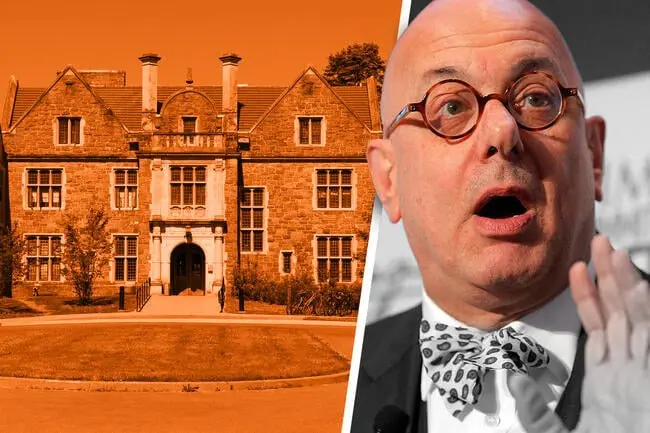
Leon Botstein has officially resigned from all remaining Bard College–affiliated positions, stepping away entirely from the institution he led for more than half a century. The sudden and complete departure follows a sweeping escalation by House Democrats, who uncovered deeply troubling new details regarding Botstein’s historical relationship with the late convicted sex offender Jeffrey Epstein, alongside separate whistleblower allegations that Botstein sexually harassed women and interfered with Title IX proceedings during his lengthy tenure as president.
The latest disclosures mark a stunning and rapid fall for one of higher education’s most enduring and prominent figures. The controversy burst into public view earlier this year, prompting fierce scrutiny from lawmakers, students, and faculty alike. As the fallout intensifies, the leadership at Bard College is now grappling with an unprecedented institutional crisis, promising a rigorous internal examination while cooperating fully with ongoing federal congressional inquiries.
Congressional Investigators Point to Disturbing Ties
The catalyst for Botstein’s total severance from the college came in a Wednesday letter addressed to Bard’s acting president and board chairman by Representative Jamie Raskin of Maryland, the ranking member of the House Judiciary Committee. In the letter, Raskin detailed findings from an investigation that House Democrats launched into Botstein’s connections to Epstein. According to the committee’s findings, the new information strongly suggests that Botstein "likely enabled and possibly even participated in Epstein’s abuse" while serving as the head of the liberal arts college.
Furthermore, the committee revealed that it has received alarming reports from whistleblowers asserting that Botstein abused his considerable administrative authority to meddle in Title IX investigations. The allegations state that he actively intervened to shield sexual predators within the Bard faculty from accountability, casting a long shadow over the institution’s historical handling of campus misconduct.
The Committee’s Focus on a 2014 Email
Central to Raskin’s letter and the Department of Justice files reviewed by congressional investigators is an exchange from May 2014. According to documents contained within the Justice Department’s publicly and privately reviewed Epstein files, Epstein directed an aspiring young vocalist to meet with Botstein. The young woman, identified in records as Jane Doe, was reportedly being trafficked by Epstein at the time. She was sent to the college president ostensibly for him to evaluate her musical abilities and offer academic and artistic guidance.
However, unredacted documents viewed by members of Congress at the Department of Justice reveal a deeply disturbing follow-up communication. On May 15, 2014, Botstein allegedly sent an email to Epstein asking, "Is [Jane Doe] for me, or are you keeping her for yourself." While Botstein’s official presidential email address was redacted in the publicly released document under file designation EFTA00989511, members of Congress gained access to the unredacted version during their review at DOJ facilities.

In his letter, Raskin underscored the grim implications of the message. The congressman noted that it is exceedingly difficult to construct an innocent or benign explanation for the question posed by Botstein, pointing out that Epstein was neither a traditional college admissions officer recruiting prospective students nor a symphony director auditioning orchestral musicians. Raskin questioned what interpretation could possibly exist for a college president asking a notorious sex offender whether a trafficked aspiring vocalist was meant for him or being retained by Epstein personally.
Botstein Denies the Allegations and Resigns
In a written statement issued to Inside Higher Ed on Wednesday, Leon Botstein forcefully denied the allegations laid out in Raskin’s letter, explicitly disputing the authenticity of the message attributed to him.
"The allegations in Raskin’s letter are untrue, including an email that I did not author or send. Any assertion that I knew of or was involved in Epstein’s criminal behavior is wrong," Botstein wrote in his statement. He expressed confidence that any objective and fair review of the facts would exonerate him.
Despite his vehement denials, Botstein stated that he ultimately chose to sever all remaining ties with the college to protect the institution from further turmoil. "I do not want to see even false allegations about me put the institution I have served for more than half a century at any risk," he added.
The resignation marks the definitive end of an era for Bard College. Botstein originally stepped down from his role as the institution’s president in July following months of mounting criticism, public pressure, and faculty unease regarding his documented communications with Epstein. Having held the presidency for an extraordinary 51 years, Botstein had initially transitioned into a semi-retired status, retaining a tenured professorship at the college alongside ongoing leadership roles in several prominent musical initiatives, including the graduate orchestral program The Orchestra Now. With his latest announcement, he has relinquished those positions entirely, cutting his final professional cords with the academic community he shaped for decades.
Institutional Response and Future Review
In the wake of Botstein’s sweeping resignation, Bard College leadership has moved quickly to address the severity of the congressional disclosures. Brandon Weber, chairman of the Bard Board of Trustees, released a statement addressing the crisis on Wednesday.
Weber announced that the college will initiate a comprehensive, independent review to thoroughly examine all the allegations brought to light in Raskin’s letter. Furthermore, Weber reaffirmed that Bard remains fully committed to cooperating with the ongoing House Judiciary Committee investigation as federal lawmakers continue to comb through the sprawling archive of documents linked to Jeffrey Epstein’s network of powerful associates across academia, politics, and finance.