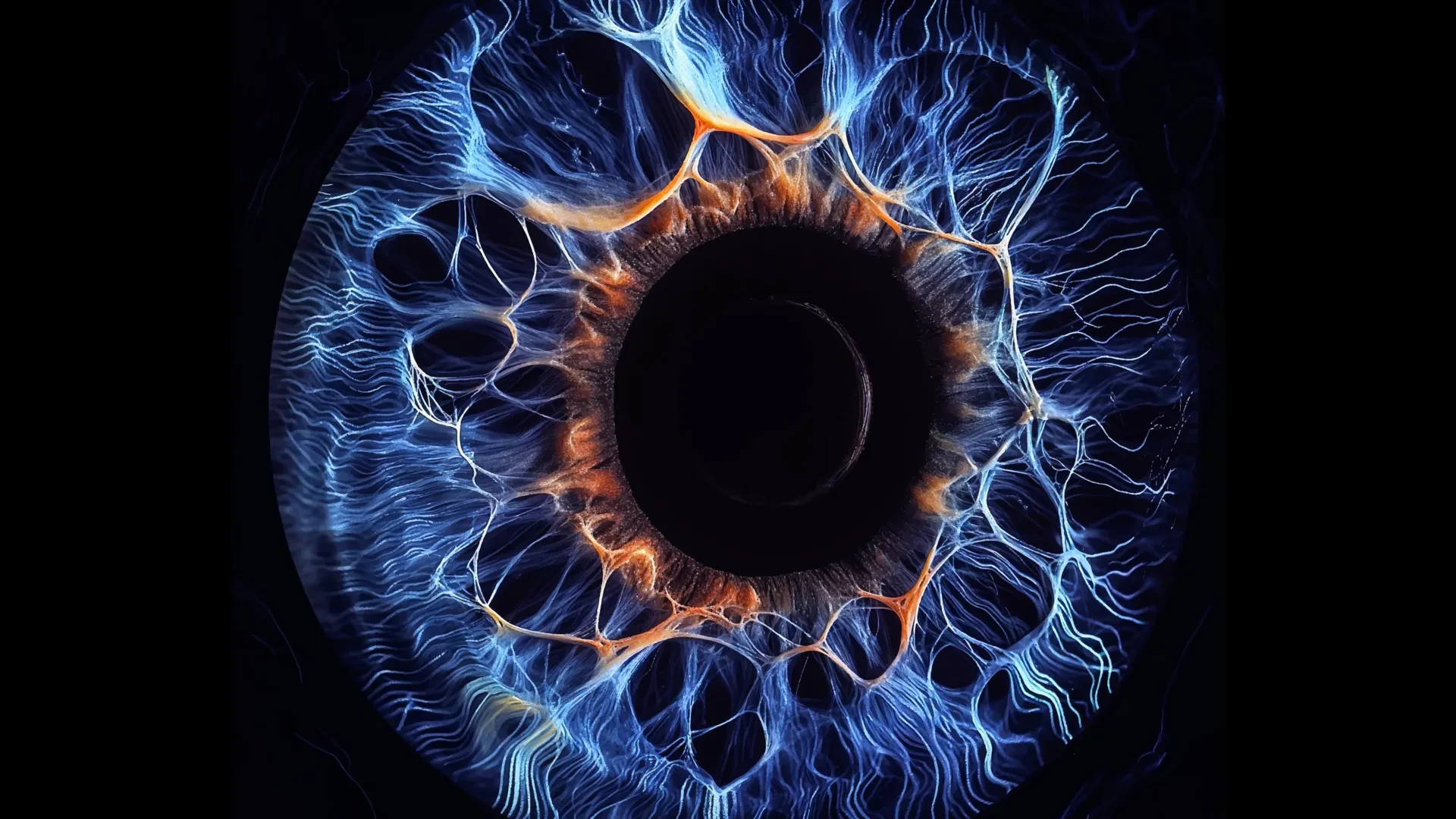
Scientists have uncovered a previously unknown cleanup system located at the back of the human eye, revealing a hidden route that allows fluid and metabolic waste to escape into the body’s broader lymphatic system. This breakthrough discovery, which challenges more than a century of ophthalmological dogma, provides a fresh perspective on how the eye maintains its delicate internal environment. By identifying this pathway, researchers have opened the door to entirely new approaches for treating some of the world’s most debilitating conditions that lead to permanent vision loss.
The research, a collaborative effort between experts at the University of British Columbia (UBC) and the University of Toronto, has identified what they have termed the "posterior ocular lymphatic outflow" (POLO) pathway. For decades, the medical community operated under the long-standing assumption that the eye lacked a lymphatic drainage system in its posterior region, unlike almost every other organ in the human body. This new evidence suggests that the eye is far more integrated into the body’s systemic waste-clearance network than previously imagined, offering a potential explanation for how the eye protects its sensitive tissues and what occurs when these critical maintenance processes fail.
A Hidden Eye Drainage System Could Open New Paths to Treatment
The retina, the light-sensitive tissue lining the back of the eye, is among the most metabolically active regions of the entire human body. It requires a massive and constant supply of energy to convert incoming light into electrical signals that the brain can interpret as vision. This relentless cellular activity naturally generates a steady stream of metabolic byproducts, inflammatory materials, and fluid. For the retina to remain healthy and functional, these waste products must be efficiently cleared.
When this drainage process is disrupted, the resulting accumulation of debris can contribute to the development of serious eye diseases. Conditions such as glaucoma and age-related macular degeneration (AMD) are intrinsically linked to the buildup of fluid and cellular waste, which in turn causes tissue stress and inflammation. In Canada alone, age-related macular degeneration affects approximately 2.5 million people, illustrating the massive clinical importance of understanding the underlying mechanisms that keep the retina in a state of homeostasis.
Dr. Neeru Gupta, a professor and head of the Department of Ophthalmology and Visual Sciences at UBC, believes this finding is a potential turning point in ophthalmic medicine. "The retina is one of the most metabolically active parts of the body, constantly generating byproducts that need to be cleared," Dr. Gupta explained. "This discovery helps explain how the eye flushes this waste and promises to transform how we think about and treat a range of eye conditions."
The existence of the POLO pathway suggests that the back of the eye possesses a natural, built-in mechanism for flushing out unwanted material. If researchers can successfully determine how this mechanism operates and whether it can be therapeutically enhanced, it could provide a novel target for treatments designed to preserve vision. "This gives us a whole new framework for understanding these diseases and a potential target for therapeutics," Dr. Gupta noted. "The question now is: How can we enhance or exploit this cleanup system to treat or even prevent disease?"
A Discovery That Challenges More Than a Century of Assumptions
For well over a hundred years, the prevailing scientific consensus held that the eye was essentially an isolated environment, lacking the lymphatic vessels found in other tissues. The lymphatic system—a critical component of the body’s immune and waste-management infrastructure—is responsible for collecting excess fluid, transporting proteins and waste, and coordinating immune responses alongside the blood circulatory system.
The rigid belief that the eye remained separate from this network began to erode in 2009. That year, Dr. Gupta and Dr. Yeni Yücel, a professor and director of ophthalmic pathology at the University of Toronto, identified a lymphatic-related drainage route in the front of the eye. Dubbed the "uveolymphatic" pathway, this discovery provided the first solid evidence that the eye was not a closed system, but rather maintained unrecognized connections to the body’s systemic fluid clearance mechanisms.
Dr. Yücel, who has spent years investigating ophthalmic pathology, continued to pursue the possibility that similar pathways might exist in the posterior of the eye. Despite the groundbreaking nature of the 2009 discovery, the back of the eye remained a "black box" in terms of fluid regulation. This was a particularly glaring gap in medical knowledge, given that the most significant causes of permanent blindness are rooted in the posterior segment.
"The retina is responsible for vision, and it is also where many of the most serious vision-loss diseases occur," Dr. Yücel said. "Understanding how this part of the eye maintains a balanced environment and flow of materials is critical."
Scientists Trace a Secret Cleanup Route Behind the Retina
To trace the elusive fluid drainage routes at the back of the eye, the research team employed a multi-modal imaging approach using mice as models. By combining magnetic resonance imaging (MRI), near-infrared fluorescence imaging, and high-resolution microscopic examination, the team was able to visualize the path of fluids in real-time.
The researchers injected fluorescent tracer molecules into a narrow space at the rear of the eye. Because these molecules were tagged to be visible under specialized imaging equipment, the team could follow their trajectory as they moved away from the retina. The results were striking: they observed the tracers entering tiny, previously undetected lymphatic vessels located in the choroid, a thin, highly vascularized layer of tissue situated directly beneath the retina. The choroid is known primarily for its role in nourishing the outer retina, but the presence of lymphatic vessels within this layer had never been established.
The study observed fluid moving from the back of the eye into the surrounding orbital tissues—the space encompassing the eyeball. Within a matter of minutes, the fluorescent tracers had reached nearby lymph nodes, confirming that the fluid was indeed exiting the eye and entering the body’s broader lymphatic system. This was definitive proof that fluid from the back of the eye is not trapped, but rather flows through an active, functional drainage pathway.
"Because lymphatic vessels in the choroid were thought not to exist, the team used multiple techniques to demonstrate both their presence and function," Dr. Yücel explained. "We were surprised to see such a direct route for fluid to leave the eye and connect with the lymphatic system. It suggests the back of the eye has an active clearance pathway, which could play an important role in removing fluid, proteins, and inflammatory material that build up in disease."
Could the Eye’s Cleanup System Help Prevent Blindness?
While the discovery of the POLO pathway provides a major leap forward in our understanding of ocular physiology, the research team emphasizes that this is a foundational step. Because the initial evidence was gathered in mice, further studies are required to confirm the precise mechanics of how the POLO pathway functions in human anatomy. Researchers must now determine how these vessels respond to disease, whether their efficiency declines with age, and if they can be safely stimulated to improve drainage.
If these hurdles are overcome, the potential clinical applications are significant. One future therapeutic strategy could involve developing drugs that specifically target and stimulate the POLO pathway, thereby accelerating the removal of toxic substances associated with inflammation and tissue degeneration. Additionally, this newfound knowledge could revolutionize drug delivery, allowing physicians to target the back of the eye more effectively by leveraging the natural drainage route.
Understanding this system may also shed light on the complex interplay between ocular pressure, chronic inflammation, and fluid movement in diseases like glaucoma and macular degeneration—conditions that have long perplexed clinicians. While these applications remain in the realm of future research rather than current medical practice, the identification of the POLO pathway provides a new "map" for the field of ophthalmology.
"This is a foundational discovery that shows the eye is not as closed a system as we previously thought," Dr. Gupta concluded. "It gives us a new map, a new mechanism, and a new set of questions to explore."
The findings of this study have been published in the scientific journal Translational Vision Science & Technology. The research was made possible through the support of several major institutions and funding bodies, including the Canadian Institutes of Health Research, the Glaucoma Research Society of Canada, the Henry Farrugia Ophthalmology Research Fund, the Canadian Space Agency, and the Canada Foundation for Innovation Leaders Opportunity Fund, among others. As the scientific community begins to digest these results, the POLO pathway stands as a promising new frontier in the ongoing effort to prevent, manage, and eventually cure the most common forms of vision loss.