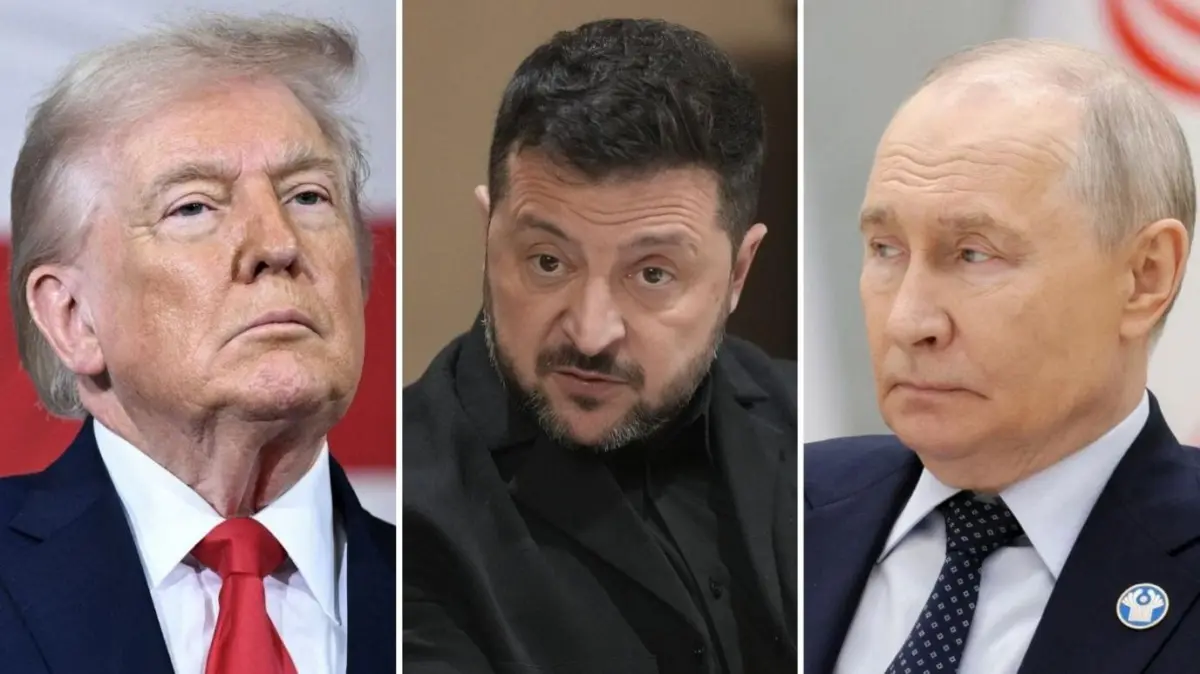
US President Donald Trump has declared an immediate "energy ceasefire" between Russia and Ukraine, a move the American leader insists will stabilize global fuel markets. However, the announcement has been met with a mixture of surprise in Kyiv, stony silence from Moscow, and mounting political friction within the United States and among its Western allies.
The president’s sudden announcement, which lacked specific operational details or a formal framework, comes as the administration attempts to navigate the domestic political fallout of high energy prices. Trump has spent the last several months contending with a volatile fuel market, exacerbated by the ongoing conflict with Iran, which has driven diesel prices to levels that have contributed to broader inflationary pressures for American consumers.
The Dynamics of the "Energy Ceasefire"
At the heart of the president’s initiative is an effort to halt Ukrainian strikes against Russian oil infrastructure. For months, Kyiv has utilized long-range drones and missiles to target refineries deep within Russian territory. Ukraine has maintained that these strikes are a legitimate and necessary component of their defensive strategy, aimed directly at crippling the revenue streams that sustain Moscow’s military operations.
However, the US administration views these strikes as a barrier to a recently brokered deal designed to bring Russian diesel back onto the global market. The agreement, which involves a temporary waiver of existing sanctions on Russian energy imports, is intended to increase supply and lower prices at the pump ahead of the US midterm elections.
President Volodymyr Zelensky, speaking to the news outlet Axios, initially expressed confusion regarding the declaration, noting that such a truce was "news" to him. In a subsequent public statement, he adopted a more diplomatic tone, suggesting that while Kyiv would be open to such an arrangement, it must be reciprocal.
"Ukraine is ready not to strike at Russian energy and we count on Russia’s similar readiness and on the agreement of the president of the United States of America on this," Zelensky wrote on social media. He added that his administration is now waiting for "clear details" regarding the communication between Washington and Moscow that led to this sudden announcement.

Escalation Despite the Announcement
The practical viability of the ceasefire was called into question almost immediately after the president’s post. According to the Ukrainian government, Russia continued its offensive operations against the country’s power grid despite the US announcement. Zelensky reported that a Russian drone strike hit a power plant in Kyiv, resulting in localized power outages, while further strikes were reported on energy infrastructure in the northeastern Kharkiv region.
The irony of the situation was not lost on the Ukrainian leadership. "All of this happened after the president of the United States made his statement about an energy ceasefire," Zelensky noted, highlighting the disconnect between the diplomatic posturing in Washington and the reality on the ground.
The ongoing "energy war" has been a defining feature of the broader conflict. Russia has frequently targeted Ukrainian power stations to degrade the nation’s ability to sustain its infrastructure during the winter months, while Ukraine has responded by attempting to erode Russia’s economic capacity to fund the war. Both sides have argued that their respective targets are legitimate military objectives, leaving the feasibility of a localized "energy ceasefire" highly uncertain in the absence of a broader security agreement.
Domestic and International Pushback
The diesel deal itself has become a flashpoint for criticism, drawing fire from both sides of the American political aisle and from key international partners. A bipartisan group of seven US senators—comprised of three Democrats and four Republicans—issued a formal statement condemning the move. The group argued that the deal runs "directly counter" to established law, which explicitly banned the import of Russian energy products until the Kremlin ends its aggression in Ukraine.
"Congress was clear: the US should not import oil from Russia until it ends its aggression against Ukraine and ceases threats against our NATO allies," the senators stated, calling on the White House to "reverse course." Republican Senator Thom Tillis, a signatory to the statement, warned in an interview with NBC News that the policy shift poses a direct risk to American interests and security.
Internationally, the reaction has been equally fractured. While the United Kingdom’s Prime Minister, Andy Burnham, signaled strong support for the ceasefire, other nations have been more cautious or overtly critical. European Union foreign policy chief Kaja Kallas has been among the most vocal critics, questioning the wisdom of providing a financial lifeline to Moscow. Meanwhile, UK Defence Secretary Wes Streeting confirmed that the British government, despite the Prime Minister’s support for the ceasefire, remains deeply skeptical of the broader implications of the diesel deal.

Political Tensions and the Path Forward
The diplomatic spat over energy is occurring against the backdrop of strained personal relations between President Trump and President Zelensky. Trump has publicly accused the Ukrainian leader of intentionally attempting to "make problems for the world" by continuing to authorize strikes on Russian oil refineries.
In a pointed escalation, the US president suggested that it was "time for Ukraine to get a new president." Zelensky, who has previously resisted pressure from Washington to hold elections during the state of martial law, countered by proposing a condition for a potential vote. He stated that he would be willing to hold elections if Russia agreed to a comprehensive 60-day total ceasefire, a move aimed at highlighting the impracticality of democratic processes in a country under active invasion.
Trump has consistently characterized the Ukrainian leadership as using the ongoing war as a pretext to avoid democratic accountability and remain in power. These tensions underscore the complexity of the current relationship, where US domestic economic concerns are increasingly clashing with the strategic objectives of the Ukrainian state.
As the rhetoric intensifies, the reality on the ground remains grim. The four-year-long conflict shows no signs of abating, with fighting continuing unabated across the front lines. On Sunday, regional officials reported that six people were killed in attacks across two Ukrainian cities, while in Russia, the conflict claimed lives in the border region of Belgorod and the Russian-occupied territory of Donetsk.
As the White House faces mounting pressure to clarify the details of the "energy ceasefire" and defend the legality of the diesel deal, the international community continues to watch closely. For now, the promised respite from energy-related strikes appears to be more of a diplomatic aspiration than an operational reality, leaving the energy infrastructure of both nations—and the stability of the global fuel market—in a state of continued, high-stakes uncertainty.