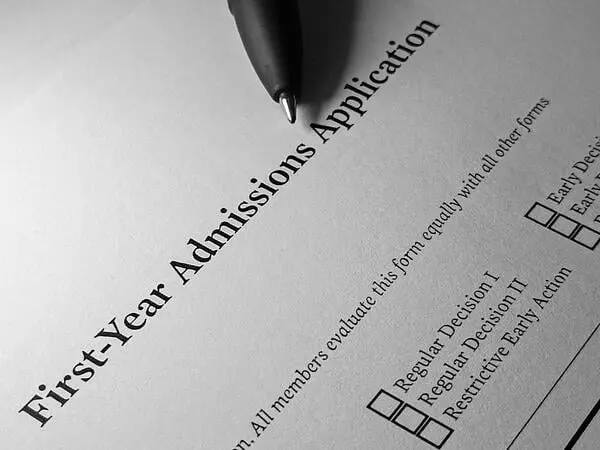
For first-generation, low-income college applicants navigating the high-stakes world of higher education admissions, anxiety is hardly a new phenomenon. Over recent years, students have had to grapple with sweeping changes across the admissions landscape, attempting to decode shifting institutional priorities in the wake of the 2023 Supreme Court ruling striking down affirmative action, the proliferation of trauma-informed narratives in personal statements, and evolving federal and state policies regarding diversity, equity, and inclusion. Yet, as a new admissions cycle gathers momentum, a distinct and more pervasive worry has rapidly pushed its way to the forefront of student anxieties: the role and expectations of artificial intelligence.
At the heart of this growing concern is a subtle but distinct expectation among colleges that applicants demonstrate sophisticated "AI literacy" within their admissions essays. Rather than merely avoiding outright plagiarism, students today find themselves caught in a complex web of institutional mixed messages, navigating an environment where the rules governing generative technology vary wildly from one campus to the next.
This landscape is defined largely by a profound lack of transparency. On one side of the equation, major application platforms like the Common App explicitly categorize AI-generated text as a form of academic fraud. At the same time, individual universities frequently fail to disclose how their internal screening systems operate or what criteria are used to flag suspicious submissions. Faced with this regulatory ambiguity, student applicants are increasingly forced to study the characteristic prose styles of popular chatbots simply to ensure their authentic voices do not inadvertently trigger an institution’s automated AI radar. The underlying strategy has become an exercise in negative mimicry: students study the algorithmic style precisely to avoid sounding like it.
This fear of accidentally mimicking automated writing is further complicated by the contradictory stances adopted by the universities themselves. While some admissions offices strictly prohibit any form of automated generation, others actively encourage candidates to utilize AI tools as a brainstorming partner to support their original ideas. Meanwhile, programs routinely accept or overlook basic digital proofreading assistants like Grammarly, creating a murky gray area that fundamentally alters the nature of the application process.
The practical implications of these varied stances are profound. If certain selective institutions embrace AI collaboration, opting out of these tools entirely could place a student at a distinct competitive disadvantage. To compound this complexity, a growing number of universities have introduced supplemental essay prompts that explicitly ask applicants to discuss artificial intelligence. Consequently, even students who choose not to utilize AI tools to write their essays must still possess the conceptual framework and vocabulary to discuss the technology intelligently.
For a well-resourced applicant, untangling these expectations is challenging enough. For an ambitious student navigating the system from an underfunded public school district where educators have had little to no training on the ethical boundaries of AI, the requirements can feel entirely opaque. Imagine applying to five distinct universities, each enforcing a completely different policy on digital collaboration, while possessing zero formal guidance on where the line between assistance and fraud is drawn.
For years, educational researchers and equity advocates have documented how traditional components of the college admissions process are systematically skewed toward the wealthy. Standardized examinations like the SAT and ACT demonstrate a strong, persistent correlation with household income. Similarly, foundational academic advantages—such as Advanced Placement and International Baccalaureate courses—remain vastly more accessible to students enrolled in well-funded suburban school districts than to their peers in underfunded rural or urban systems.
AI literacy represents the newest frontier of this systemic divide, yet it remains largely unaddressed in mainstream policy discussions surrounding college admissions. Across the broader K-12 educational landscape, artificial intelligence has emerged as the definitive dividing line. White-collar, affluent families, keenly aware of the growing importance of AI competencies in future labor markets, are actively pressuring local school districts to incorporate comprehensive AI literacy into their standard curricula. Economically disadvantaged school districts, burdened by budget shortfalls and infrastructural limitations, generally lack both the community advocacy and the financial resources required to integrate these tools or provide meaningful training.
Data from recent national research underscores this growing polarization. A comprehensive study released by the College Board, which surveyed more than 10,000 students, parents, and educators, revealed a stark disparity in institutional access. Private school educators reported significantly greater daily exposure to generative AI tools compared to their public school counterparts, with private institutions proving more than twice as likely to both permit the use of generative AI and maintain formal policies governing its application.
Because socioeconomic status and race remain deeply intertwined in the United States, sociologists warn that this technological divide will inevitably exacerbate existing racial and economic inequalities. As sociologist Jerel Ezell has noted, affluent students not only secure first access to the most advanced technological tools, but they also gain a decisive upper hand in mastering the precise competencies that will drive the future economy.
This dichotomy is acutely visible on the ground. First-generation and low-income students rarely possess the same instinctive technological fluency or specialized training as peers growing up in wealthy communities. They generally lack access to private robotics camps, specialized extracurricular programs, or enriched high school curricula tailored around digital proficiency. Instead, disadvantaged students typically discover and adopt artificial intelligence independently, navigating these powerful tools without institutional oversight, mentorship, or cultural guidance.
Without proper supervision, this autonomous experimentation frequently leads to the very types of algorithmic missteps that can trigger disqualification in competitive admissions pools. Recently, an experienced writing instructor working with low-income applicants reviewed essay drafts from a student that bore the unmistakable stylistic markers of advanced artificial intelligence models. When confronted, the student revealed that the drafts had already been reviewed and approved by his high school guidance counselor.
The oversight highlights a severe systemic vulnerability. In many underfunded public school districts, guidance counselors face overwhelming caseloads, sometimes managing upwards of 700 students simultaneously, leaving them virtually no time to meticulously review individual personal statements for nuanced technological misuse. Some severely distressed districts lack a dedicated college counselor entirely. By contrast, counselors at well-resourced private or suburban schools typically enjoy manageable caseloads and institutional support structures specifically designed to teach students ethical AI integration.
The fundamental disconnect within modern admissions is that teaching oneself how to operate a chatbot is vastly different from learning ethical digital literacy from an experienced educator. True AI proficiency involves far more than affording a monthly subscription to a language model; it relies on cultural osmosis, steady integration, and direct, informed mentorship.
Under the current framework, however, the uncoordinated and secretive AI policies maintained by colleges consistently favor the privileged. This bias is most evident in the opaque mechanics of institutional screening systems. Universities routinely refuse to disclose the specific software vendors they utilize to detect AI-generated prose, nor do they reveal the internal training protocols used to teach admissions officers how to evaluate an essay’s authenticity.
Independent research demonstrates that these policing mechanisms are deeply flawed. Automated detection software is notoriously inaccurate and frequently exhibits systemic biases against non-native English speakers. Human evaluation is similarly prone to error, varying wildly depending on an individual admissions officer’s personal technological literacy and implicit biases. Furthermore, when an applicant is quietly rejected due to suspected AI usage, institutions are rarely obligated to provide an explicit justification within their rejection notices. Consequently, admissions committees retain the power to dismiss applications based on subjective impressions of an essay "sounding like AI," shielded by a complete absence of public data, oversight, or accountability.
Equity advocates argue that if universities cannot definitively prove that their AI detection methodologies are fair and unbiased, they have no ethical right to penalize applicants for utilizing the technology. Transparency is essential. Institutions should be required to publicly clarify their operational standards: Which specific detection platforms are deployed? Do they screen for algorithmic text watermarking? What is the institutional rate of false positives, and how are admissions personnel trained to evaluate nuanced writing styles? Opening these internal processes to public scrutiny would represent a vital step toward leveling the playing field for candidates who lack professional admissions support.
While critics often argue that full disclosure would simply provide a roadmap for applicants attempting to bypass detection, supporters maintain that the current climate of ambiguity is vastly more damaging. As long as digital policing remains shrouded in secrecy, the personal essay will cease to function as a holistic, leveling metric, transforming instead into yet another vector for systemic inequality and bias. As artificial intelligence grows increasingly sophisticated, these disparities threaten to widen further.
Demanding transparency regarding backend AI policies is not an unreasonable expectation. Colleges already demand that vulnerable applicants prove their comprehensive literacy and authenticity under pressure; it is long past time for institutions to prove theirs.