For an emerging generation of young Chinese designers, historical tradition has steadily evolved into a more vital and dynamic component of their creative language. Even as they approach their work with a lighter hand, a distinct sense of play, and a distinctly contemporary worldview, contemporary creators are finding fresh ways to honor the past without being weighed down by its gravity. A prime example of this evolving design philosophy was on full display in the latest spring collection from the designer duo Austin Wang and Yansong Liu, the creative minds behind the rising brand Ao Yes.
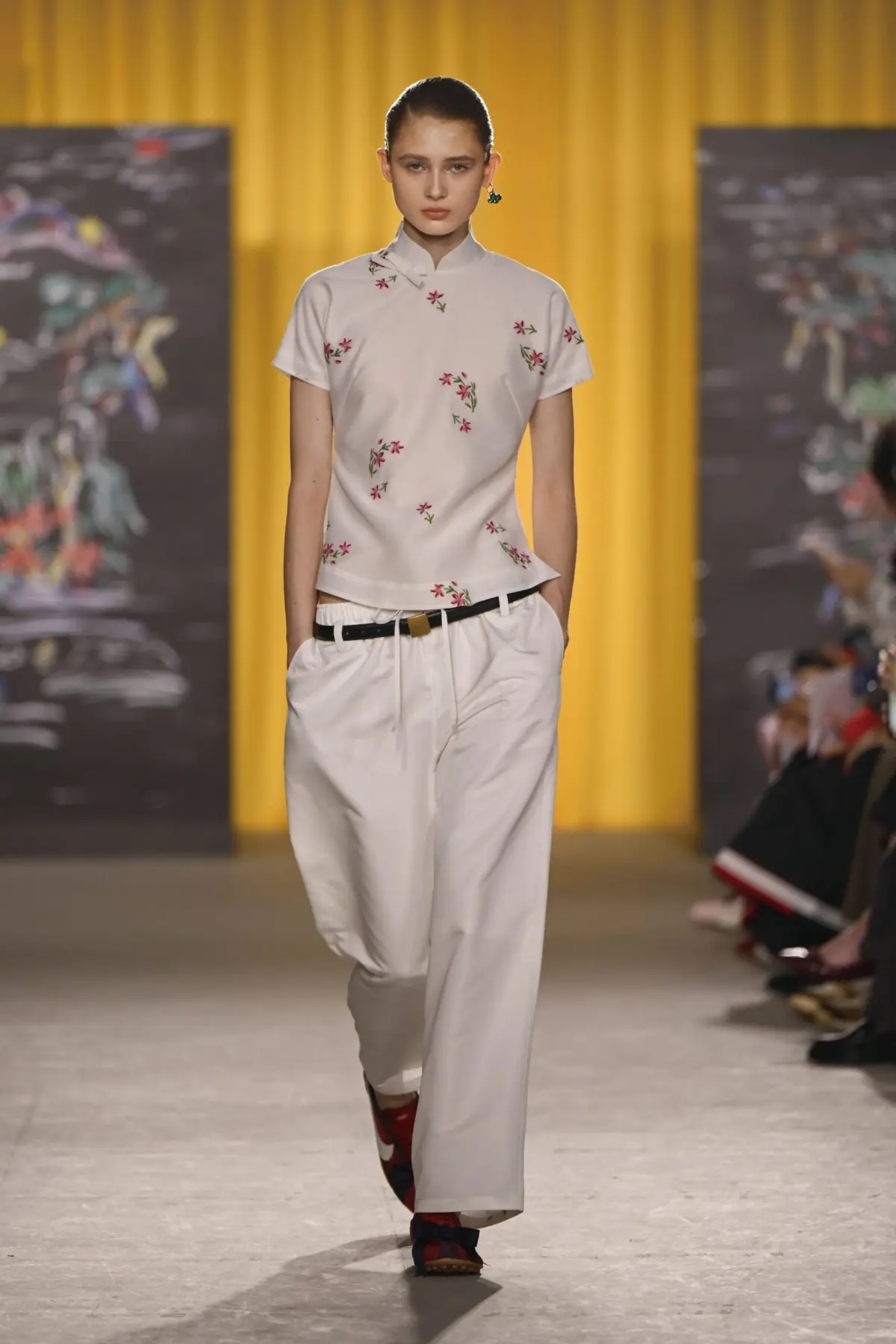
For their spring lineup, Wang and Liu built their entire collection around the multifaceted concept of reflection. The designers played extensively with visual metaphors derived from mirrors, the piercing warmth of sunlight, shifting shadows, and the gentle, rippling surfaces of water. These ethereal inspirations were artfully translated into a series of pretty, feminine pieces that captured both the eye and the imagination. Rather than relying on rigid structures or predictable motifs, the collection infused traditional concepts with a lively energy through the creative use of polka dots, jagged geometric patterns, and whimsical, cartoon-like drawings depicting traditional Chinese mountains and seas. The true charm of the garments lay in their unforced appeal, offering a masterclass in how historic imagery can be integrated into modern wardrobes without feeling forced, overly stylized, or academic.
The silhouettes showcased throughout the presentation possessed a lighthearted ease, moving fluidly from uncomplicated, everyday dresses to more body-conscious shapes that celebrated the wearer’s form. The collection also featured flowing tiered capes that added drama and movement, alongside delicate, modern reinterpretations of the classic qipao. These garments successfully bridged the gap between historical reverence and contemporary street style appeal. Direct references to historical traditions emerged subtly in rich brocades that drew their aesthetic inspiration from the intricate court textiles of the Song dynasty. Meanwhile, the color red made its customary and symbolic appearance throughout the collection, carrying with it long-standing cultural associations of happiness, good fortune, and celebration. Yet, despite the deep historical roots of these elements, nothing on the runway felt burdened by solemn cultural significance or museum-like reverence. Ao Yes approached heritage with a sensibility that was simultaneously cheerful and delicate, successfully giving familiar items a youthful, contemporary inflection that resonated with modern consumers.
Since launching the brand, Wang and Liu have been consistently exploring what a new, distinctive Chinese style might look like in the twenty-first century. Their explorations are particularly attuned to the tastes of a generation of consumers who are less interested in adhering to inherited dress codes and far more interested in making those codes their own. In this latest collection, that underlying ambition took shape not as a grand, sweeping statement about national identity, but rather as an inviting and accessible proposition: that cultural heritage can and should be a source of pleasure and personal expression rather than a strict obligation or a rigid duty.
This forward-thinking mindset was further underscored by the brand’s casting choices. The international composition of the model lineup hinted strongly at a label that is actively looking beyond its domestic home market, seeking to engage global audiences without ever losing sight of its deep cultural roots. By bridging the local and the global, Ao Yes succeeded in making cultural memory feel far less like a heavy inheritance that must be solemnly guarded and upheld, and much more like a vibrant set of possibilities to play with, reinvent, and enjoy.