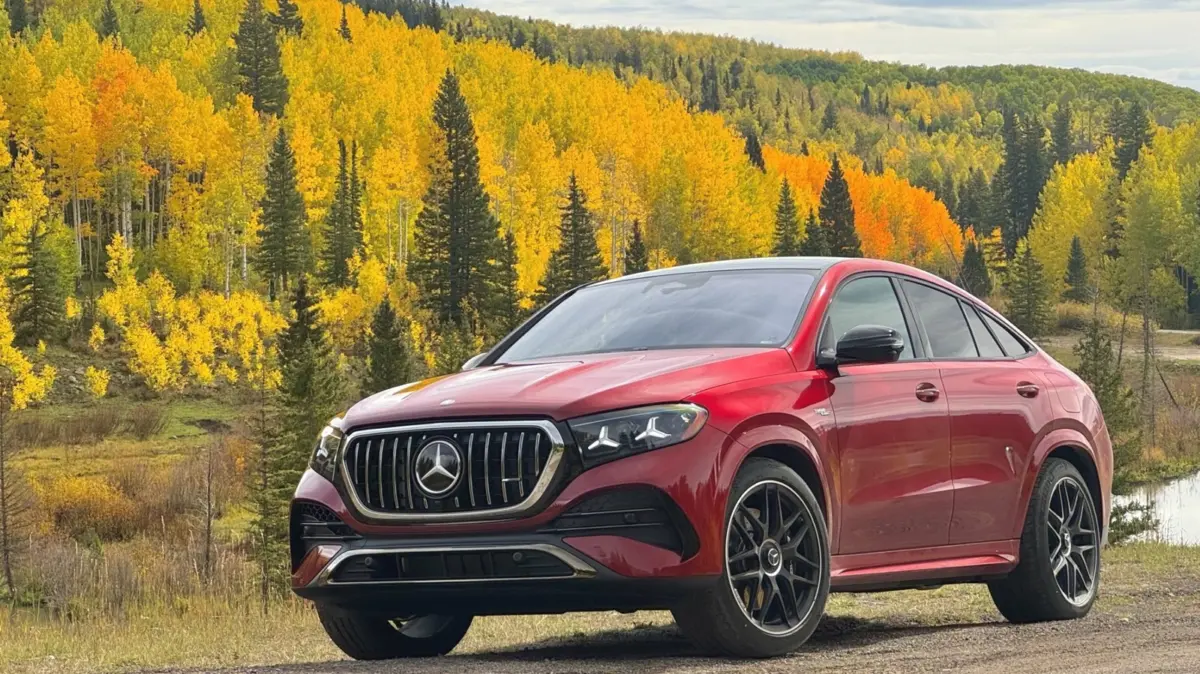
Mercedes-Benz has given its midsize GLE luxury SUV yet another comprehensive facelift for the 2027 model year. Because Mercedes is, well, Mercedes, that means a small barrage of distinct versions and variants have received updates simultaneously. Following last week’s first-drive reviews of the standard, non-AMG GLE lineup, attention now turns to the performance-focused end of the spectrum, specifically the refreshed Mercedes-AMG GLE53 plug-in hybrid.
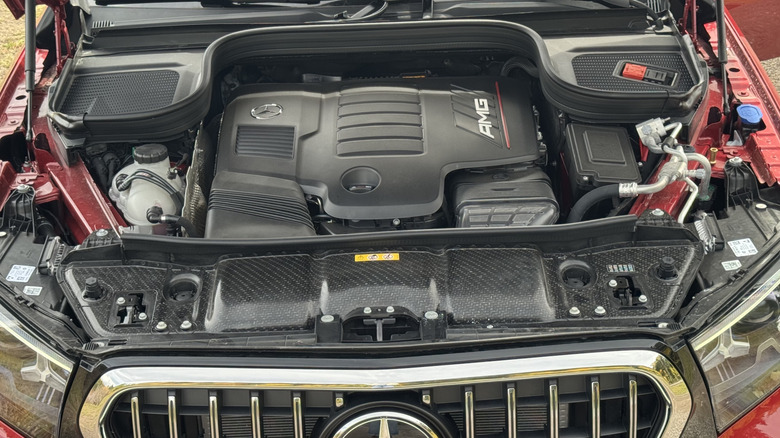
For the 2027 model year, the Mercedes-AMG GLE53 gains four crucial new letters in its nomenclature: PHEV. The powertrain starts with an AMG-enhanced version of the company’s excellent turbocharged 3.0-liter inline-six engine, designated the M256M Evo. This internal combustion engine is now paired with a potent 181-horsepower electric motor and a 25.3-kWh nickel-manganese-cobalt battery pack designed to significantly dial up performance and efficiency.
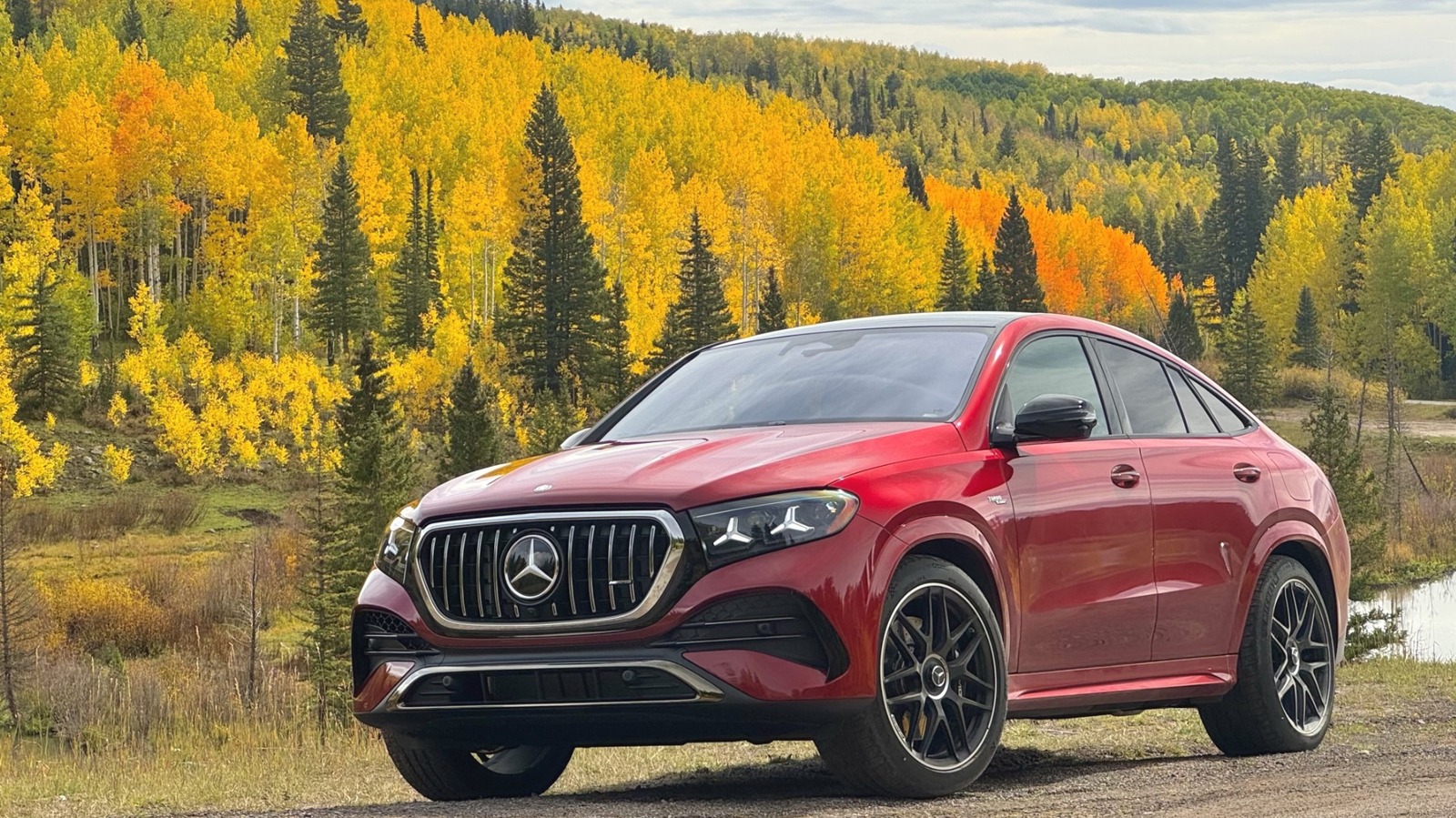
The vehicle is offered in both traditional SUV and sleek, slant-back coupe body styles. Pricing starts at $98,400 for the standard SUV and $99,450 for the coupe, with both figures including destination fees. That is undoubtedly a significant financial commitment, but the GLE53 PHEV aims to cover a wide spectrum of automotive roles. Depending on the drive mode and driver intent, it can function as a zero-emission electric vehicle for dozens of miles, an efficient family hauler for daily errands, or a full-on, brawny canyon carver.
Wait, Don’t We Dislike Mercedes-AMG’s PHEV Performance Cars?
In the case of certain other AMG plug-in hybrids—such as the four-cylinder Mercedes-AMG C63 S E-Performance—automotive critics and enthusiasts alike openly bemoaned the loss of the prior generation’s unapologetic twin-turbocharged V8 brutality. However, the mechanical recipe in the GLE53 is fundamentally different. Here, AMG has taken Mercedes’ inherently smooth, characterful, and universally beloved inline-six engine and layered electrification directly on top of it.
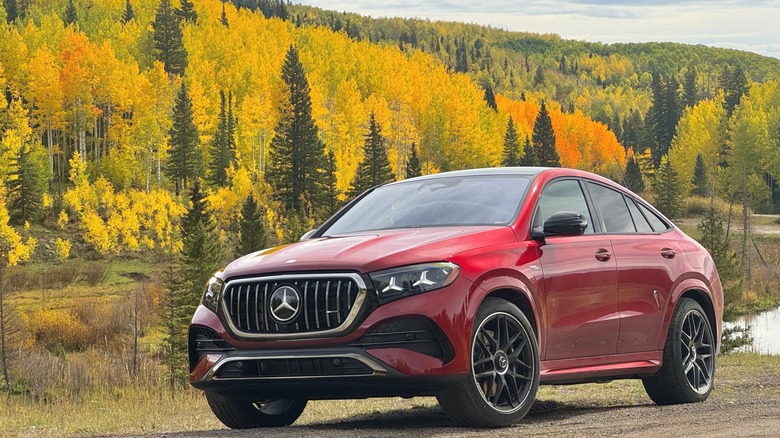
The outgoing GLE53 already utilized an AMG-enhanced iteration of this inline-six powerplant. The updated 2027 PHEV system builds upon that solid foundation with a massive injection of supplemental power. In concrete terms, the electrification translates to an additional 148 horsepower and 140 lb-ft of torque over the previous non-plug-in model. This brings the total combined system output to an impressive 577 horsepower and 553 lb-ft of torque—figures that dangerously close the gap to the 603 prodigious ponies produced by the V8-powered GLE63 S.
All that extra hardware results in a blistering 0-to-60-mph sprint of just 4.1 seconds. That makes the new plug-in hybrid a full 0.8 seconds quicker than the outgoing model, a notable achievement given the massive weight penalty inherent to hybrid battery systems. The PHEV hardware tacks on an 827-pound weight gain, bringing the total curb weight of the SUV up to a hefty 6,107 pounds. According to manufacturer specifications, the GLE53 Coupe manages to shed a minor 44 pounds by comparison, weighing in at 6,063 pounds.
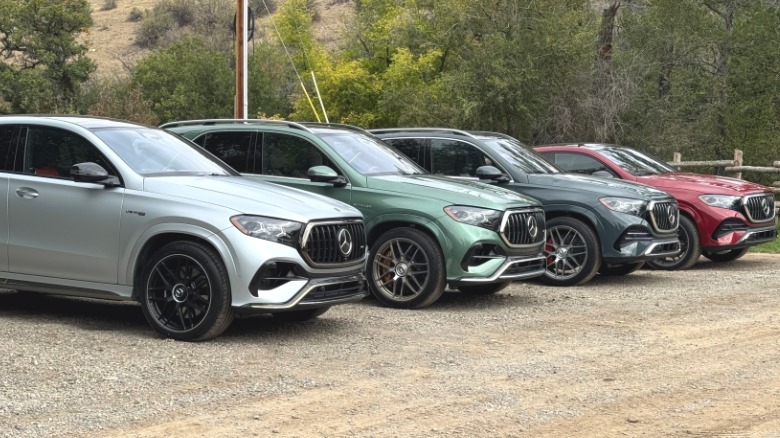
While official EPA fuel economy estimates have not yet been finalized and published, a spirited test drive covering challenging mountain roads in Colorado yielded an average of 30 mpg. This strongly suggests that overall efficiency will see a marked improvement over the outgoing GLE53’s ratings of 18 mpg in the city and 23 mpg on the highway.
On the pure electric side, the EPA has certified the GLE53 with a usable all-electric range estimate of 45 miles on a single charge. During real-world testing with a nearly full battery, the test vehicle’s onboard computer displayed a 50-mile electric-only range estimate that proved remarkably accurate in practice. Furthermore, the vehicle is capable of driving at speeds up to 87 mph in all-electric mode and supports 60-kW DC fast-charging functionality via a standard CCS port—meaning no NACS hardware is present—allowing the battery to replenish from 10 percent to 80 percent capacity in approximately 20 minutes.
It’s a Great Powertrain, and Much Livelier Than the GLE500e’s PHEV Powertrain
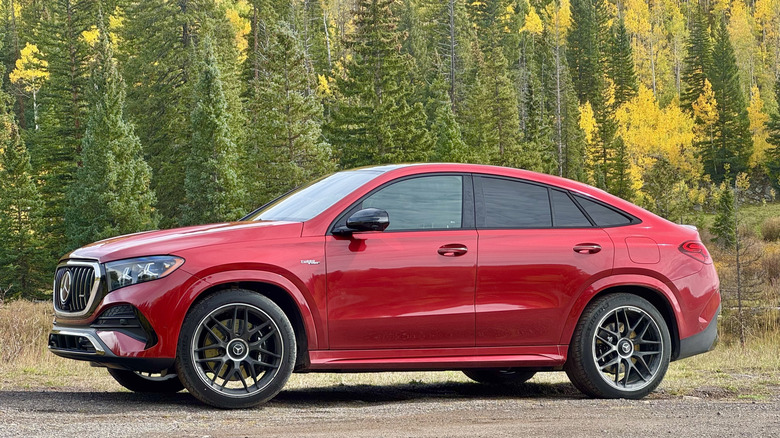
The test vehicle sampled in Colorado was a GLE53 Coupe riding on large 22-inch wheels. Yet, even with this aggressive wheel-and-tire setup, selecting Comfort mode allowed the freshly tuned AMG Ride Control+ air suspension to deliver a genuinely plush ride quality. While some critics have noted that smaller stablemates like the Mercedes-AMG GLC53 still lean toward a ride that is overly firm, the GLE53 successfully sidesteps that criticism. In Comfort mode, it fails to ride significantly stiffer than a standard, non-AMG GLE, showcasing its versatility as a multi-purpose machine.
Twisting the dedicated drive mode dial mounted directly on the steering wheel into Sport or Sport+ modes instantly firms up the chassis parameters and awakens the characteristically rowdy yet refined inline-six engine. The powertrain integrates its electric and gas components seamlessly, avoiding the jarring transitions that sometimes plague early hybrid systems and providing consistently predictable throttle inputs.
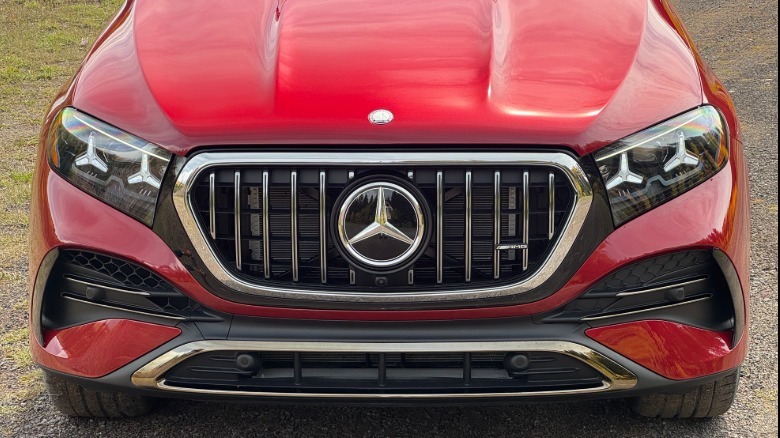
Inside the cabin, the smooth mechanical wail of the turbocharged six-cylinder engine sounds suspiciously similar to the deep, resonant baritone of a V8, courtesy of carefully engineered artificial engine noise broadcast through the interior. Standing outside the vehicle while a company representative revs the engine, however, reveals the true symphonic sound signature of a straight-six, complete with subtle, authentic-sounding pops and burbles on the overrun. While this creates a mild acoustic dissonance between the inside and outside experience, both perspectives sound undeniably impressive.
The vehicle provides an extensive array of selectable drive modes—including Slippery, Comfort, Sport, Sport+, Trail, and Individual—alongside dedicated PHEV functions like Electric and Battery Hold. Upon startup, the GLE53 automatically defaults to Electric mode. While this default setting may not appeal to every enthusiast driver, the physical rotary drive-mode selector makes switching into Comfort or Sport for hybrid operation quick and intuitive.
Ultimately, the plug-in hybrid powertrain found here takes on a significantly more athletic, sportier character than the milder setup utilized in the standard GLE500e, achieving this transformation without diluting the inherent mechanical charm of the inline-six engine hidden beneath the hood.
The Standard GLE Drives Well, and AMG Takes That to the Next Level
Driving the standard GLE lineup—particularly in the top-tier GLE580 trim equipped with its new flat-plane-crank V8—reveals an unexpected level of dynamic athleticism when tackling winding mountain passes. Spending time behind the wheel of the GLE53 Coupe yields similar thrills, allowing drivers to pitch the heavy crossover through tight corners framed by vibrant autumn foliage.
In 53 guise, the vehicle feels eager and responsive, though the substantial mass of the onboard PHEV battery pack remains palpable through sharp, tightening turns. Fortunately, the steering system is sharp and provides reassuring feedback. Unfortunately, this significant heft combines with what some drivers may find to be a disappointing lack of adjustability in the optional Multicontour seats. Even when adjusted to their maximum settings, these seats struggle to provide adequate lateral bolstering or a sufficiently low mounting position to cope with the cornering loads generated by a vehicle bearing the AMG badge.
The 2027 model year also marks the first time that the GLE nameplate is offered with launch control. While perhaps fundamentally unnecessary for a family-oriented crossover, the feature delivers immediate entertainment value. It is easily engaged by switching the drive mode selector to Sport+, holding the brake pedal firmly, and flooring the accelerator. True to AMG tradition, the vehicle responds by automatically tightening the seatbelts as a tactile signal that it is ready to pounce. Releasing the brake unleashes a strong initial surge of acceleration—undoubtedly driven by the immediate torque of the electric motor—though the ferocious acceleration tapers off slightly as highway speeds climb. It is undeniably fast, but the initial launch sets expectations for a mid-range punch that never fully materializes.
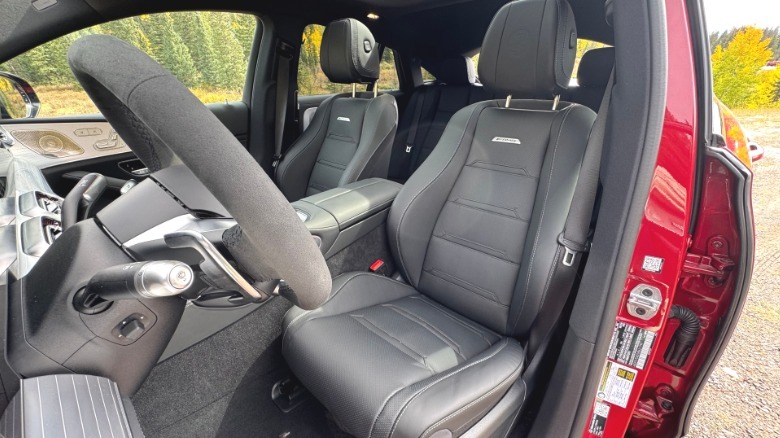
It is worth noting that the tested GLE53 Coupe weighed 584 pounds more than the V8-powered GLE580, which stands out as a particularly well-balanced variant in the standard lineup while lagging only a tenth of a second behind the GLE53 in the 0-to-60 sprint. That natural balance makes the diet-AMG model feel somewhat redundant to purists, yet the distinct aesthetic aggression and heightened performance envelope of the GLE53 still hold strong appeal for buyers seeking a middle ground short of the full-fat GLE63 S.
Aggression Is the Name of the Game Here, But It Gets the Same Demerits as the Regular GLE
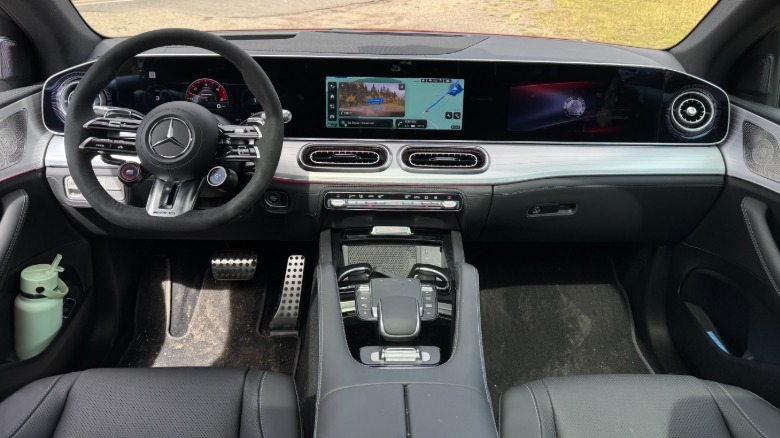
As the vehicle enters its seventh model year for this generation, the GLE53 inevitably inherits the same cabin-related shortcomings found across the broader GLE lineup. The updated interior prominently features Mercedes’ stopgap Superscreen layout, which incorporates three distinct, squat display panels framed by vast expanses of black-glass bezels. Furthermore, details like vinyl sun visors, hard plastic lower door cards, and limited small-item storage in the front cabin persist despite the vehicle’s lofty price tag.
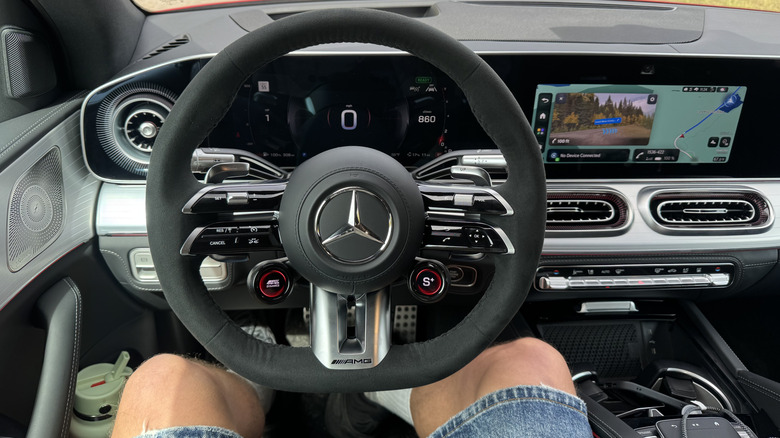
The more aggressive exterior styling, racy exhaust note, and spicier engine calibration certainly make the GLE53 feel considerably more exciting than its mainstream siblings. Yet, for many drivers, the understated competence of the standard GLE580 may still hold greater appeal. For buyers seeking a commanding road presence, athletic performance without the severe fuel consumption of a traditional V8, or a practical entry point into the upper echelons of AMG engineering, the GLE53 successfully delivers on its core promises.