In the latest installment of South Park’s 29th season, creators Trey Parker and Matt Stone have once again turned their satirical gaze toward the fast-moving currents of internet subculture. The third episode, titled "You Like That On Your Face," finds the show’s central cast navigating the bizarre intersection of Gen Alpha social trends, the obsession with beauty retail, and the encroaching influence of surreal internet horror aesthetics. As the mountain town—now officially dubbed "South America"—continues to adapt to its rebranding, the episode serves as a frantic, humor-filled exploration of how digital jargon like "mogging," "maxxing," and "mewing" has infiltrated the daily lives of the town’s youth.
The episode centers on a premise that feels ripped directly from the current social media landscape: the rise of "aura battling." This performative ritual, defined by the constant pursuit of social validation through appearance and digital status, finds Kyle Broflovski in a familiar position of frustration. His younger brother, Ike, is preparing for a high-stakes, live-streamed aura battle against a rival named Chad. While the premise is ostensibly about a schoolyard competition, the subtext is a biting critique of "looksmaxxing"—the practice of using grooming, lifestyle changes, or cosmetic procedures to optimize one’s physical attractiveness to a hyperbolic degree. Kyle’s skepticism is palpable, as he characterizes the combination of aura battling and looksmaxxing as a "bad combination," highlighting the toxic pressure these trends exert on young people.
In a twist that highlights the show’s penchant for unlikely character dynamics, it is Eric Cartman who steps up to mentor Ike. In a rare display of pseudo-benevolence, Cartman attempts to soothe the anxious youth, adopting a supportive tone that feels sharply out of character for the often-belligerent antagonist. "I’m sure that deep down your brother wants to help. Okay? Maybe he just doesn’t know how," Cartman tells Ike, offering comfort ahead of the showdown. "If I had a little brother, he’d be my special little guy."
Driven by this newfound, albeit suspicious, sense of duty, Cartman decides that the only way to ensure Ike wins his battle is to secure the right "products." This leads the duo to the local Sephora, which has been completely overrun by the town’s children. The episode leans heavily into the viral internet phenomenon of "Sephora kids"—the trend of tweens and young teens spending inordinate amounts of time testing and purchasing high-end skincare and makeup products. The show punctuates this cultural observation through the perspective of an older bystander sitting outside the store. Reflecting on the inexplicable nature of the obsession, the man remarks, "Something not right in there. My granddaughter wanted to go to Brandy Melville. Then she asked if she could just stop in the Sephora. That was six and a half years ago. There’s something in there men can’t understand."
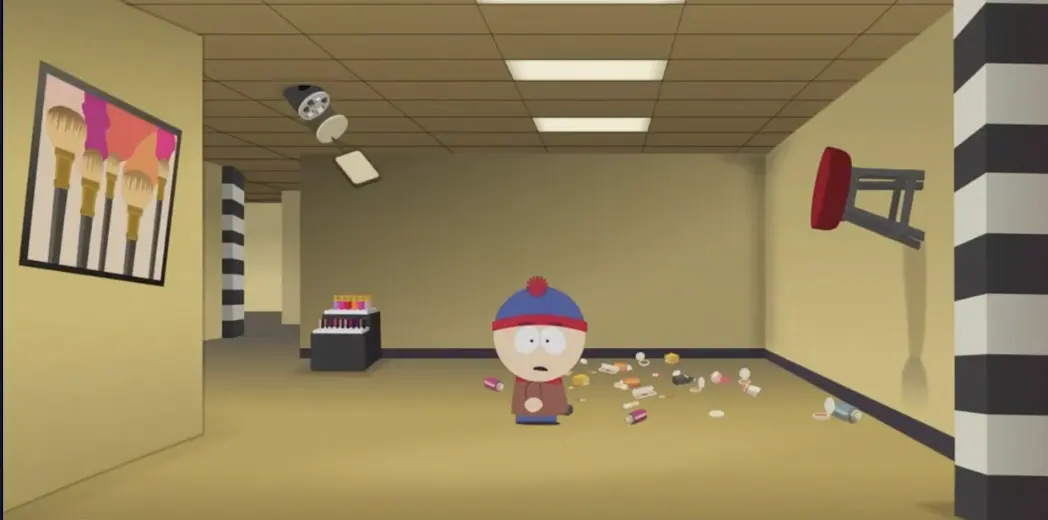
The comedy turns toward the surreal when Cartman and Ike, while navigating the aisles of the beauty giant, are lured into the store’s "Backroom." These corridors are presented as a direct homage to the "Backrooms" aesthetic—a viral internet horror trope characterized by endless, labyrinthine, and liminal office spaces, famously popularized by filmmaker Kane Parsons. The inclusion of this aesthetic marks a departure into the uncanny, as the store transforms from a retail space into a psychological trap.
Stan Marsh, who had previously wandered into this unsettling dimension, finds himself tasked with navigating the store’s architecture to rescue Cartman and Ike before the scheduled aura battle begins. However, the episode’s conclusion emphasizes the futility of these digital-era obsessions. Despite the efforts to "max out" Ike’s appearance through the use of Sephora products, he fails to emerge victorious in his battle. The ultimate victor in the social hierarchy of the episode is not the meticulously preened Ike, but rather Randy Marsh. In a classic South Park escalation, Randy—having shrunk himself down using products scavenged from the store—is forced to enroll in school to match his son’s stature. In his miniaturized state, he manages to physically best Ike’s opponent, effectively destroying the "looksmaxxed" face of his son’s rival in the process.
This latest episode is particularly notable for its lack of focus on the current political climate. While South Park has historically been a vessel for sharp political commentary, the Trump administration—which served as a primary narrative anchor in previous seasons—has been notably absent or relegated to the background in Season 29. This is a departure from the previous season, where the show dedicated significant screen time to absurd political plot lines, such as JD Vance’s bizarre fictional efforts to evade accountability for his past actions. By stepping away from direct presidential satire, the show has pivoted toward a more sociological focus, examining how the internet and shifting cultural norms impact the domestic life of the residents of "South America."
The season’s trajectory has been defined by a mix of technological anxiety and absurdity. The premiere episode established the new tone by focusing on the characters’ newfound obsession with e-bikes, a quintessential suburban status symbol. The second episode, meanwhile, took a more explicit approach to its satire. In that installment, Butters Stotch took center stage in an effort to rid the town of "billionaire weenies"—a literal, phallic manifestation of the power dynamics between tech moguls and the public. The episode also delved into the cultural divide surrounding public health, with Butters’ parents blaming his radical, anti-billionaire beliefs on the side effects of a measles vaccine. The dialogue, featuring his father shouting about the dangers of not listening to podcasts, served as a commentary on the fragmentation of information and the rise of conspiratorial thinking in modern households.
As Season 29 progresses, the commitment of Parker and Stone to the rebranding of the town as "South America" remains a central pillar of the show’s narrative universe. This change, announced shortly before the season premiere, serves as a thematic umbrella for the show’s current exploration of global influence, local identity, and the absurdity of modern trends. The commercial success of this creative shift is evident in the numbers; the premiere episode, marking the first broadcast under the new title, drew a massive audience of 4.2 million viewers within its first three days, according to data from Variety.
The success of these episodes suggests that while the subject matter continues to shift toward the increasingly niche and bizarre corners of the internet, the audience’s appetite for South Park’s specific brand of cynical observation remains robust. By grounding its episodes in the chaotic reality of contemporary youth culture—whether that be the aesthetic obsession of the "Sephora generation" or the surreal, liminal horror of the internet’s "backrooms"—the show continues to act as a mirror for the peculiar anxieties of the current era. Whether the characters are battling in the schoolyard or navigating the surreal depths of a beauty retailer, the essence of South Park remains constant: a relentless, often uncomfortable, exploration of the things that, for better or worse, define modern American life. As the season continues, viewers can expect further explorations into the ways in which global, digital-first culture continues to reshape the small-town dynamics of the show’s enduring cast.