As the literary landscape shifts through a vibrant autumn release schedule, Lit Hub’s review aggregator platform, Book Marks, has highlighted five standout reviews offering deep-dives into recent non-fiction, memoirs, and contemporary fiction. Featuring critical insights from prominent publications like The New Republic, The New York Times, The Baffler, The Atlantic, and The New Yorker, this week’s curated selection spans the turbulent history of American political movements, brilliant reissued fiction, intense explorations of addiction and the soul, community resistance, and dense, avant-garde institutional critique.
Re-Examining the Legacy of Eugene V. Debs in Shawn Gude’s American Socialist
Opening the weekly roundup, Joanna Scutts tackles Shawn Gude’s American Socialist: The Life and Legacy of Eugene V. Debs, published via The New Republic. The book arrives at a time of renewed domestic interest in leftist politics, underscored by prominent figures such as Bernie Sanders, Alexandria Ocasio-Cortez, and the mayoral election of Zohran Mamdani in New York. These contemporary politicians continually confront a persistent historical assumption: that socialist ideologies cannot find a viable foothold in the United States.
Gude, a former editor at Jacobin, seeks to correct this narrative by examining the life of America’s foremost socialist evangelist, Eugene V. Debs. Rather than viewing Debs merely as an isolated historical curiosity, Gude’s biography illuminates both the personal and ideological forces that shaped him, alongside the aggressive, exceptional efforts marshaled by his opponents to crush his burgeoning movement. Ultimately, the book posits a deeper truth about the American political ecosystem—that the history of socialism in the United States is fundamentally intertwined with the story of intense, systemic opposition to it.

Scutts highlights Gude’s description of Debs’s unique rhetorical style, which artfully fused nationalist and Christian mythology with Marxist principles. Evoking the fiery spirit of abolitionists alongside the moral resonance of Christ, Debs commanded crowds with an electrifying stage presence that printed photographs and transcripts could barely capture. This political religion drew immediate comparisons to Jesus Christ from both followers and critics alike.
Reflecting on the international socialists who initially looked to the United States with wild excitement, Gude’s work confronts the brutal disillusionment that met early American labor organizers. Yet, as Scutts notes, the unfulfilled promise of American socialism speaks to a broader national character capable of deep reinversion and resistance. The story of Eugene V. Debs suggests that transformative change will not emerge from a single charismatic leader, but rather from the collective, joyful resistance and community of ordinary people.
Barbara Trapido’s Resurfaced Gem: Brother of the More Famous Jack
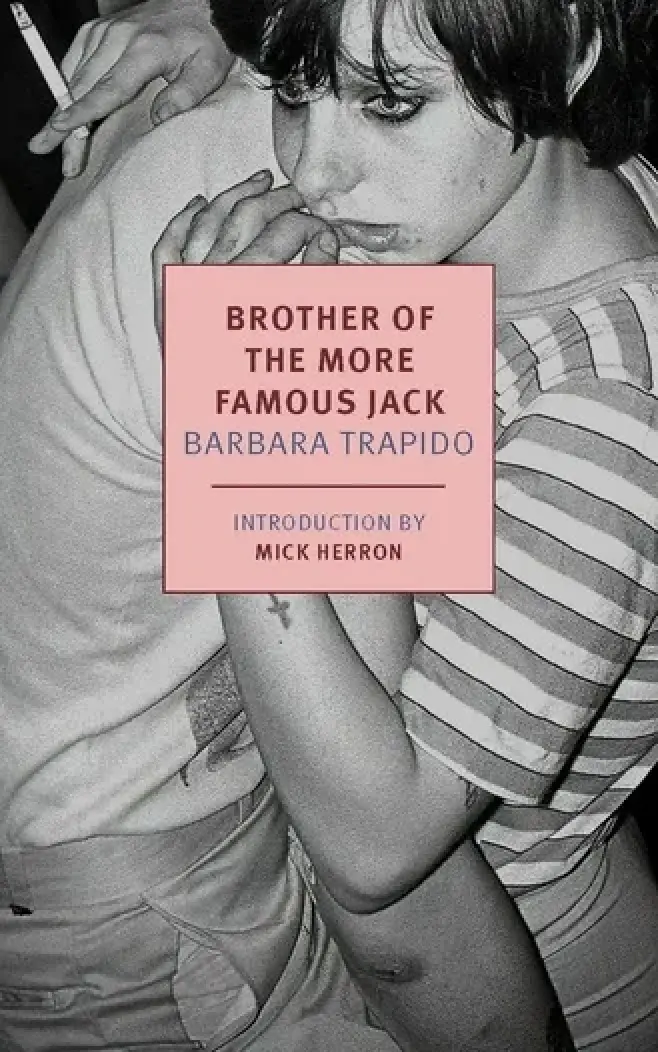
Turning to fiction, Dwight Garner of The New York Times directs fresh attention to Barbara Trapido’s novel Brother of the More Famous Jack. Featuring a challenging title derived from a subtle allusion to painter Jack Yeats—brother of the poet William Butler Yeats—the book has arguably struggled to secure the wide audience it merits. Garner champions the novel as a "pocket classic," praising its literate, funny, cruel, and eccentric prose.

Garner expresses a distinct affinity for narratives centered on young people who grow up within narrow cultural environments, only to discover alternate ways of living through mentorship or near-adoption by unconventional, urbane figures. Comparing this thematic undercurrent to Willa Cather’s One of Ours, Garner positions Trapido’s novel as a high-water mark within this genre.
The dialogue in Brother of the More Famous Jack is compared favorably to the work of Tom Stoppard, characterized by sharp banter where characters constantly challenge one another as an eccentric expression of affection. Garner laments the awkwardness of the title while celebrating the novel’s ability to take life seriously, earn its emotional stakes, and befriend the reader without slipping into sentimentality.
Meghan O’Gieblyn Explores Addiction, Will, and Consciousness in Will and Attention
In Will and Attention, reviewed by Rhian Sasseen for The Baffler, author Meghan O’Gieblyn confronts profound philosophical and personal terrain. Set predominantly against the backdrop of the COVID-19 pandemic, the memoir chronicles O’Gieblyn’s frightening, abrupt relapse into alcoholism, running parallel to her unexpected intellectual and spiritual flirtation with Catholicism years after publicly renouncing religion to embrace atheism.
Sasseen examines how the book interrogates the concept of the human soul—an antique, heavily laden term frequently dismissed in an era dominated by technological nihilism and binary logic. O’Gieblyn examines forms of obliteration, ranging from the self-erasure caused by substance abuse to the dissolution of the ego when confronted with the divine.
Drawing upon diverse intellectual traditions—including French philosopher Simone Weil, German thinker Arthur Schopenhauer, and Catholic theology—O’Gieblyn elevates the traditional addiction memoir into a broader inquiry regarding free will, self-examination, and the fundamental varieties of attention we owe to ourselves and others. Sasseen notes that the author confronts the difficult paradox wherein achieving stability and happiness in life can breed a restless boredom, which subsequently triggers a self-destructive urge to dismantle that very equilibrium. By anchoring the deeply personal trials of addiction within a broad history of human thought, O’Gieblyn avoids reducing substance abuse strictly to a biological disease or a simple matter of moral choice.
Madeline ffitch’s Avalon, Rise Blends Ethical Complexity with the Spirit of Classic Children’s Literature
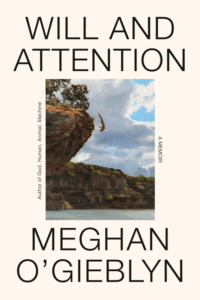
Writing for The Atlantic, Lily Meyer reviews Madeline ffitch’s sophisticated and intellectually complex novel, Avalon, Rise. The book explores the difficult mechanics of facing evil and opposing community-destroying forces with courage. However, ffitch consciously avoids presenting a narrative of easy moral purity; her characters are fallible, and the novel refuses to preach or demand that its figures make exclusively correct choices. Instead, it examines the messy, complicated reality of trying to be good and attempting to foster solidarity among imperfect people when stakes are exceptionally high.
Meyer observes that ffitch structures her narrative similarly to classic children’s literature—invoking titles such as Abiyoyo, Frog and Toad, Herschel and the Hanukkah Goblins, and The Dead Bird. Much like these beloved works, Avalon, Rise combines mundane tasks and emotional complications with humor, mischief, and delight. Whether addressing the resistance to white supremacists entering a small town or the frustrating logistics of community organizing, ffitch captures the universal truth that while life can be endlessly exciting for confused, fallible individuals, achieving collective progress is rarely simple.
Tom McCarthy’s The Rhyl Poster and the Evolution of Institutional Critique
Rounding out the week’s reviews, Max Callimanopulos examines Tom McCarthy’s latest novel, The Rhyl Poster, in a review for The New Yorker. Callimanopulos notes a distinct evolution in McCarthy’s prose style. Moving away from the sparse minimalism characteristic of writers like late-career Samuel Beckett, McCarthy has increasingly embraced a dense, geeky technical vocabulary filled with references to networks, spreads, vectors, and complex institutional frameworks.
For readers, navigating The Rhyl Poster can initially feel disorienting. The novel echoes the structural DNA of McCarthy’s previous works—recycling narrative concerns regarding men attempting to construct overarching infrastructural meanings out of contemporary bureaucracy. The prose is densely packed with legalistic jargon and administrative abstractions, creating an experience that can feel deliberately designed to frustrate conventional reading pleasures.
Yet, Callimanopulos observes that the novel’s distinct power tends to emerge retrospectively, growing on the reader only after the final page is turned. Reflecting on a character’s description of document-smuggling as "a topographic, not a spiritual, drama," Callimanopulos suggests this phrase aptly encapsulates McCarthy’s entire literary career. While the author has historically shown minimal interest in traditional emotional interiority, The Rhyl Poster hints at a potential shift away from X-raying bureaucratic institutions toward a simpler, more direct observation of the physical world.
Together, these five reviews spotlight a rich cross-section of current publishing, offering readers varied pathways through history, philosophical memoir, politically charged fiction, and avant-garde literary experimentation.