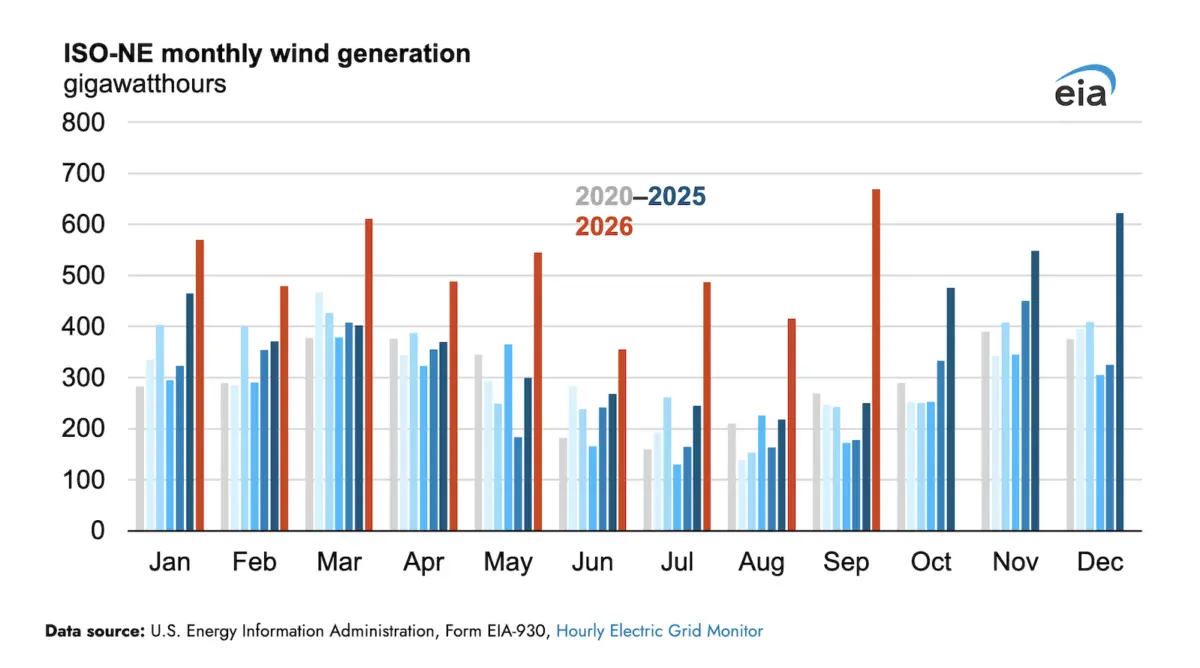
Wind power generation across the New England region has experienced a dramatic and unprecedented surge, according to recent energy data. Newly released figures indicate that monthly wind generation during the first nine months of 2026 averaged an impressive 68% higher compared to the exact same period in the previous year. This substantial jump underscores a rapidly shifting energy landscape within the footprint managed by ISO New England, the regional grid operator responsible for keeping power flowing across six states.
The data, originally highlighted by the U.S. Energy Information Administration’s Today in Energy publication with principal contributions from analyst Alex Mey, points to a broader transformation taking place in the northeastern United States. As utilities, regional planners, and policymakers look for ways to meet growing electricity demands while reducing carbon emissions, wind energy is rapidly transitioning from a supplementary power source to a major contributor to the regional grid.
To understand the magnitude of this growth, one must examine how the regional grid operates and the unique challenges and opportunities presented by New England’s geography. ISO New England oversees the generation and transmission of wholesale electricity for Connecticut, Maine, Massachusetts, New Hampshire, Rhode Island, and Vermont. Historically, this region has relied heavily on natural gas, nuclear power, and imported energy sources to meet its daily consumption needs. However, state-level clean energy mandates, declining technology costs, and aggressive investments in both onshore and offshore wind developments have begun to visibly reshape the generation mix.
The 68% average increase recorded through the first three quarters of 2026 did not happen in a vacuum. It reflects a compounding effect of newly commissioned wind projects finally coming online and feeding power into the regional transmission lines, alongside favorable meteorological conditions that have boosted capacity factors across existing and new installations alike. In a grid system where balancing supply and demand in real-time is paramount, the addition of significant blocks of zero-carbon wind generation provides a notable shift in how system operators manage daily load curves.
The broader implications of this generation spike extend far beyond raw percentage figures. For consumers and businesses across New England, the integration of more renewable energy is a key component of long-term economic and environmental strategies. Renewable sources like wind help diversify the fuel mix, potentially shielding the region from the intense price volatility that has historically accompanied spikes in fossil fuel prices, particularly natural gas. Furthermore, as regional heating and transportation sectors continue to electrify, driving up overall electricity consumption, expanding domestic and regional generation capacity becomes an absolute necessity for grid reliability.
Industry analysts tracking the EIA data note that the acceleration of wind generation in ISO New England aligns with national trends, though the Northeast faces unique siting and transmission constraints. Developing utility-scale wind farms in New England often involves navigating complex regulatory environments, dense populations, and sensitive marine or terrestrial ecosystems. Despite these hurdles, the steady stream of newly operational capacity highlighted in the 2026 data demonstrates that long-planned projects are successfully cutting through the red tape and delivering tangible results to the grid.
The ongoing transformation within ISO New England also highlights the critical importance of transmission infrastructure. As more intermittent renewable resources are integrated into the grid, the ability to transport power efficiently from high-generation areas—such as offshore wind zones off the coast or windy ridges in northern Maine—to major load centers like Boston, Providence, and Hartford is vital. Grid operators and regional transmission organizations are continually reassessing upgrade needs to ensure that clean energy generated miles away is not curtailed due to bottlenecks in the transmission wires.
Looking ahead, energy experts will be closely monitoring how the final months of 2026 shape up and whether this 68% growth trajectory can be sustained or even surpassed as winter weather patterns set in. Winter in New England typically brings higher electricity and heating demands, accompanied by some of the strongest seasonal wind resources of the year. If the performance seen during the first nine months of 2026 serves as an indicator, wind energy is poised to play an increasingly vital and reliable role in powering the region through the coldest months and into the future.