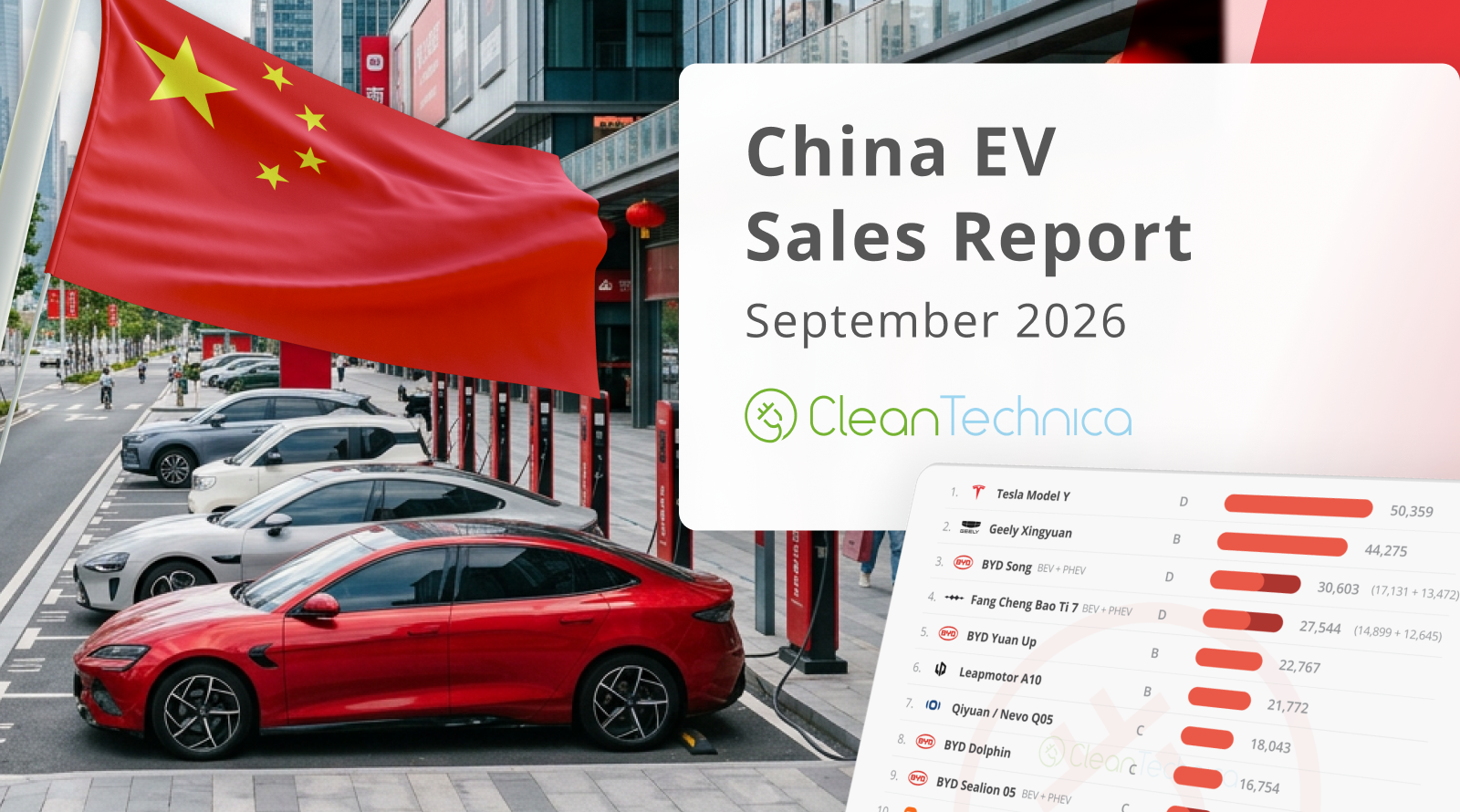
Driven by a combination of high fuel prices and a relentless wave of new battery-electric vehicle (BEV) models, China’s automotive market achieved a historic milestone in September, with electrified vehicles capturing 67% of total sales. However, a closer look at the figures reveals a shifting dynamic within the world’s largest car market: while past records were predominantly forged on the back of surging EV adoption, September’s milestone was amplified by a dramatic collapse in internal combustion engine (ICE) vehicle sales.
Overall vehicle sales in China dropped 28% year-over-year to approximately 1.6 million units during the month. While plug-in vehicles experienced a modest 17% decline compared to the same period last year, traditional pure ICE sales suffered a severe downturn, crashing by 49%. With BEVs accounting for 45% of the market and plug-in hybrids (PHEVs) taking 22%, nearly seven out of every ten cars sold in China featured a plug. Analysts note that if this trajectory persists, the Chinese passenger vehicle market could achieve full electrification before the end of the decade, with pure BEVs dominating the landscape ahead of 2035.
This strong performance lifted the cumulative market share for electrified vehicles in 2026 to 58%, marking a four-percentage-point increase over the full-year figures recorded in 2025. Pure BEVs alone climbed to 39% of the market, up from 33% the previous year. Industry projections suggest that the final tally for 2026 could see overall plugin share comfortably exceeding 60%, with BEVs alone crossing the 40% threshold. As electrification deepens in the globe’s most influential automotive arena, traditional internal combustion engine manufacturers face mounting pressure.
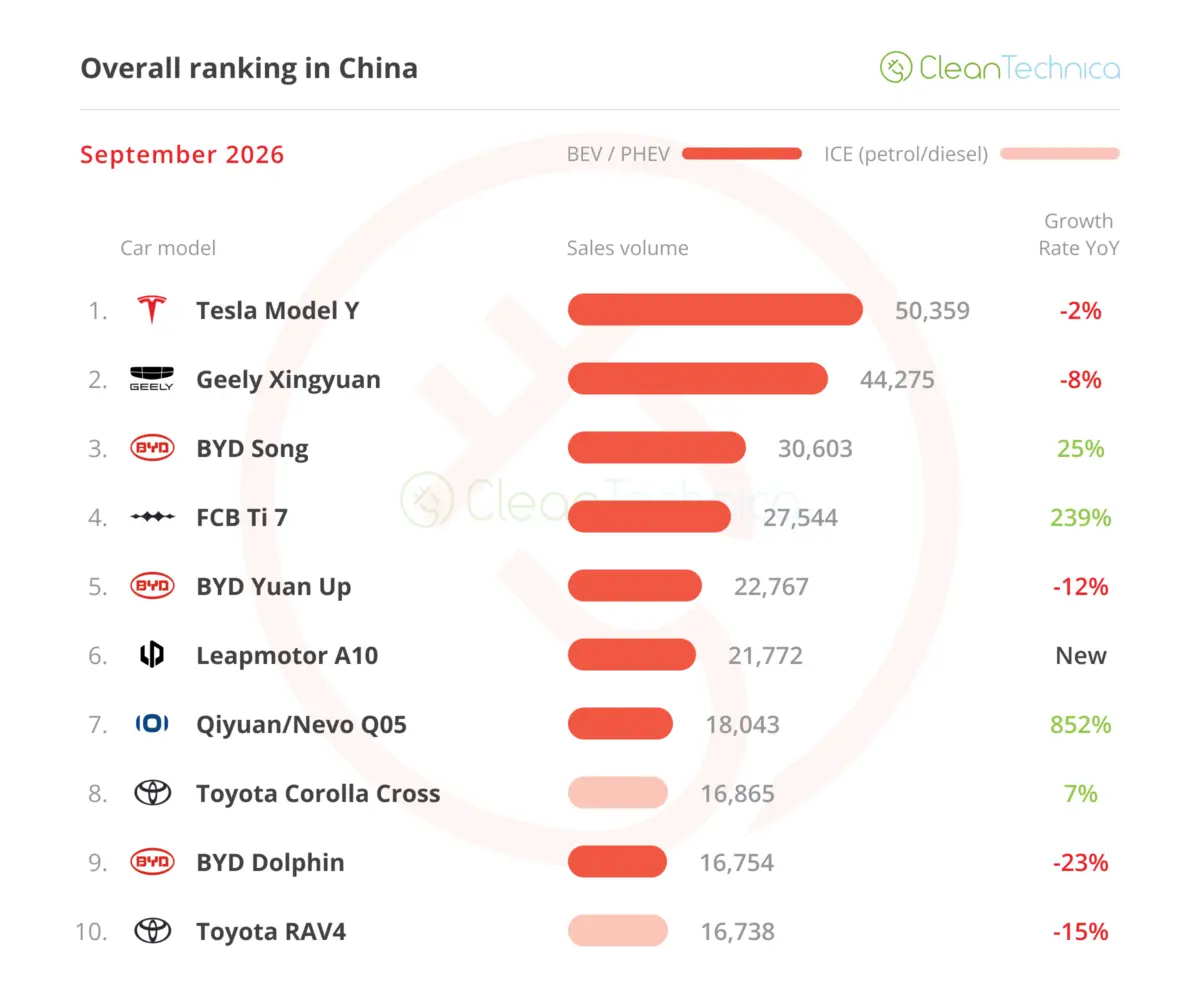
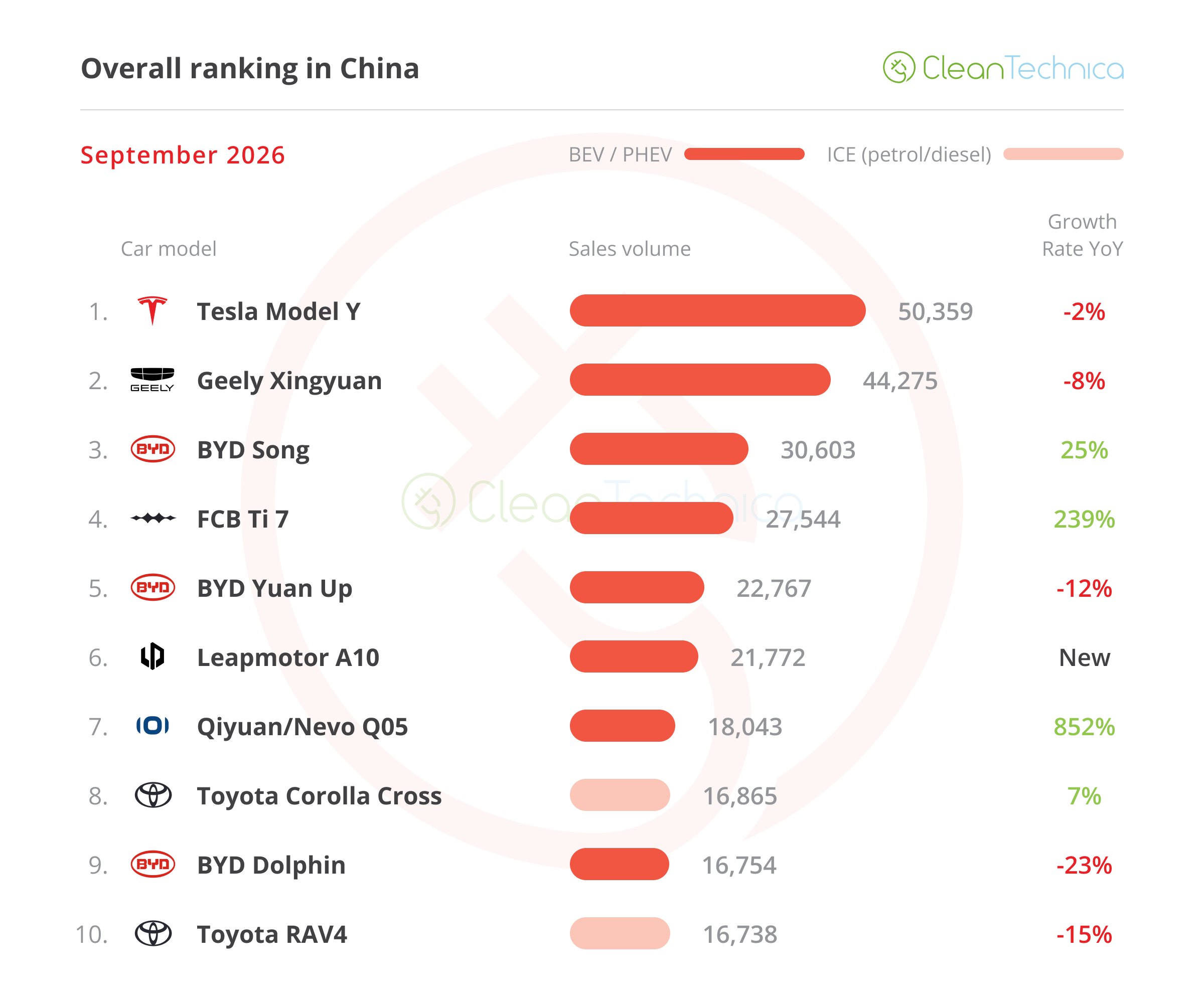
The extinction-level event facing traditional gas-powered cars was clearly reflected in the overall model rankings, though September did witness a rare appearance by legacy ICE vehicles in the top ten. Two models from Toyota managed to break into the upper tier, with the Corolla Cross securing eighth place and the RAV4 rounding out the top ten. In the context of recent Chinese automotive history, the return of ICE models to the top ten stands out as an anomaly. In preceding months, a 100% plug-in top ten had become the expected norm, making the brief resurgence of Toyota’s offerings a noteworthy development rather than a shift in momentum.
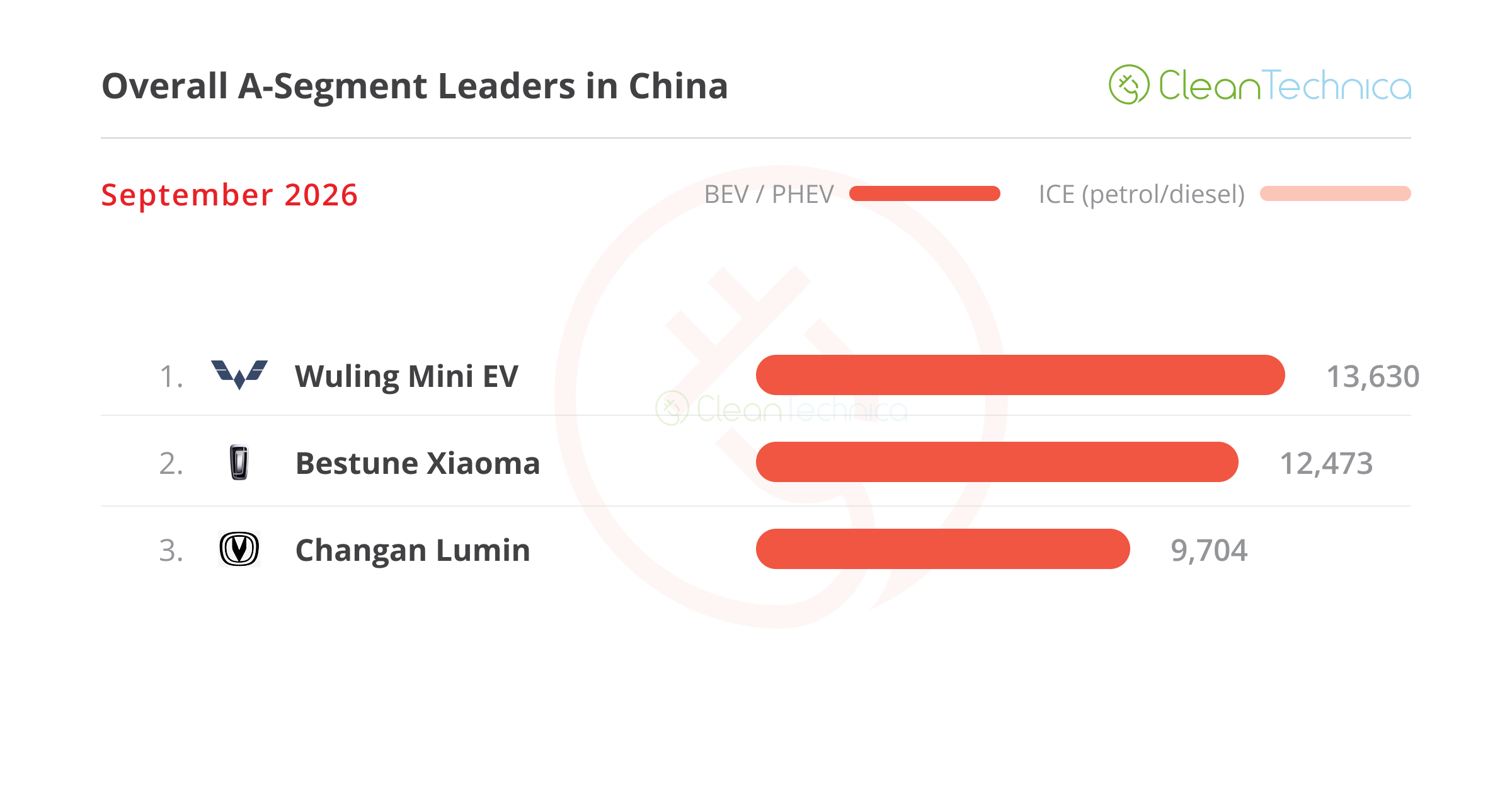
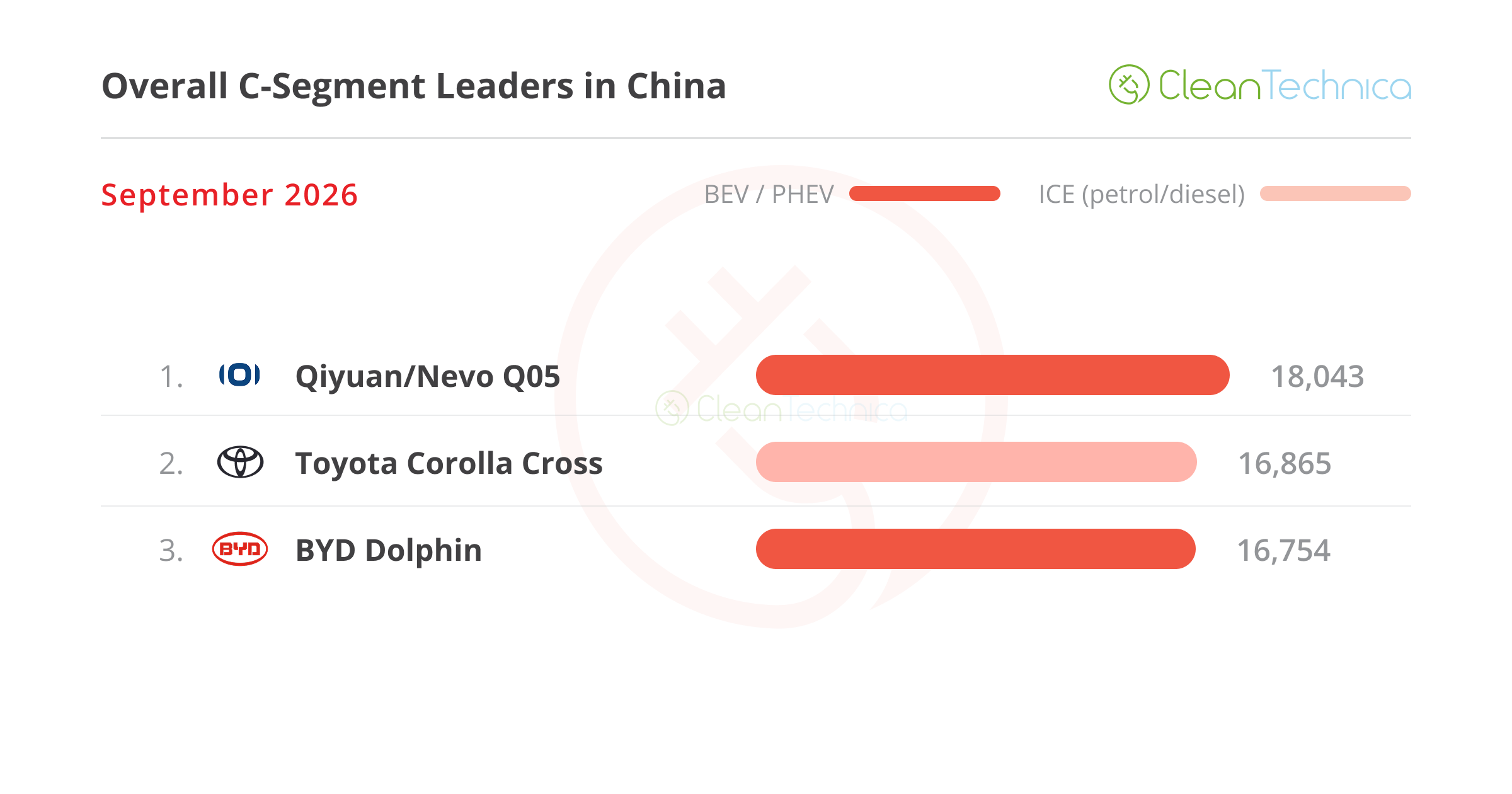
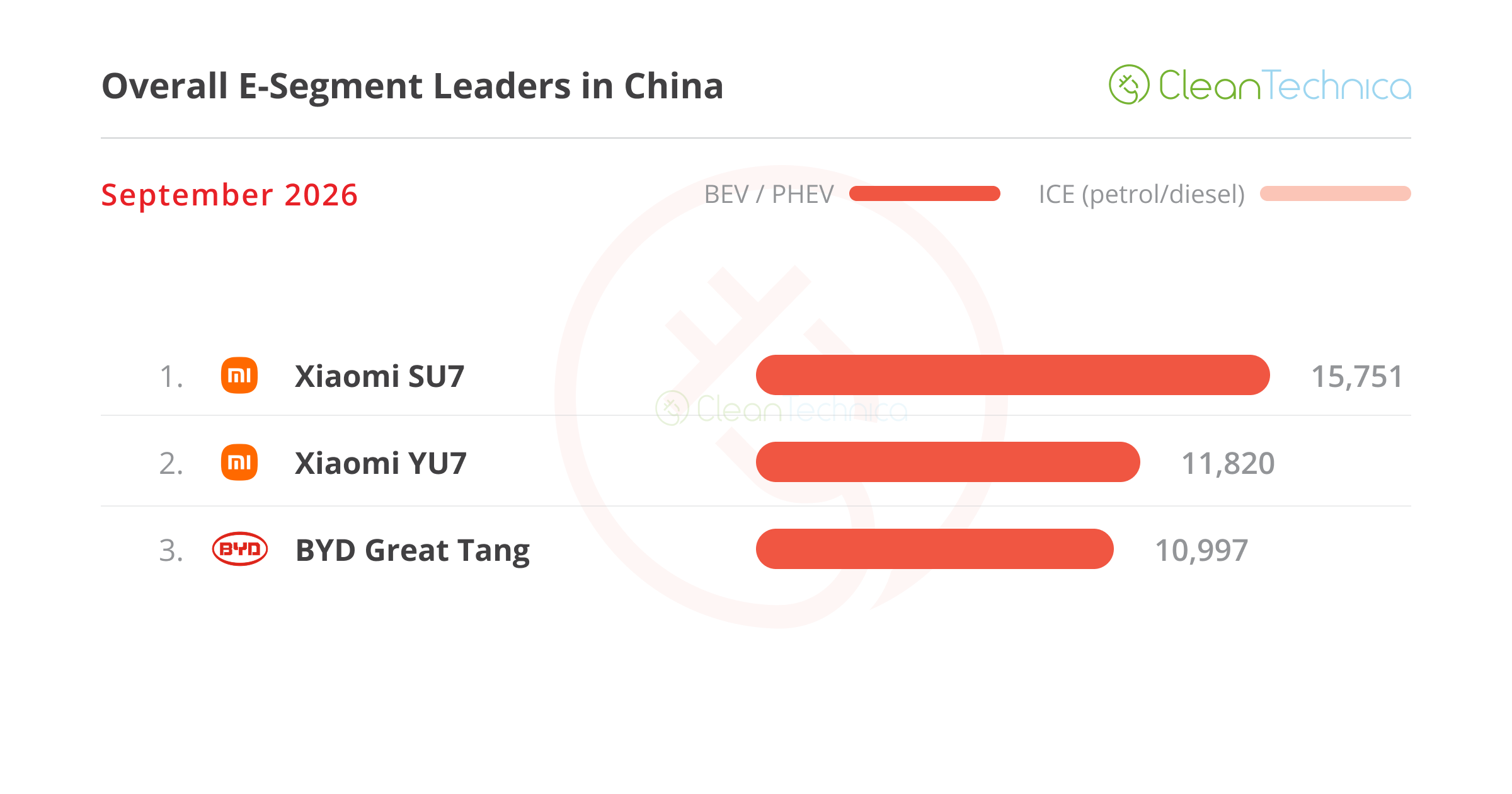
Examining best sellers across various size categories further underscores the retreat of traditional engines. The compact or C-segment category remains the sole stronghold for combustion engines, with the Toyota Corolla Cross capturing second place behind the Nevo Q05 and just ahead of the BYD Dolphin. Across the broader spectrum of vehicle classes, smaller city cars have seen a notable resurgence in volume, highlighted by the Bestune Xiaoma capturing a surprising second place in its segment. Meanwhile, premium large SUVs continue to evolve rapidly, with BYD’s flagship Great Tang SUV securing a podium finish in third place, trailing only offerings from Xiaomi.
Top-Selling Electric Models in September
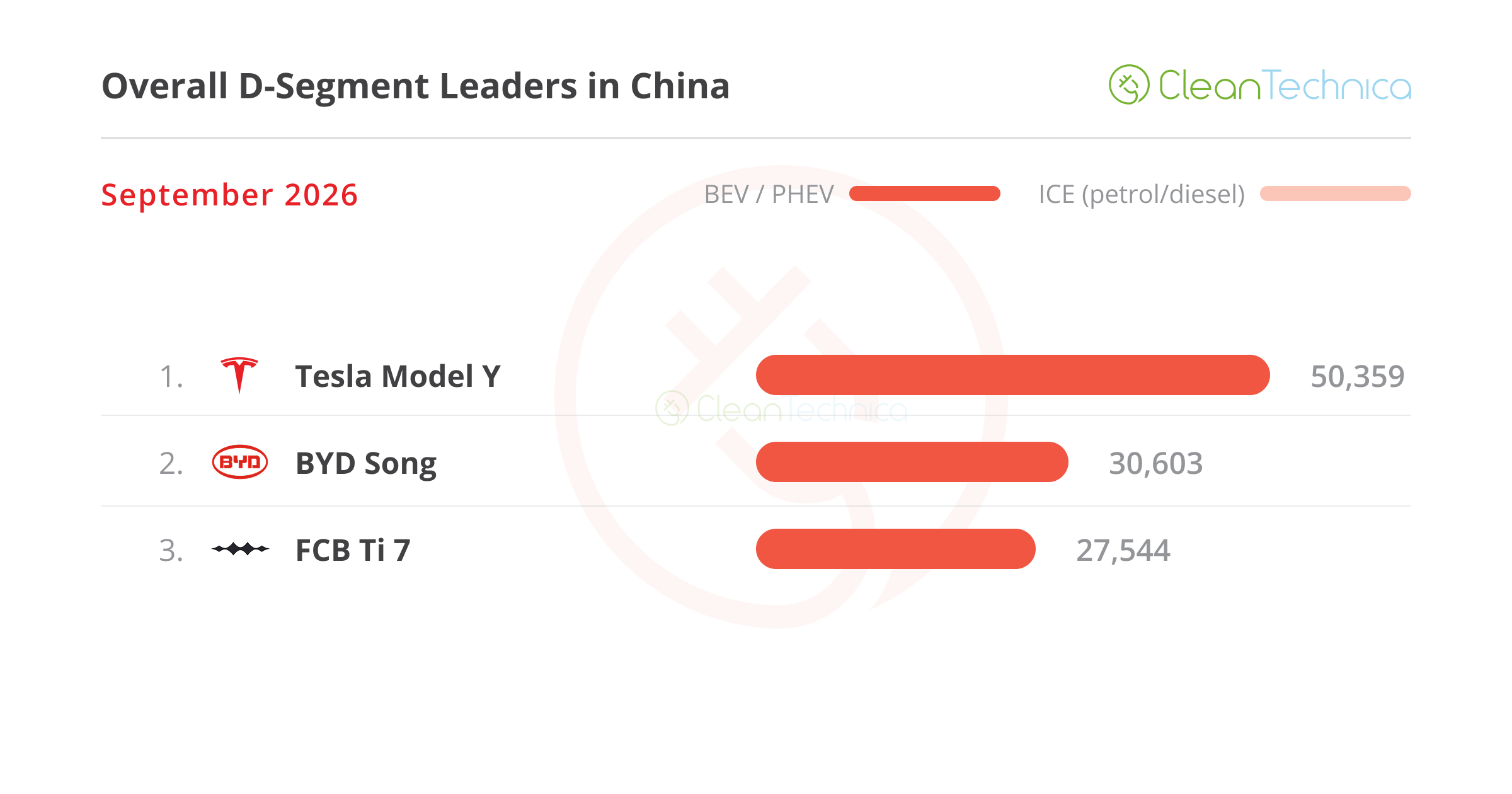
The Tesla Model Y maintained its stronghold at the top of the sales charts, delivering 50,359 units in September. The crossover’s performance continues to be bolstered by the introduction of the extended-wheelbase "L" variant in China. Despite claiming the monthly bestseller crown, deliveries slipped 2% compared to September of the previous year. While the long-wheelbase option has successfully sustained demand for the six-year-old crossover, industry observers note that aging architecture poses a growing challenge. As domestic competitors transition rapidly to 800-volt electrical architectures and integrate advanced feature sets, the Model Y is beginning to show its age, making future podium dominance increasingly difficult to maintain against surging local alternatives.
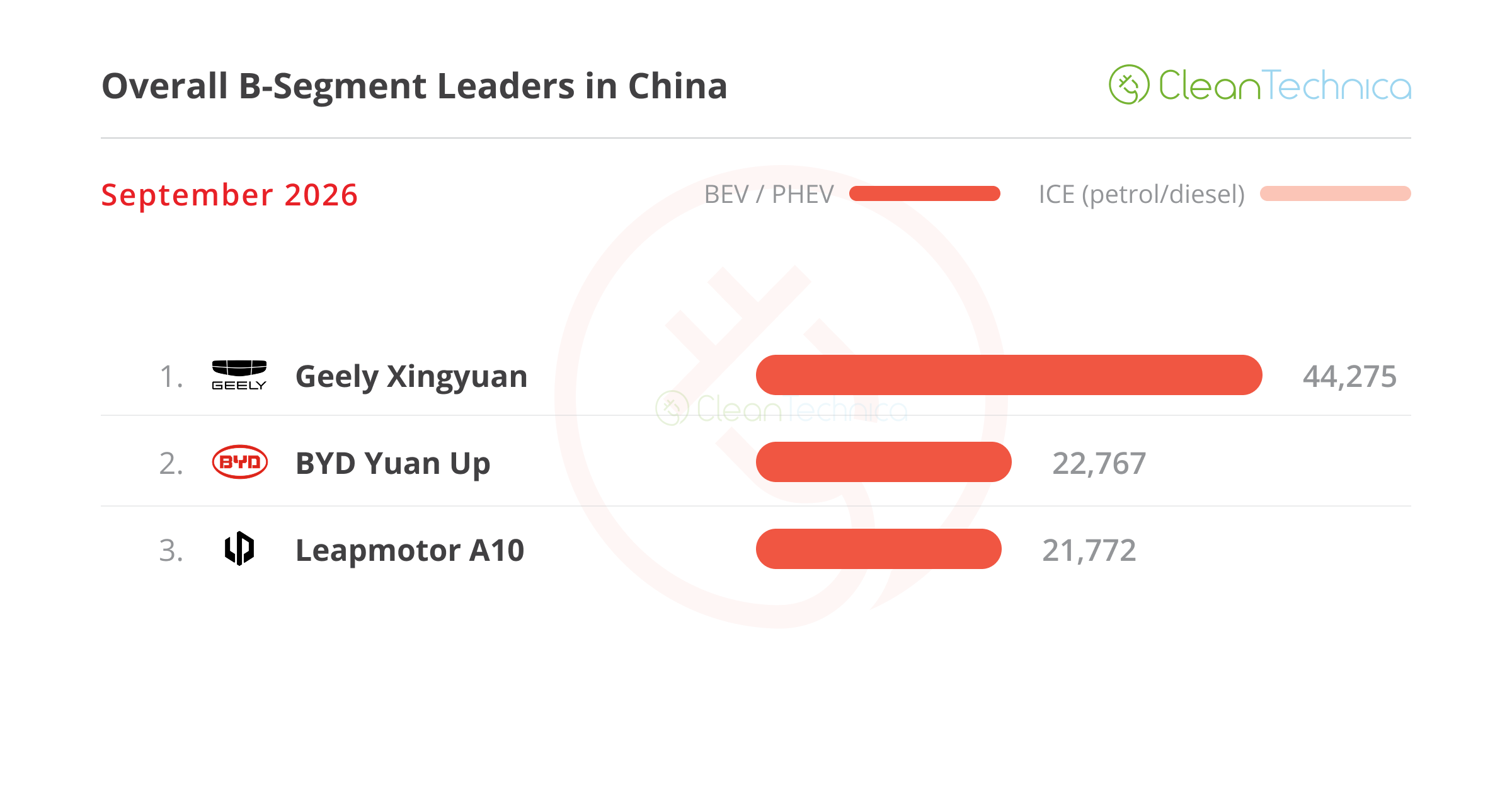
Geely’s star hatchback, the Xingyuan, secured second place with 44,275 registrations, though sales experienced an 8% year-over-year decline. Developed under the internal design philosophy of delivering a vehicle with the footprint of a BYD Dolphin at the accessible price point of a BYD Seagull—around $10,000—the Xingyuan faces intensifying competition. The crowded entry-level hatchback segment now features formidable challengers, including Leapmotor’s A10 and A05, the next-generation Wuling Bingo, Chery’s updated QQ3, the BYD Yuan Up, and a revamped iteration of the BYD Seagull, which is actively targeting the Xingyuan’s market share.
BYD’s high-volume midsize SUV, the Song, captured third place with 30,603 registrations, marking a 25% increase compared to the same month last year. The vehicle’s upward trajectory is being driven by the commercial ramp-up of its new Ultra generation. Incorporating advanced driver-assistance hardware, including lidar, alongside ultra-fast 1,500 kW DC charging capabilities, the new Song is positioned aggressively on price. Retailing between 152,000 yuan ($22,000) and 180,000 yuan ($26,000) depending on battery capacity, the model undercuts competitors like the Tesla Model Y while offering robust specifications. Analysts expect the Song to challenge for podium positions consistently moving forward.
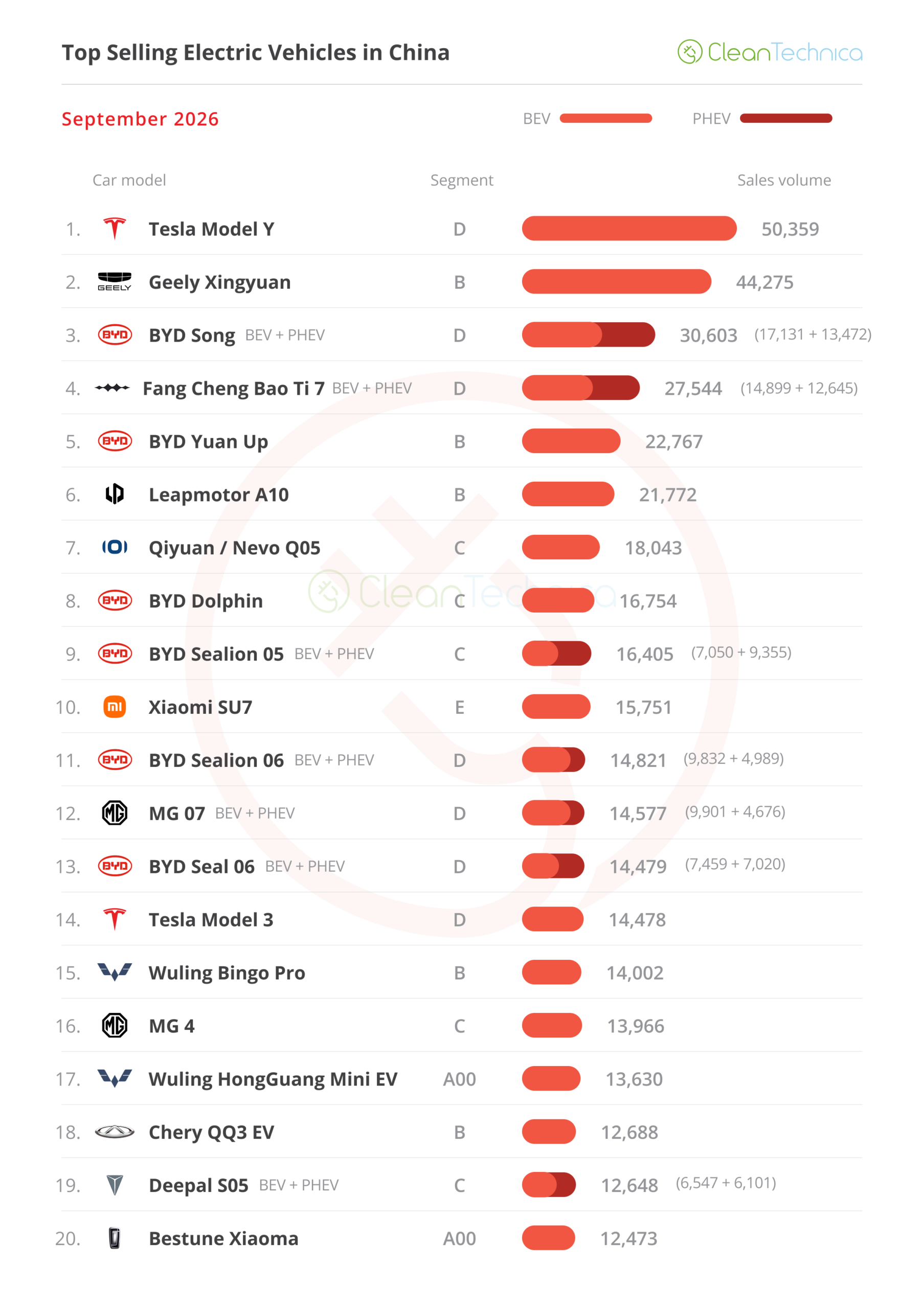
The Fang Cheng Bao Tai 7, a rugged SUV from BYD’s premium brand, achieved a yearly best with 27,544 registrations to claim fourth place. Recently launched pure electric variants equipped with 92 kWh and 106 kWh batteries and fast-charging technology have found a receptive audience amid the market’s swift pivot toward electrification. Featuring a distinct boxy aesthetic and high-end interior appointments, the vehicle has drawn comparisons to classic off-roaders and positions itself as a competitive alternative to traditional gas-guzzling heavy SUVs both domestically and potentially abroad.
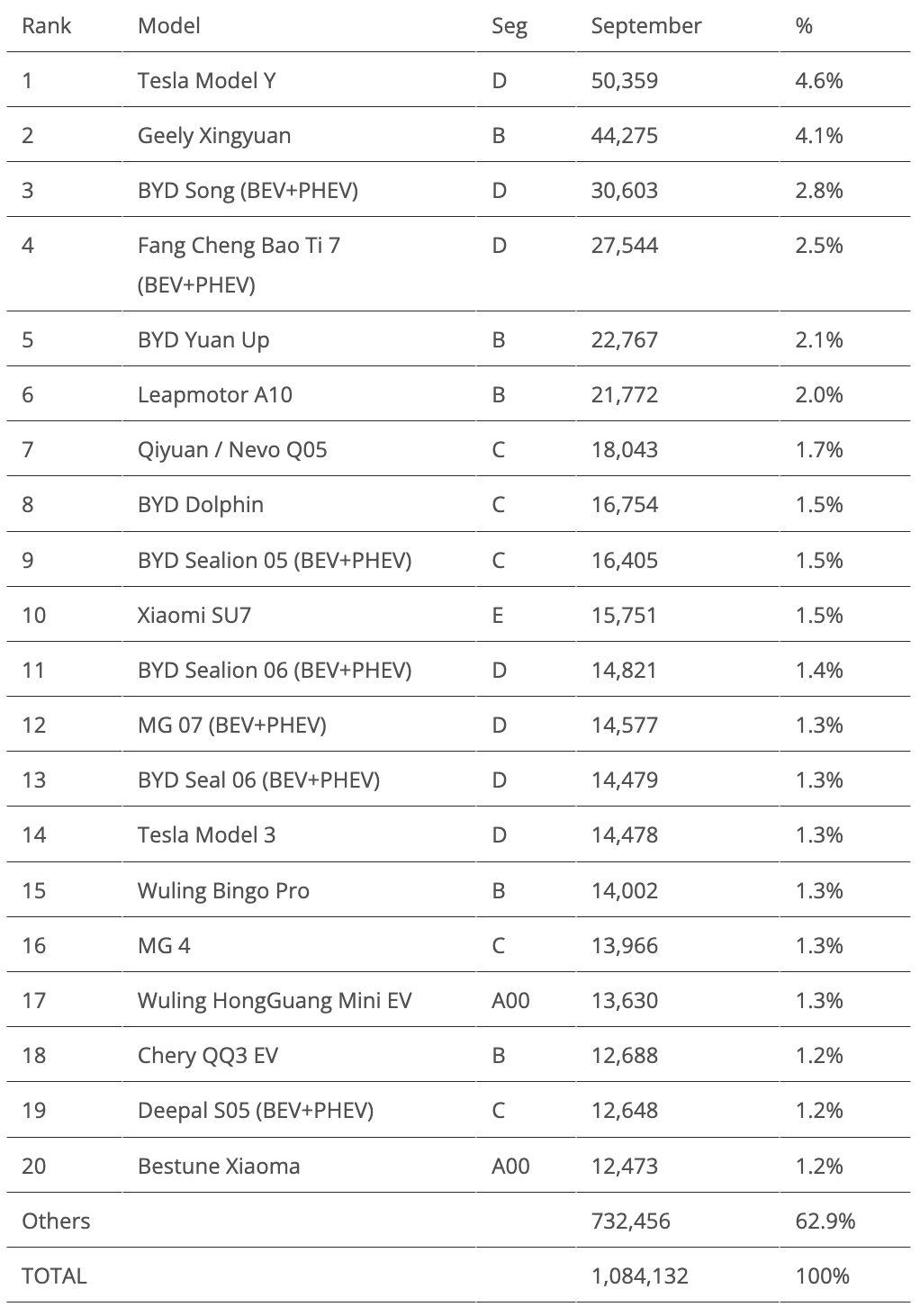
Rounding out the top five, BYD’s compact crossover, the Yuan Up, recorded 22,767 registrations, representing a 12% decline year-over-year. Despite modest styling, the crossover maintains strong consumer interest through an attractive value proposition, with entry-level pricing starting around $11,000 while higher trims incorporate advanced driver-assistance features.
Emerging Debuts and Brand Dynamics
Further down the sales table, notable performances included the market launch of the MG 07 fastback, which recorded 14,577 registrations in its debut month. Available in both plug-in hybrid and pure electric configurations, the sporty fastback accumulated a substantial waiting list, positioning itself as a direct competitor to established models such as the Xiaomi SU7, BYD Seal 06, and Tesla Model 3. In the entry-level segment, Chery’s QQ3 EV achieved a record 12,688 registrations to place 18th, while FAW’s Bestune Xiaoma entered the top twenty with approximately 12,500 units sold.
Just outside the top twenty, emerging models such as Xpeng’s Mona L03 and the Leapmotor A05 neared the threshold with approximately 12,000 registrations each. Xiaomi’s expansion continued with the initial deliveries of its N70 and N90 crossover twins, alongside the Geely Galaxy TT and Volkswagen’s ID.ERA 5S, reflecting legacy automakers’ ongoing efforts to retain consumer loyalty amid accelerating electrification.
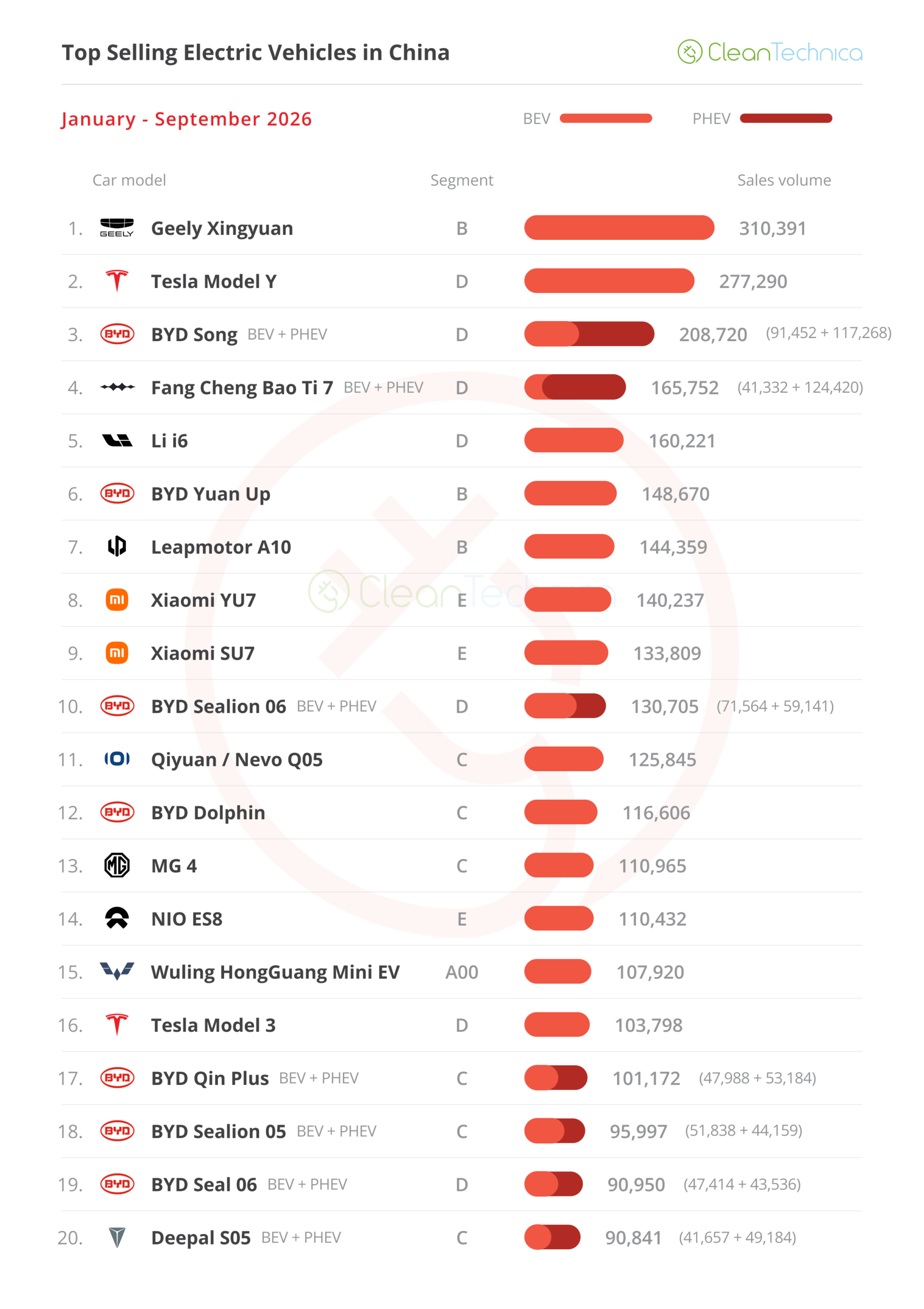
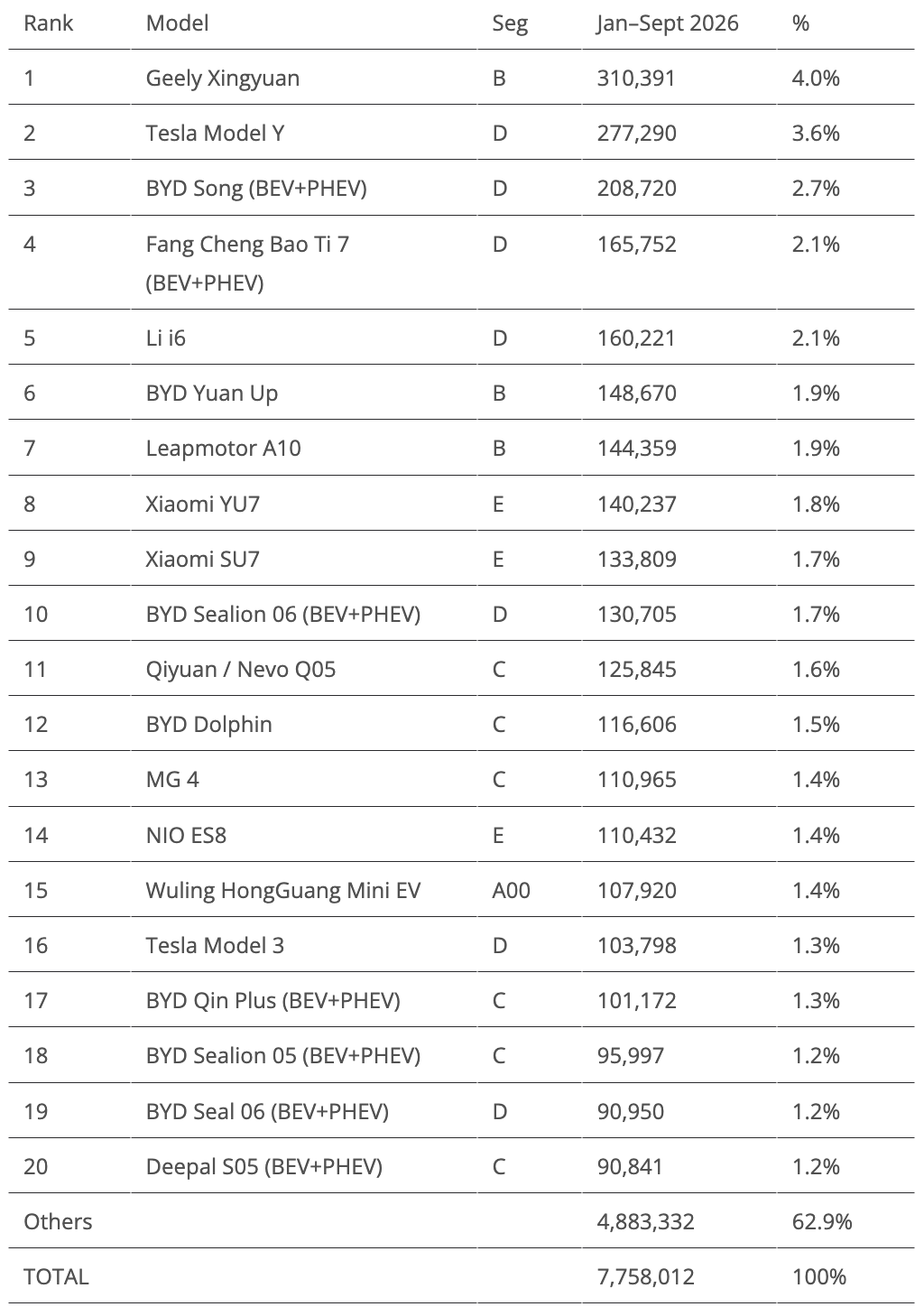
In the year-to-date standings, the podium remains stable, with Geely’s compact offering leading the cumulative charts ahead of the Tesla Model Y in second and the BYD Song in third. Further down the cumulative table, the Fang Cheng Bao Tai 7 climbed to fourth place, supported by consistent sales momentum throughout the year. BYD maintains a dominant footprint across the top twenty models, occupying seven positions directly, alongside its premium brand entries.
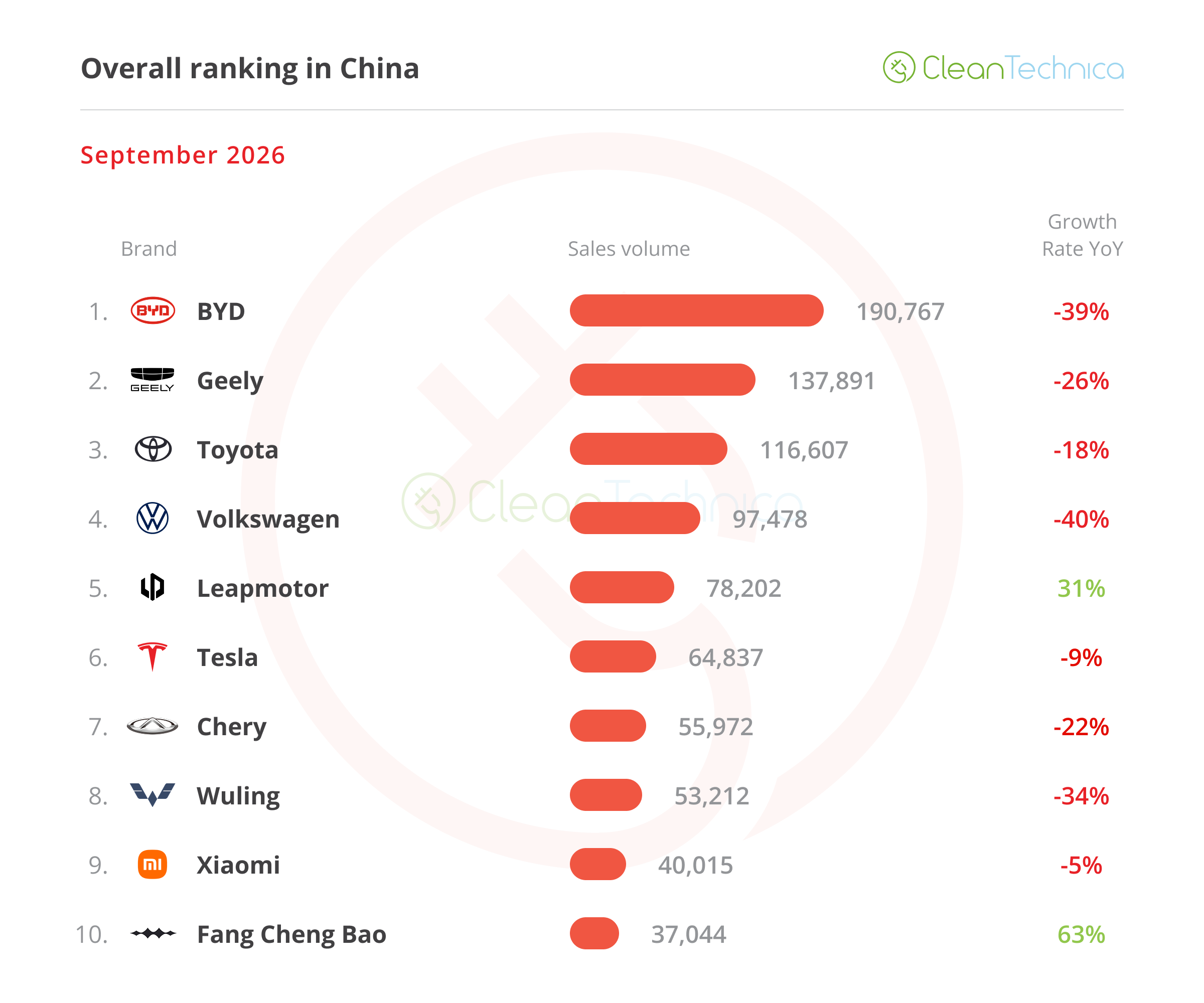
The broader manufacturer and brand rankings continue to reflect a stark divergence between contracting legacy operations and expanding electric vehicle specialists. While established international giants grapple with double-digit sales declines, startups like Leapmotor defy broader market trends. Leapmotor recorded a 31% year-over-year increase in September with 78,000 registrations, rapidly closing the gap on established market leaders like Geely as new volume-driving models scale up.
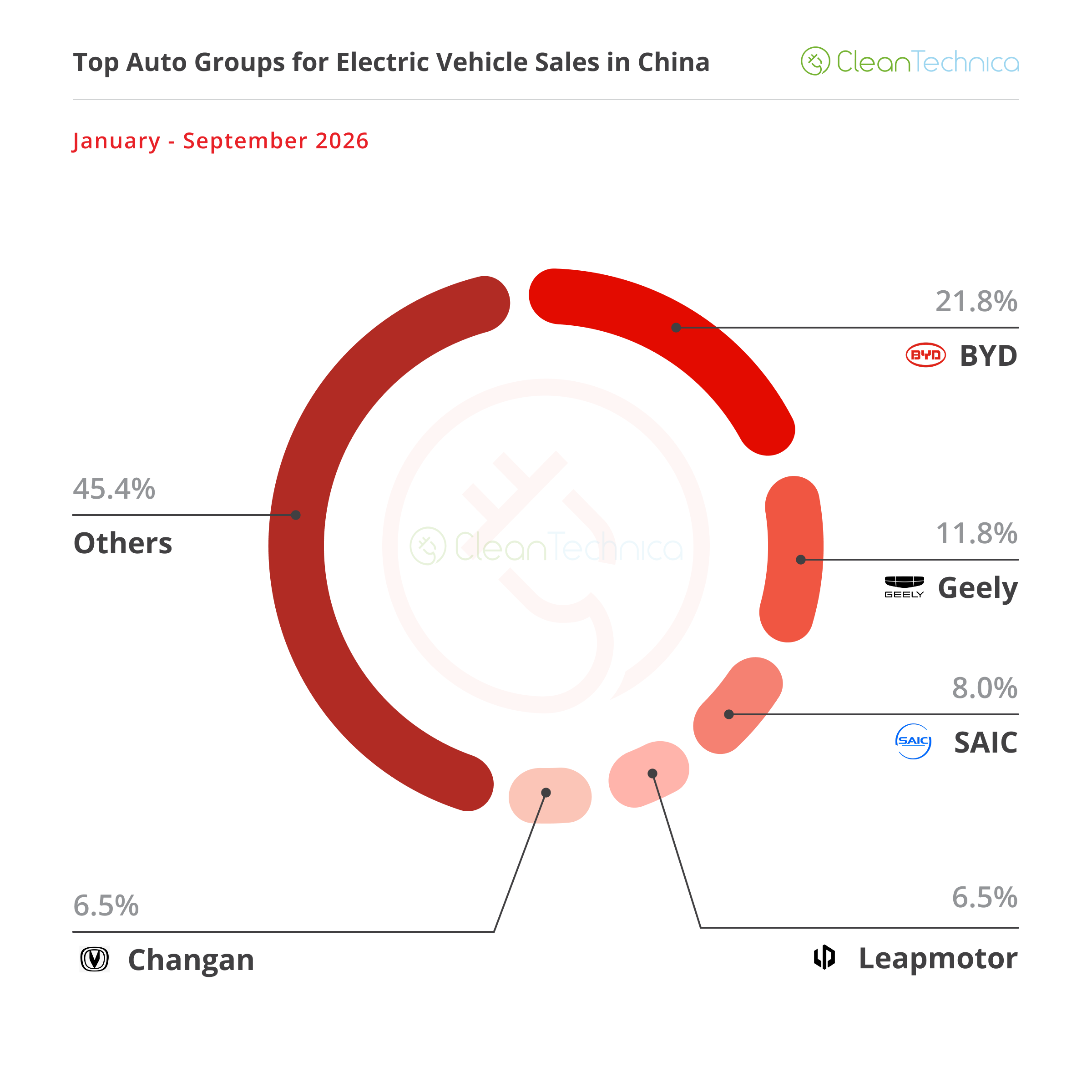
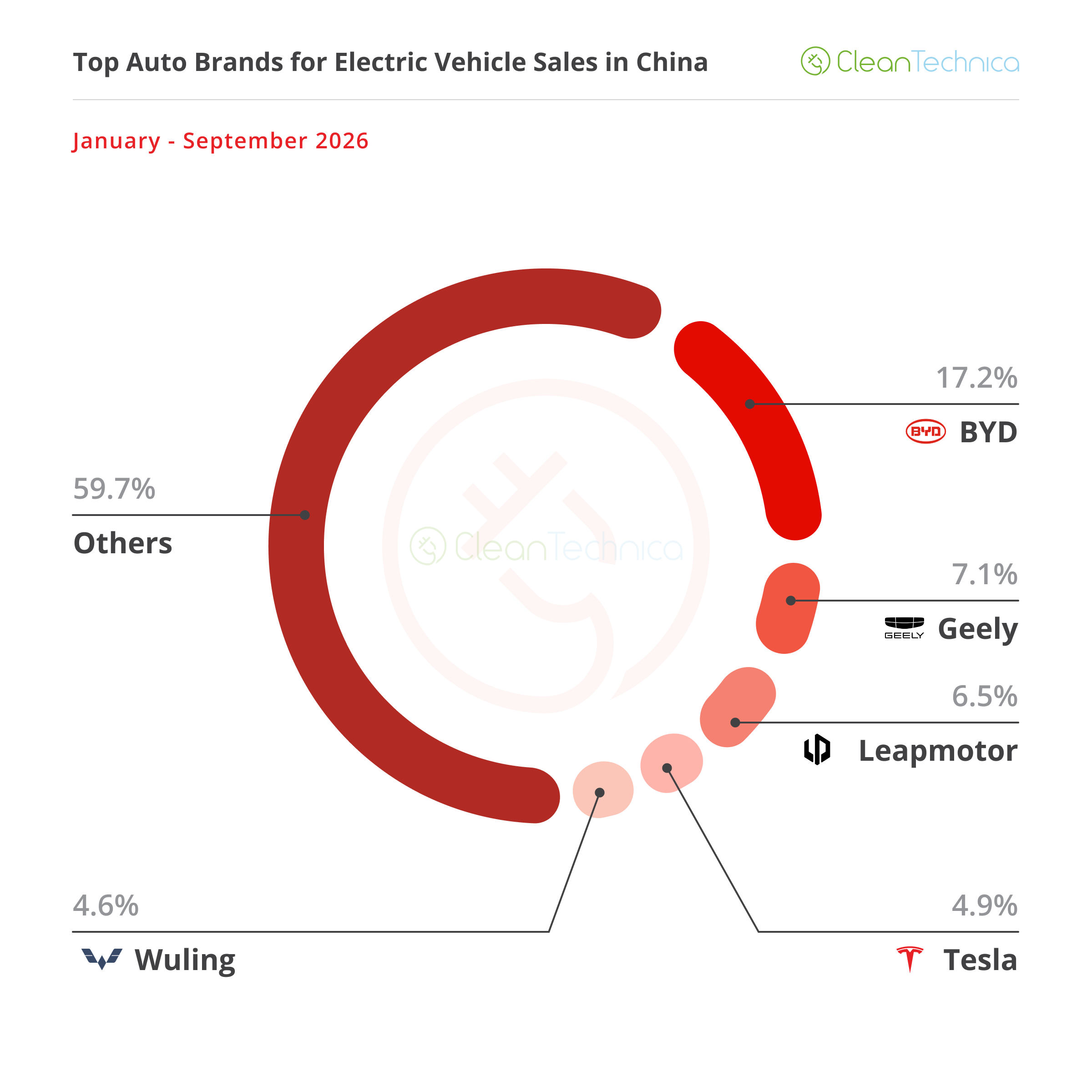
At the brand level, BYD remains the clear market leader with a 17.2% share, followed by Geely at 7.1% and Leapmotor advancing closely behind at 6.5%. Tesla held the fourth position with a 4.9% market share, maintaining a narrow lead over Wuling. On an automotive group level, BYD commands 21.8% of the total Chinese market, reinforced by strong performances across its brand portfolio including Fang Cheng Bao and Denza, while Geely and SAIC secure the remaining positions on the corporate podium.