For fashion insiders navigating the hectic pace of the international calendar, Tao Kurihara’s early-morning presentations have long served as a cherished late-season ritual. Held promptly at the crack of dawn in the subterranean depths of the Comme des Garçons headquarters in Tokyo’s upscale Aoyama district, these gatherings offer a quiet, contemplative contrast to the frenetic energy typically associated with major fashion weeks. Far removed from the glaring lights and chaotic crowds of standard runway venues, Kurihara’s intimate shows invite audiences into a thoughtfully curated world where garments speak softly, yet leave a lasting impression.
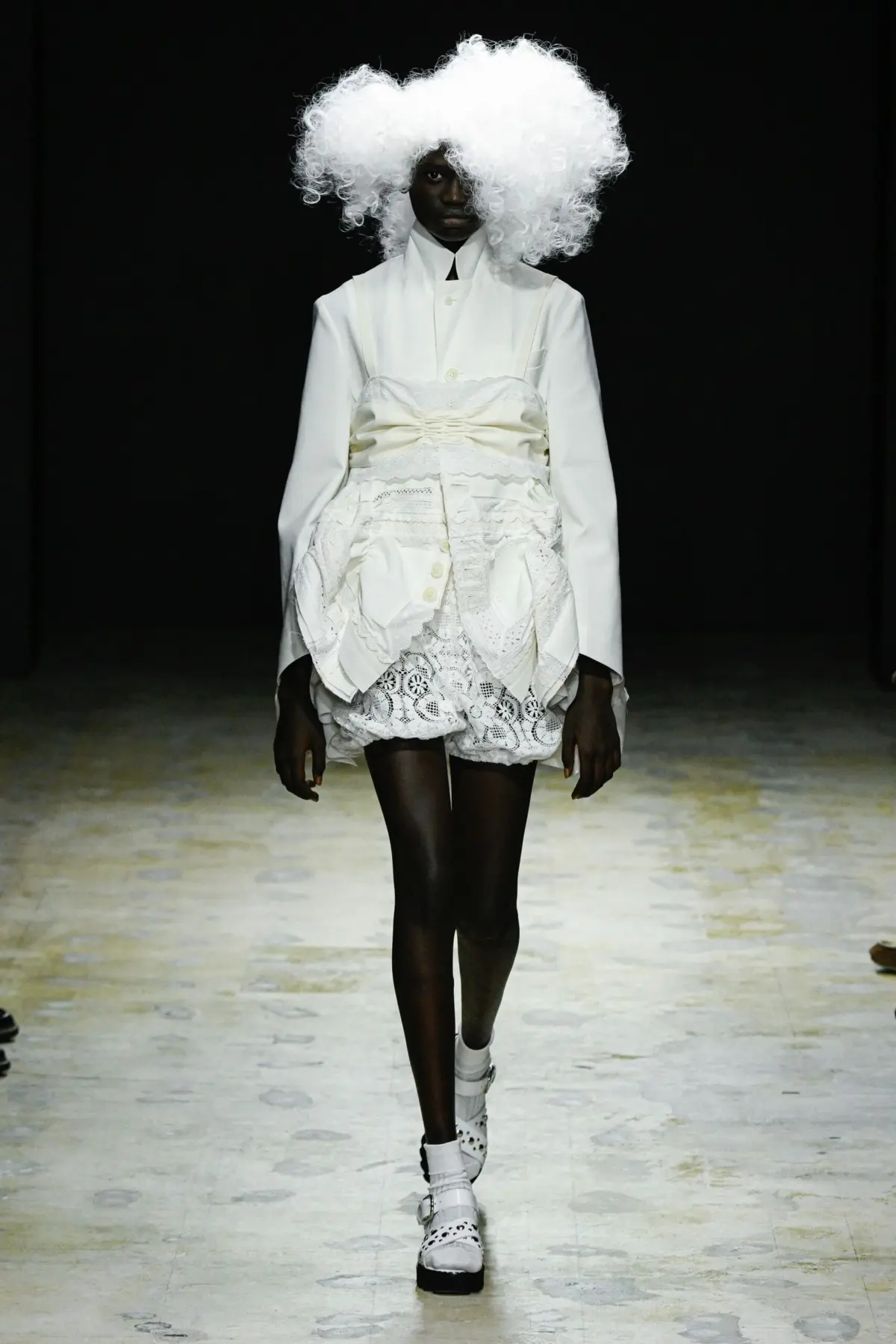
This season, the designer chose a theme that immediately set an introspective and earnest tone. Titled "MY TRUE SELF," the collection was envisioned as an unadulterated exploration of purity and freedom. To bring this abstract concept to tangible life, Kurihara relied almost exclusively on a palette of white, using the color not merely as a blank canvas, but as a deliberate medium to convey clarity, innocence, and emotional stripping-away.
The runway narrative commenced with an intricate exploration of domestic textiles and heritage craftsmanship. Models emerged draped in elaborate layers of broderie anglaise, alongside a complex array of vintage-inspired doilies. This opening chapter featured lace-laden coats and dresses that played brilliantly with surrealist notions of domesticity, evoking the uncanny sensation that the garments themselves were gradually transforming into fine household furnishings such as delicate curtains and embroidered tablecloths.
As the presentation progressed, the pristine white phase gave way to a brief, grounding chapter of tailored gray ensembles, introducing architectural structure and subdued gravity to the lineup. Following this sharp transitional moment, the collection returned to shades of white before culminating in a vibrant crescendo. This final chapter presented a rich cacophony of floral details and Liberty-esque botanical prints splashed across casual cotton capris and voluminous, playful ruffled skirts, injecting a lively burst of organic energy into the serene atmosphere.
Every element of the styling was meticulously orchestrated to reinforce the overarching storybook whimsy that has become a hallmark of Kurihara’s design identity. The models walked the runway with cloud-like, voluminous hair that was whimsically crowned with accents of natural straw and delicate foliage. Enhancing the garments further were intricate botanical embroideries, the result of a creative collaboration with artist Hitomi Mori, whose meticulous needlework—showcased under the Instagram handle @nuimori1—demands close inspection to fully appreciate the depth of its craftsmanship.
Complementing the visual poetry of the clothing was an atmospheric soundscape composed, as is customary, by Kurihara’s husband. The audio environment blended the ethereal resonance of harps with the gentle chirping of birds and the intermittent, nostalgic plink of a piano. This carefully curated auditory backdrop amplified the fairy-tale ambiance, enveloping the modest Aoyama basement in a sense of timeless wonder and transporting the invited guests far away from the urban realities of modern Tokyo.
Following the presentation, visitors gathered in the Comme des Garçons press room, which is currently configured to host its seasonal exhibition highlighting the collective output of all the house’s diverse brands over the coming days. Amidst the racks of avant-garde designs and commercial samples, Kurihara appeared in a characteristically cheery and relaxed disposition, reflecting deeply on the creative journey that brought the collection into existence.
Discussing her artistic motivations behind "MY TRUE SELF," Kurihara offered rare insight into her current design philosophy. She explained that her primary objective this season was to quiet external pressures and internal hesitations in favor of pure, unadulterated creation.
"I decided to just set aside all of my concerns and just create something I truly, purely wanted to make. How should I put it? It’s like when a child draws a picture, they aren’t thinking about wanting to be praised. It’s that kind of mindset, a state of total, genuine focus," Kurihara shared with members of the press. She acknowledged the potential misinterpretation of her words, adding, "Saying this might make it sound like my previous work wasn’t like that, but this time I really felt I distilled everything down to just what I purely, from the bottom of my heart, wanted to create."
To Kurihara’s immense credit, the resulting collection managed a delicate balancing act, avoiding the common pitfalls of sentimentality or heavy-handed nostalgia. Instead of leaning into retrospective melancholy, the garments simply existed in the present moment, asserting their own distinct identity without apology or forced narrative weight.
Yet, within the ecosystem of a legendary fashion house like Comme des Garçons, creative purity does not necessitate an abandonment of commercial viability. Under the foundational philosophy long instilled by Rei Kawakubo, the house’s visionary founder and mentor to generations of designers, creativity and commerce are understood to be complementary forces rather than mutually exclusive goals. Kurihara demonstrated this practical wisdom through her collaboration with Hitomi Mori. While Mori’s original embroidered artworks are inherently delicate and exceptionally difficult to produce at an industrial scale, the house found an innovative solution: the intricate textile art was magnified and skillfully printed directly onto accessible dresses and everyday T-shirts, ensuring that the beauty of the artwork could be successfully shared with a global audience without losing its original integrity.