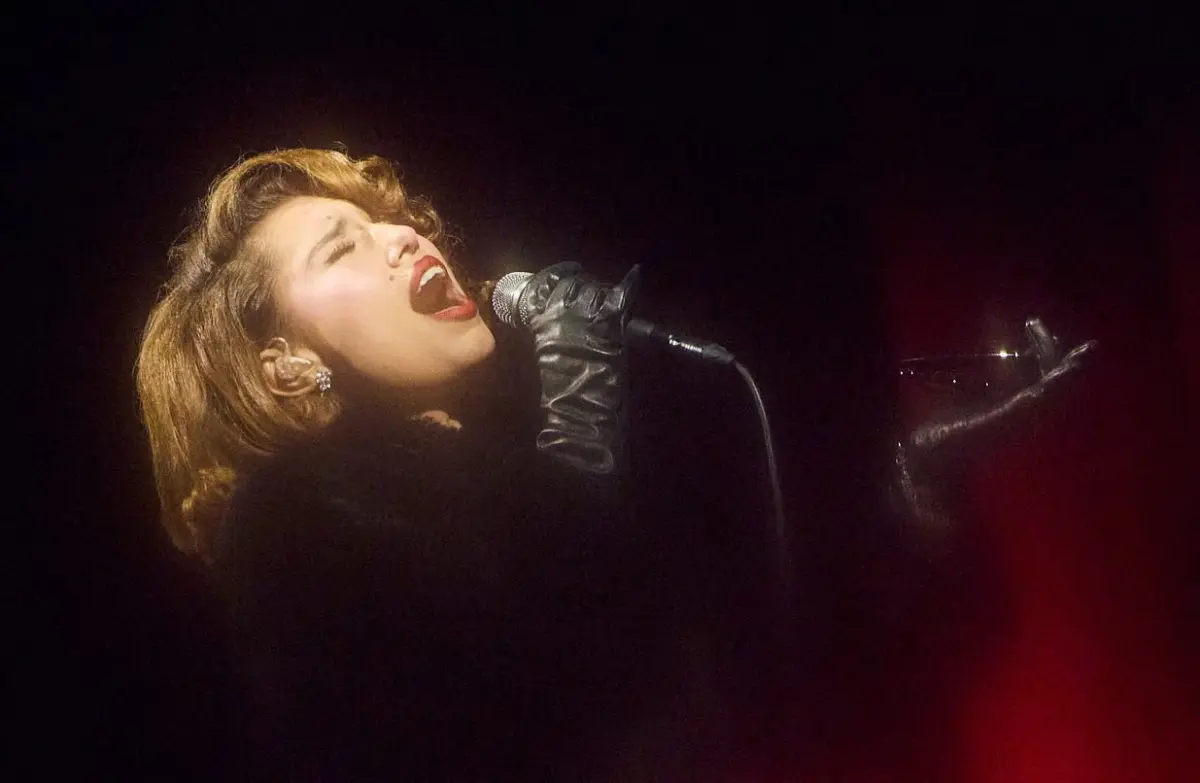
In a landmark moment for British music, singer-songwriter and 2024 Variety Hitmaker honoree Raye has been crowned the winner of the 2026 Mercury Prize. The prestigious accolade was awarded to her for her critically acclaimed and sprawling second studio album, This Music May Contain Hope. The win solidifies Raye’s status as a formidable force in the modern music landscape, as she triumphed over a diverse and formidable field of nominees that included industry legends like Paul McCartney and contemporary stars such as Olivia Dean.
The Mercury Prize, which holds a unique position in the global music industry, is specifically designed to recognize the best album released by a musician from the United Kingdom or Ireland. Unlike the Brit Awards, which function as a British equivalent to the American Grammys and often lean toward commercial success and broad industry appeal, the Mercury Prize is frequently cited for its focus on artistic merit, innovation, and the cultural impact of a singular body of work. By honoring This Music May Contain Hope, the judging panel has signaled its appreciation for bold, maximalist artistry in an era often dominated by short-form content and single-track consumption.
The victory places Raye in the company of some of the most respected names in contemporary music. The list of past Mercury Prize recipients is a roll call of artists who have defined the sound of the U.K. over the past several decades, including Arlo Parks, Little Simz, The XX, and James Blake. Each of these artists brought a distinct, uncompromising vision to their winning projects, a tradition that Raye has now upheld with her latest release.
A Competitive Field of Contenders
The competition for the 2026 prize was exceptionally stiff, reflecting the vibrant and varied state of the U.K. music scene. Raye’s win came after a rigorous deliberation process that saw her album rise above a shortlist of significant projects. Among those in contention were Dave, whose narrative-driven The Boy Who Played the Harp had been a favorite for many critics, and Dove Ellis, who garnered widespread praise for the atmospheric production of Blizzard.
The diversity of the shortlist highlighted the breadth of the current musical climate. Florence + the Machine remained a heavy hitter with their high-octane project Everybody Scream, while rising talents like Nia Archives—with the rhythmic, genre-blurring Emotional Junglist—and Kojey Radical—whose Don’t Look Down explored complex personal and societal themes—showcased the strength of the U.K.’s urban and independent scenes. The list also featured the infectious pop sensibilities of Jade’s That’s Showbiz Baby!, the regional cultural commentary of Knats’ A Great Day in Newcastle, and the soul-searching, melodic warmth of Olivia Dean’s The Art of Loving.
Perhaps most notably, the inclusion of legendary figures and collaborative efforts underscored the prize’s inclusive reach. Sir Paul McCartney, a perennial icon, was nominated for his reflective and surprisingly experimental project The Boys of Dungeon Lane. Meanwhile, the inclusion of Suede’s Antidepressants proved that veteran acts continue to push boundaries, and the War Child compilation Help(2) served as a poignant reminder of the power of collective artistry in the face of global challenges.
The Ambition of “This Music May Contain Hope”
In its review of the winning album, Variety noted the sheer audacity of Raye’s creative undertaking. This Music May Contain Hope is not an album designed for casual listening or as a mere backdrop for daily life; it is a dense, intricate, and deeply demanding piece of work that commands the listener’s full attention from the opening track to the final note.
Structured as a grand narrative divided into four distinct sections—each corresponding to the four seasons—the album spans a 70-minute runtime that feels surprisingly agile given its complexity. With 17 tracks exploring a vast spectrum of genres, Raye manages to pivot between styles with a fluidity that suggests a singular, guiding hand behind the chaos. The album embraces a maximalist philosophy, running the risk of being "too much" for some listeners—too many songs, too many stylistic shifts, and a constant, high-energy delivery that rarely lets up.
However, it is precisely this refusal to adhere to modern industry norms of brevity and cohesion that critics argue makes the record so compelling. Much like the ambitious projects of legendary artists ranging from Queen to Beyoncé, Raye’s work demonstrates that excess, when coupled with genuine intelligence and a sense of humor, can result in something truly glorious. The album functions as a voyage; it trusts the listener to keep pace with the artist’s shifting moods and musical explorations without feeling that their time is being wasted. It is a testament to Raye’s confidence that she has crafted an album that demands engagement, and by winning the Mercury Prize, she has been validated for that creative risk-taking.
A Night of Celebration and Performance
The ceremony itself was a vibrant showcase of the health of the U.K. music industry, serving as a reminder of the raw power of live performance. The stage was graced by a selection of the nominees, who offered a glimpse into the creative breadth represented on the shortlist. Among the highlights were performances by Suede, who brought their enduring stage presence to the event, and Pulp, who reminded the audience of their legendary status within the British alternative scene.
The atmosphere throughout the evening reflected a sense of communal celebration. While the prize itself is awarded to a single artist, the Mercury Prize ceremony often functions as a homecoming for the U.K.’s most influential creative minds. By bringing together established icons and emerging stars, the event highlights the interconnectedness of the British music industry, where influence flows across generations and genres.
For Raye, the award is a career-defining milestone. Having transitioned from a songwriter and featured artist to a solo powerhouse, she has spent the last few years meticulously building her own sound and identity. Winning the Mercury Prize in 2026 marks the culmination of a period of intense artistic growth. It validates the path she has chosen—a path that eschews the easy route of cookie-cutter pop in favor of something more idiosyncratic and deeply personal.
As the industry looks ahead, the victory of This Music May Contain Hope will likely be analyzed as a moment where the "album" format was reaffirmed as a vital tool for artistic expression. In a streaming-first world, where the playlist often supersedes the long-form project, Raye’s commitment to the 70-minute, 17-track conceptual journey serves as a powerful reminder that there is still a massive appetite for music that challenges, provokes, and ultimately, provides a sense of hope.
As the echoes of the ceremony fade, the focus now turns to the impact of this win on Raye’s future endeavors. Given the ambition she displayed on this record, it is clear that she is an artist who is only just beginning to map out the possibilities of her craft. For now, however, the 2026 Mercury Prize serves as the ultimate seal of approval, cementing her place in the pantheon of artists who have shaped the trajectory of music in the U.K. and Ireland.