Thousands of years after unleashing one of the most violent geological events in recent history, one of Earth’s most formidable supervolcanoes is showing signs of renewed life. A team of researchers from Kobe University, working in collaboration with the Japan Agency for Marine-Earth Science and Technology (JAMSTEC), has discovered that a massive magma reservoir beneath Japan’s Kikai caldera is slowly refilling. This discovery provides a rare, high-resolution glimpse into the life cycle of supervolcanoes, offering scientists a better understanding of how these geological titans recover and eventually prepare for potential future eruptions.
The Kikai caldera, situated largely beneath the ocean surface south of Japan’s Kyushu island, is a site of immense historical significance. Approximately 7,300 years ago, it produced the largest volcanic eruption of the Holocene epoch—the current geological period that began roughly 11,700 years ago. The eruption was so catastrophic that it effectively leveled the surrounding landscape, leaving behind a sprawling, submerged depression that marks the site of the ancient collapse.
Unlocking the Secrets of Supervolcano Storage
Supervolcanoes represent the most powerful class of volcanic activity on Earth. When they erupt, the scale of destruction is difficult to comprehend. The volume of material expelled during a major supervolcanic event is staggering; to put it in perspective, the magma released during such an eruption would be sufficient to bury the entirety of New York City’s Central Park under a layer of volcanic debris roughly 12 kilometers—or 7.5 miles—thick.
These massive eruptions occur when an enormous underground chamber of molten rock reaches a critical threshold of pressure and volume. Once the magma is expelled, the structural integrity of the crust above the reservoir is compromised, causing the ground to collapse inward and creating what geologists call a caldera. While the aftermath of such events is visible across the globe—with iconic examples including Yellowstone in the United States, Toba in Indonesia, and the Kikai system itself—the internal mechanics of how these volcanoes replenish their vast stores of magma between events have remained largely mysterious.
Understanding this replenishment process is a fundamental challenge in volcanology. Because these events occur over thousands of years, scientists often struggle to track the slow, subtle accumulation of magma required to build up to another catastrophic eruption. "We must understand how such large quantities of magma can accumulate to understand how giant caldera eruptions occur," says Kobe University geophysicist Nobukazu Seama. By unraveling the "recharging" process at Kikai, researchers hope to demystify the long-term behavior of similar systems worldwide.
Innovative Surveying Beneath the Waves
Studying the Kikai caldera presents a unique set of challenges, primarily due to its underwater location. However, as the research team discovered, the seafloor setting actually provides an unexpected advantage. Unlike land-based volcanoes, where dense vegetation, rugged terrain, and human infrastructure can hinder geological monitoring, the open seafloor offers a clean slate for systematic, large-scale surveys.
"The underwater location allows us to implement systematic, large-scale surveys," Seama explains. To map the hidden architecture of the reservoir, the Kobe University team and their partners at JAMSTEC utilized a high-tech approach involving powerful airgun arrays. These instruments generate controlled seismic pulses that travel through the crust beneath the ocean floor.
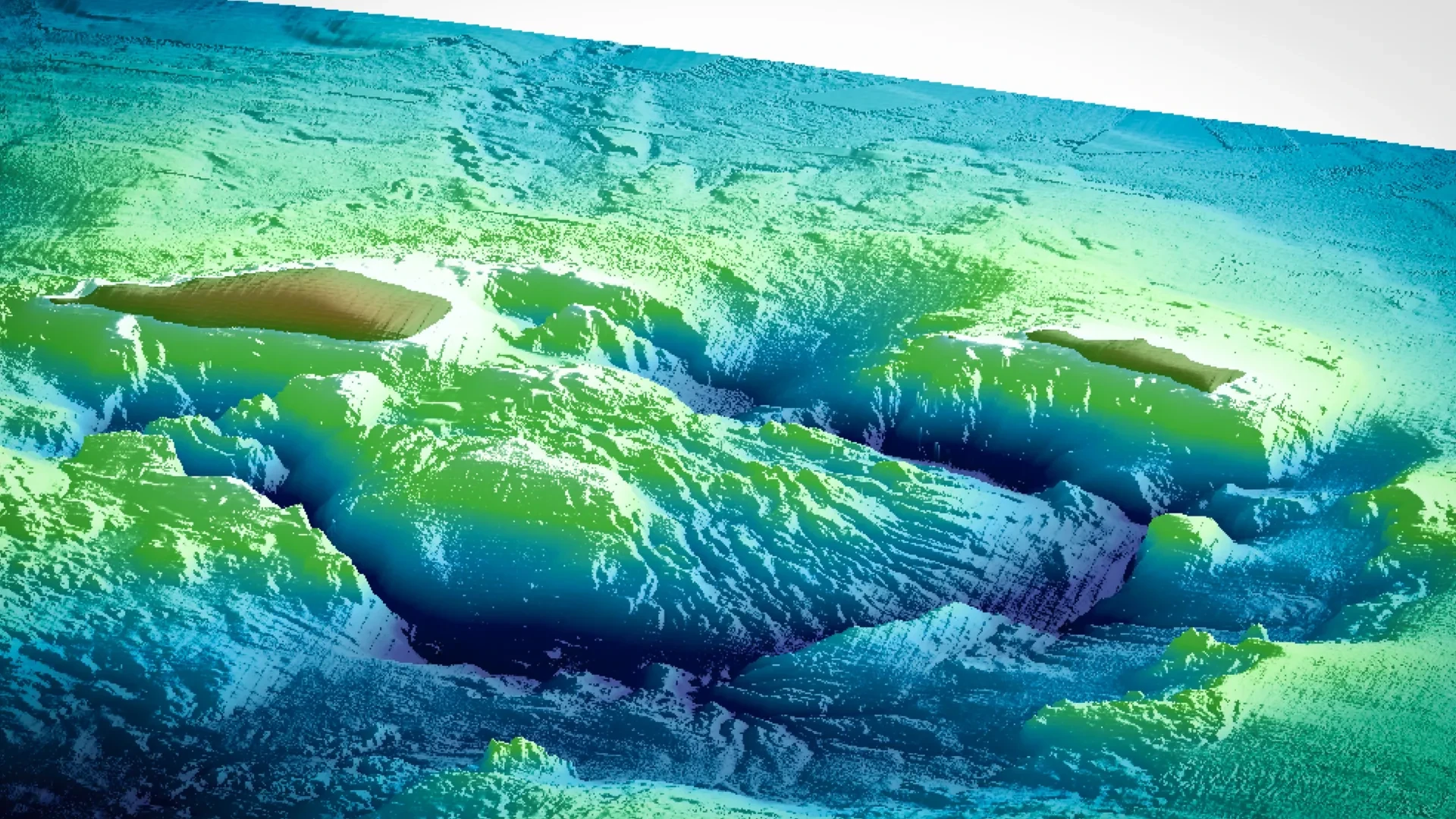
As these pulses propagate through the Earth, they are captured by ocean-bottom seismometers. The behavior of these waves changes depending on the density and state of the material they encounter. Seismic waves travel differently through solid, cold rock than they do through regions containing molten or partially molten material. By recording and analyzing these variations, the researchers were able to construct a detailed map of the subsurface, revealing the shape and extent of the magma reservoir.
The findings, recently published in the journal Communications Earth & Environment, confirmed the presence of a substantial region of high-magma concentration directly beneath the site of the ancient 7,300-year-old eruption. The spatial arrangement of this reservoir indicates that it occupies the same structural system that fed the massive event thousands of years ago. According to Seama, the extent and location make it clear that this is the same storage system involved in the previous, catastrophic eruption.
Evidence of Fresh Magma Injection
One of the most significant aspects of the study is the realization that the magma currently residing beneath Kikai is not merely a stagnant remnant from the ancient past. Instead, evidence points to a process of active replenishment.
Previous geological surveys have identified a lava dome developing near the center of the caldera, a feature that has been growing for approximately 3,900 years. A lava dome typically forms when highly viscous lava, too thick to flow freely, accumulates around a volcanic vent. Chemical analyses of material from this dome, as well as from other recent volcanic activity in the area, show that the composition of this lava differs significantly from the material ejected during the major eruption 7,300 years ago.
This chemical signature is the "smoking gun" that suggests the reservoir is being actively recharged. The distinct composition indicates that the current magma is being supplied by fresh injections of molten rock rising from deeper within the Earth’s crust or mantle. "This means that the magma that is now present in the magma reservoir under the lava dome is likely newly injected magma," Seama notes.
This discovery helps bridge the gap in our understanding of how giant volcanic systems gradually rebuild their supply. It provides a clearer, more dynamic picture of a system that is not dead, but rather in a state of slow, long-term recovery.
Implications for Global Volcanic Hazards
The implications of the Kikai study extend far beyond the coast of Japan. Scientists believe the "magma re-injection" model identified at Kikai provides a template for understanding other major caldera systems across the globe.
"This magma re-injection model is consistent with the existence of large shallow magma reservoirs beneath other giant calderas like Yellowstone and Toba," Seama says. By observing the patterns at Kikai, researchers can better hypothesize how these systems maintain their large, shallow reservoirs over vast geological timescales. The proposed model suggests that the interval between giant eruptions is defined by this slow, steady influx of new material into existing underground chambers.
It is important to note that this replenishment process does not imply that another catastrophic eruption is imminent. Rather, it serves as a crucial data point for monitoring the long-term life cycles of these systems. The research team intends to refine their seismic techniques to observe the movement and storage of magma with even greater precision.
"We want to refine the methods that have proved to be so useful in this study to more deeply understand the re-injection processes," Seama states. "Our ultimate goal is to become better able to monitor the crucial indicators of future giant eruptions."
As scientists continue to monitor Kikai, the data gathered offers a rare, empirical look into the heart of a supervolcano. By decoding how fresh magma accumulates beneath one of Earth’s most extraordinary volcanic structures, researchers are moving closer to deciphering the complex processes that eventually pave the way for such colossal, world-shaping events. This ongoing work, supported by the Ministry of Education, Culture, Sports, Science and Technology (MEXT) and the Japan Society for the Promotion of Science, underscores the necessity of long-term geological observation in managing the hazards posed by Earth’s most powerful natural systems.