In early 2006, producer J.J. Abrams was riding the crest of an extraordinary generational run in the entertainment industry. The espionage thriller Alias was nearing its dramatic conclusion, Lost had firmly cemented itself as a worldwide cultural phenomenon, and Abrams was busy traveling the globe to promote his feature-film directorial debut, Mission: Impossible 3. Yet, despite juggling multiple high-profile television and film projects, Abrams was apparently just getting started.
During Paramount Pictures’ memorable panel at San Diego Comic-Con in 2007, Abrams recounted the overseas inspiration that ultimately sparked one of the most inventive monster movies of the 21st century. While promoting Mission: Impossible 3 in Japan, he found himself wandering into a Tokyo toy store with his young son. He was hunting for Godzilla toys, hoping to find merchandise that captured a specific aesthetic. Abrams wanted to create "our own monster"—something visceral, insane, and intense—contrasting sharply with the classic portrayal of King Kong, whom he affectionately dismissed as "adorable." Sitting in that foreign toy store, the seed for an entirely original American kaiju movie was planted.
That foundational idea quickly snowballed into Cloverfield. Abrams turned to his frequent collaborator, Lost writer Drew Goddard, to pen the screenplay, and tapped director Matt Reeves to helm the project. The marketing campaign for the film remains a masterclass in modern mystery generation. The first teaser trailer appeared unexpectedly before Michael Bay’s Transformers in July 2007, giving audiences zero context, no title, and no recognizable actors—only a fiery glimpse of chaos and a definitive release date: January 18, 2008. At that same Comic-Con panel, Paramount showed early footage from blockbusters like Iron Man, Indiana Jones and the Kingdom of the Crystal Skull, and Abrams’ own live-action Star Trek reboot, yet the untitled monster movie managed to steal a massive share of the convention’s cultural buzz.
Whether audiences love or hate some of Abrams’ subsequent sci-fi output, few can deny his distinct knack for manufacturing intense hype and genuine mystery. Nearly two decades later, Cloverfield—which has newly arrived on Peacock while remaining available on Paramount Plus and for free streaming on Pluto TV—stands as a cinematic artifact that fully warrants all the initial intrigue.
What is Cloverfield about?
The most concise way to define Cloverfield is as a seamless, high-concept marriage of classic found-footage horror, ala The Blair Witch Project, and a large-scale kaiju creature feature. A gargantuan, city-destroying monster attacks New York City, but the entirety of the narrative unfolds through the lens of a personal digital camcorder. This structural choice grants the filmmakers a distinct stylistic advantage. The movie technically opens on cryptic, archival-style footage indicating that the audience is watching official evidence recovered by the U.S. Department of Defense. It cites "multiple sightings" of a case officially designated as "Cloverfield" and notes that the recording equipment was salvaged from the "incident site… formerly known as Central Park."
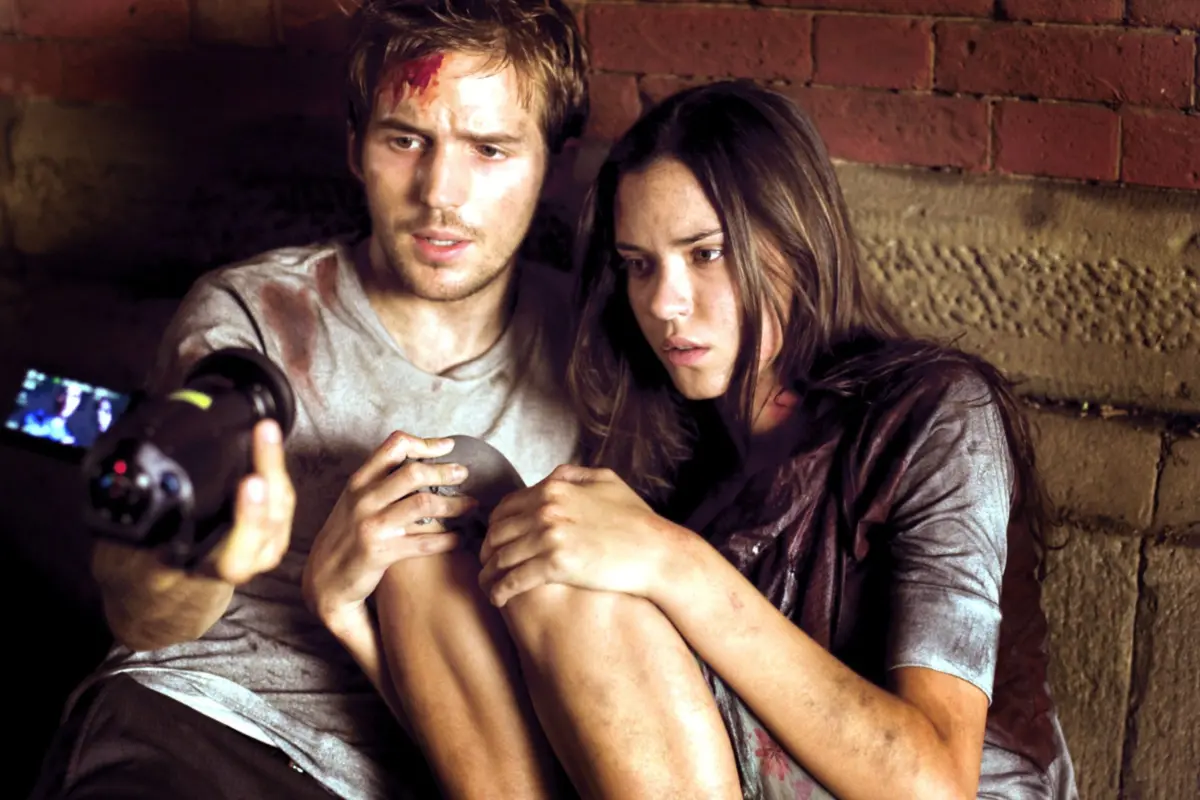
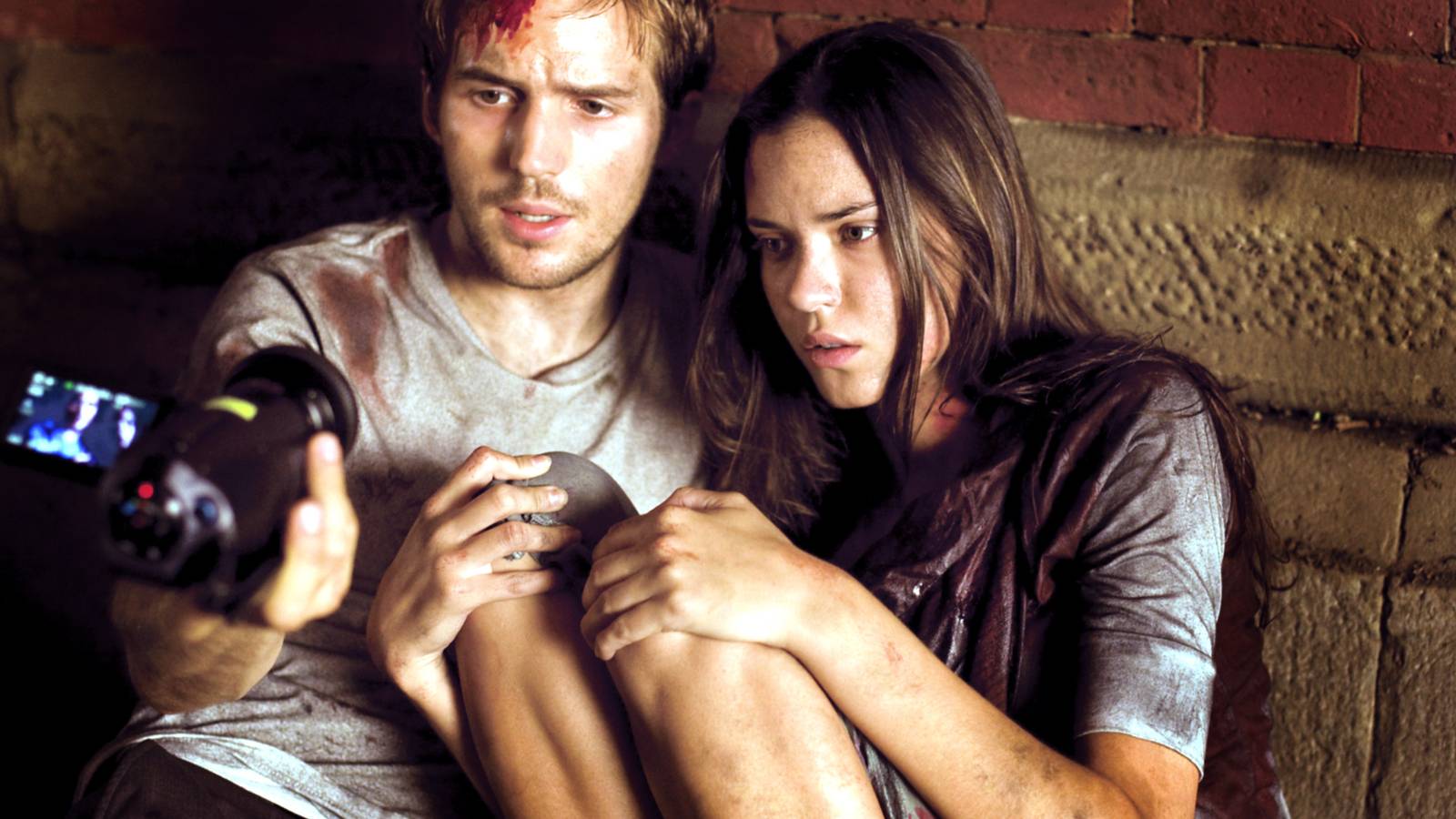
This grim framing immediately spells disaster for anyone watching, but the narrative quickly rewinds to a much more grounded, charming setting: a sunny day date between Rob, played by Michael Stahl-David, and Beth, played by Odette Annable, as they travel out to Coney Island. The bulk of the film then shifts forward nearly a month, landing on a going-away party organized for Rob, who is preparing to leave New York City behind for a promising new job opportunity in Japan.
During the packed apartment gathering, friends take turns recording heartfelt video messages for Rob on the handheld camcorder. However, an underlying tension permeates the room, driven primarily by Rob and Beth’s complicated and strained romantic history. Feeling frustrated and overwhelmed by how the evening is unfolding, Beth decides to head home early. Little do any of the partygoers know, the simmering personal drama is about to be violently overshadowed by an existential crisis.
Without warning, a massive explosion lights up the Manhattan skyline, plunging the city into sudden, unmitigated chaos. As the neighborhood unravels, the surviving partygoers make a desperate pact to venture out into the ruined streets to find Beth.

This intimate setup gives Cloverfield a uniquely human scale. Instead of focusing exclusively on military generals in war rooms or scientists analyzing seismic data from afar, the camera stays locked with a small group of ordinary young adults trying to navigate a metropolis they thought they knew. When Rob and his friends first spot the distant explosion, they are hanging out on a high-rise rooftop—a scenario instantly recognizable to anyone who has ever spent a casual evening socializing above the concrete canyons of New York. The sudden impact of flaming debris hurtling from the sky hits with visceral terror precisely because the scene begins with such mundane, everyday comfort.
A shaky camera with a clear view of the story
The visual style of Cloverfield relies entirely on a shaky, handheld camera aesthetic. While that particular cinematic movement felt ubiquitous and occasionally polarizing even by 2008, it serves a crucial narrative purpose. Despite the frantic camera work, the film maintains enough spatial coherence to keep the character geography and stakes crystal clear. Furthermore, the breakneck runtime of just 85 minutes ensures the movie never gets bogged down in the traditional formatting limitations of the genre or bogged down by cumbersome exposition and invented mythology.
Viewers never receive a clean, comfortable look at the colossal monster as it stomps through the municipal grid. Instead, the narrative priority remains firmly fixed on ordinary humans struggling simply to survive as massive explosions rock the surrounding blocks and terrifying parasite creatures drop from the beast’s hide.
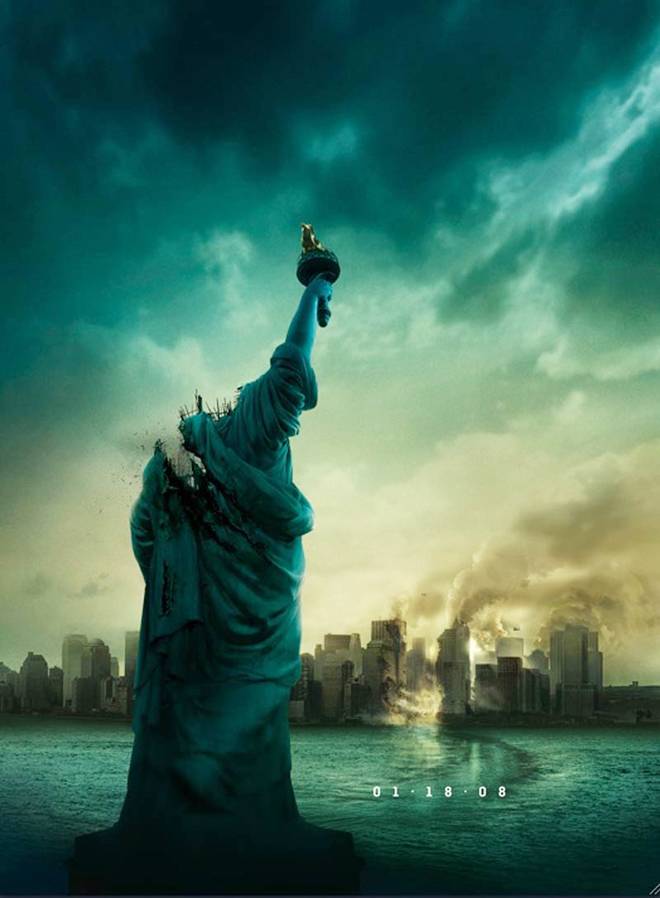
In a darkly comedic moment early in the film, the severed head of the Statue of Liberty comes crashing down into a Manhattan street. In classic modern fashion, bystanders instantly whip out their phones and camcorders to record the surreal spectacle rather than fleeing for their lives. At the time of its release in 2008, this bizarre behavior felt slightly exaggerated and almost comical to theater audiences. In hindsight, however, this particular creative choice feels profoundly prescient of how society responds to unimaginable crises in the modern digital age.
Similarly, Cloverfield asks audiences to accept a logical hurdle inherent to the subgenre: Why would anyone continue filming when a monstrous entity is tearing Manhattan apart and recording directly jeopardizes one’s personal safety? Hud, played by T.J. Miller, serves as the group’s designated cameraman. Convinced early on that he has captured the creature on tape, he stubbornly resolves to keep rolling. While convenient for the filmmakers, this motivation gives the footage an internal purpose beyond the structural needs of a movie. As the crisis escalates into a full-scale military evacuation, the compulsion to document the impossible transforms from a narrative contrivance into a chillingly believable human impulse.
Ultimately, what resonates most enduringly about Cloverfield is how the complex relationship between Rob and Beth anchors the emotional core of the story without ever hijacking the spectacle. Rob’s decision to accept a career abroad drove them apart, providing a plausible reason why they never fully pursued their connection after a previous one-night stand. The sudden apocalyptic disaster grants them a desperate second chance to find one another, and the film allows that lingering romance to tug at the heartstrings just enough. As they face the end together, their personal narrative adds a profound ache to the surrounding destruction without slowing down the breakneck narrative pace.
Where the franchise went afterward—with subsequent thematic entries bearing the Cloverfield name despite lacking clear, direct narrative continuity—proved that the original film struck a lightning-in-a-bottle balance. The greatest trick Cloverfield ever pulled was refusing to give the audience the whole picture, leaving viewers with just enough raw, terrifying perspective to understand what it truly feels like to be caught directly in the path of the unimaginable.