At the prestigious Tokyo Gap-Financing Market, a project capturing significant attention is "Trinity," the latest feature film from acclaimed Singaporean director Boo Junfeng. A provocative exploration of the intersection between religious fervor and human desire, the film centers on a charismatic celebrity preacher whose public persona hides a burgeoning and destructive obsession with a young member of his congregation. As the film nears completion, its unique blend of theological inquiry and high-stakes drama has positioned it as one of the most anticipated international co-productions in the current circuit.
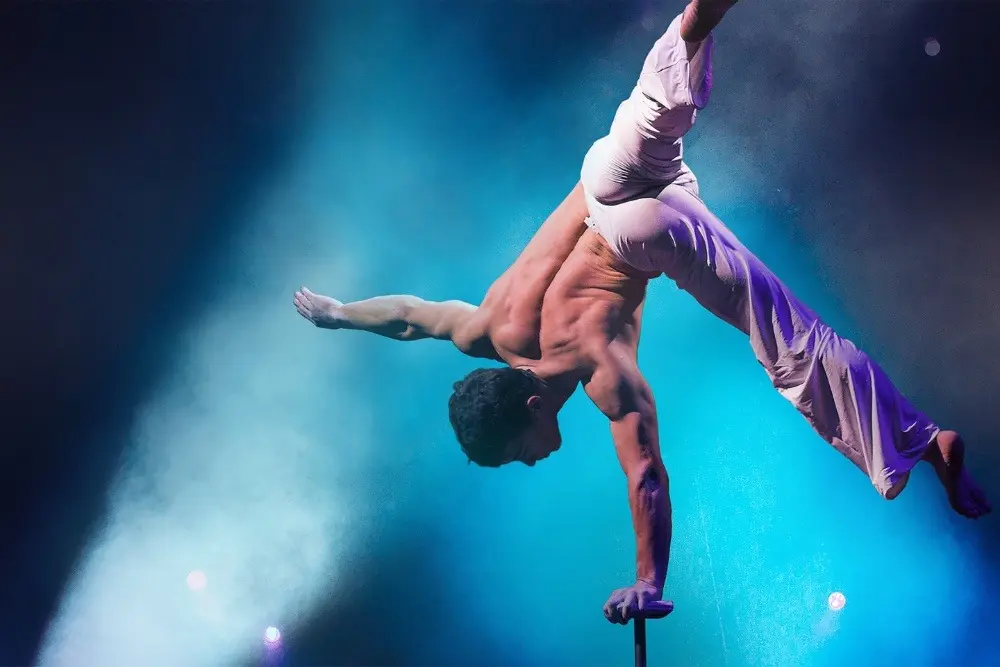
The narrative architecture of "Trinity" is as deliberate as its themes, structured in three distinct chapters that mirror the Christian concept of the Trinity: the Father, the Son, and the Holy Spirit. The protagonist, Johnny, is a Taiwanese pastor who has successfully cultivated a massive, devoted following in Singapore through his leadership of a high-profile megachurch. Johnny is far from a conventional clergyman; he is a performer, known for staging elaborate, death-defying acrobatic shows that draw thousands, reminiscent of the awe-inspiring theatricality of Cirque du Soleil. By merging the spectacle of modern entertainment with the intensity of evangelical fervor, Johnny has built an empire of faith.
However, the foundation of this empire begins to crack when Johnny becomes fixated on Yang, a newcomer who joins his rigorous training program. While Johnny is publicly celebrated for his staunchly conservative values, his private behavior tells a different story. His preferential treatment of Yang is blatant, creating an atmosphere of discomfort and jealousy within his inner circle. This dynamic deeply unsettles his wife, Ruth, and his primary disciple, David—who is also engaged to Johnny’s daughter. Together, this tight-knit group helps manage the daily operations of the church, and as they observe Johnny’s erratic behavior, the boundaries between professional duty and personal betrayal begin to blur.
The tension reaches a breaking point when Yang suddenly vanishes. The disappearance triggers a frantic, obsessive inquiry from Johnny, whose desperation leads him to cast suspicion on those closest to him. As the investigation unfolds, the internal rot of the church is exposed, leading to tragic consequences that force Johnny and Ruth to abandon their Singaporean life entirely. Seeking to escape the wreckage of their past, the couple relocates to rural Taiwan. There, they attempt to live in anonymity, attending a modest local congregation far removed from the glitz and grandiosity of their previous ministry. Yet, the past proves difficult to bury; the arrival of an enigmatic stranger provides a final, haunting twist, leaving open the possibility of divine grace—or further reckoning.
For director Boo Junfeng, "Trinity" is a natural evolution of his long-standing fascination with the psychological complexities of identity and belief. "I’ve always been very interested in the subject of sexuality and faith, and I wanted to make a film that dives deep into the psyche of these characters within a church," Boo explained during discussions at the Tokyo event.
Boo, a prominent voice in contemporary Asian cinema, first gained international recognition with his 2010 debut feature, "Sandcastle." The film achieved a historic milestone by becoming the first Singaporean production selected for the Cannes Critics’ Week. He continued to build his reputation with his sophomore feature, "Apprentice" (2016), a searing drama centered on the realities of capital punishment, which earned a place in the prestigious Un Certain Regard section at Cannes. Beyond his filmography, Boo is a central figure in Singapore’s cultural landscape, having served as the creative director for the country’s National Day Parade—including the significant 2025 celebration marking the nation’s 60th anniversary—and currently holding the position of chair for the Singapore International Film Festival.
The production of "Trinity" is bolstered by the experience of producer Raymond Phathanavirangoon, who has been a collaborator since the project’s inception and co-wrote the screenplay with Boo. Phathanavirangoon brings a wealth of international expertise to the table, with a producing resume that includes "Apprentice," Pen-ek Ratanaruang’s "Headshot," Ron Howard’s "Thirteen Lives," and the Pang Ho-Cheung films "Dream Home" and "Aberdeen." His background is further enriched by his previous roles as an international programmer for the Toronto International Film Festival and a program delegate for Cannes Critics’ Week, as well as his work as a co-founder of the Southeast Asia Fiction Film Lab (SEAFIC).
Reflecting on the unique cultural landscape of the film, Phathanavirangoon noted that while he has witnessed the rise of evangelical movements firsthand through people close to him, such narratives are rarely depicted in Asian cinema. "Personally, I have had people close to me convert to Christianity due to Evangelism, but this is seldom seen in Asian films," he remarked.
Phathanavirangoon also emphasized that the "spectacle" element of the film is grounded in the reality of modern megachurch culture. He pointed to the viral nature of contemporary religious services, where entertainment and worship are increasingly intertwined. "Some are surprised that churches can host Cirque du Soleil-style performances like in our film, but just earlier this year in Korea, a stunt sent a man dressed as Jesus into the sky, and that went super viral," he added, highlighting the authenticity behind the film’s high-concept staging.
As "Trinity" moves through the final stages of post-production, the production team has utilized the Tokyo Gap-Financing Market to secure the final pieces of the project’s financial puzzle. The film stands as a testament to global cooperation, listed as an ambitious co-production spanning 11 countries, including Taiwan, France, Singapore, Poland, Greece, Japan, Germany, Brazil, South Korea, Indonesia, and the Philippines. The production is spearheaded by Peanut Pictures, Filmagic Pictures, and Gaïjin.
At the heart of the project remains a desire for human connection, even amidst the moral ambiguity of the characters. Boo expressed a hope that the film will resonate with audiences on a deeply personal level. "I hope people will empathize with the characters, despite them being flawed human beings," he said.
The project’s participation in the Tokyo Gap-Financing Market occurs under the umbrella of TIFFCOM, the vital content market attached to the Tokyo International Film Festival. As the team works toward the film’s completion, the industry’s eyes are on how Boo will navigate the delicate, often volatile, intersection of faith, power, and the human psyche in what promises to be one of his most ambitious projects to date. By avoiding simple moral judgments and instead focusing on the vulnerability of his subjects, Boo aims to present a story that is as intellectually challenging as it is narratively compelling. The final product will not only serve as a window into the specific dynamics of a modern megachurch but will also offer a broader reflection on how individuals grapple with their own desires in the shadow of institutional belief.