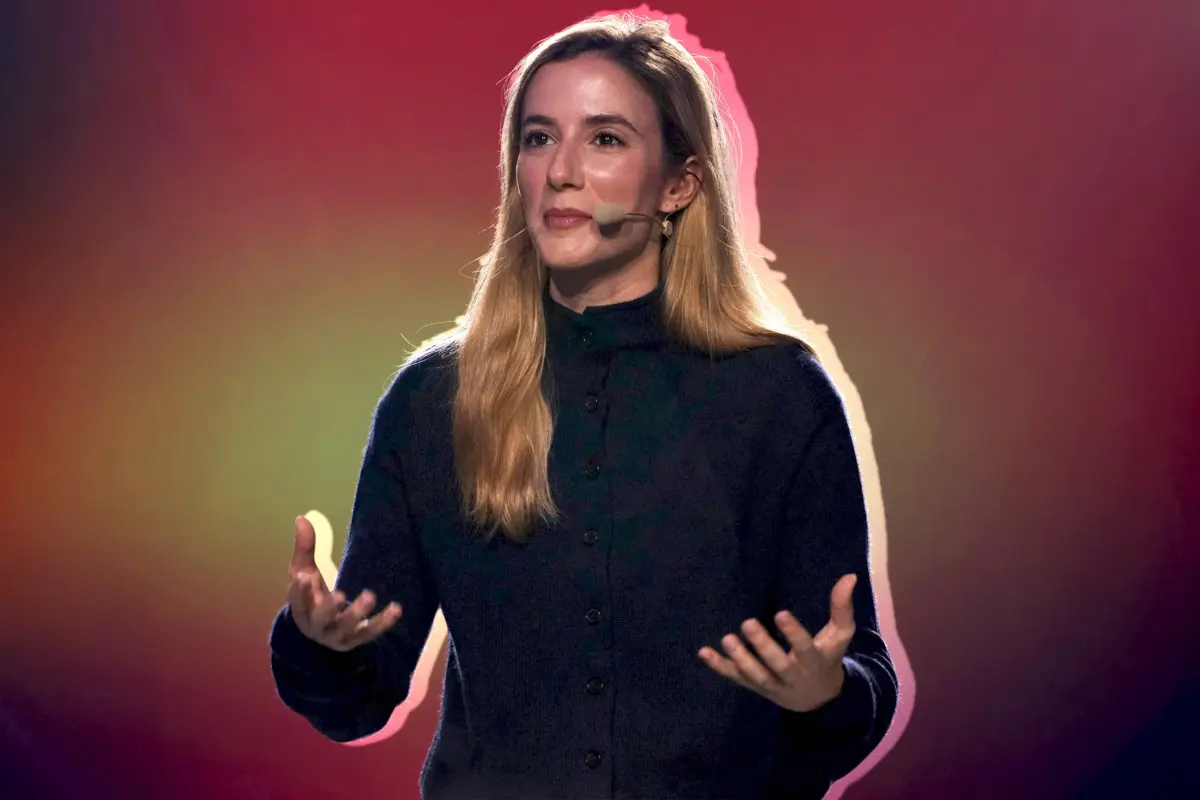
In the high-stakes world of professional ballet, success is measured in technical precision, physical endurance, and the ability to withstand immense pressure. For Luana Lopes Lara, the rigor of the Bolshoi Theater School in Brazil served as more than just an artistic training ground; it was an incubator for the grit required to navigate the volatile landscape of global finance. Today, at 30 years old, Lopes Lara has pivoted from the stage to the boardroom, cementing her status as the world’s youngest self-made female billionaire with a net worth of $2.6 billion, according to Forbes.
Lopes Lara’s journey to the top of the financial world is a testament to the power of cross-disciplinary discipline. As a teenager, her daily life was defined by a relentless schedule that saw her balancing intense academic studies at a technical school in the morning with hours of grueling ballet training that stretched from the afternoon well into the night. The environment was notoriously competitive—so much so that students occasionally resorted to sabotage, including the chilling practice of hiding glass fragments in each other’s shoes to gain a competitive edge. It was in this cutthroat atmosphere that she first cultivated the mental fortitude that would later define her career in tech and finance.
"Since I was very little, I wanted to do big things," Lopes Lara remarked in a recent episode of the podcast Confession with Ali Partovi. That early ambition, paired with the sheer volume of work she was capable of sustaining, provided the foundational structure for her eventual leap into the world of prediction markets. By December 2025, her rise had officially outpaced other notable self-made figures, including music superstar Taylor Swift and tech entrepreneur Lucy Guo, marking a historic shift in the landscape of young, self-made wealth.
The Architecture of Prediction
Lopes Lara’s fortune is rooted in her role as the co-founder of Kalshi, a pioneering prediction market exchange. At its core, Kalshi functions as a platform where users can buy and sell yes-or-no contracts tied to the outcomes of real-world events. Whether it is the result of an election, the release of specific economic data, the volatility of the weather, or the outcome of a sports match, Kalshi allows participants to treat the future as a tradable asset.
As the company’s website notes, Kalshi is the first federally regulated exchange in the United States dedicated exclusively to trading on the outcomes of future events. For Lopes Lara, the mission is expansive: she is working toward a future where, in theory, individuals can hedge against or bet on almost anything. By providing a regulated outlet for these beliefs, the company has transformed how participants interact with uncertainty. In an era where information is abundant but definitive outcomes are rare, Kalshi has positioned itself as a critical infrastructure for quantifying human expectations.
The Pitfalls of Analytical Obsession
Despite the math-heavy nature of her business, Lopes Lara is quick to caution other founders about the psychological traps inherent in entrepreneurship. During her appearance on Confession with Ali Partovi, she discussed the common mistake of becoming "obsessed with probabilities." She argues that while data and risk assessment are vital, an over-reliance on calculating every possible outcome can paralyze a leader.
"You can psych yourself out of doing anything," she explained. "I think that going for it, taking the risk, believing that things will work out, is very important."
Lopes Lara believes that a startup environment can easily sour if employees become consumed by the mathematical probability of success or failure. She warns that such a focus can foster a "super negative culture that overreacts to every new piece of information you have." Instead, she champions the necessity of maintaining a core team of optimistic, action-oriented individuals. According to the billionaire, the ability to build and execute—rather than merely analyze—is what separates successful companies from those that collapse under the weight of their own caution. This philosophy of measured optimism has been a cornerstone of her leadership at Kalshi, allowing the firm to navigate regulatory hurdles and market skepticism alike.
The Genesis of a $22 Billion Idea
The story of Kalshi began in 2018, born from the intersection of two brilliant academic minds. Lopes Lara met her co-founder, Tarek Mansour, while both were students. They shared a rigorous academic path; Lopes Lara majored in computer science and mathematics, while Mansour pursued electrical engineering, computer science, and mathematics. Their connection was organic, rooted in their shared dedication to their studies. Lopes Lara, known for her focus, consistently sat at the front of the lecture hall. Recognizing her drive and intellectual clarity, Mansour began sitting next to her, setting the stage for a long-term partnership.
The "aha" moment for Kalshi did not come in a boardroom, but rather from a casual observation of pop culture. While interning at Five Rings, a prominent New York trading firm, Lopes Lara observed the intense speculation on social media regarding the pregnancy of reality TV star Kylie Jenner. She watched as millions of people debated the truth of the situation, yet found herself frustrated by the lack of a formal mechanism to capitalize on that collective conviction.
"I was like, ‘I want to make a bet with you on this,’" she recalled in a Bloomberg interview. When she realized there was no legitimate platform to execute such a transaction, she recognized a massive, untapped market. She saw that millions of people held firm, well-researched, or even intuitive beliefs about the future, but were left with no outlet to express those beliefs in a structured, financialized way.
That realization served as the blueprint for Kalshi. By formalizing the desire to speculate on the future, Lopes Lara and Mansour created a product that resonated with a massive audience. Today, the platform is valued at a reported $22 billion, a figure that continues to climb as the company finalizes new funding rounds ahead of a potential IPO.
The growth of Kalshi reflects a broader trend in the tech industry: the transformation of niche consumer behaviors into institutional-grade financial products. By bridging the gap between social sentiment and regulated trading, Lopes Lara has successfully scaled a concept that began as a simple question about a celebrity’s life into one of the most closely watched financial exchanges in the world. Her trajectory—from the demanding, disciplined world of professional dance to the high-velocity environment of fintech—serves as a compelling narrative of how diverse experiences and a willingness to embrace risk can redefine success. As she looks toward the future, the question for the market is no longer if she will succeed, but rather how much further she will take the platform she built from scratch.