Where were you between the hours of 1 p.m. and 3 p.m. on May 23, 2004? For the average person, this is a forgotten slice of time two decades in the past. But for those involved in the world of Formula 1, that specific window remains the epicenter of the sport’s most baffling unsolved mystery.
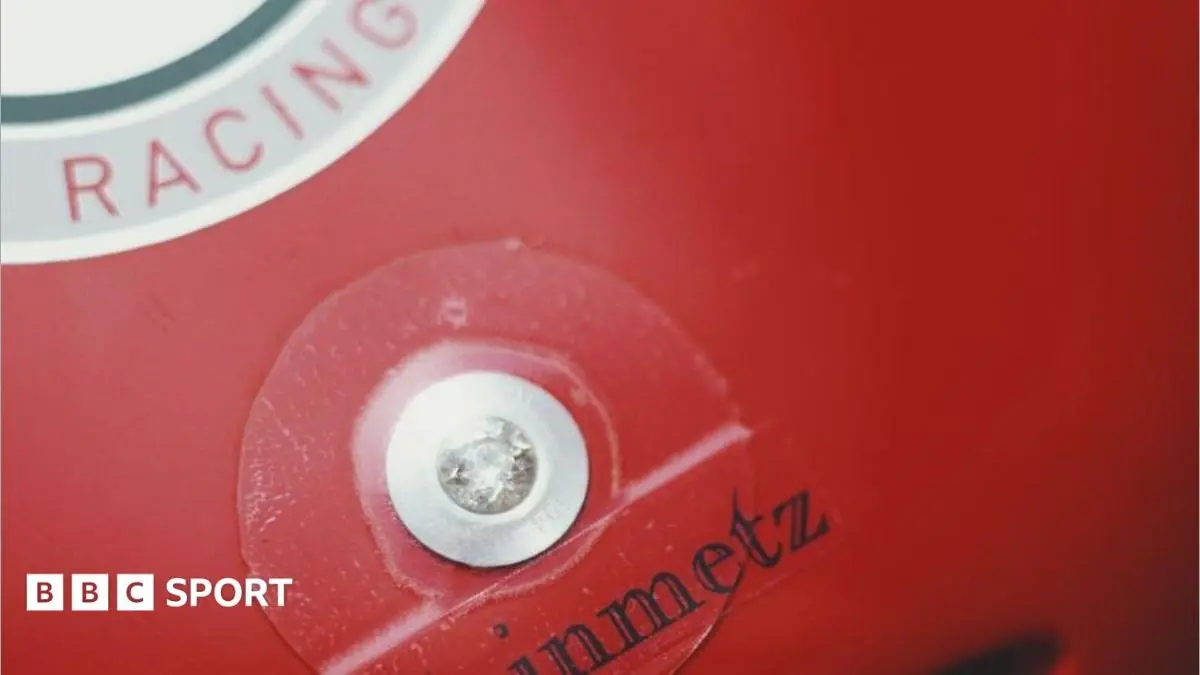
If you were present in the principality of Monaco during the 2004 Grand Prix, you might—however improbably—be considered a witness to a vanishing act that has captivated racing enthusiasts for 22 years. The object in question was a 1.4-carat diamond, valued at approximately $300,000 at the time, which was last seen affixed to the nose cone of a Jaguar Racing Formula 1 car. Following a first-lap collision, the gem vanished into the chaotic, high-pressure environment of the Monte Carlo street circuit, never to be seen again. To this day, the questions remain: Was it scavenged by a bystander? Swept away with the track debris? Did it tumble into the dark, inaccessible depths of a city drain? Or, as some skeptics have whispered for years, was it ever a real diamond at all?
The High-Stakes Strategy of Jaguar Racing
The decision to mount a precious gemstone onto the most fragile, high-impact surface of an F1 car—a vehicle capable of exceeding 200 mph—was not a product of engineering necessity, but of cold, calculated desperation. By 2004, the Jaguar Racing team, which had entered the sport in 2000, was struggling. Results on the track were, by the team’s own admission, mediocre at best. Behind the scenes, the situation was even more dire: Ford, the team’s parent company, had made the decision to withdraw from the sport, leaving the management in a precarious position.
"My job flipped from primarily running the team to primarily selling the team and finding a new owner, or they would shut it down," recalls Tony Purnell, the former Jaguar Racing team principal. Reflecting on that period, Purnell describes it as "probably the worst year of my life," largely due to the intense pressure of being sworn to secrecy regarding the team’s impending exit. With the team’s future hanging in the balance, leadership knew they needed a massive injection of publicity to distract from the dismal performance metrics and to increase the team’s marketability to potential buyers.
The team had previously found success with a promotional tie-up with the film Terminator 3 during a weekend at Silverstone. Seeking to replicate that visibility, the team’s director of communications, Nav Sidhu, looked toward Hollywood once more. During the winter of 2003, rumors swirled that the production team behind the star-studded blockbuster Ocean’s Twelve was scouting locations in Monte Carlo.
"One thing led to another and before you knew it, we had agreed on a deal with George Clooney, Brad Pitt, and Matt Damon," Sidhu explains. The arrangement, brokered with legendary producer Jerry Weintraub, allowed the film’s branding to take over the Jaguar team for the duration of the Monaco weekend. Given that the plot of the film centered on the elaborate theft of a diamond-encrusted Fabergé egg, Sidhu hit upon a marketing masterstroke: he would place actual diamonds on the cars. After negotiating with the luxury diamond house Steinmetz, two gems—part of a collection that would be worth roughly $1 million in today’s market—were secured to be mounted on the nose cones of the two Jaguar cars.
The Crash at the Loews Hairpin
On race day, the atmosphere in Monaco was as glamorous as ever. While the elite enjoyed champagne on superyachts in the harbor, the diamonds were hand-delivered to the Jaguar garages. Two gems were encased in steel and fixed to the front of the cars—one on the machine driven by veteran Mark Webber, and the other on the car of rookie Christian Klien, who was competing in only his sixth Grand Prix.
While neither driver was expected to challenge for the podium, the expectation was that they would at least return the cars—and the diamonds—to the garage. The Monaco street circuit is notoriously unforgiving, defined by its claustrophobic walls, tight technical corners, and the legendary tunnel. Overtaking is a rarity, and incidents are an inevitability.
Disaster struck on the very first lap. In a chaotic sequence of events near the Mirabeau corner, Klien made contact with a Jordan car. The impact damaged the front of his Jaguar, where the diamond was mounted, and resulted in a secondary, slow-speed collision with the barriers at the iconic Loews hairpin. Klien emerged from the vehicle uninjured, but the front of the car was left crumpled and exposed.
As the race continued, Sidhu found himself in a state of high anxiety, immediately contacting the diamond company to address the situation. When asked if the stone would be recovered, his answer was far from certain. He was trapped, unable to access the track while the race proceeded for another 76 laps. The car was eventually lifted by a crane and deposited behind the barriers, but it was not until the race concluded that the team could inspect the wreckage. By then, the diamond was gone.
Unraveling the Theories
In the absence of the gem, the rumor mill immediately began to churn. The most persistent theory—that the diamond was a fake—has been vehemently denied by those in charge. Sidhu maintains that a company of the stature of Steinmetz would never risk its reputation or the credibility of the sport by using a counterfeit stone. "Had we used a fake diamond… the embarrassment and the disrepute it would bring Jaguar, and Formula 1 for that matter, was too high risk," he argues.
Purnell corroborates this, recounting a telling interaction with the team’s managing director, David Pitchforth. Pitchforth had allegedly tested the stone by scratching a windowpane—a traditional, if rudimentary, method of verifying a diamond’s authenticity—and was left with no doubt as to its genuineness.
Another prominent theory is that the stone was simply stolen. Given that the circuit was opened to the public within an hour of the race’s conclusion, thousands of spectators had access to the area. "Somebody probably just picked it up, put it in their pocket and… they’re probably smiling and thinking, ‘it’s in my drawer’," Purnell suggests. Others speculate that the diamond, subjected to the high-impact force of the crash, may have shattered, or perhaps it was swept up by cleaning crews and discarded into the municipal sewer system. Sidhu, however, leans toward the idea that a fan stumbled upon it, unaware of its origin. "There’s a lot of diamonds in Monte Carlo… Somebody dropped a diamond in Monte Carlo. Well, they’re not going to miss that, are they?"
A final, more cynical theory suggested that the crash was staged to generate headlines. Both Purnell and Sidhu dismiss this outright. The cost of the repairs to the car far exceeded the value of the diamond, and the team was desperate for points, not notoriety. Klien, for his part, was a young driver attempting to establish his career; he had no incentive to ruin his own race. "No amount of money would have got Christian to do that," Purnell asserts.
The Unexpected PR Victory
As the race unfolded and the Jaguar team’s prospects for a respectable finish evaporated, Purnell’s initial panic was centered on how he would explain the performance to sponsors like Sir John Bond of HSBC. Yet, the missing diamond proved to be the ultimate, if unintentional, distraction.
"No-one mentioned Jarno Trulli winning the Grand Prix, no-one asked how the Jaguars did," Purnell notes. "It was, ‘where’s the diamond?’" The story dominated news cycles globally, providing a level of visibility that the team could never have purchased through conventional advertising. When the team was eventually sold to Red Bull six months later—a team that would go on to dominate the sport for years—Purnell believes the "buzz" generated by the incident played a significant role.
In the annals of Formula 1, the 2004 Monaco Grand Prix is remembered not for the tactical masterclass of the race winner, but for the $300,000 stone that vanished into the ether. It remains a bizarre footnote in the sport’s history, a "perfect" PR disaster that somehow worked to the team’s advantage, leaving behind a mystery that continues to spark debate over two decades later. Somewhere in the streets of Monte Carlo, or perhaps hidden in a long-forgotten collection, the Jaguar diamond remains the most elusive ghost of the racing world.