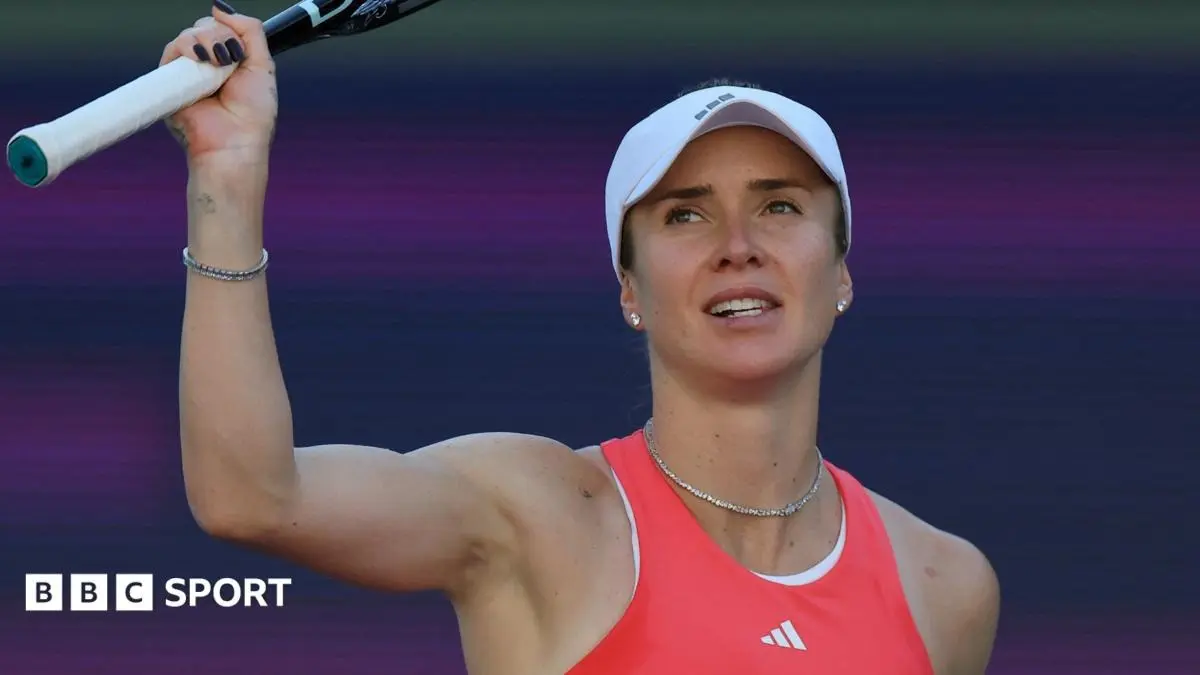
Elina Svitolina has breathed new life into her WTA Finals campaign, orchestrating a gritty, hard-fought comeback against Karolina Muchova to keep her semi-final aspirations firmly alive. In a match that served as a testament to her resilience and mental fortitude, the 32-year-old Ukrainian clawed her way back from the brink of elimination, overcoming both a deficit and a physical setback to secure a 3-6, 6-2, 6-2 victory in California.
The win provides a crucial lifeline for Svitolina, who arrived at this pivotal clash following a disheartening 6-4, 6-0 loss in her opening group match against Mirra Andreeva just days earlier. That initial performance had left her qualification prospects hanging by a thread, and for much of the first set against Muchova, it appeared that the narrative of her week was trending toward a premature exit.
Muchova, a renowned tactician and former Wimbledon runner-up, initially dictated the terms of engagement. Svitolina looked sluggish and unsettled, struggling to find the rhythm that has defined her successful 2024 campaign. The situation grew increasingly dire during the changeover after the first set, when Svitolina was forced to call for a medical timeout to receive treatment for an issue with her right hip. Returning to the court, she immediately faced a break point in the opening game of the second set, a moment that felt like the potential death knell for her tournament hopes.
However, the sixth seed refused to fold. She saved the break point, found a renewed intensity in her movement, and began to systematically dismantle Muchova’s game. Svitolina later admitted that the catalyst for her turnaround was a surge of internal frustration—a feeling she managed to harness rather than allow it to consume her.
"I was really angry at myself after the first match and the first set," Svitolina explained in a post-match interview with Sky Sports. "Sometimes it happens in a good way and sometimes in a bad way. I tried to direct my anger towards the ball and I found my game in the end."
That transformation in mindset was palpable. As Svitolina grew more assertive, Muchova began to unravel. The Czech player, usually known for her composure and elegant shot-making, committed a staggering 39 unforced errors throughout the contest. A significant portion of these mistakes originated from her forehand side, as Svitolina’s relentless depth and tactical patience forced Muchova to overextend.
The momentum shift was solidified in the third set. Muchova surrendered an early break, a deficit she proved unable to overcome as Svitolina’s defensive prowess turned into clinical offense. The match ultimately slipped away from the Czech when she committed her eighth double fault, gifting Svitolina a second break of serve and paving the way for the victory. Upon striking the final ball, Svitolina allowed the tension of the previous few days to dissipate, tipping her head back and letting out a roar of celebration that echoed the relief of a hard-earned survival.
This victory holds significant weight in the context of Svitolina’s season. It marks her ninth win over a top-10 opponent in 2024, highlighting her sustained competitive level despite the challenges she has faced. Furthermore, it represents her first victory at the WTA Finals since her triumphant title run in 2019, proving that she remains a formidable force on the biggest stages of the sport.
Despite the joy of the win, Svitolina’s path to the semi-finals remains complex. Her fate is no longer entirely in her own hands, as the qualification scenarios depend on the outcome of the match between Aryna Sabalenka and Mirra Andreeva. Until that result is finalized, the permutations for the final four will remain in a state of flux, leaving Svitolina to wait for confirmation of her status in the tournament.
While the drama unfolded in California, the international tennis calendar continued to produce significant storylines elsewhere. At the Stockholm Open, the ATP Tour saw a clash of contrasting fortunes. British standout Cameron Norrie, who has been working to regain his form after a challenging season, found himself on the wrong side of a 7-5, 6-3 scoreline against the world number 10, Taylor Fritz. Fritz’s clinical performance underscored the high stakes of the late-season indoor swing, where ranking points are at a premium for those vying to solidify their standing before the year ends.
Perhaps the most emotional narrative in Stockholm, however, belonged to Denmark’s Holger Rune. The young star reached the quarter-finals of the event exactly one year after suffering a devastating Achilles injury at the same tournament. The recovery process has been arduous, keeping Rune sidelined for the better part of a year and necessitating a cautious return to the tour in October.
Rune’s progress in Sweden has been a clear signal that he is regaining the form that once saw him touted as a future grand slam contender. His match against Miomir Kecmanovic served as a microcosm of his resilience; after dropping the first set 2-6, he displayed the composure of a veteran to claw back and take the next two sets 6-1, 6-4.
For players like Svitolina and Rune, the current period of the season is as much about mental endurance as it is about physical capability. Svitolina’s ability to pivot from a state of self-directed anger to a focused, winning performance against a high-caliber opponent like Muchova serves as a reminder of the psychological demands of professional tennis. As she waits to learn if her tournament journey will continue into the semi-finals, she can take solace in the fact that her grit has kept her competitive in a field defined by margins as thin as a single break of serve.
The coming days will provide the final clarity for both the WTA Finals and the closing stages of the Stockholm Open. For Svitolina, the focus remains on the process—the same process that saw her fight through a hip injury and a deficit to earn a win that she clearly felt was overdue. Whether or not it is enough to push her through to the final four remains to be seen, but her performance in California has ensured that, regardless of the math, she remains a player whose resolve cannot be underestimated.
As the tournament heads toward its conclusion, the focus on the court will shift back to the players who have managed to survive the grueling nature of the group stage and the indoor circuit. For Svitolina, the victory over Muchova was not just a win—it was a declaration that despite the poor start and the physical hurdles, her competitive fire remains as bright as ever. For now, the waiting game continues, with the tennis world watching to see if her resurgence will result in a deeper run in this prestigious season-ending event.