North Korea has issued a sharp rebuttal to mounting international allegations that it was the primary architect behind the staggering $6.3 billion (£4.7 billion) cyberattack on the cryptocurrency exchange Binance. Pyongyang, through the voice of one of its most prominent political figures, has categorically dismissed the claims as "absurd rhetoric," characterizing the accusations as part of a broader, hostile geopolitical strategy orchestrated by the United States.
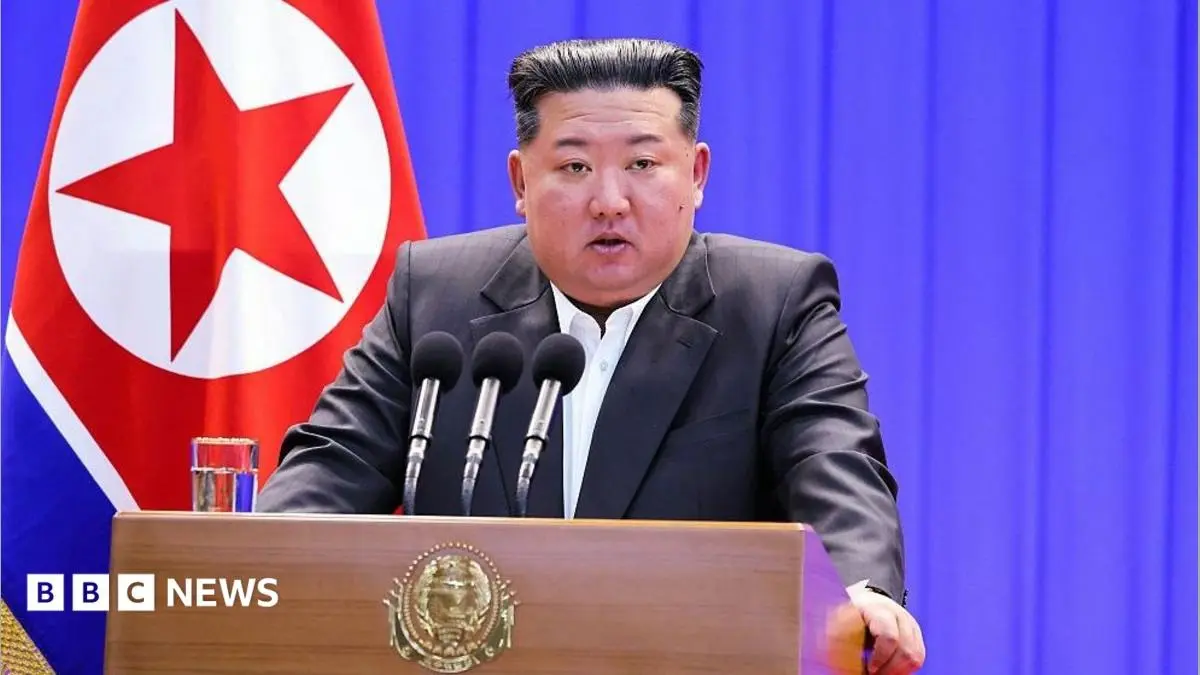
The denial came in a formal statement released on Tuesday by Kim Yo Jong, a senior official within the Democratic People’s Republic of Korea (DPRK) and the influential sister of supreme leader Kim Jong Un. Her remarks serve as the latest salvo in an escalating war of words regarding the origins of what many cybersecurity experts and government agencies have labeled the largest cryptocurrency heist in history.
According to Kim, the allegations linking Pyongyang to the massive breach are merely another "sinister attempt" by Washington to damage the public image of the DPRK on the global stage. By painting these accusations as a coordinated effort to undermine the state, North Korean leadership continues to maintain a narrative of victimhood, asserting that Western powers are weaponizing misinformation to justify ongoing sanctions and diplomatic isolation.
The Case Against Pyongyang
The controversy stems from a series of investigative findings released by the United States Federal Bureau of Investigation (FBI), the Secret Service, and a coalition of private-sector cyber analysts. These entities have pointed to substantial technical evidence suggesting that North Korea orchestrated the breach. For the US intelligence community, the scale and sophistication of the attack align with the modus operandi of North Korean state-backed actors, who have increasingly turned to the digital realm to bypass the constraints of international sanctions.
The attack, which resulted in the loss of billions of dollars in digital assets, has drawn intense scrutiny from global financial regulators and law enforcement agencies. Investigators have specifically identified the hacking group known as "TraderTraitor" as the primary force behind the operation. This group has been a focal point for the FBI for several years, with analysts frequently linking its activities to the North Korean regime’s efforts to generate illicit revenue.
The FBI has taken the unusual step of publicly calling on international industry partners, particularly those operating within the cryptocurrency and financial technology sectors, to assist in blocking transactions associated with digital wallets and accounts linked to the TraderTraitor group. This move highlights the severity of the situation; by effectively "blacklisting" these assets, the US hopes to prevent the regime from liquidating the stolen funds into hard currency, which is critical for sustaining the nation’s sanctioned economy.
A Pattern of Digital Aggression
The incident involving Binance is not an isolated event but rather the latest in a long string of cybercrimes that international observers have attributed to North Korean entities. For years, the DPRK has been accused of relying on sophisticated cyber-theft to bolster its coffers, providing a lifeline for an economy that has been stifled by years of restrictive international trade measures.
Blockchain analysts have frequently noted that the digital fingerprints left behind during these high-profile heists often point back to North Korean infrastructure. These attacks are typically characterized by a high degree of technical precision, suggesting that they are not the work of amateur criminals but rather the output of state-supported units tasked with achieving specific financial objectives. In this context, the Binance hack is viewed by many in the security community as a logical, if extreme, evolution of the regime’s reliance on cyber-enabled financial warfare.
The implications of such a theft are profound. As the global financial system continues to integrate cryptocurrency and decentralized finance, the potential for state actors to cause systemic disruption increases. If the claims against North Korea are accurate, it suggests that the regime has developed a formidable capability to strike at the heart of the global digital economy, turning the volatility of the crypto market into a tool for state survival.
Pyongyang’s Diplomatic Counter-Narrative
In her Tuesday statement, Kim Yo Jong sought to reframe the debate, positioning the accusations as a "trite provocation" that serves the domestic interests of the US administration. Her language was pointed, reflecting the combative tone that has become a staple of Pyongyang’s diplomatic messaging.
"The US has made a trite provocation of linking it with the Democratic People’s Republic of Korea again," Kim stated, speaking in her capacity as the director of the General Affairs Department. She went on to argue that the international community is being misled by a deliberate campaign of disinformation, aimed at casting the DPRK as a global pariah responsible for all manner of digital criminality.
"It is a grave political provocation against the DPRK that the US misleads the international public opinion as if all the cyber crimes in different parts of the world are our deeds," she asserted. This rhetoric serves two primary purposes for the regime: it reinforces a sense of national defiance among the domestic population, and it seeks to sow doubt among international allies of the US who may be wary of being dragged into a protracted cyber-conflict based on intelligence that Pyongyang claims is fabricated.
The Challenge of Attribution
The standoff highlights one of the most difficult aspects of modern international relations: the challenge of definitive attribution in the cyber domain. While the FBI and private security firms utilize sophisticated data tracking, forensic analysis, and pattern recognition to trace the movement of stolen digital assets, the decentralized and often obfuscated nature of blockchain technology creates a high bar for legal proof.
North Korea has frequently used these complexities to its advantage, denying involvement in high-profile attacks by claiming that such operations are impossible to verify or are being "framed" by Western intelligence services. For the international community, the challenge lies in balancing the need to hold perpetrators accountable with the risk of escalating tensions in an already volatile region.
As the investigation into the Binance hack continues, the international pressure on North Korea is unlikely to subside. The sheer scale of the theft ensures that global financial watchdogs will remain focused on the movement of these assets. Meanwhile, the FBI’s directive to financial institutions to monitor and freeze accounts associated with TraderTraitor signifies a commitment to tracking the funds through the labyrinthine world of cryptocurrency exchanges and "mixers"—platforms used to scramble the origin of funds to make them harder to trace.
For the moment, the diplomatic impasse remains, with the US standing by its assessment and Pyongyang dismissing the entire ordeal as a political fabrication. As the global economy grapples with the fallout of the record-breaking hack, the incident serves as a stark reminder of the intersection between emerging technologies and traditional geopolitical conflict. Whether or not further evidence emerges to bridge the gap between these opposing narratives, the Binance incident has solidified the status of cyber-warfare as a primary front in the struggle over North Korea’s sanctioned economy and its place in the international financial system.