Warning: This article contains distressing content and strong language.
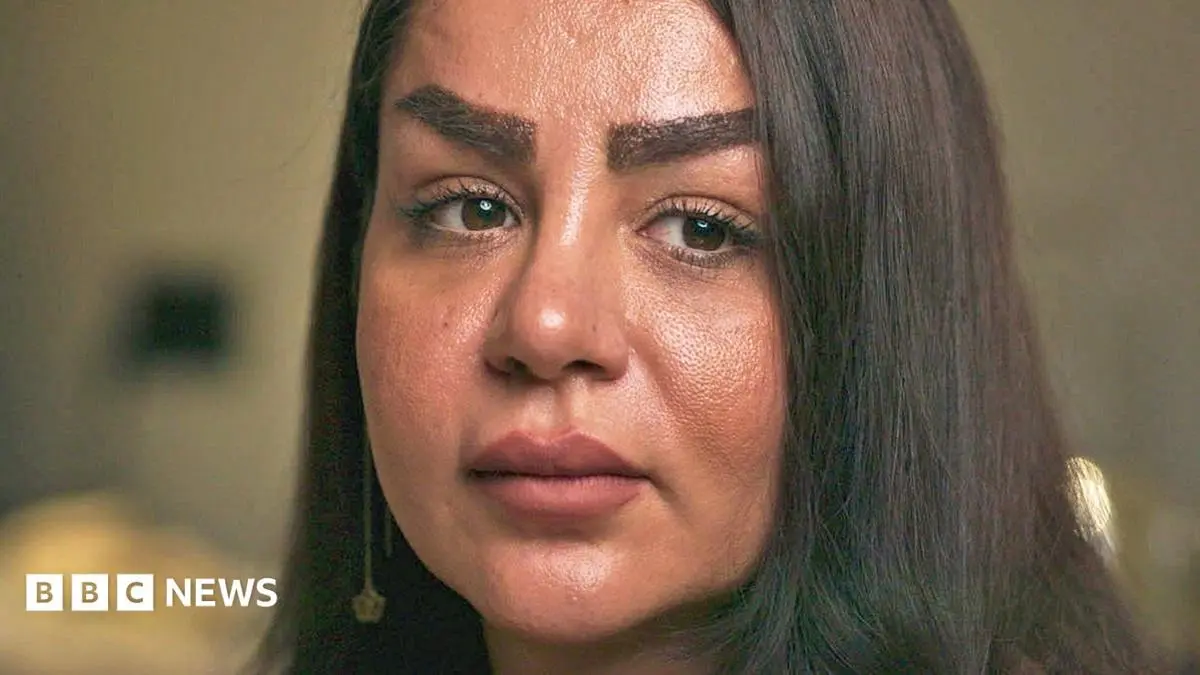
Samira, a former cosmetics saleswoman from Iran, describes her life before this year as entirely apolitical. She lived a quiet, professional existence, far removed from the turbulent corridors of Iranian power struggles. However, that normalcy was shattered in an instant when her only child, 16-year-old Sevda, was gunned down by security forces during the wave of protests that swept through Iran.
Sevda was among the thousands of demonstrators who took to the streets to challenge the country’s repressive regime. The uprising, which began late last year, intensified throughout the winter before eventually being overshadowed by the broader geopolitical firestorm that erupted when U.S. and Israeli airstrikes targeted and killed Iran’s supreme leader, Ayatollah Ali Khamenei. For Samira, the political landscape shifted from a distant reality to a personal battlefield the moment her daughter’s life was taken.
Following the shooting, Samira’s grief quickly curdled into a cold, focused fury. Her ordeal was compounded by the Iranian authorities, who she claims actively obstructed her search for her daughter’s body, subjecting her to a campaign of harassment that transformed her from a grieving mother into a defiant, singular force of opposition. "I realised that finding Sevda wasn’t the end, but just the beginning of all the harassment they put me through," Samira tells BBC Panorama.
After a harrowing escape from Iran—a journey that required her to navigate treacherous, mountainous terrain on foot to evade state intelligence—Samira now lives in hiding abroad. She characterizes herself as a "one-woman army fighting the regime." Her mission is now one of accountability: she is meticulously documenting and naming the specific members of the security forces and government officials she holds responsible for the lethal crackdown on the protests. "They’ll bring me to the brink of death before they kill me, but finding me won’t be easy," she says, resolute. "Return to normal life? There is no going back."
The Shadow of Resistance
Samira is not alone in her desire to speak out. In interviews conducted by the BBC since the start of the year, several Iranians still residing within the country expressed a desperate need to voice their dissent, despite the immense personal risks involved. Many described a deep sense of disillusionment and a struggle to maintain hope after the mass demonstrations were suppressed with extreme brutality.
In response to these accounts, the Iranian embassy in London maintained that the protests were not organic expressions of civilian discontent but rather a movement hijacked by foreign powers, specifically the United States. The embassy alleged that external actors promoted violence, funneled weapons and equipment into the country, and deliberately compromised public security to destabilize the Islamic Republic.
The protests, which reached a boiling point on January 9, began months earlier as a reaction to economic despair before evolving into a direct challenge to the legitimacy of the Islamic Republic. Sevda, according to her mother, was far more politically engaged than she was. The teenager looked up to Mahsa Amini, whose death in custody after an alleged violation of the mandatory headscarf law ignited the nationwide movement, and Nika Shakarami, another young woman killed during the subsequent uprising. "She kept them alive in her thoughts and always wanted to continue their path," Samira says of her daughter’s dedication to the resistance.
The atmosphere on the streets was increasingly volatile. On January 8, the day before Sevda’s death, protesters had answered a call for demonstrations issued by Reza Pahlavi, the exiled son of Iran’s last shah. Samira recalls that by that point, the state’s security apparatus had effectively lost control of the streets. Rumors circulated of a "shoot-to-kill" order from the government, but for many, including Samira, the scale of the potential violence seemed unfathomable. They were further emboldened by rhetoric from the international stage; U.S. President Donald Trump had publicly warned Iranian authorities on January 8, stating, "I have let them know that if they start killing people, which they tend to do during their riots… we’re going to hit them very hard."
The Final Moments
On January 9, the crowds appeared smaller, but the danger was more acute. Sevda seemed to possess a premonition of the tragedy to come. Before heading to the demonstration, she gave her earrings to her grandmother and shared the passcode to her mobile phone with her mother. When they reached the outskirts of Tehran, the scale of the security deployment was overwhelming.
"It seemed there were more forces than people," Samira recounts. "I don’t know how, within one day, they gathered so many… Basijis and IRGC forces." The Islamic Revolutionary Guard Corps (IRGC) and the paramilitary Basij Resistance Force had mobilized to defend the regime with lethal force.
As the protest unfolded, Sevda climbed onto a dustbin to lead a chant. It was then that the violence struck. "A sniper fired from the roof of a building on our right," Samira says. "The bullet went through her heart. I couldn’t even scream. I just stared at Sevda – her body lying lifeless. Blood was gushing out her mouth and nose. I couldn’t believe it, I couldn’t believe she was dying. Her eyes were still looking at me."
Samira rushed her daughter to the hospital, where she was told surgeons were working to save her. Moments later, the reality was confirmed when she saw Sevda’s body being zipped into a bag.
A Search Through the Morgue
The days following the shooting were a descent into a bureaucratic nightmare. Samira spent days searching for her daughter’s remains, eventually arriving at one of Tehran’s largest morgues. The scale of the carnage was devastating. "Teenagers—young boys and girls. So many had been killed," she says, her voice breaking. "I died with every bag I unzipped. I’d never seen so many bodies. But I wouldn’t give up." She finally located Sevda, who had been buried under three other bodies.
While Iranian authorities have officially acknowledged that more than 3,000 people were killed during the protests—attempting to frame the death toll as a mix of protesters and security forces—human rights groups such as Hrana estimate the true number of fatalities to be well over 7,000, the vast majority being civilians.
Retrieving the body was only the beginning. To secure the release of Sevda’s remains for burial, Samira claims she was coerced into stating that "terrorists," rather than state security forces, were responsible for her daughter’s death. This, she says, was a calculated attempt by the regime to suppress the truth and frame the deaths as the result of foreign sabotage. Even after the funeral, the state’s interference did not cease; she was forbidden from visiting the gravesite or erecting a tombstone.
As the 40-day anniversary of Sevda’s death approached—a significant milestone in Iranian mourning culture—Samira was summoned by the Ministry of Intelligence. They offered her a chilling trade: if she would appear on camera to claim that Sevda was a member of the Basiji who had been killed by protesters, the state would declare her daughter a "martyr" and provide Samira with financial perks and a new home.
"They told me: ‘You should give us an interview… Then we will announce her as a martyr—you will then receive perks, a house, or anything that you want,’" she recalls. It was clear to Samira that the regime’s sudden interest was driven by fear; she had successfully communicated the truth of her daughter’s death to media organizations based in London once internet access was restored. Fearing for her life and refusing to "trade with her child’s blood," Samira fled the country.
A Life in Exile
Even from abroad, the reach of the regime has been relentless. Samira has been charged in absentia with a series of offenses, including moharebeh, or "waging war against God," a charge that carries the potential for the death penalty. When she attempted to watch a livestream of a vigil held for what would have been Sevda’s 17th birthday, the feed was abruptly cut. She later learned the event had been raided and her family members arrested. Authorities reportedly warned her family that if they continued to gather at the gravesite, they would exhume Sevda’s body and relocate it to an undisclosed location.
Despite these threats, Samira continues to use her online platform to identify and name the officials and security personnel she believes were behind the trigger on that January day. Her goal is to ensure that these individuals are one day brought to trial for their roles in the deaths of so many young people. The danger is real; when one of the men she named was found dead, a regime supporter placed a $5,000 bounty on information leading to Samira, assuming she was responsible.
"Every day and every second without Sevda is very difficult for me," she says. "It’s like a mother who has lost her heart… But the fact that Sevda is not breathing has made it possible for me to stand on my feet… all those body bags I opened looking for Sevda, they all made me fight the Islamic Republic until my last breath."