The excitement surrounding high-profile creative director appointments and their debut collections is creating a powerful halo effect on the global luxury resale market. From Matthieu Blazy’s striking pony hair heels for Chanel to Michael Rider’s massive Celine Disc sunglasses, the buzz generated by modern runways is rippling across eras, reshaping consumer behavior, and driving up prices for key items of the past.
According to eBay’s latest watchlist report for the Fall/Winter season, the ripple effect of creative debuts over the past year is fundamentally altering what luxury consumers search for, list, and buy. The data sheds light on how contemporary fashion hype extends far beyond current collections, breathing new life into historical eras of major luxury houses and validating the secondhand market as an essential extension of the primary fashion ecosystem.
The immediate correlation between a designer’s current appointment and surging interest in their past work—or the archives of the houses they now lead—is striking. When Matthieu Blazy’s first collection for Chanel hit stores, searches for the designer skyrocketed by 291%. Simultaneously, listings for Karl Lagerfeld-era Chanel rose 87% year-on-year. A similar phenomenon occurred when Demna made his first Gucci runway appearance, prompting a 42% jump in searches for the designer and a 49% year-on-year increase in listings for items from the Tom Ford era of the brand.
This trend is part of a broader movement where pieces from defining designer eras are entering circulation on resale platforms at unprecedented rates. Users are actively capitalizing on current brand interest to sell past collections, fueling massive year-on-year surges for archival periods such as Demna’s Balenciaga, which saw listings jump 204%, and Phoebe Philo’s Chloé, up 165%. At Dior, consumer response was similarly swift; searches for Jonathan Anderson rose 92% following his first couture show for the French fashion house, while average sales prices for pieces from the John Galliano era of Dior increased by 81% during the same period.
This shift is reflected widely across the broader secondary market. Blazy’s appointment alone drove searches for the designer up a staggering 10,976% on luxury resale platform The RealReal, according to its annual report released in August. The data underscores the profound impact that modern brand heat has on the circulation and valuation of past collections. eBay’s platform metrics further illustrate this evolution: Chanel did not rank among the top-purchased luxury brands on the marketplace between 2022 and 2024. By 2025, however, the storied French house had climbed to fifth place, and by 2026, it advanced to the third spot, trailing only Louis Vuitton and Gucci, which have held the top two positions since 2022.
"When someone new takes the helm, they’re not necessarily reinventing the wheel, but very often revisiting the codes, silhouettes, and references that made the house interesting in the first place," explains stylist Brie Welch, who collaborated on the eBay report as a resident stylist. "Seeing a brand reinterpreted through a new creative lens naturally sparks curiosity about its past collections."

This dynamic highlights a sophisticated shift in consumer habits. Shoppers are following brands and their runway presentations with intense scrutiny, as evidenced by their growing inclination toward ultra-specific fashion search terms and the immediate impact of debut shows on digital search metrics, listings, and sales. The migration of these shoppers to secondhand marketplaces like eBay indicates a dual desire: they want to tap into current, highly visible trends while securing better value. This mirrors broader economic trends in the primary retail market, where overall spending remains steady, but consumers place a heightened emphasis on perceived value. If shoppers conclude that superior value lies in the secondary marketplace rather than primary retail channels, luxury brands ignore this behavior at their peril.
Market Demand and Rising Prices
John Galliano’s era at Dior is far from the only category experiencing a steep price hike. Cultural heat has driven luxury secondhand prices up across the board, according to eBay’s findings, though the continuous upward trajectory of primary luxury retail prices has undoubtedly played a role in the spike. Kirsty Keoghan, eBay’s general manager of EU fashion and luxury, attributes many of the specific price increases measured between January and September to high-profile celebrity sightings.
The Row’s coveted Margaux bag, for instance, continues to climb in price, registering a 137% year-on-year increase as public figures like Zoë Kravitz and Kendall Jenner are regularly spotted carrying the minimalist staple. Similarly, consumer demand for Gucci’s Giglio tote surged by 103%, amplified by sightings on the arms of Dakota Johnson and Suki Waterhouse.
"There is an intentionality about owning something with cultural relevance, longevity, and a sense of value," Keoghan says, noting that shopping for secondhand designer fashion has evolved into a deeply culturally responsive practice.
This consumer mindset coincides with the robust return of the classic "It-bag," as shoppers hunt for styles experiencing a prominent cultural resurgence. Global listings for Balenciaga’s Le City bag have surged by 936%. The style, which recently celebrated its 25th anniversary, has transitioned seamlessly from its 2004 origins—when Sienna Miller was frequently photographed wearing a denim mini skirt with a red City bag slung over her shoulder—to the modern wardrobes of public figures ranging from Harris Dickinson to Bella Hadid. Other archival bag styles are enjoying similar resurgences in listings, including the Loewe Amazona 180, up 440%; the Valentino Garavani VLogo Bag, up 358%; and the Bottega Veneta Veneta Bag, up 158%. Welch attributes these surges to style mainstays like Kravitz and Jacob Elordi being frequently photographed styling such heritage pieces.
Current Trends, Past Collections
Current runway trends are feeding directly back into secondhand market purchases, as consumers seek to participate in what is trending in real-time by sourcing pieces from previous seasons. At a time when consumer anxiety remains high—though without dampening overall fashion spending—opting for a pre-loved item serves as a savvy style choice. It allows shoppers to engage with current aesthetics while feeling like they have made a more calculated financial decision, even as resale prices tick upward alongside demand, according to Keoghan.

"We are seeing how quickly a new runway moment can evoke an interest for shoppers in a brand’s archive, sending them in search of special pieces with a story," Keoghan notes.
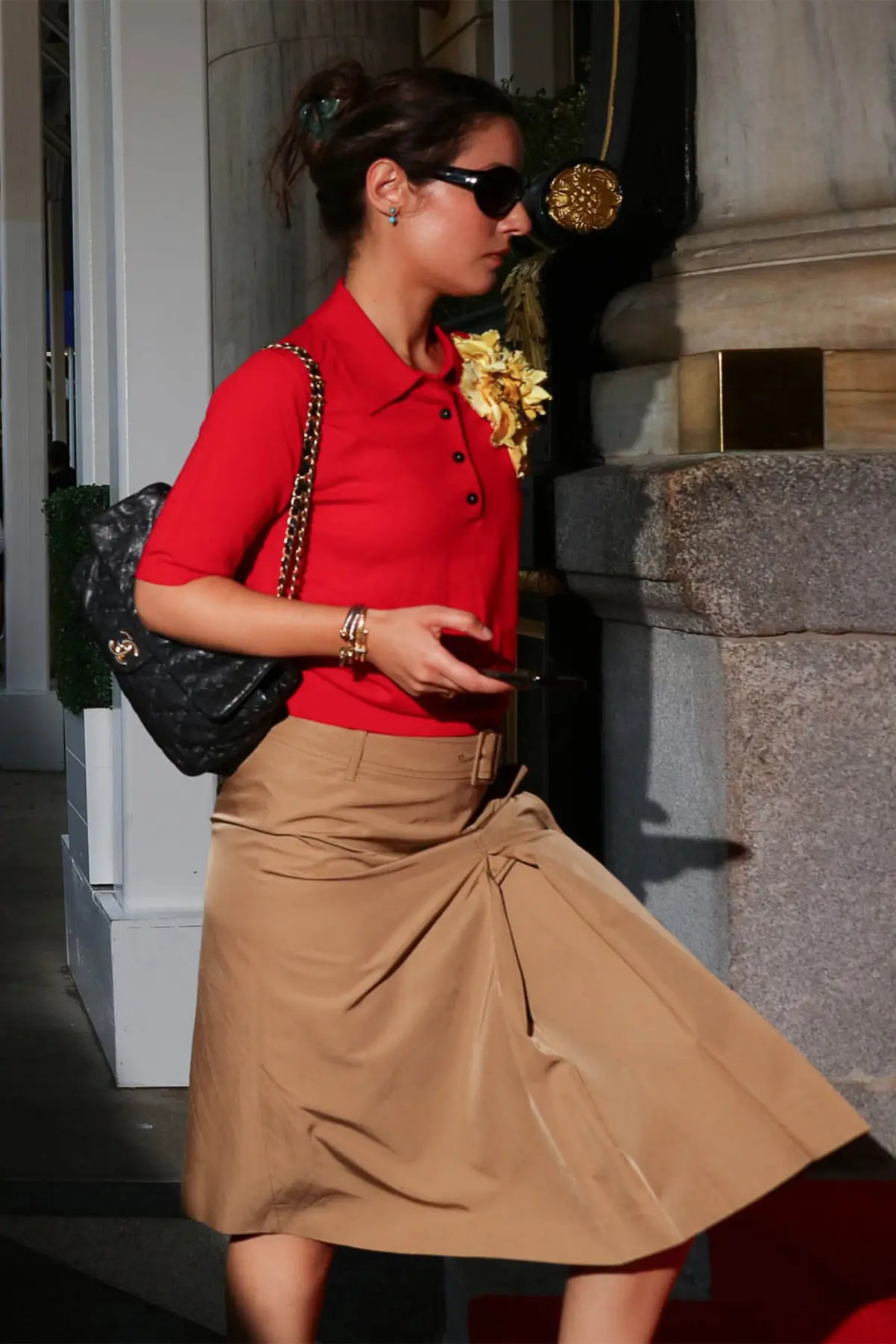
Prada skirts, for example, emerged as an immediate breakout trend that transcended standard fashion discourse. Seemingly inspired by the brand’s runway presentation, shoppers turned to the secondhand market to source past-collection skirts in the days following Prada’s Spring/Summer show in Milan. Global searches for "Prada skirt" spiked by more than 360% compared to the beginning of the month, reflecting an immediate, runway-inspired uptick in archive browsing.
"Suddenly, you’re looking at a sort of dated silhouette differently," Welch says, pointing out that consumers are finding success by seeking out alternative iterations of A-line skirts already circulating in the market. "You can find an earlier version of the idea, sometimes at a more accessible price point, and make it your own."
This season’s pronounced emphasis on footwear also served as a powerful search booster for the resale sector. On eBay, Chanel—which has featured a heavy rotation of classic slingbacks on its recent runways—exerted the most notable influence. Overall searches for slingbacks rose over 65% compared to the start of fashion month, while searches specifically for Chanel slingbacks increased by 50%.
"People are shopping with a sharper point of view; they want to be part of the conversation, and they are shopping pre-loved to achieve that," Keoghan concludes.