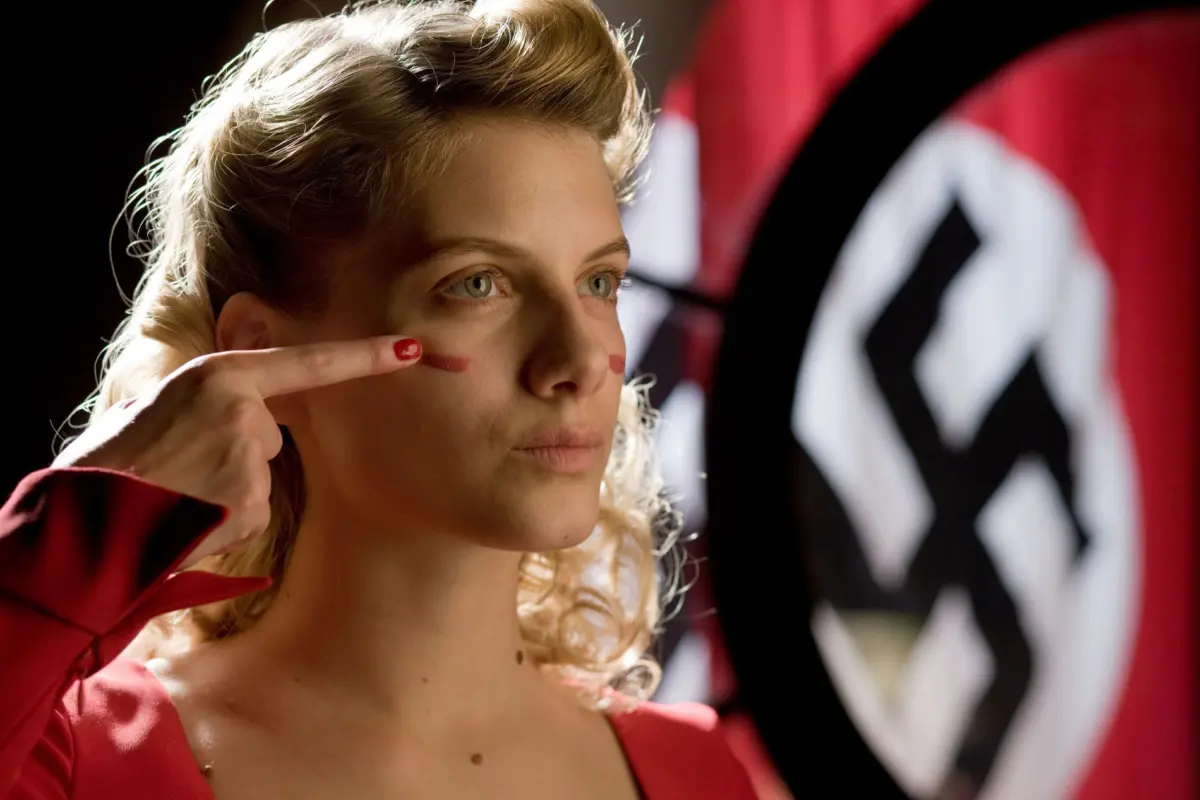
Quentin Tarantino has never been a director to shy away from unconventional methods, but his latest revelations regarding the casting process of his 2009 war epic, Inglourious Basterds, highlight a ruthless, uncompromising approach to filmmaking. In Jay Glennie’s new behind-the-scenes book, The Making of Quentin Tarantino’s Inglourious Basterds, the director offers a candid and unflinching look at the pre-production chaos that defined the film, including the high-stakes decision to fire both Mélanie Laurent and French cinema legend Isabelle Huppert before a single frame of the movie had been shot.
For Tarantino, the table read represents the most sacred and vital phase of pre-production. It serves as his first true glimpse into the world he has painstakingly written, transforming abstract dialogue on a page into the tangible, breathing reality of a motion picture. When the cast of Inglourious Basterds gathered for that initial read-through, the experience for the director was far from the creative epiphany he had anticipated, particularly regarding the pivotal role of Shosanna Dreyfus, the French cinema owner who orchestrates a daring act of vengeance against the Nazis who destroyed her family.
"Mélanie Laurent’s table read was terrible. It wasn’t good enough to be terrible," Tarantino remarked to Glennie. For a director who describes the table read as the most exciting day of his process, the disappointment was profound. "That is the closest I get to seeing the movie for the first time. Up until then, it’s just been me reading all the scenes to myself or to a friend. So, a table read with the whole cast is so exciting and so important to me. Well, Mélanie was terrible, so I fired her."
The abrupt dismissal could have spelled the end of the collaboration, but Laurent, clearly undeterred by the director’s cold assessment, was not ready to walk away from the project. Days after being let go, she reached out to Tarantino to plead her case. She explained that she had been suffering from an illness during the table read and offered to fly herself to Germany, covering her own travel and accommodation expenses, to prove that she was the right person to bring Shosanna to life.
Tarantino, who has often been characterized by his intense appreciation for raw talent and dedication, found himself moved by Laurent’s tenacity. He agreed to "turn the clock back" and return to "square one," provided she was willing to undergo a rigorous three-day rehearsal process with him. It was a gamble for both parties, but one that ultimately paid off; Laurent’s performance during those three days was enough to convince the director that he had been wrong to dismiss her initially.
Reflecting on the incident years later, Tarantino is quick to emphasize his deep professional affection for the actress. "Let me just go on the record for everybody to know: I love Mélanie," he stated. "The fact of the matter is, if we were not talking about the making of Inglourious Basterds, I would never think about the table read again for the simple reason Mélanie is my Shosanna. She did a wonderful job."
The director frames his brutal honesty as a byproduct of the book project itself. Because he and Glennie committed to documenting the film’s creation "warts and all," Tarantino felt compelled to be transparent about the friction that occurred behind the scenes. Without the scope of the book, he maintains that the incident would have been a forgotten footnote in his career, completely eclipsed by the success of the finished film.
While Laurent was granted a second chance, Isabelle Huppert was not afforded the same opportunity. The esteemed actress had been cast as Madame Ada Mimieux, a character intended to be the woman who shelters Shosanna in Paris. However, the production faced immediate hurdles, and the relationship between the director and the actress fractured quickly. According to Tarantino, Huppert failed to attend the crucial table read, which proved to be a terminal mistake in his eyes.
"So fuck it. I fired her," Tarantino told Glennie. "I mean, I love Isabelle Huppert—Heaven’s Gate and all that—but there were issues with her contract. It just kept stalling. And then not coming to the table read. Well, we cast Maggie instead."
The role was subsequently handed to Maggie Cheung, the iconic star of Wong Kar-wai’s In the Mood for Love. Tarantino’s stance on the matter is unequivocal: he views the table read as a non-negotiable obligation. "That invariably happens," he noted. "As far as I’m concerned, if you’re cast and you are not at that table, I don’t owe you jack shit! You can be fired, especially if I get excited by what somebody else did in your absence."
Ironically, despite the turmoil surrounding the casting of the role, the character of Madame Ada Mimieux ultimately did not make the final cut. Tarantino eventually determined that the scenes featuring the character were redundant and bogged down the pacing of the film. He concluded that the audience did not need to see the minutiae of how Shosanna acquired her cinema; a simple title card reading "Four Years Later" and a brief line of dialogue from Shosanna explaining that she had inherited the theater from her aunt were sufficient. While he praised Cheung’s performance as "fantastic," the narrative necessity of the character had vanished in the editing room.
The release of Inglourious Basterds in 2009 marked a major milestone in Tarantino’s career. The film held its world premiere at the Cannes Film Festival in May, where it garnered critical acclaim and a Best Actor award for Christoph Waltz, whose performance as Colonel Hans Landa remains one of the most celebrated portrayals in modern cinema. The movie went on to become a massive box office success, grossing $321 million worldwide and solidifying its place in pop culture history. For Laurent, the role of Shosanna became a definitive moment in her career, proving that her initial struggle at the table read was a temporary obstacle rather than a reflection of her capabilities as an actress.
For Tarantino, the entire ordeal is emblematic of a singular, uncompromising philosophy regarding the collaborative nature of filmmaking. He views his director’s chair not as a position of social comfort, but as a position of responsibility to the integrity of the story.
"I have no moral compass when it comes to giving roles to actors: They have to be right. They have to feel like they are right for the world I have created," Tarantino explained. "I have fired actors in the past. If it’s not right, it is not right. I don’t owe them shit. I owe my film the best actors I can find. Period."
The Making of Quentin Tarantino’s Inglourious Basterds provides a window into the intensity of that pursuit of perfection. By documenting the moments where things went wrong, the book sheds light on why, in Tarantino’s eyes, the final product remains so enduringly right. For cinephiles and students of the craft, the account serves as a reminder that the polished final cut seen on the screen is often the result of volatile decisions, last-minute pivots, and an uncompromising, sometimes brutal, insistence on excellence.