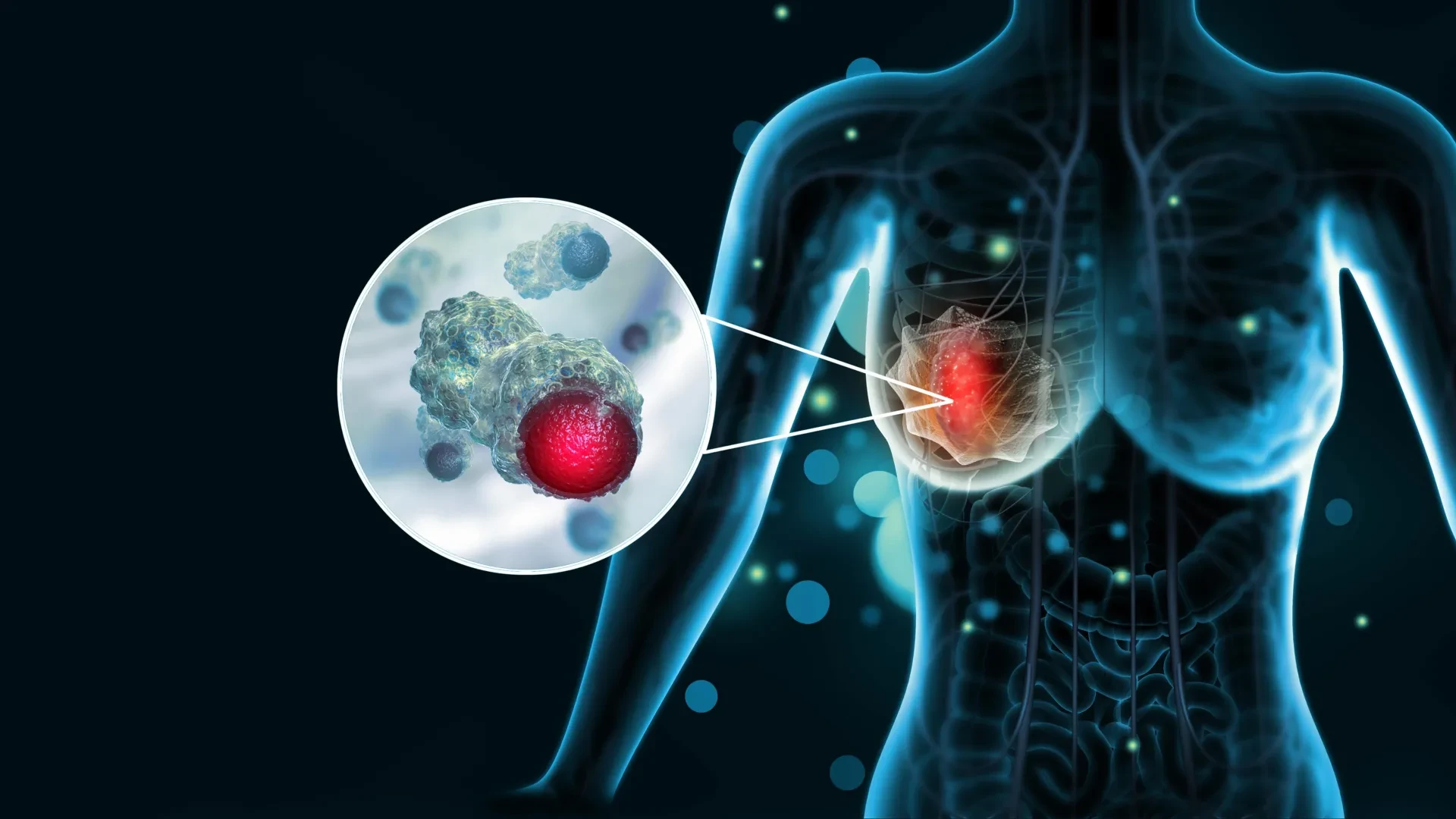
Women with higher blood levels of two common "forever chemicals" may face a significantly increased risk of developing a particularly aggressive form of breast cancer, according to groundbreaking new research released by the National Institutes of Health (NIH), a division of the U.S. Department of Health and Human Services (HHS).
The study, which has been published in the Journal of Clinical Oncology, provides a compelling link between estrogen receptor-negative (ER-negative) breast cancer and two prevalent per- and polyfluoroalkyl substances (PFAS): perfluorooctanoic acid (PFOA) and perfluorooctanesulfonic acid (PFOS). While the research did not find a clear, universal link between these chemicals and every form of breast cancer, the discovery of a specific association with the more aggressive ER-negative variant represents a critical development in environmental health research.
PFAS are a large, complex family of synthetic chemicals that have been utilized for decades in a wide array of consumer products, ranging from non-stick cookware and water-repellent clothing to food packaging and fire-fighting foams. Frequently dubbed "forever chemicals," these substances are characterized by their remarkable chemical stability, which allows them to resist degradation in the environment. This same durability causes them to persist in the human body, where they can accumulate in the blood and tissues over many years.
"Women deserve clear answers about how chemicals in their environment may affect their health," said HHS Secretary Robert F. Kennedy, Jr. "This NIH study links two forever chemicals to a higher risk of ER-negative breast cancer and demands further investigation. Under President Trump’s leadership, we will pursue the evidence, confront environmental health risks, and give women the information they need to protect their health."
The Challenge of ER-Negative Breast Cancer
The specific form of cancer identified in this study is of particular concern to the medical community. ER-negative breast cancer differs fundamentally from more common forms of the disease because its tumor cells do not possess the receptors that allow estrogen to stimulate their growth. Because these cancers do not rely on estrogen for development, they are typically unresponsive to hormone-blocking therapies, which are standard treatments for many other types of breast cancer.
As a result, ER-negative cancers are often categorized as more aggressive and generally correlate with poorer clinical outcomes. Despite their severity, scientists have historically struggled to identify definitive risk factors that predispose an individual to developing this specific tumor type. The new findings from the NIH suggest that long-term, persistent exposure to certain environmental contaminants may be a significant, previously under-recognized contributing factor.
"Our findings, which we confirmed using a meta-analysis of prior research, indicate that certain legacy PFAS, including PFOA and PFOS, are associated with a higher risk of ER-negative breast cancer, a more aggressive tumor type with few known risk factors," explained NIH Stadtman Investigator Alexandra White, Ph.D., who served as the lead researcher on the project.
Analyzing the Connection: Higher Exposure, Higher Risk
To explore this potential connection, a team of NIH scientists and their collaborators performed a retrospective analysis of blood samples. These samples had been collected from participants years before they received any formal cancer diagnosis, which was essential for establishing a temporal sequence between chemical exposure and disease onset. The research team measured concentrations of 17 different types of PFAS in the blood, allowing for a comparative analysis of historical exposure levels against subsequent breast cancer outcomes.
The data revealed startling differences in risk profiles for the two specific chemicals, PFOA and PFOS. When participants were divided into groups based on their chemical concentrations, the results showed a clear, tiered increase in risk. Women categorized in the highest PFOA exposure group exhibited a 67% higher rate of developing ER-negative breast cancer compared to those in the lowest exposure group. The findings for PFOS were even more pronounced, with the highest exposure group demonstrating a 93% higher rate—nearly double that of the lowest group.
It is important for the public to note that these figures describe relative differences between population groups rather than the absolute probability of an individual woman developing the disease. Furthermore, the researchers caution that while this study establishes a strong, statistically significant association, it does not constitute absolute proof that these chemicals directly cause breast cancer. Instead, it serves as a crucial signal for further investigation into the biological mechanisms at play.
Insights from the Sister Study
The analysis drew upon the extensive resources of the "Sister Study," a long-term research initiative led by the National Institute of Environmental Health Sciences (NIEHS). Between 2003 and 2009, this massive study enrolled 50,884 women across the United States and Puerto Rico. All participants were between the ages of 35 and 74 at the time of enrollment and were breast cancer-free; however, each participant had a sister who had already been diagnosed with the disease, providing a unique cohort for studying breast cancer risk.
For the specific investigation into PFAS, the researchers analyzed data from 1,609 women who went on to develop breast cancer and a carefully matched comparison group of 2,269 women who did not. By utilizing this robust dataset, the scientists were able to adjust for a variety of confounding factors, strengthening the credibility of the observed associations.
Potential for Prevention and Future Research
One of the most pressing questions following the release of these findings is whether reducing environmental exposure could effectively lower the risk of aggressive breast cancer. While the persistent nature of PFAS in the environment and the human body makes them difficult to eliminate, researchers emphasize that exposure is not entirely unavoidable.
"These findings matter for women’s health broadly," said first author Che-Jung Chang, Ph.D., who previously served as an NIH research fellow and is now a researcher at the scientific organization DLH. "Although PFAS are persistent in the environment and in our bodies, exposure to them is still potentially modifiable, meaning people can take steps to reduce their exposure, and these findings could open new avenues for prevention."
The researchers are now focusing their efforts on the "how"—specifically, what biological processes might be triggered by these chemicals to facilitate tumor development. Because the strongest associations were found in tumors lacking estrogen receptors, the study suggests that PFAS may act through pathways that are entirely independent of hormonal signaling. Potential hypotheses include the disruption of immune system functions or the alteration of gene activity, though the current study did not investigate these mechanisms in depth, leaving them as areas for future exploration.
Despite the fact that PFOA and PFOS have been largely phased out of manufacturing in many parts of the world and replaced with newer chemical compounds, they remain a significant public health issue. Because of their "forever" nature, measurable quantities of these substances persist in the bodies of the vast majority of the population. Consequently, the legacy of these chemicals remains a point of concern for researchers and health officials alike.
The scientific community is now calling for further investigation into populations that have experienced high levels of PFAS exposure, as well as those that exhibit historically higher rates of ER-negative breast cancer. Such studies will be vital to clarifying the strength of these associations and determining if specific communities are at disproportionately higher risk.
Furthermore, a significant gap remains regarding the safety of the newer PFAS compounds that have been introduced as replacements for PFOA and PFOS. Scientists are tasked with determining if these modern substitutes carry similar health risks. "More research is needed, particularly evaluating the risk of breast cancer associated with newer replacement PFAS chemicals," White concluded.
As the scientific community continues to untangle the complex relationship between the modern environment and long-term health, this study serves as a critical reminder of the importance of understanding the cumulative impact of industrial chemicals on human health, particularly regarding the development of aggressive and difficult-to-treat diseases. The research received funding and support through NIEHS grants Z01ES044005, Z1AES103332, and R01ES032831.