In an era where the boundaries between high-octane luxury and high-fashion lifestyle are increasingly blurred, iconic brands are discovering that their identity can no longer be contained by a single industry. Just as a devotee of Louis Vuitton luggage might wish to dine at an LV-branded café, or a dedicated Dior enthusiast might seek to rest their head on a Dior pillow within the confines of a Dior-designed hotel, why shouldn’t an aficionado of legendary Italian sportscars desire to dress the part? For Maranello, the answer is a resounding affirmative, marking a strategic pivot that brings the visceral thrill of the racetrack directly into the wardrobes of global luxury consumers.
This philosophy of total lifestyle immersion is the driving force behind Ferrari’s expanding ready-to-wear enterprise. "Look at what Louis Vuitton is doing—they are becoming the first sponsor at F1," observes Rocco Iannone, the creative director of Ferrari’s ready-to-wear collection. "They are too big to sell only small leather goods and bags. So they need to enlarge their experiences. Luxury is becoming very multidimensional."
Iannone recently elaborated on this vision inside Ferrari’s newly opened boutique in the heart of SoHo. Situated in a former Nespresso space directly opposite a Prada store, the location places Ferrari in prestigious company, rubbing shoulders with other Italian icons that have successfully transcended their foundational products to become comprehensive cultural symbols. The interior design of the boutique pays homage to the brand’s engineering prowess and aesthetic heritage, utilizing sinuous lines of burnished steel that evoke the monumental scale of a Richard Serra sculpture. These industrial elements are set into a sophisticated interplay against raw concrete, expansive glass, and supple leather.
The architectural layout of the SoHo store is meticulously divided to cater to the diverse tiers of the brand’s clientele. Downstairs, the atmosphere is geared toward the more commercial collection, featuring a prominent stand of logo baseball caps, small accessories such as pens and keychains, and special collaborative pieces. Among these is a notable partnership with music producer and entrepreneur Swizz Beatz, the quintessential Ferrari owner who embodies the collector culture—the kind of devotee who has to pause and mentally review his garage just to answer how many cars he currently owns from the marque. Upstairs, the ambiance shifts to mirror a high-end atelier. The recent runway collection hangs gracefully near a dedicated table where shoppers can engage in the bespoke service of customizing Ferrari-shaped bags, a common request from clients eager to match their accessories to the exact specifications of their automobiles. Further up is a private, curtained-off sanctuary reserved exclusively for VIP clients.
The expansion into New York’s retail landscape served as the prelude to a major fashion event held just days later in a downtown gallery, designed to showcase the brand’s latest sartorial vision to the American market. "America’s the most important market for us," noted John Elkann, the chief executive of the brand, prior to the commencement of the show. "And Ferrari is very intertwined with America—there is no better place to be than here in New York." The venue itself reinforced this transatlantic connection, featuring oversize runway-side tapestries that faithfully recreated the vibrant covers of a magazine the automotive company once produced in collaboration with the historic textile manufacturer Rubelli. Rendered in vivid shades, the installations naturally highlighted the fiery Ferrari red that has become synonymous with speed, passion, and Italian craftsmanship.
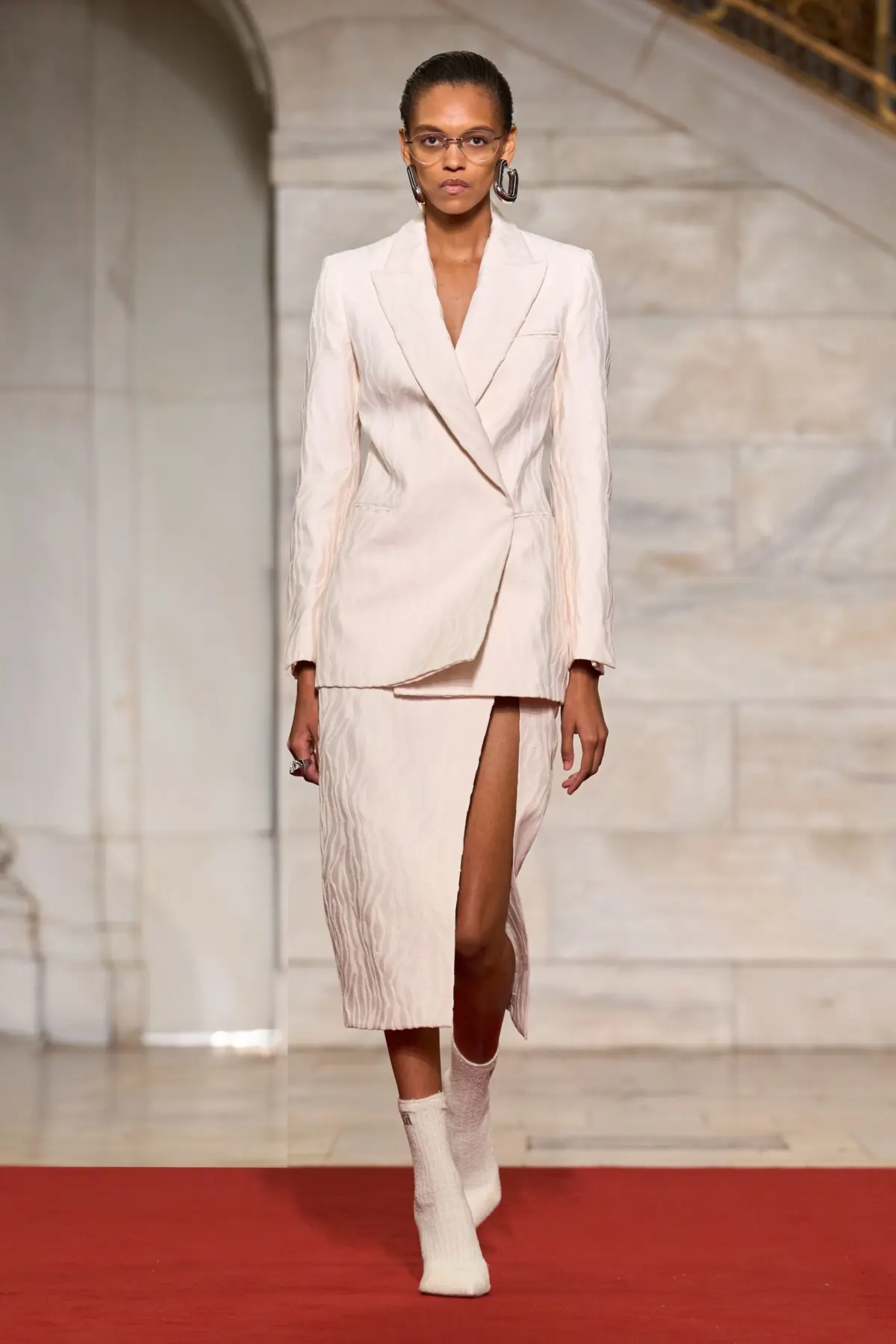
When the presentation began, the runway offered a sophisticated evolution of the brand’s aesthetic vocabulary. Models walked in creamy, tailored pieces characterized by a subtle rippling effect, alongside slouchy tracksuits, slick leather skirts, and cropped bomber jackets. The collection also featured body-hugging intarsia knits rendered in swirling, occasionally chaotic patterns that visually oscillated between the organic veining of marble and the dense, multi-sponsor branding typically plastered across a race car driver’s uniform. The show culminated in a rich passage of garments in deep mocha brown, where denim appeared to "melt" seamlessly into leather printed with an intricate turtle shell pattern—a textural triumph that Iannone noted with particular satisfaction—alongside lighter silks that featured a delicate, puckered appearance.
This latest outing highlights a noticeable evolution in Iannone’s creative trajectory since he first took the helm of the brand’s fashion division. In recent seasons, the designer has deliberately mellowed the more dynamic, in-your-face aesthetic that defined his initial collections, which relied heavily on graphic hits of neon and showy, oversized logos. Yet, in pivoting
toward a more subdued elegance, the collections have occasionally brushed against the risk of shedding some of the flashy, swaggering bravado that remains utterly foundational to the Ferrari legend. At its core, Ferrari is sleek, sexy, and ostentatiously unafraid of its own desire for speed, adrenaline, and unbridled excitement. While this latest New York runway was undeniably reserved and tasteful, some observers noted that it occasionally missed that visceral, gutsy element that historically makes both a Ferrari sportscar—and the world of high fashion—roar like an engine.