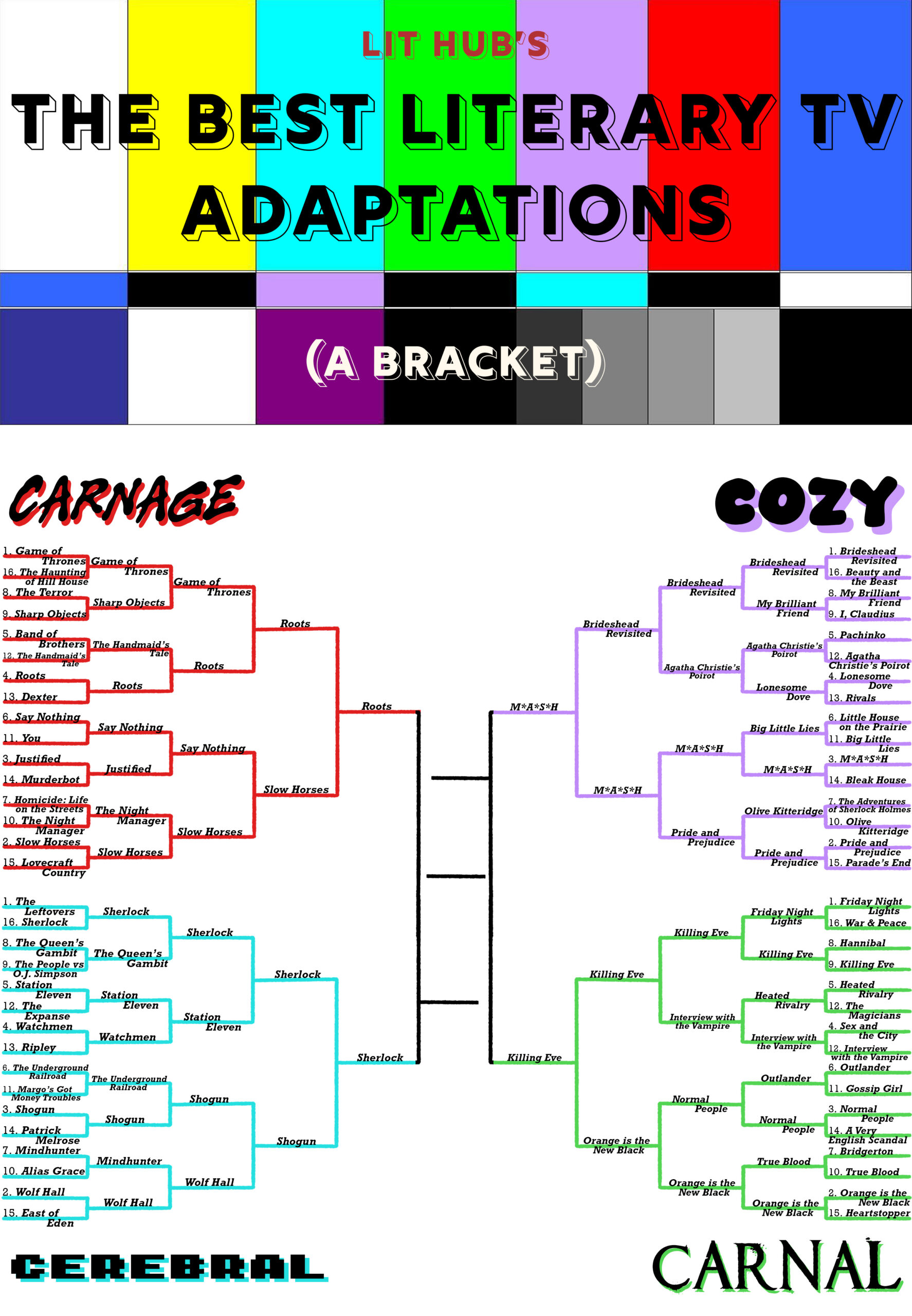
Well, we have officially arrived at the semifinals—the stage of the tournament that perpetually gets confused with the quarterfinals whenever a bracket of this scale is put together. After days of fierce competition and an intense round of voting, the field has been narrowed down to just four television shows across two distinct match-ups. To say these are not the four shows that everyone expected would be an understatement, and with the competition reaching its fever pitch, there is no telling where the final rounds might lead.
Yesterday’s quarterfinal matches brought a wave of heartbreak to enthusiasts across the literary and television communities, with four exceptionally strong and critically acclaimed programs dropping out of the running. Orange Is the New Black was officially denied parole, bringing an end to its prison-yard run; Shōgun ultimately failed to unite the warring states of feudal Japan; Slow Horses suffered the indignity of being demoted to an even more degrading and menial desk job under an even grosser and meaner boss; and Brideshead Revisited made its final narrative turn by converting back to Protestantism.
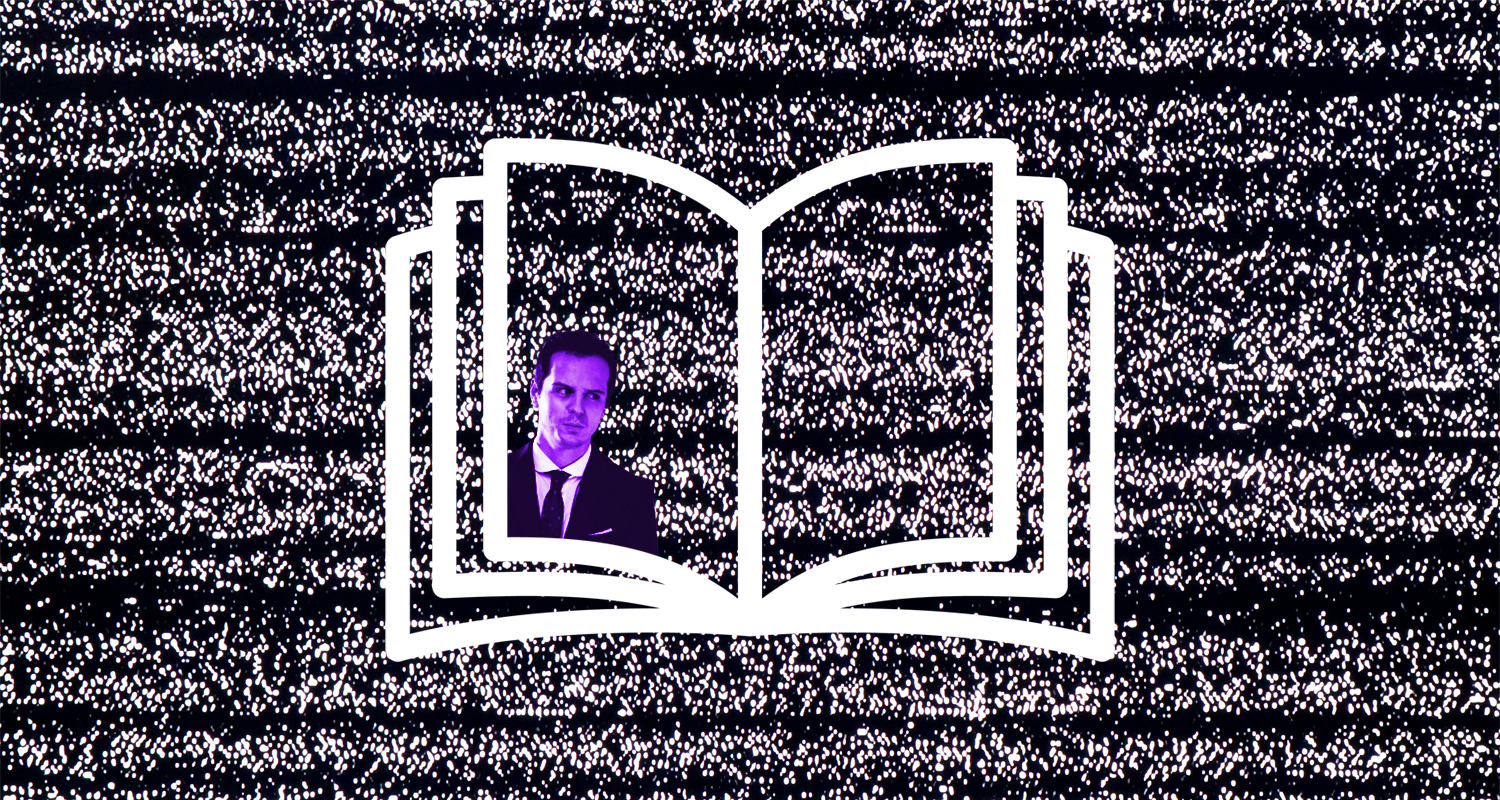
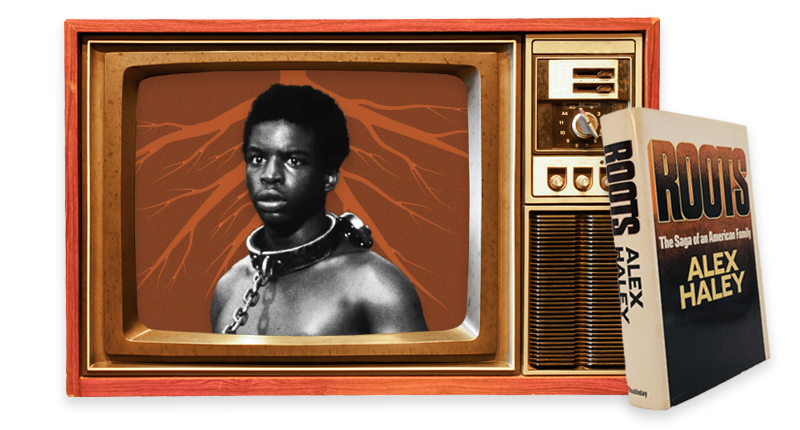
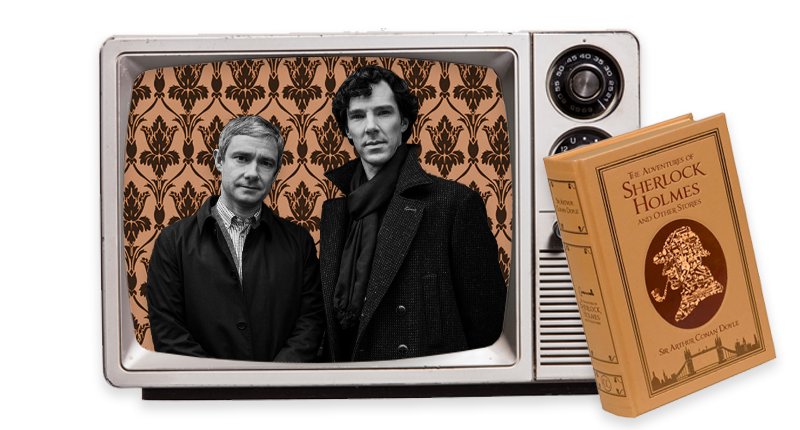
Despite those heavy losses, the four shows left standing have created two surprisingly compelling and radically different match-ups for the semifinals. In the first pairing, the Carnage bracket winner Roots goes head-to-head against the Cerebral bracket winner Sherlock. These are two wildly different television experiences, yet both have launched an immense amount of cultural discourse over the decades. Roots famously attracted the ire of various conservative commentators during its initial broadcast, while the fierce online debates over which version of the Sherlock characters fans should ship notoriously overheated several Tumblr servers in the early 2010s. Voters are now left to decide which of these heavy-hitting discourse magnets deserves to advance.
Meanwhile, the second semifinal pairing pits the Cozy bracket winner M*A*S*H against the Carnal bracket winner Killing Eve. Both of these critically lauded series deal fundamentally with finding human connection in the midst of high-stress, high-stakes environments—whether that is an army surgical hospital during wartime or a lethal international cat-and-mouse chase. The core question facing voters is whether they prefer a wise-cracking friend in the trenches or a wise-cracking crush across enemy lines.
Instructions and Voting Schedule
For those participating in the tournament, the rules remain delightfully straightforward. For every match-up, voters are asked simply to pick their favorite show. The primary goal is to identify the best overall television series, rather than strictly judging them on how faithful they are to their source material—though adaptation fidelity may certainly factor into individual decision-making. Ultimately, participants are encouraged to go with their gut instincts. The organizers will tabulate the results using standard liberal arts major mathematics and unveil the outcome following the close of voting.
The voting schedule for the tournament has moved swiftly through the rounds. The Round of 64 opened on Monday, November 9, followed by the Round of 32 on Tuesday, November 10, the Round of 16 on Wednesday, November 11, and the Quarterfinals on Thursday, November 12. Voting for the Semifinals is open now and will run until Sunday, November 15, at 7:00 PM EST. Following this crucial phase, the Finals will open for voting on Monday, November 16, from 10:00 AM until 7:00 PM EST, with the ultimate winner of the best literary TV adaptation of all time being officially announced on Tuesday, November 17. Participating is as easy as clicking the voting forms located at the bottom of each match-up and moving along like changing the channel on a television set.
Roots (1977) vs. Sherlock (2010)
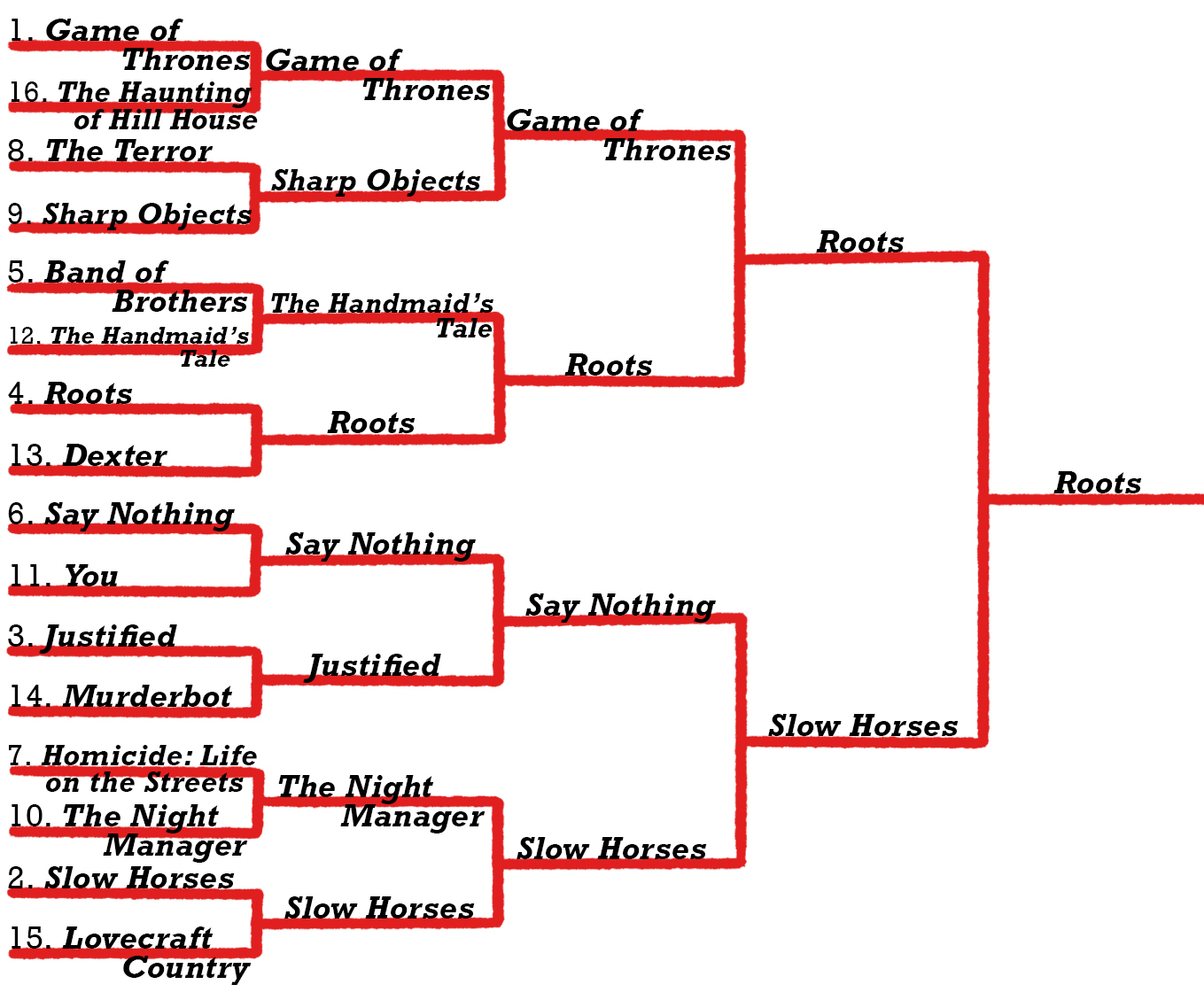
The first semifinal match-up brings together Roots (1977), seeded fourth, and Sherlock (2010), seeded sixteenth.
Roots, based on Alex Haley’s 1976 bestselling novel of the same name, stands as one of the most-watched miniseries in American television history and a seminal dramatic portrayal of the nation’s history through slavery and the Civil War. The production famously faced immense institutional pressure, nearly getting pulled when ABC executives recoiled at how unflinching the script was regarding the brutal reality of enslavers, particularly when those roles were cast with some of television’s most recognizable white actors. The network ultimately insisted on inserting a concerned white captain character who does not appear in Haley’s original book.
Despite studio interference, Haley’s novel was celebrated as the first popular work of fiction to present the genuine horrors of the Middle Passage, a core truth that the television adaptation successfully maintains. While some of the novel’s finer nuances were inevitably lost in translation, Roots remains an exceptional television landmark anchored by powerful performances, including a breakout early role for LeVar Burton. It serves as an ideal watch for viewers looking to remember an era when network television executives were willing to greenlight deeply serious, challenging historical drama.
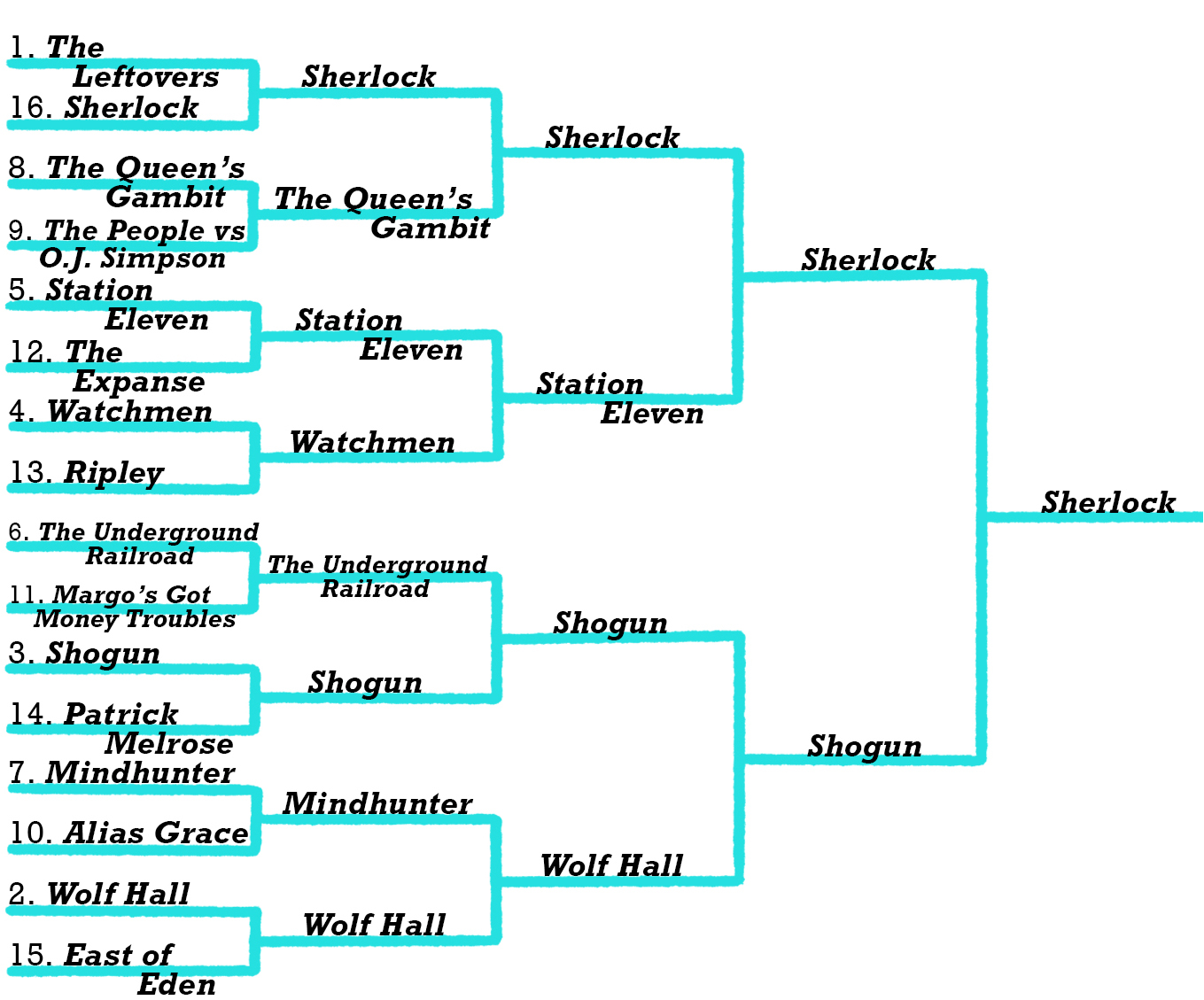
Opposite Roots in the Cerebral bracket is Sherlock, the contemporary British adaptation created by Steven Moffat and Mark Gatiss, based on Sir Arthur Conan Doyle’s iconic detective stories published between 1887 and 1927. For anyone who frequented specific corners of the internet during the early 2010s, it was entirely possible to absorb exhaustive cultural lore about Sherlock without ever having watched a single episode.

This modern reimagining situates Holmes in twenty-first-century London, employing digital superimposition, slick editing, and undersaturated cinematography to visually represent his rapid-fire deductions and the inner workings of his "mind palace." Even though internet memes about Benedict Cumberbatch’s unique name may have faded, appreciation for the series endures, illustrating more than anything why audiences continue to care deeply about Holmes and Watson more than a century after Doyle first introduced them to the literary world. It remains the quintessential show to put on when a viewer wants to feel intellectually stimulated.
MAS*H (1972) vs. Killing Eve (2018)
The second semifinal match-up features M*A*S*H (1972), seeded third, facing off against Killing Eve (2018), seeded ninth.
M*A*S*H, the iconic anti-war sitcom based on Richard Hooker’s 1968 novel MASH: A Novel About Three Army Doctors, fundamentally redefined what a television comedy could achieve by seamlessly layering sharp social commentary and genuine dramatic pathos with rapid-fire humor. Functioning as a television spinoff of Robert Altman’s 1970 feature film, the series ran for eleven acclaimed seasons. Its emotional series finale stood, at the time of its broadcast, as the most-watched television episode in American history.
Set during the Korean War, the series served as an unmistakable contemporary parallel and critique of American military involvement in Vietnam. More than fifty years after its television premiere, M*A*S*H is firmly established as a classic of the medium, offering viewers a history lesson wrapped in enduring personality and wit.
Challenging the sitcom classic is Killing Eve, the sleek, stylish thriller based on Luke Jennings’s Codename Villanelle book series. At the absolute heart of Killing Eve is the intense, dangerous mutual obsession between the glamorous, psychopathic assassin Villanelle and her dogged MI5 pursuer, Eve Polastri. Jodie Comer’s portrayal of Villanelle—volatile, ruthless, and unabashedly chaotic—proved to be magnetic, while Sandra Oh’s grounded intelligence created a pitch-perfect dynamic between two brilliantly mismatched characters.
The production famously relied on visionary head writers for its early runs, with Phoebe Waller-Bridge steering the acclaimed first season and Emerald Fennell taking the reins for season two. While television fans remain famously divided over the show’s later narrative turns and its controversial ending, the cultural footprint of the series remains secure. Viewers will always have the unforgettable kitchen confrontations and the sharp subversion of genre tropes. It stands as the ultimate watch for anyone looking to live vicariously through high-stakes fiction rather than spending another quiet evening at home.
The voting is now officially underway. Make your selections, enjoy the weekend, and check back on Monday as the tournament moves forward into the finals.