Published on November 15, 2026, as part of the Opinion section on ArchDaily, a new format dedicated to argument-driven essays exploring critical questions shaping the built environment, a compelling discourse has emerged regarding the nature of architectural programming and contemporary design. Authored by Jonathan Yeung, the piece examines the limitations of rigid functionality and celebrates what it terms "the productive ambiguity of contemporary architecture," using historical milestones and modern masterpieces to question how buildings should adapt to time, culture, and human use.
The Fall of Adaptability: The Nakagin Capsule Tower
In 2022, Tokyo witnessed the end of an era with the demolition of the Nakagin Capsule Tower, marking the conclusion of one of modern architecture’s most recognizable and ambitious experiments in structural adaptability. Designed by visionary architect Kisho Kurokawa and completed in 1972, the building was a physical manifestation of the Metabolist movement. It consisted of 140 prefabricated capsules cantilevered around two central concrete cores.
The architectural proposition behind Kurokawa’s design was radically forward-thinking: individual capsules could be unbolted and replaced as technological needs, material standards, and human lifestyles evolved over time. This approach promised a building that could continuously renew itself without ever having to dismantle its primary structural framework. Yet, despite its iconic status and decades of intense global fascination, the envisioned replacement system was never fully realized.
Over five decades of use, structural degradation, deteriorating building services, and the immense complexities of collective decision-making among multiple owners conspired against the building’s survival. Despite various impassioned preservation efforts led by architects, historians, and architectural enthusiasts from around the world, the practical hurdles proved insurmountable. The eventual demolition of the Nakagin Capsule Tower laid bare a persistent vulnerability in architectural design: the gap between theoretical adaptability and the stubborn realities of maintenance, economics, and human coordination.
Shifting Paradigms: From Programmatic Rigidity to Productive Ambiguity
The fate of Kurokawa’s Metabolist masterpiece prompts a wider critical evaluation of how contemporary architecture approaches utility, function, and longevity. For much of the twentieth century, the prevailing dogma of modernism dictated that form should strictly follow function. Buildings were meticulously programmed down to the square foot, mapped out for specific, highly specialized activities with little room for deviation.
However, as society accelerates through economic, technological, and cultural shifts, highly rigid programs frequently become obsolete long before the physical structures themselves degrade. Buildings designed exclusively for a single, narrowly defined purpose often struggle to survive when institutional needs change, leading either to premature demolition or costly, invasive renovations.

In contrast, contemporary architectural discourse increasingly highlights the value of spatial ambiguity—designing buildings that refuse to be pinned down to a single program. Rather than attempting to predict the future through complex mechanical systems or modular components that rely on perpetual maintenance, some of today’s most successful architectural interventions embrace loose-fit spaces, raw materiality, and indeterminate layouts. These projects demonstrate that a lack of strict programming can be profoundly productive, allowing buildings to absorb unpredictable community needs over time.
Contemporary Masterpieces of Adaptability
This shift away from hyper-specific programming is vividly illustrated by several prominent contemporary projects that favor spatial generosity and structural flexibility over deterministic design. Works by architectural practices such as Lacaton & Vassal—exemplified by their transformations of the Palais de Tokyo in Paris and FRAC Dunkerque—showcase how stripping away architectural pretension and leaving expansive, unprogrammed volumes can foster enduring cultural value. By providing robust, well-lit, and climate-controlled spaces without rigid internal partitions, these adaptive reuse projects allow curators, artists, and visitors to continually reinvent how the architecture is inhabited.
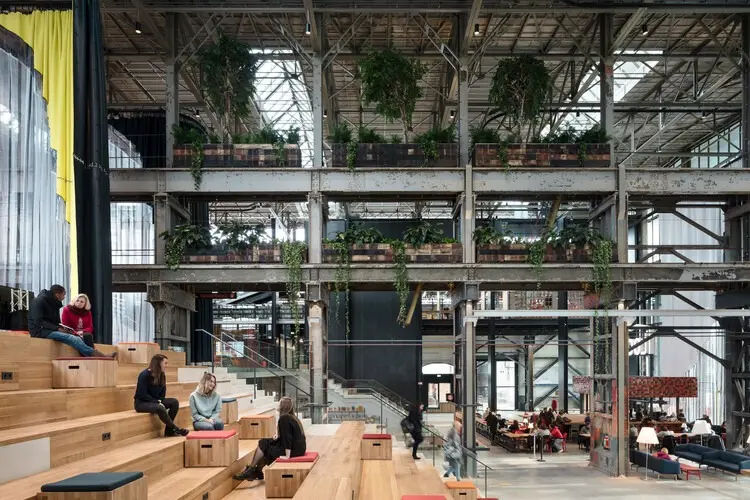
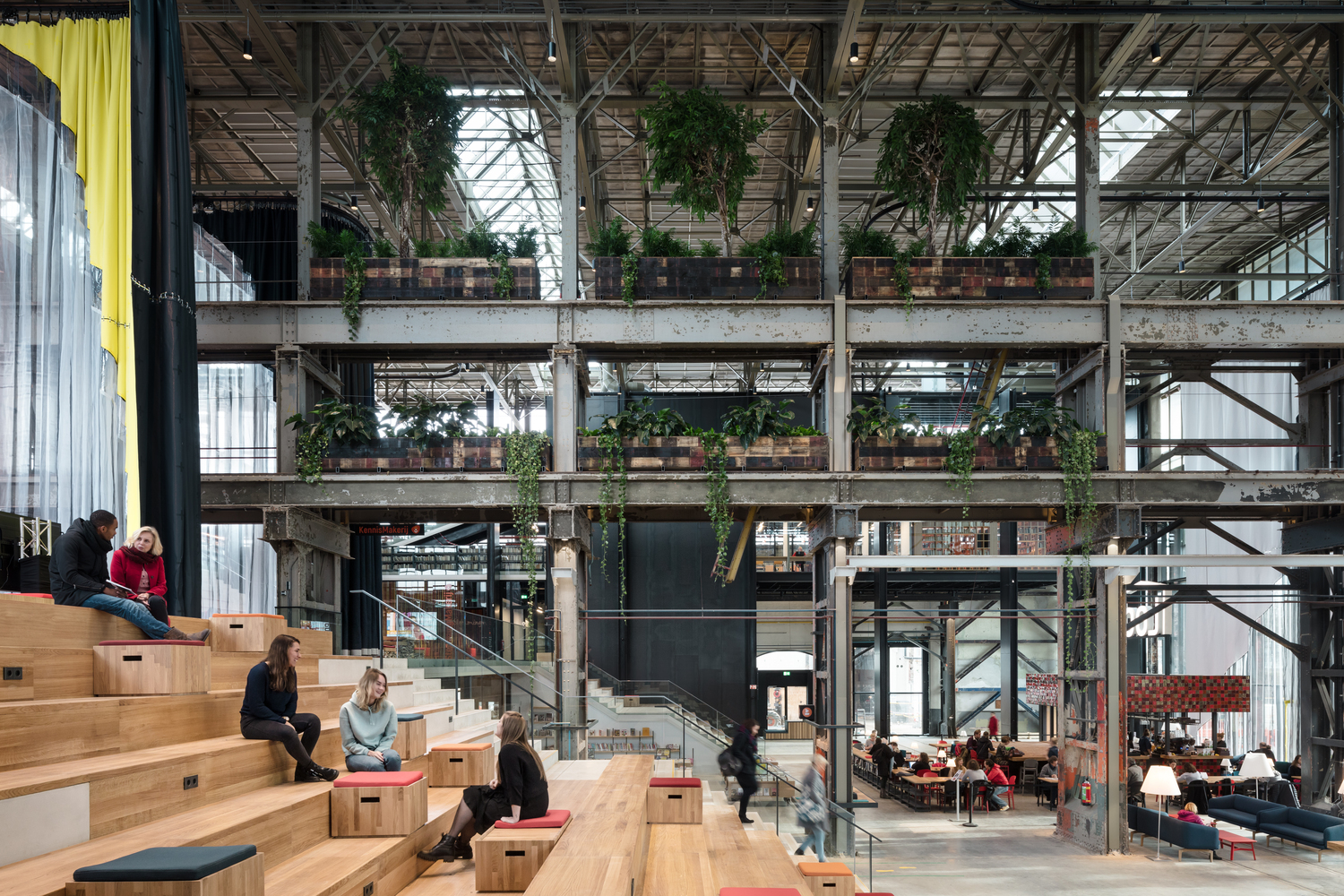
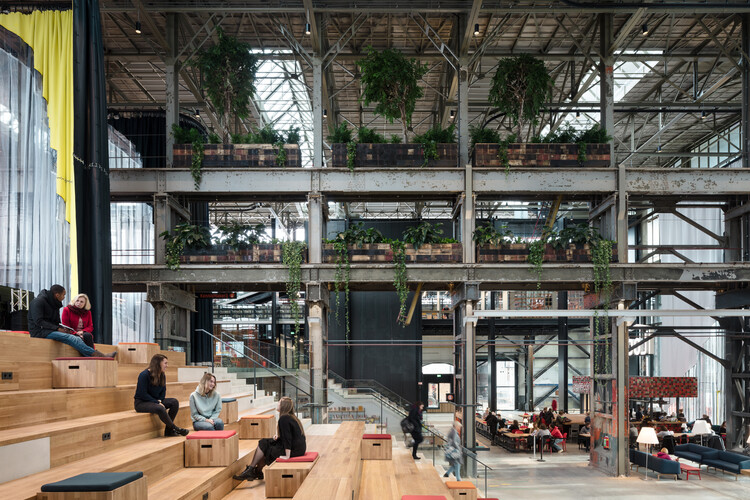
Similarly, civic projects like the LocHal Library in the Netherlands—designed by a collaborative team comprising CIVIC architects, Braaksma & Roos architectenbureau, Inside Outside, and Mecanoo—repurpose industrial infrastructure into dynamic urban living rooms. By preserving the cavernous scale of a former locomotive shed and introducing flexible textile screens rather than fixed walls, the LocHal accommodates everything from quiet reading and formal lectures to large public gatherings and workshops.
These contemporary examples suggest that the future of architecture may lie not in complex, short-lived mechanisms of change—such as the detachable capsules of the Nakagin tower—but in a resilient, open-ended ambiguity. By designing structures that invite multiple interpretations and unexpected uses, contemporary architects are finding new ways to ensure that buildings can endure, evolve, and remain relevant long after their original programmatic intentions have faded away.