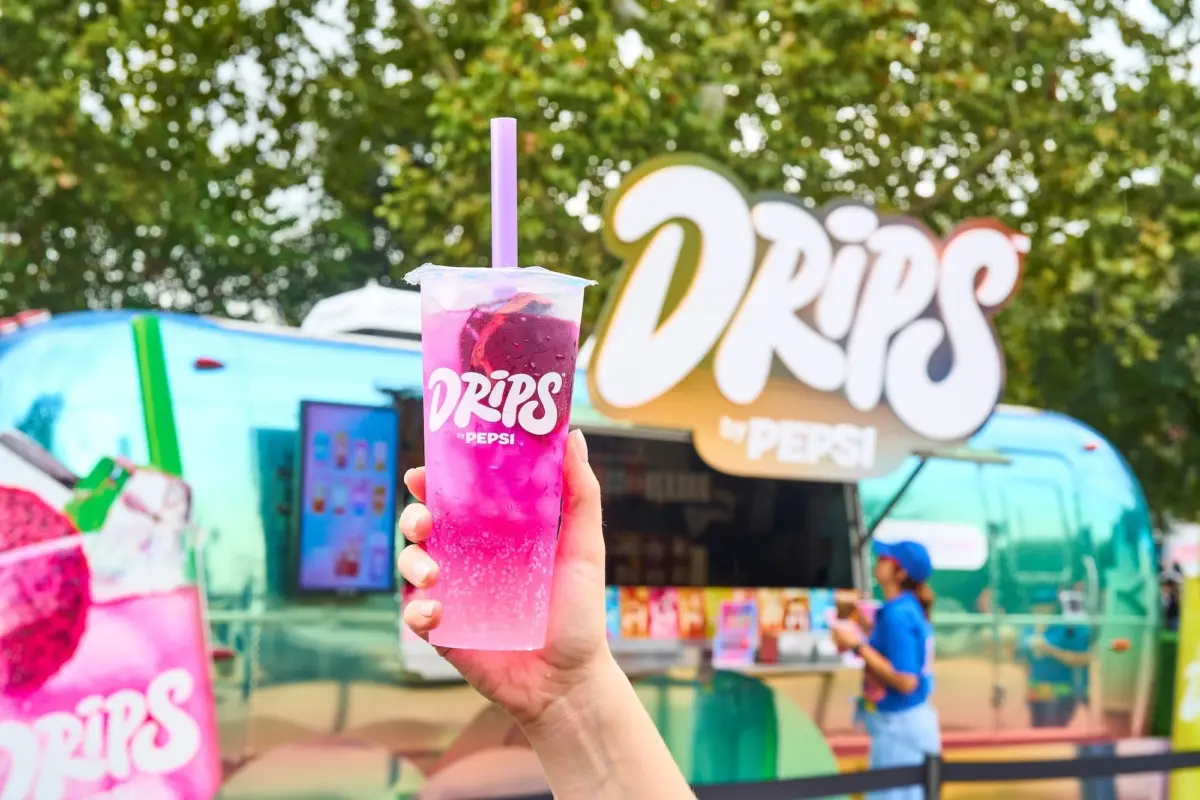
If you find yourself navigating the high-octane energy of the Formula 1 track in Las Vegas this week, you are likely to encounter a striking, mirror-chrome Airstream trailer gleaming brilliantly under the desert sun. To the casual observer, it might look like a piece of high-end event decor, but for the throngs of race attendees, it serves as an oasis of innovation. Inside this mobile unit, PepsiCo is serving up something entirely unexpected: a menu of "Instagram-worthy" concoctions that are fundamentally changing how the beverage giant approaches its consumer base.
These drinks, branded as DRIPS by Pepsi, represent the company’s direct, aggressive response to the surging "dirty soda" phenomenon—a trend that has swept across social media and younger demographics. For the uninitiated, dirty soda is the practice of taking classic carbonated beverages and elevating them with a curated mix of flavored syrups, decadent cold foams, and unexpected textures like popping boba. While the concept sounds simple, the execution is part of a complex strategy by a nearly $100 billion corporation to act with the agility of a lean, hungry startup.
Despite the immense scale of the parent company, the DRIPS initiative operates with a distinct, autonomous spirit. "We actually work as almost an intrapreneur within the company," explains Scott Finlow, the chief marketing officer of PepsiCo Away From Home. By operating as an internal incubator, the team has been able to build a brand from the ground up, moving from concept to consumer in record time, while documenting invaluable lessons about market agility and generational preferences along the way.
Chasing the Next Generation
PepsiCo has been meticulously courting young drinkers for decades, a history that is woven into the very fabric of its marketing legacy. In 1963, the company famously invited consumers to "Come alive! You’re in the Pepsi Generation," a pitch that eventually evolved into the iconic "The Choice of a New Generation" campaign. Today, DRIPS is essentially a modern-day continuation of that same playbook, albeit recalibrated for the hyper-connected, aesthetic-driven world of Gen Z.
The current strategy draws heavily from the demands of younger consumers, who are less interested in traditional brand loyalty and more focused on customization and visual flair. Finlow notes that Gen Z drinkers are constantly searching for beverages that offer "a little bit of flair, a little bit of fun." From their perspective, the root beer float should not be the only soda that possesses a distinct personality. This specific craving for customization fueled the meteoric rise of the dirty soda movement, which was famously popularized by Swig, a drive-thru beverage chain based in Utah that eventually coined the term.
Recognizing the shift in consumer behavior, PepsiCo did not simply watch from the sidelines. It built its own version of the trend. After developing a proprietary menu and brand identity, the team took DRIPS on the road in a converted Airstream to meet consumers where they gather. The trailer has since become a fixture at major cultural events, including the Austin City Limits music festival, and has successfully integrated itself into the menus of major partners, such as KFC’s chicken-tender chain, Saucy, and various locations within Vail Resorts.
From Trend to Cup: The Science of Innovation
The secret behind the success of DRIPS lies in the hands of the company’s internal chefs, whom Finlow describes as "the magicians behind these drinks." The process is highly methodical: the team identifies a popular flavor trend, aligns it with a specific cultural moment or event, and constructs the drink on a base of a trusted PepsiCo product, adding layers of complexity through texture and foam.
A prime example of this speed-to-market strategy can be seen in the team’s recent output for the Formula 1 events. With bananas currently trending as a flavor profile, the team rapidly conceptualized and launched a banana float made with Mug root beer specifically for the race. "Very rapidly, we can take a flavor trend and then a big moment in culture like F1, and we can then get in the kitchen with those chefs," Finlow says. This ability to pivot based on real-time cultural data is what separates the DRIPS team from traditional, slow-moving corporate product development.
The current menu is designed to span what the team calls "vibe states," ranging from deeply indulgent treats to light, refreshing options. Furthermore, the inclusion of buzzy, health-conscious brands like poppi and Celsius highlights a strategic shift toward functional beverages. Energy drinks, in particular, are becoming an "increasingly important base for crafted drinks as Gen Z shifts toward cold caffeinated drinks," according to Finlow.
To ensure this model is sustainable, every recipe is engineered with the operational reality of a restaurant in mind. PepsiCo does not just hand over a list of ingredients; it provides operators with comprehensive recipe kits, marketing support, and assistance in integrating these complex drinks into existing point-of-sale systems. They even go as far as documenting the specific hand movements required to construct each drink to ensure consistency and speed.
On Tap for the Future
The success of the pop-up model has provided PepsiCo with a wealth of data, which is now being packaged for wider distribution. Just recently, the company launched "DRIPS by Pepsi Signature Mixes," its first line of standalone syrups. Developed using feedback gathered from the Airstream pop-ups, these five no-added-sugar syrups allow for complex flavor profiles with a single pump. Options range from the tropical "Island Escape"—a blend of mango, pineapple, and coconut—to the richer "Mocha Mood," which features chocolate, caramel, and warm spices. Additionally, a new Lipton Green Tea concentrate has been introduced, allowing restaurants to offer high-quality refreshers without requiring any new equipment.
Looking ahead, PepsiCo is exploring the possibility of permanent, standalone DRIPS locations in urban centers like Austin and New York City. Finlow refers to these potential sites as "lab stores," where the team can test pricing strategies, experiment with rapid-fire flavor innovation, and study the operational efficiency of their staff in real-time. Simultaneously, a test kitchen in Manhattan is currently piloting a delivery service featuring six core flavors.
However, the path to scale is not without its hurdles. Like any startup, the DRIPS team is learning through trial and error. Finlow candidly admits that ensuring the drinks can be prepared efficiently in the high-pressure environment of a busy restaurant kitchen remains "the single biggest ongoing challenge." There is also the inherent pressure to grow the brand quickly, a "healthy tension" that is familiar to any founder attempting to transition from an early-stage concept to a large-scale operation.
The results, however, suggest the effort is paying off. During last month’s U.S. Grand Prix in Austin, the DRIPS trailer saw a consistent line of Gen Z enthusiasts eager to sample the latest innovations, such as drinks featuring dulce de leche or gochujang. At its peak, the trailer was generating nearly $10,000 in daily sales, serving as many as 130 drinks per hour. The most popular item, a drink dubbed "Pole Position"—a mix of Pepsi, peach, lime, and lychee jelly—was a concept that did not even exist a month prior to the event. As PepsiCo continues to iterate, the success of the DRIPS model serves as a testament to the power of blending corporate resources with the experimental, fast-paced nature of a startup.