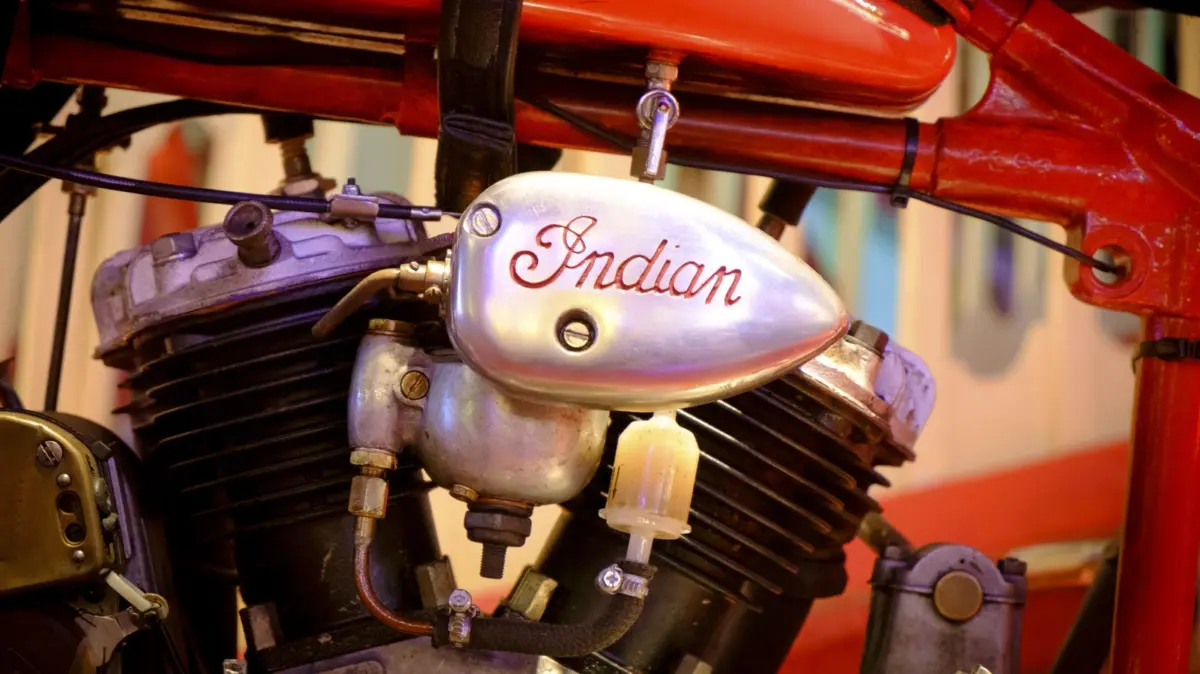
Indian officially bills itself as America’s first motorcycle company, a foundational claim that, while widely recognized, historically trails slightly behind the absolute oldest motorcycle brand in the United States. During the booming years of the 1910s, Indian stood proudly as the largest motorcycle manufacturer in the entire world. Yet even industry titans must trace their origins to humble beginnings. For Indian, that genesis occurred in Springfield, Massachusetts, where founder George Hendee established the Hendee Manufacturing Company in 1897.
By 1901, Hendee made a pivotal alliance by hiring engineer Oscar Hedstrom. Together, the pair opened a modest downtown factory dedicated to constructing gasoline-powered bicycles. Their first prototype rolled out that very year—a milestone Indian would celebrate 125 years later with a series of breathtaking, hand-painted commemorative machines—before hitting public streets in 1902. Growth was explosive: by 1905, roughly 1,000 Indian motorcycles had been constructed, and by 1913, annual production had surged to a staggering 32,000 units. However, the company’s initial corporate chapter came to an abrupt end when it closed its doors in 1953, inadvertently setting the stage for some of the rarest, most coveted collectible motorcycles in automotive history.
From the pioneering single-cylinder Camelback of 1902 to the final Springfield-built Chief of 1953, Indian produced an extensive array of conventional machines alongside a select few extraordinary anomalies. Some early models were virtually indistinguishable from standard bicycles, while others represented engineering experiments soundly rejected by the market, such as the 1914 Hendee Special, whose faltering electric starter sparked one of history’s earliest vehicle recalls. Still others were specialized contract builds commissioned specifically by the U.S. Army and the Department of War. Examining verified auction records and estimates from major houses reveals ten of the rarest Indian motorcycles ever produced, ranked progressively from relatively accessible survivors to ultra-rare museum centerpieces.
1902-1905 Indian Camelback
By contemporary standards, Indian’s inaugural production motorcycle barely resembles a traditional motorcycle, yet as the primary fruit of the Hendee and Hedstrom partnership, it remains a cornerstone of motorcycling history. Following a fateful meeting in New York City in 1900—where Hendee grew deeply impressed by Hedstrom’s competitive "motor-pacers"—the founder sought to build a reliable motorcycle for everyday riders driven by a chain rather than the notoriously unreliable belt drives popular at the time. Hedstrom successfully mated a bicycle frame with a motor-pacer engine, unveiling his prototype on June 1, 1901.
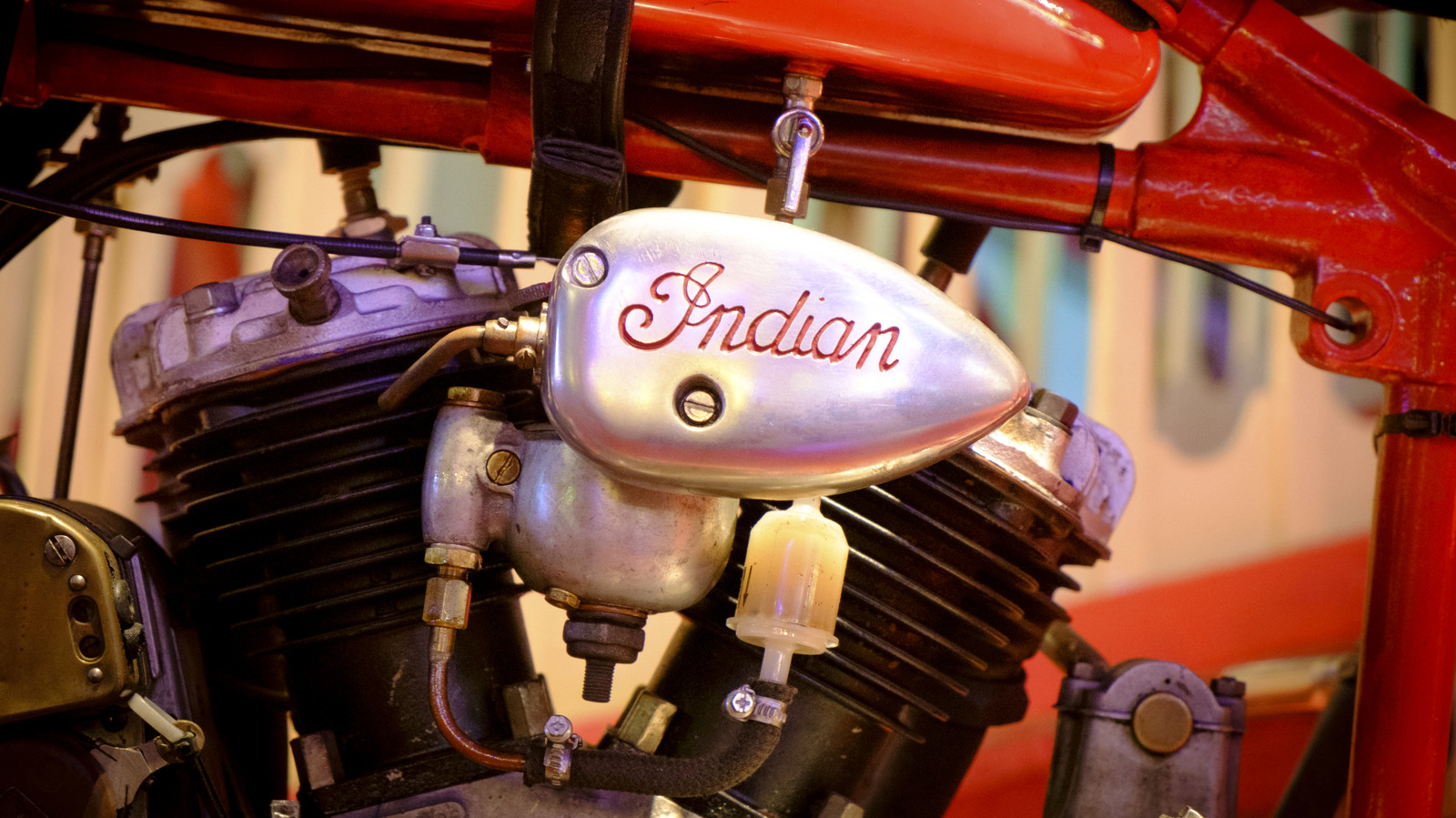
A surviving 1903 Camelback preserved key elements of Hedstrom’s original design, including a two-horsepower, 13-cubic-inch air-cooled single-cylinder four-stroke engine paired with a distinctive rear-mounted fuel tank shaped like a camel’s hump, which ultimately gave the model its iconic moniker. The engines were sourced from the Aurora Automatic Machinery Company in Illinois, while the frames were fabricated locally in Springfield. Despite their primitive architecture, these machines proved remarkably capable; Hedstrom himself piloted one to a world speed record of 56 mph in 1903. Major upgrades followed two years later with the introduction of sprung front forks and twist-grip throttles.
Total production figures remain a subject of debate among historians. The now-closed National Motorcycle Museum maintained that Hendee built only 1,000 units between 1902 and 1905, whereas historical auction documents from Bonhams cite a figure of 1,182 machines manufactured in 1905 alone. Regardless of the exact tally, original Camelbacks command immense respect among collectors. An unrestored example offered by Bonhams in England realized 40,250 pounds in 2015, translating to a substantial modern valuation.
1941-1943 Indian 841
Among the most eccentric and fiercely collected machines in the marque’s history is the Indian 841, a motorcycle born not of civilian desires but of direct commission from the United States military. In 1941, the U.S. Army tasked both Harley-Davidson and Indian with developing a rugged motorcycle capable of enduring harsh desert warfare in North Africa. While Harley-Davidson responded with the XA—a close adaptation of BMW’s R71 design—Indian engineered the revolutionary 841.
The 841 featured a 45-cubic-inch, 90-degree side-valve V-twin engine oriented with a longitudinal crankshaft to maximize cooling efficiency. Built to meet rigorous military demands for a low-maintenance machine capable of conquering extreme heat, shifting sands, and vast distances, the motorcycle incorporated a low 5.1:1 compression ratio to accommodate poor-quality fuel, a four-speed foot-shifted transmission, an enclosed driveshaft, girder front forks with coil springs, eight-inch drum brakes, plunger rear suspension, and rubber-isolated handlebars.
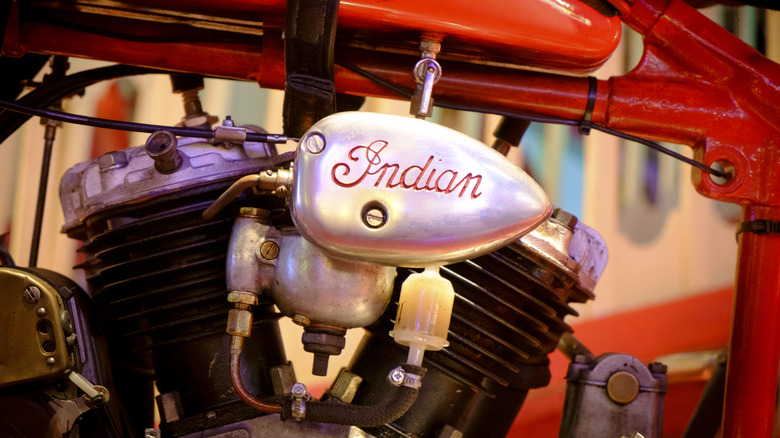
Ultimately, the Army chose neither machine, opting instead to deploy the Jeep for operational needs. Indian had constructed approximately 1,000 prototypes, perhaps reaching 1,056 units, none of which saw active wartime deployment. Surplus machines languished in storage until the war’s conclusion, after which Indian marketed them to civilian buyers. Bonhams estimates that complete surviving 841s number fewer than 100 units. One notable example, formerly owned by E. Paul du Pont, who served as Indian’s president from 1930 to 1945 and helped steer the company through the Great Depression, resides in the Hagley Museum and Library in Delaware, while civilian variants continue to command strong interest on the collector market.
1936-1937 436/437 Upside Down Four
In an ambitious effort to enhance the speed and acceleration of its first-generation four-cylinder motorcycles, Indian radically redesigned the engine architecture inherited from the Ace Motor Company. By inverting the layout and placing the exhaust valves directly above the side-facing intake valves, engineers created the short-lived Upside Down Four.
Early iterations, such as the 1936 model 436, featured exposed exhaust valves, a Marvel updraft carburetor, leaf-spring front forks, a three-speed hand-operated transmission, six-volt electrical systems, and mechanical drum brakes. Displacing 77.1 cubic inches, these engines produced 35 horsepower and propelled the heavy machine to a top speed of 95 mph. A subsequent update in 1937 introduced the model 437, dubbed the Sport Four, which substituted the single Marvel carburetor with twin Zenith units, redesigned connecting rods, and added a protective guard over the valve rockers.
Despite delivering improved reliability and sustained high-speed performance, the design suffered from a critical ergonomic flaw: the exhaust-over-inlet configuration subjected riders to intense engine heat and demanded frequent valve maintenance. Production was halted by 1938 after output of just a few hundred units per year, prompting Indian to revert to a traditional inlet-over-exhaust valve arrangement. Well-preserved and restored examples have proven exceptionally desirable at premier collector car and motorcycle auctions.
1927-1928 Indian Ace
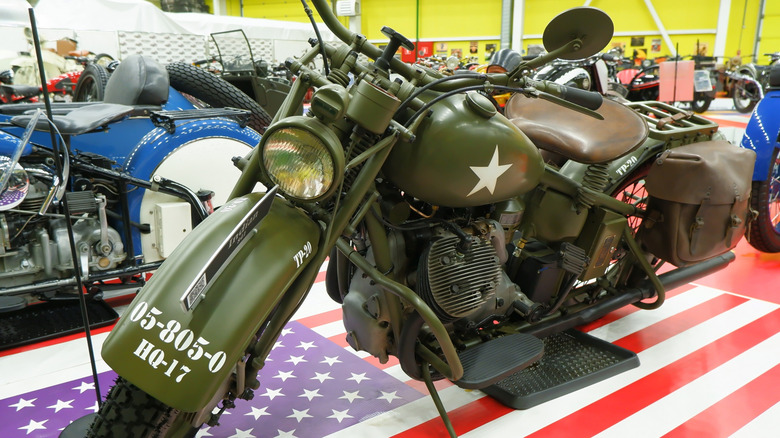
Indian’s entry into the four-cylinder motorcycle market began with a design that was not originally conceived in Springfield. The machine was fundamentally a 75-cubic-inch Ace Four engineered by William G. Henderson. Initially, the earliest four-cylinder models rolling out of the Springfield facility carried only the Ace badge upon their fuel tanks before being officially rebranded as the Indian 401 in July 1928. While precise production records remain elusive, historical estimates place the total run of these transitional machines at approximately 260 units.
Beneath the tank lay an air-cooled inline-four engine featuring inlet-over-exhaust valves, a three-speed manual hand shift, and chain drive. In 1927, Indian introduced significant internal modifications, drilling oil passages directly into the crankshaft to force lubrication to every engine bearing under 40 pounds of pressure. Surviving Springfield-built Aces also featured a slightly increased displacement of 1,265 cc compared to the original 1,229 cc specifications, alongside lightweight alloy pistons, a lower saddle profile, and a revised camshaft. Examples preserved in international museums and occasional auction offerings underscore the extreme scarcity and prestige of these early four-cylinder machines.
1953 Indian Chief
The Chief remains the definitive visual and mechanical expression of the Indian motorcycle brand. Introduced in 1922 as a larger, more muscular evolution of the Scout, the Chief achieved iconic status by the 1940s, distinguished by its sweeping, skirted fenders. While standard production numbers during peak years were relatively robust—peaking at nearly 12,000 units in 1947 alone—Chiefs manufactured in the final production year of 1953 represent a legendary holy grail for collectors.
Early iterations featured 61-cubic-inch powerplants, which expanded to 80 cubic inches by the 1950s. These ultimate-era Chiefs paired an air-cooled, 42-degree side-valve V-twin with a three-speed tank-shift transmission, a foot-operated wet multi-disc clutch, hydraulic front forks, and plunger rear suspension. Generating 40 horsepower, they were capable of a 90-mph top speed. Their primary significance for collectors stems from production realities: only about 600 examples were assembled before the Springfield factory permanently ceased operations, rendering them the final tangible chapter of original-era Indian manufacturing.
1914 Hendee Special
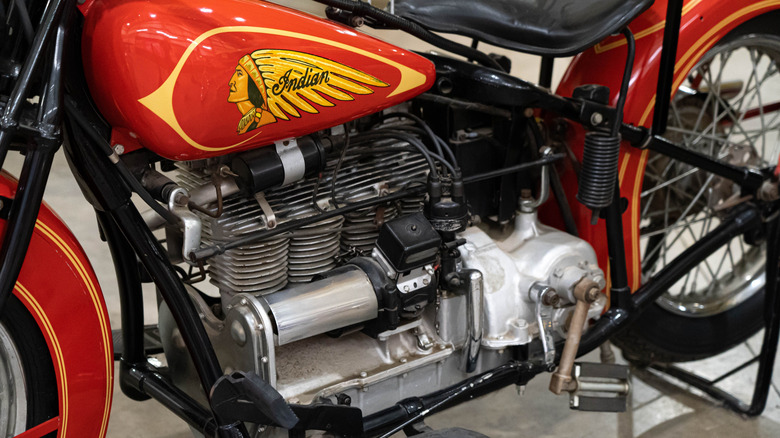
By 1913, just a dozen years after George Hendee and Oscar Hedstrom forged their partnership, the Hendee Manufacturing Company had achieved global dominance, producing 32,000 motorcycles annually. Although production moderated to 25,000 units the following year, the company maintained its reputation for relentless innovation by releasing the world’s first motorcycle equipped with an electric starter: the Hendee Special. Total production reached just 200 units, with automotive historians estimating that fewer than six complete examples survive today.
Named in honor of co-founder George Hendee, the motorcycle utilized a 61-cubic-inch V-twin generating seven horsepower, a three-speed transmission, and a dual six-volt ignition system patterned after the pioneering Kettering starters found in early Cadillacs. Unfortunately, the technology proved premature; the electrical batteries depleted after only a dozen starts, and the machine lacked a manual kick-start backup. This engineering shortcoming led to the world’s first motorcycle recall, wherein factory technicians removed the electric starters and retrofitted kick-start levers onto the transmissions. Surviving motorcycles retaining their original, intact electric starting systems represent exceptionally rare prizes for advanced collectors.
1948 648 Big Base Scout
While standard Scout models enjoyed massive popularity following their 1920 debut—and continue to serve as pillars of the brand’s contemporary lineup—the post-World War II landscape saw the Scout temporarily vanish from Indian’s catalog. In 1948, the company engineered a brief, highly exclusive revival specifically to satisfy homologation requirements for the prestigious Daytona 200 race.
Indian constructed exactly 50 examples of the 648 "Big Base" Sport Scout. The machine instantly validated its engineering by propelling rider Floyd Emde to victory at Daytona, securing Indian’s final major racing title before the factory’s ultimate closure. Historical tallies suggest that only a handful of complete original survivors remain in existence today. Powered by a 45-cubic-inch, 42-degree side-valve V-twin producing approximately 50 horsepower, the machine featured an Amal carburetor, a three-speed transmission, girder forks, a rigid rear end, and a Splitdorf magneto. Because of their competition pedigree and microscopic production numbers, Big Base Scouts command astronomical figures whenever they occasionally surface on the public auction circuit.
1920s A45 Altoona Hillclimber
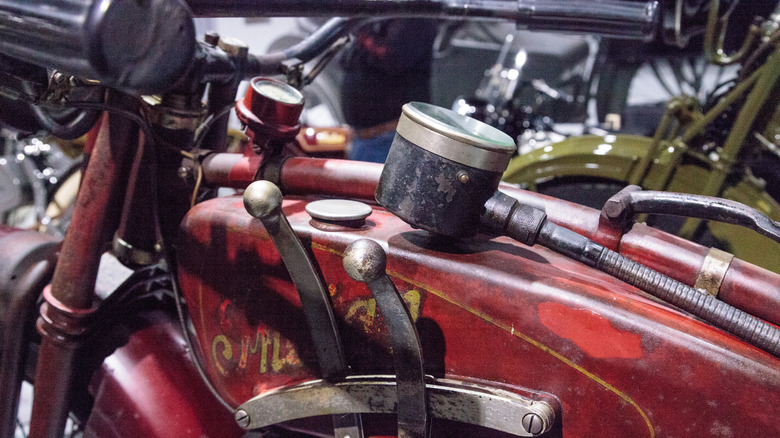
Hillclimbing emerged alongside oval track racing as a wildly popular American motorsport during the 1920s, attracting tens of thousands of spectators to national championship events. To conquer punishing vertical inclines, Indian and its rivals manufactured specialized, alcohol-burning racing machines outfitted with extended wheelbases and heavy traction chains wrapped around the rear tires. Among these, the Indian A45 achieved legendary status, earning its nickname from the prominent Altoona speedway in Pennsylvania where it routinely dominated competition. According to industry records, Indian constructed only two dozen A45s, solidifying their status as extraordinarily scarce artifacts of early motorcycle sport.
Surviving examples reveal diverse mechanical specifications tailored to specific racing demands, ranging from 80-cubic-inch powerplants with high-lift cams to specialized 750 cc factory engines boasting extreme compression ratios exceeding 15:1 and outputs surpassing 60 horsepower. Due to their limited production and fierce competition usage, authentic A45 hillclimbers are fiercely pursued by serious collectors, frequently commanding six-figure sums at specialized vintage vehicle auctions.
1938/1939 Indian Scout Factory Hill Climber
The enduring performance architecture of the Indian Scout found expression not only in transcontinental speed records—such as Burt Munro’s legendary exploits on the Bonneville Salt Flats—but also in specialized professional hillclimbing competition. Among the most elusive variants are the 18 dedicated factory hillclimbers constructed by the Springfield plant across 1938 and 1939, representing the final specialized competition machines built before production ceased.
Similar to the earlier A45 Altoona, these Scout Factory Hill Climbers were custom-engineered to burn alcohol and navigate severe inclines. Many were subsequently modified by their respective professional riders, incorporating extended chassis configurations, specialized Linkert carburetors, and rear-facing air intakes designed to prevent airborne sand, mud, and turf from fouling the engine during aggressive runs. Surviving documented examples are exceedingly rare, with recorded auction appearances generating intense interest among museum curators and marque historians.
1910s 8-Valve Racers
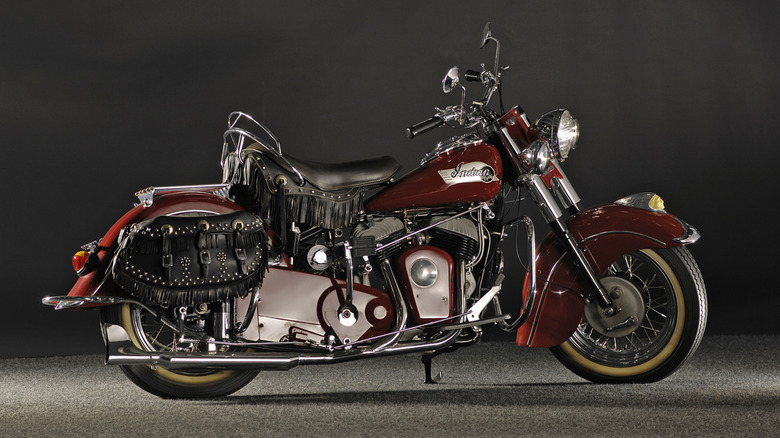
Arguably the most elusive and historically significant motorcycles ever produced by Indian are the specialized 8-Valve racers engineered during the zenith of American board track motordrome racing in the 1910s. Never intended for mass-production, these machines were handcrafted in minuscule numbers exclusively for high-speed wooden track competition. Given the inherently perilous nature of motordrome racing, very few machines survived the era’s catastrophic crashes, leaving an extremely limited pool of genuine survivors today.
Notable examples that have surfaced in recent years include rare machines featuring prototype keystone and Marion frames with original factory castings, matching racing forks, and expansive fuel tanks designed to endure grueling endurance events spanning up to 200 miles. Supported by comprehensive archival documentation and factory provenance, these restored competition masterpieces have achieved monumental results when presented at elite international venues, underscoring the enduring legacy, engineering audacity, and timeless collectibility of America’s storied early motorcycle pioneer.